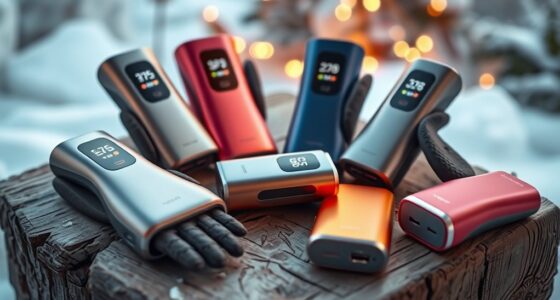


When it comes to portable power banks for travel, the biggest tradeoff is between capacity and carry weight: a 50,000mAh giant keeps a whole family charged but weighs down a daypack, while a slim 10,000mAh unit disappears into a pocket but may run dry before your layover does. My best overall pick is the Anker Power Bank 20,000mAh with Built-in USB-C Cable, because it balances capacity, brand reliability, and the convenience of never hunting for a cable. Two other standouts: the INIU 20000mAh 22.5W for travelers who want fast top-ups at a budget price, and the Miady 2-Pack Slim 10,000mAh for couples or families who each need their own bank. Built-in cables, wall plugs, and multi-device output are the features that actually separate these models in real travel scenarios. Keep reading for the full breakdown of all 14 picks.

Get travel and outdoor gear delivered free with Prime
- Fast, free delivery on millions of items
- Prime Video, Amazon Music and more included
- Member-only deals all year
Complete the kit



Key Takeaways
- Anker‘s two entries (the 20,000mAh built-in cable model and the 10,000mAh PowerIQ) earned the top spots because of consistent charging reliability and warranty support, even though budget brands like INIU and Charmast beat them on raw specs per dollar.
- Power banks with built-in cables (HELLEE, Charmast, Orfeika, VRURC, NOBIS) dominated the middle of the ranking — the convenience is real, but the models that paired built-in cables with fast 45W+ charging pulled ahead of the 15–22W versions.
- The 50,000mAh high-capacity pick and the Ayeway 26,800mAh are niche choices: great for camping or multi-day trips without outlets, but they violate many airlines’ size expectations and are overkill for typical city travel.
- Only one model in the lineup, the Charmast 20000mAh with AC wall plug, doubles as its own charger — a genuine advantage for travelers trying to minimize gear, since every other pick still needs a separate wall adapter and cable.
- The Miady 2-Pack was the only multi-unit option, and it won on value math for groups: two slim 10,000mAh banks cost less than most single 20,000mAh rivals and split easily between two bags or two people.
| HELLEE 15000mAh Portable Charger Power Bank with Built-in 4 Cables |  | Best Overall for Travel | Battery Capacity: 15000mAh | Max Output: 22.5W fast charging | Built-in Cables: USB-A, Type-C, iOS, Micro | VIEW LATEST PRICE | See Our Full Breakdown |
| 50000mAh Portable Charger with Built-in Cables – Compact Power Bank with Fast Charging |  | Best for Long Trips and Emergencies | Capacity: 50000mAh | Size: 4.4″ × 2.8″ × 1.2″ | Weight: 0.75 lb | VIEW LATEST PRICE | See Our Full Breakdown |
| Charmast Portable Charger Power Bank with Reinforced Built-in 4 Cables |  | Best Compact Pick | Capacity: 10,000mAh | Output Ports: USB-C ×1, USB-A ×2 | Built-in Cables: 4 cables (Lightning, Type-C, Micro-USB, USB-A) | VIEW LATEST PRICE | See Our Full Breakdown |
| Charmast 20000mAh Portable Charger with Built-in Cables and AC Wall Plug |  | Best All-in-One Design | Battery Capacity: 20000mAh | Output Wattage: 22.5W | Number of Ports: 5 | VIEW LATEST PRICE | See Our Full Breakdown |
| Anker Power Bank, 10,000mAh Portable Charger, PowerIQ USB-C Battery Pack |  | Best Brand Reliability | Capacity: 10,000mAh | Ports: USB-C (input/output) | Charging Technology: Anker PowerIQ | VIEW LATEST PRICE | See Our Full Breakdown |
| INIU Portable Charger, 20000mAh, 22.5W Fast Charging Power Bank |  | Best Value | Capacity: 20000mAh | Fast Charging Power: 22.5W | Built-in Cable: USB-C with nylon lanyard | VIEW LATEST PRICE | See Our Full Breakdown |
| Orfeika 20000mAh Power Bank with Built-in Cables |  | Best for Group Travel | Battery Capacity: 20000mAh | Fast Charging: 20W PD | Ports: 4 built-in cables + 3 external ports | VIEW LATEST PRICE | See Our Full Breakdown |
| Anker Power Bank 20,000mAh with Built-in USB-C Cable |  | Best Premium Pick | Capacity: 20000mAh | Power Output: Up to 87W | Built-in Cable: USB-C | VIEW LATEST PRICE | See Our Full Breakdown |
| 45W Portable Charger, 20000mAh Fast Charging Power Bank with Retractable USB-C Cable |  | Best Cable Management | Capacity: 20000mAh (rated 12000mAh usable) | Maximum Output Power: 45W | Input Power: 45W | VIEW LATEST PRICE | See Our Full Breakdown |
| NOBIS Portable Charger 65W 20000mAh Power Bank with Detachable C-Cable |  | Best for Fast Recharging | Battery Capacity: 20000mAh | Power Output: 65W | Ports: 2 USB-C, 2 USB-A | VIEW LATEST PRICE | See Our Full Breakdown |
| VRURC Portable Charger 20000mAh with Built-in Cables and Fast Charging |  | Best for Cable-Free Packing | Battery Capacity: 20000mAh | Ports: 6 total (2 ports: USB-C, USB-A, plus built-in cables) | Built-in Cables: Type-C, Phone, Micro USB, USB Type-A | VIEW LATEST PRICE | See Our Full Breakdown |
| INIU 10000mAh 45W Fast Charging Portable Charger |  | Best Compact Speed Demon | Battery Capacity: 10000mAh | Output Ports: 2x USB-C, 1x USB-A | Max Charging Power: 45W | VIEW LATEST PRICE | See Our Full Breakdown |
| Ayeway Fast Charging Battery Pack 26800mAh Portable Charger with 5 Outputs |  | Best for Long-Haul Endurance | Battery Capacity: 26800mAh | Number of Ports: 5 | Connector Types: USB Type-A, USB Type-C | VIEW LATEST PRICE | See Our Full Breakdown |
| Miady 2-Pack Portable Charger, Slim 10000mAh Power Bank |  | Best Budget Two-Pack | Battery Capacity: 10000mAh per unit (2-pack) | Ports: 4 per unit (2x USB-A, 1x USB-C input, 1x USB-C output) | Max Output: 2.4A | VIEW LATEST PRICE | See Our Full Breakdown |
| portable power banks for travel | Weight | Battery Capacity |
|---|---|---|
| HELLEE 15000mAh Portable Charg | — | 15000mAh |
| 50000mAh Portable Charger with | 0.75 lb | — |
| Charmast Portable Charger Powe | 9.2 oz | — |
| Charmast 20000mAh Portable Cha | 148 g | 20000mAh |
| Anker Power Bank | 8.6 oz | — |
| INIU Portable Charger | Approx. 11 oz | — |
| Orfeika 20000mAh Power Bank wi | 0.73 lbs | 20000mAh |
| Anker Power Bank 20,000mAh wit | 15.5 oz | — |
| 45W Portable Charger | 14.13 ounces | — |
| NOBIS Portable Charger 65W 200 | — | 20000mAh |
| VRURC Portable Charger 20000mA | — | 20000mAh |
| INIU 10000mAh 45W Fast Chargin | — | 10000mAh |
| Ayeway Fast Charging Battery P | 13.4 ounces | 26800mAh |
| Miady 2-Pack Portable Charger | 7.68 oz per unit | 10000mAh per unit (2-pack) |
More Details on Our Top Picks
HELLEE 15000mAh Portable Charger Power Bank with Built-in 4 Cables
HELLEE’s 15000mAh charger hits a middle ground most travel power banks miss. With four built-in cables (USB-A, Type-C, iOS, and Micro), it eliminates the cable clutter that plagues the Anker 10,000mAh model, which requires you to bring your own cord. Capacity lands comfortably between the Charmast 10,000mAh option—too small for a long weekend—and the 50,000mAh giant, which borders on overkill unless you’re off-grid. The 22.5W fast charging means a phone reaches 50% in roughly 30 minutes, enough for a quick airport top-up. Compared with similar options, this pick makes the most sense for travelers who want enough power for a phone plus headphones or a tablet without carrying a brick. The tradeoff: 15,000mAh won’t fully satisfy a heavy phone user beyond two days, and there’s no digital battery readout like the Charmast wall-plug model offers.
Pros:- Four built-in cables cover nearly every device without packing cords
- 22.5W fast charging delivers 50% phone charge in about 30 minutes
- Charges multiple devices simultaneously across 6 ports
- Noticeably smaller and lighter than similarly rated power banks
Cons:- 15,000mAh capacity falls short for heavy users on extended trips
- No digital display, so remaining charge is a guess
- Fixed built-in cables can’t be replaced if damaged
Best for: Frequent travelers who want a balance of capacity, built-in cables, and pocketable size for 2-3 day trips
Not ideal for: Off-grid campers or multi-device families who need enough power for more than a weekend — the 15,000mAh ceiling will run dry
- Battery Capacity:15000mAh
- Max Output:22.5W fast charging
- Built-in Cables:USB-A, Type-C, iOS, Micro
- Number of Ports:6
- Output Current:3A
- Recharge Time:3 hours
- Compatible Devices:Smartphones, headphones, laptops, speakers
- Battery Cell Type:Lithium Polymer
Our verdict“This is the pick for the one-bag traveler who wants cable-free convenience and enough capacity for a long weekend without the weight of a 50,000mAh tank.”
50000mAh Portable Charger with Built-in Cables – Compact Power Bank with Fast Charging
When a weekend away turns into a week, 50,000mAh of capacity changes the math entirely—this model can recharge a modern phone several times over and still have power for a tablet or camera. At just 0.75 lb and roughly the footprint of a deck of playing cards, it undercuts the size expectations set by older high-capacity banks, though it’s still heftier than the Charmast 10,000mAh slim option. The LED digital display is a genuine advantage over the HELLEE 15000mAh, which leaves you estimating remaining power. Four built-in cables and a three-port layout let a whole travel group charge at once. The tradeoffs are real: this capacity class is bulky for everyday pocket carry, and airline limits on lithium batteries mean it may not clear security on some carriers—check before flying. For road trips, camping, or power outages, though, it outlasts everything else in this lineup.
Pros:- Massive capacity powers a phone 8-10 times before recharging
- Digital display shows exact remaining percentage
- Four built-in cables plus three ports charge several devices at once
- 8-layer safety protection guards against overcharge and overheating
Cons:- May exceed airline lithium battery limits for carry-on or checked bags
- At 0.75 lb it’s heavy compared with 10,000mAh slim models
- No wireless charging despite the premium capacity
Best for: Campers, road-trippers, and emergency-prep buyers who need multiple days of power away from any outlet
Not ideal for: Carry-on-only flyers and daily commuters — the capacity exceeds some airline lithium limits and it’s too heavy for casual pocket carry
- Capacity:50000mAh
- Size:4.4″ × 2.8″ × 1.2″
- Weight:0.75 lb
- Charging Power:22.5W
- Built-in Cables:Micro-B, USB-A, Type-C, Lightning
- Ports:Micro-B input, Type-C input/output, USB-A output
- Safety Features:8-layer protection
Our verdict“Buy this if your travel involves days away from outlets; skip it if you mostly need a daily commute top-up, where the Charmast slim model does the job at half the weight.”
Charmast Portable Charger Power Bank with Reinforced Built-in 4 Cables
This Charmast slim charger is the one I’d point minimalist travelers toward. At 9.2 oz and smaller than an iPhone 14, it slides into a jacket pocket or the side of a sling bag unnoticed—something the 50,000mAh model simply can’t claim. The reinforced built-in cables address the durability complaint that fixed cords usually invite, and being able to charge up to six devices at once is remarkable for a bank this size, even if six simultaneous devices would drain it instantly. Compared with the Anker 10,000mAh, you get the same pocketable footprint but without needing to pack a single cable—an underrated convenience at airport gates and in hotel rooms with few outlets. The obvious limitation is 10,000mAh: expect roughly two phone charges and little left over, so tablet or multi-day travelers should step up to the HELLEE 15000mAh instead.
Pros:- Slimmer than an iPhone 14, genuinely pocketable
- Four reinforced built-in cables with no separate cords to pack
- Charges up to 6 devices simultaneously
- Multiple recharge options: USB-C, USB-A, or Micro-USB
Cons:- 10,000mAh capacity covers only about two full phone charges
- Built-in cables are fixed and irreplaceable if they fail
- No fast-charging figure competitive with the 22.5W models in this lineup
Best for: Minimalist travelers and city commuters who want one pocket-sized device with zero loose cables
Not ideal for: Tablet owners or anyone away from outlets for more than a day — 10,000mAh barely covers two phone charges
- Capacity:10,000mAh
- Output Ports:USB-C ×1, USB-A ×2
- Built-in Cables:4 cables (Lightning, Type-C, Micro-USB, USB-A)
- Weight:9.2 oz
- Dimensions:Slim, smaller than iPhone 14
- Simultaneous Charging:Up to 6 devices
Our verdict“The right choice for light packers doing one-day outings; anyone needing multi-day endurance should pay up for the HELLEE or the 50,000mAh tank.”
Charmast 20000mAh Portable Charger with Built-in Cables and AC Wall Plug
The foldable AC wall plug is what sets this Charmast apart: it’s a power bank that also recharges itself from any wall outlet, no adapter required. That makes it a standout for international travel, where forgetting a wall charger usually strands a standard bank like the Anker 10,000mAh after one depletion. With 20,000mAh, it doubles the endurance of the slim Charmast and comfortably beats the HELLEE for longer trips, while the digital display removes the guesswork both of those models leave you with. The 22.5W output keeps phone charging quick, and the 36-month warranty signals real confidence. The compromises: recharging through the AC plug takes a sluggish 11 hours—use the USB-C input at 6.5 hours instead—and despite five ports, the single AC outlet means it can’t double as a multi-device wall charger at your hotel. It’s also a touch bulky for pants pockets.
Pros:- Built-in foldable AC plug recharges the bank anywhere with an outlet
- 20,000mAh balances multi-day endurance with carry-friendly size
- Digital display shows exact remaining battery percentage
- 36-month warranty is among the longest in this roundup
Cons:- AC wall-plug recharging takes roughly 11 hours
- Only one AC outlet despite five total ports
- Slightly bulky for pocket carry compared with slim 10,000mAh models
Best for: International travelers and forgetful packers who want a power bank that recharges itself from any wall outlet without a separate adapter
Not ideal for: Travelers who want the fastest turnaround — an 11-hour AC recharge makes it a poor choice if you need it topped up quickly between stops
- Battery Capacity:20000mAh
- Output Wattage:22.5W
- Number of Ports:5
- Recharge Time:6.5 hours (USB-C), ~11 hours (AC plug)
- Pass-Through Charging:Yes, via AC plug
- Weight:148 g
- Dimensions:5.91 × 2.83 × 1.09 inches
- Warranty:36 months
Our verdict“This model earns its spot by replacing two gadgets — power bank and wall charger — making it ideal for international trips if you can live with slow self-recharging.”
Anker Power Bank, 10,000mAh Portable Charger, PowerIQ USB-C Battery Pack
For buyers who value brand trust and build quality over feature lists, this Anker stands alone in the roundup. The scratch-resistant, drop-tested housing means it survives the bottom of a backpack or a drop on tile—durability claims most no-name competitors don’t even attempt. Anker’s PowerIQ charging intelligence also tends to deliver consistent real-world speeds across devices, which explains the brand’s reputation. But the feature set is sparse: unlike the Charmast slim model, no cables are included, so you’re packing a cord anyway, and there’s no digital display, no built-in AC plug, and only a single USB-C port handling both input and output. At 10,000mAh it matches the Charmast for capacity but can’t charge multiple devices at once. This option stands out for reliability-first buyers; anyone prioritizing convenience features should choose the HELLEE or the wall-plug Charmast instead.
Pros:- Drop-test certified and scratch-resistant for real travel abuse
- Two-way USB-C charging simplifies cabling to a single cord
- Anker brand reputation for reliability and support
- Slim, lightweight profile at 8.6 oz
Cons:- No built-in cables — you must pack your own cord
- Single USB-C port means no simultaneous multi-device charging
- 10,000mAh capacity limits it to roughly two phone charges
Best for: Buyers who prioritize a trusted brand, proven durability, and simple single-device charging for short trips
Not ideal for: Multi-device travelers or anyone who hates packing cables — one USB-C port and no built-in cords make it inflexible
- Capacity:10,000mAh
- Ports:USB-C (input/output)
- Charging Technology:Anker PowerIQ
- Size:5.99 × 2.81 × 0.61 inches
- Weight:8.6 oz
- Durability:Scratch resistance, drop test certified
Our verdict“Choose this if brand reliability and ruggedness matter more than features; skip it if you want the do-everything convenience of built-in cables and multiple ports.”
INIU Portable Charger, 20000mAh, 22.5W Fast Charging Power Bank
For travelers who want dependable capacity without a premium price, this option stands out for how little it asks in return. The 22.5W output covers phones comfortably, and the built-in USB-C cable doubling as a lanyard is a clever touch that the Orfeika also borrows — though INIU’s execution is lighter and simpler. Compared with the Anker 87W model, this pick trades raw speed for a lighter pack and a friendlier price, which makes more sense for travelers charging phones rather than laptops. The TSA approval means airport security is a non-issue. The tradeoffs are real: 11 ounces still shows up in a jacket pocket, and the three-year warranty is shorter than category leaders.
Pros:- Compact, pocket-sized design for easy travel
- Built-in USB-C cable with nylon lanyard eliminates loose cords
- 22.5W fast charging is plenty for smartphones
- TSA-approved, so airport security is hassle-free
Cons:- 11 oz weight is noticeable in pockets or small bags
- Only a 3-year warranty, shorter than premium competitors
Best for: Budget-conscious travelers who charge phones and want a built-in cable so they can leave cords at home
Not ideal for: Anyone carrying a laptop or tablet full-time — 22.5W won’t keep a MacBook meaningfully charged
- Capacity:20000mAh
- Fast Charging Power:22.5W
- Built-in Cable:USB-C with nylon lanyard
- Weight:Approx. 11 oz
- Additional Features:Flashlight, TSA-approved
- Warranty:3 years
Our verdict“This pick makes the most sense for phone-first travelers who want solid capacity and a built-in cable at a price that leaves room for a travel accessory budget.”
Orfeika 20000mAh Power Bank with Built-in Cables
When the whole family needs a top-up at the gate, charging six devices at once changes the math entirely. Four built-in cables plus three external ports means nobody digs through a backpack for the right cord — a step beyond the INIU’s single USB-C lanyard. The LED percentage display is more reassuring than the INIU’s basic setup, and the UL 2056 certification adds peace of mind when charging overnight in a hotel. The catch is physics: 0.73 pounds and a 6.3-inch footprint make this a bag battery, not a pocket battery. And at 20W PD, it charges slower than the NOBIS 65W, so device-heavy users trade speed for sheer port coverage.
Pros:- Charges up to six devices at the same time
- Four built-in cables eliminate the need to pack cords
- LED display shows exact remaining battery percentage
- UL 2056 and UN38.3 safety certifications
Cons:- 0.73 lbs and 6.33-inch length make pocket carry impractical
- 20W PD is slow compared with 45W+ competitors
- Devices must match the built-in cable types
Best for: Families and group travelers who need to charge several phones, earbuds, and a tablet simultaneously
Not ideal for: Minimalist packers or day-hikers — it’s too bulky and heavy for pocket or belt-bag carry
- Battery Capacity:20000mAh
- Fast Charging:20W PD
- Ports:4 built-in cables + 3 external ports
- Weight:0.73 lbs
- Dimensions:6.33 x 2.85 x 0.74 inches
- Safety Standards:UL 2056, UN38.3
- Display:LED battery percentage
Our verdict“This is the pick for travelers who carry a family’s worth of gadgets and would rather have every cable built in than manage a cord spaghetti problem on a layover.”
Anker Power Bank 20,000mAh with Built-in USB-C Cable
This is the option for travelers whose bag holds a MacBook or iPad alongside a phone. The 87W output sits far above the INIU’s 22.5W and even outpaces the NOBIS 65W, and the 1.5-hour self-recharge with a 65W charger means it’s ready again before the next flight leg. Compared with the Orfeika, this model offers fewer simultaneous ports but far more power per port — a better fit for one big device than six small ones. The tradeoffs are weight and cost: at 15.5 ounces it’s the heaviest in this batch, and the price sits at the top of the category. Buyers paying less than half as much for the INIU give up laptop-grade speed entirely.
Pros:- 87W output charges laptops, not just phones
- Self-recharges in 1.5 hours with a 65W charger
- Built-in durable USB-C cable is always attached
- Anker reliability and brand support
Cons:- 15.5 oz makes it the heaviest option in this group
- Premium price well above lower-wattage competitors
- Fastest charging is limited to USB-C devices
Best for: Business travelers and digital nomads who need to fast-charge a laptop, tablet, and phone from one bank
Not ideal for: Light packers or budget buyers who only top up a phone — the weight and price are wasted on small devices
- Capacity:20000mAh
- Power Output:Up to 87W
- Built-in Cable:USB-C
- Dimensions:6.2 x 2.9 x 1.0 inches
- Weight:15.5 oz
- Charge Time:1.5 hours with 65W charger
Our verdict“Worth the premium only if a laptop travels with you — this is the bank that keeps a full work setup alive through a long travel day.”
45W Portable Charger, 20000mAh Fast Charging Power Bank with Retractable USB-C Cable
The retractable USB-C cable is the standout here — it delivers the cord-free convenience of the INIU’s lanyard design without a cable dangling from the side of the bank. At 45W, this model handles tablets and smaller laptops that the INIU can’t touch, while costing meaningfully less than the Anker 87W. Charging three devices at once covers a typical traveler’s phone, earbuds, and e-reader. The honest drawback is efficiency: the rated capacity drops to roughly 12000mAh in real use, so that 20000mAh headline overstates what actually reaches your devices. At 14 ounces, it also sits between the INIU and Anker in heft — a middle-ground pick in nearly every respect.
Pros:- Retractable built-in USB-C cable keeps everything self-contained
- 45W output charges tablets and some laptops
- Charges three devices simultaneously
- 45W input recharges the bank itself quickly
Cons:- Usable capacity drops to about 12000mAh due to conversion losses
- 14.13 oz is heavy for its output class
- Low power mode limits compatibility with small-current devices
Best for: Travelers who hate loose cables and want a tidy, mid-power bank that can also revive a tablet or small laptop
Not ideal for: Capacity-first buyers — the real-world 12000mAh output falls well short of what the 20000mAh label implies
- Capacity:20000mAh (rated 12000mAh usable)
- Maximum Output Power:45W
- Input Power:45W
- Built-in Cable:Retractable USB-C
- Additional Ports:USB-C, USB-A
- Size:5.12 x 2.76 x 0.98 inches
- Weight:14.13 ounces
Our verdict“A smart middle pick for cable-averse travelers who need more than phone charging but don’t want to pay Anker prices for 87W.”
NOBIS Portable Charger 65W 20000mAh Power Bank with Detachable C-Cable
What separates this model is the 1.8-hour recharge time — for travelers moving hotel to hotel, a bank that refills fast matters as much as one that drains slowly. With 65W output, it lands between the 45W retractable-cable model and the Anker’s 87W, comfortably covering laptops while undercutting Anker on price. The four ports (2 USB-C, 2 USB-A) offer more legacy-device flexibility than the Anker, which leans USB-C only, and the digital display matches the Orfeika’s clarity. The unknowns are the concern: no published weight and thin documentation on build quality make it harder to vet against established brands, a real risk for something living in a carry-on every week.
Pros:- 65W output charges laptops and multiple phones
- Recharges fully in just 1.8 hours
- Four ports including two USB-A for older devices
- Digital display shows exact remaining power
Cons:- No published weight makes packing decisions harder
- Limited information on durability and build quality
- Less brand track record than Anker or INIU
Best for: Frequent movers who prioritize quickly recharging the bank itself between legs of a trip and need 65W for a laptop
Not ideal for: Buyers who want verified specs and a track record — the missing weight data and limited documentation are a gamble
- Battery Capacity:20000mAh
- Power Output:65W
- Ports:2 USB-C, 2 USB-A
- Charging Time:1.8 hours
- Voltage:5V
- Amperage:3A
- Battery Type:Lithium Polymer
- Included Accessory:Detachable USB-C cable
Our verdict“A strong laptop-capable choice at a mid-tier price, best for travelers who value fast turnaround over brand-name certainty.”
VRURC Portable Charger 20000mAh with Built-in Cables and Fast Charging
The entire pitch of this model is never packing a charging cable again. Four built-in cables — Type-C, Lightning-style, Micro USB, and USB-A — mean one brick covers a phone, earbuds, and a tablet at the same time, and the 22.5W output keeps pace with the INIU 20000mAh for single-device top-ups. Compared with the Anker Power Bank with Built-in USB-C Cable, this option covers far more device types, though Anker’s single cable feels sturdier over years of coiling. The 19mm slim chassis and built-in strap make it genuinely pocket-friendly for a 20000mAh unit. The tradeoff: you pay a premium for the all-in-one design, and there’s no wireless charging if you prefer a pad-style top-up. Still, this pick makes the most sense for travelers who hate cable clutter more than they hate spending a few extra dollars.
Pros:- Four built-in cables eliminate the need to pack cords
- 20000mAh capacity with accurate charge reporting
- 22.5W fast charging across multiple devices simultaneously
- Slim 19mm profile with a built-in carrying strap
Cons:- Premium price for the all-in-one cable design
- No wireless charging capability
- Compatibility documentation is thin for less common devices
Best for: Multi-device travelers who want to leave every charging cable at home
Not ideal for: Budget buyers or anyone who charges via wireless pad — the built-in cables add cost and there’s no Qi support
- Battery Capacity:20000mAh
- Ports:6 total (2 ports: USB-C, USB-A, plus built-in cables)
- Built-in Cables:Type-C, Phone, Micro USB, USB Type-A
- Fast Charging:22.5W smart power delivery
- Thickness:19mm (upgraded slim design)
- Voltage:3.7V
Our verdict“Buy this if your travel bag is a tangle of cables and you’d rather carry one slim brick that does everything.”
INIU 10000mAh 45W Fast Charging Portable Charger
This is the pick where charging speed per ounce matters more than raw capacity. At 45W, it pushes an iPhone 16 to 60% in 25 minutes — nearly double the output of the VRURC’s 22.5W — and it’s 40% smaller and 36% lighter than typical 10000mAh rivals like the Miady slim pack. The detachable braided USB-C cable doubles as your charging cord, so it competes with built-in-cable models without the bulk. The obvious cost is endurance: 10000mAh means roughly two phone charges before the bank itself needs a socket, so it’s a short-trip warrior, not a weekend workhorse. The single USB-A port also limits legacy-device households. Compared with the larger Ayeway 26800mAh below, this model wins on pocketability and speed but loses badly on total runtime.
Pros:- 45W output charges phones and tablets at full speed
- 40% smaller and lighter than conventional chargers
- TSA-compliant and airline-safe for carry-on travel
- Detachable braided USB-C cable included
Cons:- 10000mAh capacity runs out quickly on extended trips
- Only one USB-A port for older devices
- No wireless charging
Best for: Weekend travelers and commuters who want the fastest possible top-up in the smallest possible pocket footprint
Not ideal for: Multi-day trips off the grid — 10000mAh won’t keep a phone and tablet alive through two nights
- Battery Capacity:10000mAh
- Output Ports:2x USB-C, 1x USB-A
- Max Charging Power:45W
- Charging Speed:Up to 60% in 25 minutes (iPhone 16)
- Size:40% smaller and 36% lighter than conventional chargers
- Travel Compliance:TSA-compliant and airline-safe
- Included Cable:Detachable braided USB-C
Our verdict“Choose this if you prioritize lightning-fast charges in a pocketable size over multi-day battery endurance.”
Ayeway Fast Charging Battery Pack 26800mAh Portable Charger with 5 Outputs
When the trip outlasts every outlet, capacity wins, and 26800mAh is the largest figure in this lineup. That’s enough for roughly five to six phone charges — nearly triple the INIU 10000mAh — and the five output ports let a family charge everything at once, something no compact pick here can match. The digital LED display showing exact remaining percentage is more useful than it sounds; compared with the Charmast 20000mAh, you’re never guessing whether the bank will make it through the night. The costs are real, though: at 13.4 ounces it’s the heaviest option here, it takes about six hours to recharge itself, and no charging cords are included — unlike the VRURC, which builds them in. This model is better suited to base camps, cruise cabins, and airport marathons than everyday pockets.
Pros:- 26800mAh capacity delivers roughly 5-6 full phone charges
- Five output ports charge a family’s devices simultaneously
- Digital LED display shows precise remaining percentage
- 80% recharge in 1 hour with PD 20W input
Cons:- Heavy and bulky at 13.4 ounces for pocket carry
- No charging cords included in the box
- Full recharge takes approximately 6 hours
Best for: Families and long-haul travelers who need multiple days of charging for several devices from one bank
Not ideal for: Minimalist packers and day-trippers — at 13.4 ounces with a 6-hour recharge time, it’s overkill and heavy
- Battery Capacity:26800mAh
- Number of Ports:5
- Connector Types:USB Type-A, USB Type-C
- Fast Charging:PD 20W, 80% in 1 hour
- Display:Digital LED battery percentage
- Weight:13.4 ounces
- Battery Cell Type:Lithium Ion
Our verdict“Pick this when total runtime matters more than weight — it’s the endurance champion of the roundup.”
Miady 2-Pack Portable Charger, Slim 10000mAh Power Bank
Two banks for the price of one entry-level charger is a value play the rest of this lineup can’t touch. The real benefit is redundancy: keep one in your carry-on and one in a daypack, or hand the second to a travel partner — something a single premium unit like the Anker 10000mAh simply can’t do. Each slim unit charges up to three devices at once and recharges itself through bidirectional USB-C, which is unusual at this price. The compromises are obvious when you compare specs: 2.4A output means no true fast charging — the INIU 45W will hit 60% before this reaches half that — and you’ll need to bring your own cables, since nothing is included. For light users, backup drawers, and emergency kits, though, this pairing is hard to argue against.
Pros:- Two separate 10000mAh banks for the price of one
- Charges up to 3 devices simultaneously per unit
- Slim 0.6-inch profile at just 7.68 oz each
- USB-C bidirectional charging for easy recharging
Cons:- No fast-charging technology — capped at 2.4A output
- Cables not included, including no Lightning cable
- 10000mAh per unit limits use to shorter trips
Best for: Budget-conscious travelers, couples, or families who want a backup bank in two separate bags
Not ideal for: Speed-focused users — 2.4A output means slow top-ups compared with 22.5W+ rivals
- Battery Capacity:10000mAh per unit (2-pack)
- Ports:4 per unit (2x USB-A, 1x USB-C input, 1x USB-C output)
- Max Output:2.4A
- Weight:7.68 oz per unit
- Dimensions:5.5 x 2.6 x 0.6 inches
- Voltage:3.7V
- Compatibility:Smartphones, tablets, Android, iPhone, iPad
Our verdict“Grab this two-pack if you’d rather have redundant basic chargers in multiple bags than one fast, expensive unit.”

How We Picked
My ranking leans on five criteria, weighted for travel specifically rather than everyday use. First, capacity-to-weight ratio: a power bank you resent carrying is a power bank you leave in the hotel, so heavy 26,800mAh+ units had to justify their bulk. Second, charging speed, where I distinguished between 15–20W banks fine for phones and 45–65W banks capable of fast-charging phones, tablets, and even some laptops. Third, cable strategy — built-in cables and wall plugs score well because they eliminate the tangle of accessories travelers forget at home. Fourth, port versatility, since multi-output banks can rescue a group sharing one outlet at an airport gate.
Finally, I weighed value and brand trust. Anker and INIU have stronger track records for cell quality and warranty service, which nudged them above spec-sheet rivals from less established brands. Products were ordered so the top picks handle the widest range of travel scenarios, while lower-ranked options remain excellent for narrower use cases — ultra-high capacity, ultra-low price, or two-pack convenience — that some travelers will still prefer.
Factors to Consider When Choosing Portable Power Banks For Travel
Before picking from the fourteen models above, it helps to understand the broader patterns in this category — because most buying mistakes with travel power banks come from mismatched expectations, not bad products.Match Capacity to Your Trip Type, Not Your Anxiety
The most common mistake is buying capacity you will never use. A weekend city trip with nightly hotel access rarely needs more than 10,000mAh, which fully charges most phones twice. A long flight day plus an evening out calls for 20,000mAh — the sweet spot most of my picks occupy. Reserve 26,800mAh and above for genuinely outlet-free scenarios like camping, festivals, or rural travel, and accept the weight penalty. Also remember that rated capacity is not real capacity: voltage conversion losses mean a “20,000mAh” bank delivers roughly 12,000–13,000mAh to your phone. Buying one size up from your estimate is smarter than doubling your budget on a giant you carry half-empty.
Airline Rules and Battery Safety Limits
Most airlines allow power banks up to 100Wh in carry-on bags only — roughly 27,000mAh at standard voltage — which is exactly why the 26,800mAh Ayeway sits near the limit and the 50,000mAh model is effectively a no-fly zone for many carriers. Banks between 100Wh and 160Wh usually need airline approval, and no power bank may ever go in checked luggage. If you fly frequently, this single rule should shape your purchase more than any spec sheet. It is also worth buying from brands that use certified lithium cells and include overcharge protection, since cheap unbranded banks are the ones that get confiscated at security or fail after a season. Keep your bank’s capacity printed or labeled — some airports ask to verify it.
Charging Speed Works in Both Directions
Buyers obsess over output wattage and forget recharge time, which is often the bigger travel frustration. A basic 20,000mAh bank with only a micro-USB or single low-watt input can take seven or eight hours to refill — an overnight job that fails if you only have a two-hour airport window. Models with USB-C input/output at 30W or more can recharge in two to three hours while also topping up your devices. On the output side, 20W charges a phone comfortably, but 45W or 65W is the threshold where tablets, Nintendo Switches, and USB-C laptops become realistic targets. If you travel with anything beyond a phone, paying for that higher wattage is one of the few upgrades genuinely worth the money.
Built-in Cables: Convenience With a Catch
Half of this lineup features built-in cables, and for good reason — a travel bank that charges itself off its own AC plug or cable means one less item to pack and lose. But there is a real tradeoff: a built-in cable is a single point of failure. If it frays or the connector wears out, the whole bank becomes less useful, and you cannot swap in a replacement. Reinforced or retractable designs (like the Charmast reinforced cables or the 45W retractable model) mitigate this. My advice: treat built-in cables as a bonus feature, not the deciding one, and always carry one spare cable regardless of which bank you choose. The ideal setup is a bank with built-in cables plus a standard USB port for your own.
Pass-Through Charging and Multi-Device Output
Two underrated features separate a good travel bank from a great one. Pass-through charging lets you plug the bank into the wall and charge your phone from the bank simultaneously — invaluable in hotels or hostels with one available outlet. Multi-device output matters for families or couples sharing a single bank at a gate or on a train; banks with four or five outputs (like the Ayeway with five) can rescue an entire group at once. Check whether all ports deliver full speed simultaneously, though, because some budget banks split wattage when loaded, leaving every device charging slowly. If you typically travel solo with one phone, these features are nice-to-haves; if you travel with gear or companions, they should be near the top of your checklist.
When to Pay More for a Brand Name
Anker and INIU products cost 20–40% more than spec-identical rivals, and whether that premium is worth it depends on how you travel. The extra money buys better battery cells that hold capacity over hundreds of charge cycles, smarter power management that does not overheat, and multi-year warranties with responsive customer service — things you only appreciate eighteen months in. For infrequent travelers or a backup bank that lives in a glovebox, budget brands like Miady, VRURC, and Orfeika deliver remarkable value. For a primary bank you depend on abroad, where a failure means a dead phone in an unfamiliar city, brand reliability becomes cheap insurance. A reasonable rule: spend up on the bank you cannot afford to have fail, and save on secondary units.
Frequently Asked Questions
Is a 50,000mAh power bank allowed on flights?
In most cases, no. Airline regulations typically cap lithium battery packs at 100Wh (roughly 27,000mAh) without airline approval, and many carriers now prohibit banks over that limit outright — plus all power banks must be carried in the cabin, never checked. A 50,000mAh bank far exceeds the standard limit, so it is realistically a road-trip and camping-only device. If you need maximum airborne-legal capacity, the 26,800mAh Ayeway sits right at the boundary and is a safer frequent-flyer choice. Always check your specific airline’s policy before flying, since enforcement tightened considerably at many airports recently.
Are built-in cables on power banks reliable, or do they break easily?
They are more durable than they used to be, but the failure risk is real and worth planning around. Standard built-in cables typically handle daily flexing for one to two years, while reinforced designs like Charmast’s or retractable mechanisms (as on the 45W pick) tend to last longer because stress is distributed differently. The key is that a broken built-in cable should not brick your bank — any model worth buying also includes standard USB ports so you can fall back on your own cable. My recommendation is to choose banks where the built-in cable is a convenience layer, not the only charging path, and to pack one spare cable no matter what. That way a cable failure costs you nothing but a little tidiness.
Do I need 45W or 65W charging if I only travel with a phone?
Probably not — and this is where many travelers overspend. Modern phones rarely draw more than 25–30W even when they support faster rates, so a solid 22.5W bank like the INIU 20000mAh fast-charges virtually any phone at full speed. The higher wattage tiers earn their price only when you add devices: iPads, Kindle Fire tablets, drones, Nintendo Switch, or USB-C laptops like MacBooks all need 30–65W to charge at a useful rate. One hidden benefit of higher-watt banks even for phone-only travelers: they usually recharge themselves much faster through USB-C, cutting refill times from overnight to a couple of hours. If that convenience appeals to you, a 45W bank like the INIU 10,000mAh slim model gives you fast self-charging in a small package.
Is buying a 2-pack like the Miady better than one bigger power bank?
For many travelers, yes — and the math is often better than people expect. Two 10,000mAh banks cost about the same as one decent 20,000mAh unit, but give you redundancy and flexibility: each traveler carries their own, one can live in a carry-on while the other goes in a day bag, and if one fails you still have power. The tradeoff is total simultaneous capacity — a single 20,000mAh bank can push more power to multiple devices at once, and you are managing two devices to recharge instead of one. For couples, families, or anyone who has fought over a shared bank at a gate, the two-pack approach usually wins. Solo travelers who charge one device at a time will get better value from a single larger bank.
Why does my 20,000mAh power bank only charge my phone about four times when the math says more?
This is the most common disappointment in the category, and it comes down to physics rather than false advertising. The battery stores power at 3.7 volts, but your phone charges at 5 volts or higher, and converting between the two wastes roughly 30–35% of the energy as heat. A 20,000mAh bank therefore delivers around 12,000–13,000mAh of usable phone charging, which is four full charges for most modern phones — not the six or seven the raw number suggests. Heat, cable quality, and fast charging (which is less efficient) shave off a bit more. Use this adjusted math when sizing your purchase: estimate your phone’s battery size, divide by 0.65 of the bank’s rating, and you will land on a realistic number of charges.
Conclusion
After comparing all fourteen models, the right choice comes down to what kind of traveler you are. For the best overall pick, I recommend the Anker Power Bank 20,000mAh with Built-in USB-C Cable — it hits the capacity sweet spot, includes its own cable, and comes from the most reliable brand in the lineup. For best value, the INIU 20000mAh 22.5W delivers flagship-tier practicality at a budget price, with the Miady 2-Pack close behind for groups. On the premium end, the NOBIS 65W stands out for travelers carrying laptops or multiple devices, thanks to its laptop-class output and detachable cable. Beginners who want zero fuss should start with the Charmast 20000mAh with AC wall plug — it charges itself from the wall, cables included, so there is nothing extra to buy or forget. For specific needs: the 50,000mAh giant for off-grid trips, the INIU 10,000mAh 45W for minimalist packers, and the Ayeway 26,800mAh for maximum airline-legal capacity with five outputs. Whatever you pick, match the bank to your trip length and device list rather than buying the biggest number — that is the difference between a power bank that saves your trip and one that just weighs down your bag.
Columbus Day / Indigenous Peoples' Day Picks
long weekend sales
As an affiliate, we earn on qualifying purchases.