For most backpackers, I’d start with the Naturehike Cloud Up 2-Person PFAS-Free Backpacking Tent: it pairs a practical two-person format with a lightweight design and a PFAS-free material claim. The Naturehike Cloud-Up 1-Person is a better fit when carrying less matters more than sharing space, while the Underwood Aggregator 4-Season Tent targets trips where added weather protection takes priority. The main tradeoffs are pack weight versus room, seasonal protection versus ventilation, and backpacking-focused features versus a lower-complexity camping setup. A tent’s listed capacity can also feel tighter in real use, especially with bulky sleep systems or gear inside. Read on for the full comparison and help matching a shelter to your trip style.

Get travel and outdoor gear delivered free with Prime
- Fast, free delivery on millions of items
- Prime Video, Amazon Music and more included
- Member-only deals all year
Complete the kit

Key Takeaways
- The Naturehike Cloud Up two-person models stand out as the lineup’s strongest balance of backpacking-oriented weight and shared sleeping space; compare included accessories and exact model details before choosing between them.
- The one-person tents from Naturehike, TETON Sports, ALPS Mountaineering, Camppal, and Night Cat serve different priorities, so compact capacity alone does not make them interchangeable.
- Four-season labels appear on the Underwood Aggregator and Camppal models, but season rating should not replace checking the conditions, ventilation design, and protection details for a planned route.
- The OneTigris Tetra and Naturehike Bleik-A offer different capacity and use-case tradeoffs than the compact solo shelters; a larger tent can add comfort but also increase what must be carried.
- The Coleman Sundome and Wakeman Outdoors tents are more camping-oriented choices in this roundup, while models explicitly framed for backpacking are the more natural starting point for mileage-focused trips.
| BISINNA 2-Person Lightweight Waterproof Backpacking Tent |  | Best for Two-Door Access | Capacity: 2 people | Season: Listed as 4-season; product details also describe 3-season use | Weight: 4.7 lb listed; 6 lb minimum trail weight | VIEW LATEST PRICE | See Our Full Breakdown |
| Naturehike Cloud Up 2-Person PFAS-Free Backpacking Tent |  | Best Value for Lightweight Weather Protection | Occupancy: 2 people | Season: 3-season | Weight: 3.97 lb; also listed as 4 lb | VIEW LATEST PRICE | See Our Full Breakdown |
| OneTigris Tetra Ultralight Tent, Upgraded, 1-2 Person, Waterproof, 3-Season |  | Best Modular Shelter for Solo Treks | Occupancy: 1–2 persons | Season: 3-season | Weight: 4 lb (1.8 kg) | VIEW LATEST PRICE | See Our Full Breakdown |
| OneTigris Bastion 2-Person 3-Season Camping Tent |  | Best for Roomier, Sturdier Camps | Occupancy: 2 persons | Season: 3-season | Weight: 5.8 lb | VIEW LATEST PRICE | See Our Full Breakdown |
| Underwood Aggregator 2-Person 4-Season Backpacking Tent |  | Best for Snow-Ready Versatility | Occupancy: 2 people | Season: 4-season | Weight: 5.73 lb | VIEW LATEST PRICE | See Our Full Breakdown |
| Camppal 1-Person 4-Season Waterproof Camping Tent |  | Best for Solo Trips in Wet, Windy Conditions | Occupancy: 1 person | Inner dimensions: 8.2 ft L × 2.95 ft W × 2.95 ft H | Outer dimensions: 8.2 ft L × 4.26 ft W × 3.11 ft H | VIEW LATEST PRICE | See Our Full Breakdown |
| TETON Sports Mountain Ultra 1-Person Backpacking Tent |  | Best for Ventilation and Freestanding Setup | Occupancy: 1 person | Dimensions: 80 × 30 × 41 in | Item weight: 4.7 lb | VIEW LATEST PRICE | See Our Full Breakdown |
| ALPS Mountaineering Zephyr 1-Person Tent |  | Best for Ventilated Solo Comfort | Occupancy: 1 person | Dimensions: 86 × 44 × 36 in | Floor area: 23 sq ft | VIEW LATEST PRICE | See Our Full Breakdown |
| Coleman Sundome 3-Person Camping Tent with Rainfly |  | Best for Car Camping, Not Backpacking | Capacity: 3 people | Season: 3 season | Floor dimensions: 10 × 7 ft | VIEW LATEST PRICE | See Our Full Breakdown |
| Naturehike Cloud-Up 1-Person Backpacking Tent | 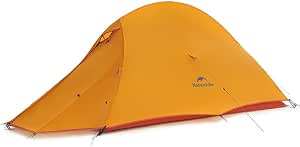 | Best Lightweight Complete Backpacking Package | Occupancy: 1 person | Season: 3 season | Weight: 3.66 lb | VIEW LATEST PRICE | See Our Full Breakdown |
| Naturehike Bleik-A 2–3 Person Waterproof Camping Tent |  | Best for Ventilated Two-Person Comfort | Occupancy: 2 people | Season: 3-season | Tent type: Freestanding dome | VIEW LATEST PRICE | See Our Full Breakdown |
| Naturehike Cloud-Up Base 2-Person Lightweight Backpacking Tent with Footprint |  | Best Value for a Protected Two-Person Setup | Occupancy: 2 people | Season: 3-season | Weight: 4.25 lb excluding footprint | VIEW LATEST PRICE | See Our Full Breakdown |
| Night Cat 1-Person Backpacking Tent, Lightweight Waterproof Dome Tent |  | Best Solo Pick for a Simple Freestanding Pitch | Occupancy: 1 person | Season: Listed as 4-season | Weight: 2 kg (4.4 lb) | VIEW LATEST PRICE | See Our Full Breakdown |
| Wakeman Outdoors 2-Person Camping Tent with Rain Fly and Carrying Bag |  | Best for Short, Fair-Weather Hiking Trips | Occupancy: 2 people | Season: Listed as 4-season; described for spring and summer | Weight: 3.3 lb | VIEW LATEST PRICE | See Our Full Breakdown |
| Night Cat Compact 1-Person Backpacking Tent with Clip Setup |  | Best for Fast Solo Campsite Setup | Occupancy: 1 person; can accommodate one additional child | Season: 3-season | Weight: 2 kg (4.4 lb) | VIEW LATEST PRICE | See Our Full Breakdown |
| camping tents for backpacking | Weight | Occupancy | Season | Packed size |
|---|---|---|---|---|
| BISINNA 2-Person Lightweight W | 4.7 lb listed; 6 lb minimum trail weight | — | Listed as 4-season; product details also describe 3-season use | 16.9 × 5.9 × 5.9 in |
| Naturehike Cloud Up 2-Person P | 3.97 lb; also listed as 4 lb | 2 people | 3-season | 15.7 × 5.1 × 5.1 in |
| OneTigris Tetra Ultralight Ten | 4 lb (1.8 kg) | 1–2 persons | 3-season | — |
| OneTigris Bastion 2-Person 3-S | 5.8 lb | 2 persons | 3-season | — |
| Underwood Aggregator 2-Person | 5.73 lb | 2 people | 4-season | 5.9 × 16.54 in |
| Camppal 1-Person 4-Season Wate | 3.75 lb | 1 person | — | — |
| TETON Sports Mountain Ultra 1- | — | 1 person | — | — |
| ALPS Mountaineering Zephyr 1-P | — | 1 person | — | — |
| Coleman Sundome 3-Person Campi | 9 lb | — | 3 season | — |
| Naturehike Cloud-Up 1-Person B | 3.66 lb | 1 person | 3 season | 15.3 × 5.1 × 5.1 in |
| Naturehike Bleik-A 2–3 Person | 5.2 lb (2.35 kg) | 2 people | 3-season | 16.9 × 6.7 × 6.7 in |
| Naturehike Cloud-Up Base 2-Per | 4.25 lb excluding footprint | 2 people | 3-season | 15.7 × 5.1 × 5.1 in |
| Night Cat 1-Person Backpacking | 2 kg (4.4 lb) | 1 person | Listed as 4-season | 42 × 12 × 12 cm |
| Wakeman Outdoors 2-Person Camp | 3.3 lb | 2 people | Listed as 4-season; described for spring and summer | — |
| Night Cat Compact 1-Person Bac | 2 kg (4.4 lb) | 1 person; can accommodate one additional child | 3-season | 16.5 × 4.7 × 4.7 in |
More Details on Our Top Picks
BISINNA 2-Person Lightweight Waterproof Backpacking Tent
The BISINNA is a practical pick for two backpackers who value separate doors and a freestanding pitch more than shaving every ounce. At 4.7 pounds listed weight, it is lighter than the OneTigris Bastion, though its minimum trail weight is listed as 6 pounds, so buyers should clarify what each figure includes before packing. Its 31.64-square-foot floor and 10-square-foot vestibule give two people room for basic gear, while mesh panels help airflow. The PU2000 mm rating is below the Naturehike Cloud Up’s PU3000 mm coating, making the Naturehike the stronger match for buyers prioritizing stated water resistance. One caution stands out: the product information calls this both a 3-season and a 4-season tent, so I would not choose it for severe winter conditions based on that label alone.
Pros:- Two doors make entry and exit easier for two occupants.
- Freestanding design can simplify pitching on varied campsites.
- Listed 4.7-pound weight and compact packed dimensions suit moderate backpacking loads.
- Mesh panels support airflow, and the rainfly has a PU2000 mm rating.
Cons:- Minimum trail weight is listed as 6 pounds, creating uncertainty about actual carried weight.
- Season information conflicts between 3-season and 4-season claims.
- PU2000 mm rating is lower than the Naturehike Cloud Up’s PU3000 mm rating.
Best for: Two backpackers who want a freestanding shelter with two doors and can accept a moderate pack weight.
Not ideal for: Ultralight hikers or winter campers who need a clearly specified season rating and stronger stated waterproofing.
- Capacity:2 people
- Season:Listed as 4-season; product details also describe 3-season use
- Weight:4.7 lb listed; 6 lb minimum trail weight
- Packed size:16.9 × 5.9 × 5.9 in
- Floor area:31.64 sq ft
- Vestibule area:10 sq ft
- Water resistance:PU2000 mm
- Doors:2
- Pole material:Aluminum
Our verdict“Choose the BISINNA if two-door access and a freestanding setup matter more than ultralight weight or a clearly defined season rating.”
Naturehike Cloud Up 2-Person PFAS-Free Backpacking Tent
For backpackers who want a light two-person shelter without leaving the footprint at home, the Cloud Up has a strong feature-to-load balance. Its listed weight is about 4 pounds, and the included footprint, PU3000 mm PFAS-free coating, taped seams, and extended vestibule cover several practical needs in one kit. Compared with the BISINNA, it has a higher stated waterproof rating and a smaller packed size, but gives up a second door. That single entrance can mean one occupant has to climb past the other, especially when gear fills the vestibule. The 20D nylon double-layer construction and ventilation window suit three-season trips, not winter use. I would also check the stated width before buying: product details give both 49.2 and 51.2 inches.
Pros:- About 4-pound listed weight and compact packed dimensions suit backpacking.
- Includes a footprint, reducing the need to source one separately.
- PFAS-free PU3000 mm coating and taped seams provide stated weather protection.
- Extended vestibule and ventilation window add useful storage and airflow.
Cons:- One door can make access awkward when two people share the tent.
- Product information gives conflicting interior widths of 49.2 and 51.2 inches.
- Three-season design is not intended as a dedicated winter shelter.
Best for: Two- person backpackers seeking a compact three-season tent with a footprint, covered gear storage, and PFAS-free coating.
Not ideal for: Partners who want independent entry and exit, or campers who need a confirmed interior width before purchase.
- Occupancy:2 people
- Season:3-season
- Weight:3.97 lb; also listed as 4 lb
- Packed size:15.7 × 5.1 × 5.1 in
- Material:20D nylon
- Coating:PFAS-free PU3000 mm
- Doors:1
- Pole material:7001 aluminum alloy
- Included footprint:Yes
Our verdict“Pick the Cloud Up for a light, well-equipped three-season setup if one shared entrance works for both occupants.”
OneTigris Tetra Ultralight Tent, Upgraded, 1-2 Person, Waterproof, 3-Season
The Tetra takes a different approach from the enclosed dome tents here: its pyramid-style layout can be used with an optional mesh inner for insect protection or opened up for a more exposed shelter. That flexibility appeals to solo hikers who want to adapt their camp setup, and the 4-pound listed weight is comparable to the Naturehike Cloud Up. But the Tetra’s dimensions describe a broad footprint rather than a conventional two-person interior, so I would treat its 1–2-person label as a tight fit for two, especially with packs. Its 3000 mm waterproof rating and ventilation system are appealing for three-season trips, yet the supplied details do not give a packed size or clarify how the inner wall is included. Buyers seeking a straightforward, complete two-person tent may find the Cloud Up easier to evaluate.
Pros:- Modular setup allows use with a mesh inner or as a more open teepee-style shelter.
- Listed 4-pound weight is suitable for many backpacking trips.
- 3000 mm waterproof rating and integrated ventilation address rain and condensation concerns.
- Two doors and two windows offer multiple access and airflow points.
Cons:- The 1–2-person occupancy claim may mean limited room for two people and their packs.
- Packed size is not provided in the supplied specifications.
- The details do not clarify whether the mesh inner is included.
Best for: Solo backpackers and bushcraft campers who value a configurable pyramid shelter and can verify what components come in the package.
Not ideal for: Two-person teams wanting a conventional enclosed tent with clearly stated packed dimensions and included components.
- Occupancy:1–2 persons
- Season:3-season
- Weight:4 lb (1.8 kg)
- Unfolded dimensions:7.8 × 7.2 × 5.2 ft
- Doors:2
- Windows:2
- Fabric:Nylon mesh base and nylon rainfly
- Pole material:Aluminum
Our verdict“Choose the Tetra for adaptable solo camping, but favor the Cloud Up if you need a more conventional two-person package with a listed packed size.”
OneTigris Bastion 2-Person 3-Season Camping Tent
The Bastion is the more substantial choice for backpackers who prefer a conventional freestanding tent with a durable-feeling fabric specification over a minimal carry weight. Its 75D polyester shell, taped seams, and 3000 mm water resistance give it a stronger stated weather-protection package than the BISINNA’s PU2000 mm fly. Two doors and arched side windows also make it easier for a pair to share than the single-door Naturehike Cloud Up. The tradeoff is pack burden: at 5.8 pounds and 22.8 inches long when packed, it is heavier and bulkier than the Cloud Up or Tetra. Its listed dimensions provide a modest two-person footprint, so I would not expect generous room for bulky gear inside. This makes more sense for short approaches or comfort-minded trips than mileage-focused backpacking.
Pros:- 75D polyester, taped seams, and 3000 mm water resistance provide a robust stated weather package.
- Two doors and side windows support shared access and ventilation.
- Freestanding structure offers flexibility when choosing a campsite.
- Includes poles, stakes, guy-lines, and a storage bag.
Cons:- At 5.8 pounds, it weighs more than the Naturehike Cloud Up and OneTigris Tetra.
- Packed length of 22.8 inches is comparatively bulky for backpacking.
- Two occupants may have limited room for gear inside the tent.
Best for: Two backpackers taking shorter routes who want a freestanding tent, two-door access, and a heavier-duty fabric specification.
Not ideal for: Long-distance hikers who prioritize a low pack weight or a compact packed length.
- Occupancy:2 persons
- Season:3-season
- Weight:5.8 lb
- Dimensions:86.6 × 50.4 × 41.7 in
- Packed dimensions:22.8 × 7 × 6.3 in
- Water resistance:3000 mm
- Material:75D polyester
- Doors:2
- Pole material:Aluminum
Our verdict“The Bastion suits comfort-minded pairs on shorter backpacking trips who accept extra weight for two doors and a sturdier fabric specification.”
Underwood Aggregator 2-Person 4-Season Backpacking Tent
The Underwood Aggregator is the only tent in this group with a specified snow skirt and 4-season design, making it the natural pick for backpackers who expect cold-weather trips as well as milder outings. Its PU5000 mm coating and full-coverage rainfly have a higher stated water-resistance rating than the BISINNA and the OneTigris Bastion. That protection comes with a clear carrying cost: at 5.73 pounds, it is a heavier choice than the roughly 4-pound Naturehike Cloud Up and Tetra. The single door and 59.1 × 86.6-inch floor also make the two-person rating feel better suited to close-sharing than roomy comfort. Interior storage and a lantern hook add convenience, but those details do not offset the access limits for partners with separate gear.
Pros:- Snow skirt and 4-season design suit trips where snow protection is a priority.
- PU5000 mm coating and full-coverage rainfly provide the highest stated water-resistance rating in this batch.
- Freestanding dome structure uses two aluminum poles.
- Interior pocket and lantern hook provide convenient small-item storage.
Cons:- Listed 5.73-pound weight is heavy compared with the Naturehike Cloud Up and OneTigris Tetra.
- Single door can restrict access for two occupants.
- Floor dimensions may leave limited space for two people and their gear.
Best for: Two-person backpackers who need a snow-skirted shelter for year-round trips and accept extra weight for weather-focused features.
Not ideal for: Ultralight hikers or pairs who want separate entrances and generous room for packs.
- Occupancy:2 people
- Season:4-season
- Weight:5.73 lb
- Floor size:59.1 × 86.6 in
- Center height:45.3 in
- Packed size:5.9 × 16.54 in
- Water resistance:PU5000 mm
- Doors:1
- Structure:Freestanding dome with aluminum poles
Our verdict“Choose the Underwood Aggregator for snow-oriented trips where its weather features matter more than a low pack weight or two-door access.”
Camppal 1-Person 4-Season Waterproof Camping Tent
The Camppal suits backpackers who put weather protection ahead of the lightest possible load. Its 3.75-pound weight is manageable for solo trips, while taped seams and a stated 3500–4000 mm water resistance make it a more rain-focused choice than the ALPS Mountaineering Zephyr, whose rainfly is rated at 1500 mm. A single-pole structure is intended to simplify pitching, and the 8.2-foot inner length gives taller sleepers more room to stretch out. That length does not make this a roomy shared shelter: it has one occupant’s capacity, one door, and a narrow 2.95-foot inner width. Compared with the Naturehike Cloud-Up, it has stronger stated water resistance but weighs a little more. Choose it for a solo itinerary where rain readiness matters more than extra access or space.
Pros:- 3.75-pound listed weight is practical for many solo backpacking trips.
- 3500–4000 mm stated water resistance and taped seams suit rainy conditions.
- 8.2-foot inner length offers extra room for taller sleepers.
- Single-pole structure is designed for a quick, straightforward setup.
Cons:- One-person capacity and a 2.95-foot inner width leave little room to spread out.
- One door limits access and makes getting in or out less flexible.
- At 3.75 pounds, it is heavier than the Naturehike Cloud-Up 1 listed at 3.66 pounds.
Best for: Solo backpackers who expect wet, windy conditions and want a long sleeping area with a simple pole structure.
Not ideal for: Hikers counting every ounce, people who need a two-person shelter, or anyone who wants multiple doors for easier access.
- Occupancy:1 person
- Inner dimensions:8.2 ft L × 2.95 ft W × 2.95 ft H
- Outer dimensions:8.2 ft L × 4.26 ft W × 3.11 ft H
- Weight:3.75 lb
- Water resistance:3500–4000 mm
- Materials:Polyester fabric; aluminum poles and stakes
- Setup:Single-pole structure
- Doors and pockets:1 door; 2 pockets
Our verdict“Pick the Camppal for solo backpacking in rain-prone conditions if its extra water resistance matters more to you than a lighter carry or a second door.”
TETON Sports Mountain Ultra 1-Person Backpacking Tent
The TETON Mountain Ultra is a good fit for solo hikers who want a freestanding tent with airflow rather than a highly weather-specialized shelter. Its mesh interior, mesh top, and stated 360-degree ventilation help manage stuffiness in milder conditions, while the rainfly has a waterproof coating and heat-sealed seams. The two-pole, clip-attached design also offers more conventional freestanding setup than the Camppal’s single-pole structure. There is a significant weight detail to check: the listing gives an item weight of 4.7 pounds but a minimum trail weight of 8.7 pounds, so the included carry setup may be a poor match for strict ounce-counting. The footprint is sold separately, unlike the Naturehike Cloud-Up’s included footprint. Pick this model for ventilation and a lifetime limited warranty, not for the leanest pack.
Pros:- Mesh interior and stated 360-degree ventilation support airflow.
- Freestanding dome design uses two clip-attached poles.
- Rainfly has a waterproof coating and heat-sealed seams.
- Includes poles, stakes, rainfly, and carry bag.
Cons:- The listed minimum trail weight of 8.7 pounds is high for a solo backpacking tent.
- Footprint is sold separately, unlike the Naturehike Cloud-Up 1.
- One door and one-person capacity restrict access and gear space.
Best for: Solo backpackers who value a freestanding pitch, mesh ventilation, and a lifetime limited warranty for three-season trips.
Not ideal for: Weight-conscious hikers who need a clearly lighter packed setup, or buyers who want a footprint included.
- Occupancy:1 person
- Dimensions:80 × 30 × 41 in
- Item weight:4.7 lb
- Minimum trail weight:8.7 lb
- Floor area:2,400 sq in
- Weather protection:Waterproof coating and heat-sealed seams
- Poles and doors:2 poles; 1 door
- Warranty:Lifetime limited warranty
Our verdict“Choose the TETON Mountain Ultra if you prioritize freestanding convenience and ventilation over a light, complete trail load.”
ALPS Mountaineering Zephyr 1-Person Tent
The Zephyr puts livable space and easy access ahead of maximum rain protection. Its 23-square-foot floor, pre-bent poles, and steepened walls give a solo backpacker more usable interior room than the TETON Mountain Ultra’s listed 2,400-square-inch floor. Two doors and two vestibules are an unusual convenience in this lineup: they make it easier to reach gear and provide covered storage without crowding the sleeping area. The tradeoff is weather margin. Its rainfly is rated at 1500 mm, below the Camppal’s stated 3500–4000 mm and the Naturehike Cloud-Up’s 3000 mm+, so I would favor the Zephyr for warmer, milder three-season trips rather than sustained heavy rain. The 4.7-pound item weight also exceeds the Naturehike’s 3.66 pounds, though its minimum trail weight is listed as 3.3 pounds.
Pros:- 23-square-foot floor provides more stated area than the TETON Mountain Ultra.
- Two doors and two vestibules improve access and separate gear storage.
- Pre-bent aluminum poles create steeper walls and added headroom.
- Mesh walls and freestanding clip setup suit warm-weather pitching.
Cons:- 1500 mm rainfly rating is lower than the Camppal and Naturehike Cloud-Up ratings.
- At 4.7 pounds listed item weight, it is heavier than the Naturehike Cloud-Up 1.
- Ventilated mesh construction is less suited to cold conditions.
Best for: Solo backpackers on warm three-season routes who want more interior room, two access points, and covered gear storage.
Not ideal for: Hikers expecting sustained heavy rain, cold-weather trips, or anyone choosing a tent solely for low listed item weight.
- Occupancy:1 person
- Dimensions:86 × 44 × 36 in
- Floor area:23 sq ft
- Item weight:4.7 lb
- Minimum trail weight:3.3 lb
- Rainfly:75D 185T polyester; 1500 mm coating
- Doors and vestibules:2 doors; 2 vestibules
- Setup:Freestanding; clip pole attachment
Our verdict“Choose the Zephyr for warm-weather solo trips where two doors and usable interior space matter more than a higher rain rating or lower item weight.”
Coleman Sundome 3-Person Camping Tent with Rainfly
The Sundome is the roomiest option here, but its 9-pound weight makes it a weak fit for a roundup centered on backpacking. Its 49-square-foot floor is designed to fit a queen-size airbed, a very different priority from the solo tents’ compact sleeping footprints. Setup is pitched as a roughly 10-minute process, and welded corners, inverted seams, large windows, and a ground vent make sense for campground trips where car access removes the need to carry the shelter far. Compared with the Naturehike Cloud-Up 1 at 3.66 pounds, the Sundome weighs more than twice as much while serving three occupants. Its water protection is described as water resistant, not waterproof, so I would not choose it for a remote hike with sustained rain exposure. This is the group-trip pick when comfort and capacity outrank trail weight.
Pros:- 49-square-foot floor offers substantially more space than the solo tents in this lineup.
- Designed to fit a queen-size airbed for campground comfort.
- Welded corners and inverted seams support rain protection.
- Large windows and a ground vent promote airflow.
Cons:- At 9 pounds, it is much heavier than the Naturehike Cloud-Up 1 and poorly suited to long carries.
- Protection is described as water resistant rather than waterproof.
- One door offers less access flexibility than the ALPS Zephyr’s two doors.
Best for: Car campers or short-walk-in groups who need room for up to three people and prefer a large floor over a low carry weight.
Not ideal for: Backpackers covering long distances, or hikers who need a shelter described as waterproof for prolonged wet conditions.
- Capacity:3 people
- Season:3 season
- Floor dimensions:10 × 7 ft
- Floor area:49 sq ft
- Weight:9 lb
- Maximum height:23.81 in
- Water protection:Water resistant; WeatherTec system
- Setup and doors:Freestanding; about 10 minutes; 1 door
Our verdict“Choose the Sundome for car camping or short approaches with a group, not for a backpacking route where every pound has to be carried.”
Naturehike Cloud-Up 1-Person Backpacking Tent
The Cloud-Up is the strongest all-around match here for backpackers who want a light, compact solo shelter with key setup accessories included. At 3.66 pounds, it is slightly lighter than the Camppal, and its packed size of 15.3 × 5.1 × 5.1 inches gives hikers a clear storage reference. The double-layer design pairs a 3000 mm+ polyester rainfly with a B3 mesh inner, balancing weather coverage and airflow for three-season use. An included footprint, stakes, and guylines also make its package more trail-ready than the TETON Mountain Ultra, whose footprint is sold separately. The tradeoff is a single door and one-person layout: its 20.34-square-foot inner area is practical for one sleeper, but there is little room for a partner. Compared with the Camppal, it gives up some stated water resistance for a lighter carry.
Pros:- 3.66-pound weight is the lightest listed item weight among the solo models in this batch.
- 3000 mm+ rainfly and double-layer mesh design balance weather protection with airflow.
- Footprint, poles, stakes, guylines, and carry bag are included.
- Compact packed size and freestanding design suit backpacking setup.
Cons:- One-person capacity and one door limit space and access.
- Its stated 3000 mm+ water resistance is below the Camppal’s 3500–4000 mm range.
- The 20.34-square-foot inner area leaves limited room for bulky gear.
Best for: Solo three-season backpackers who want a light, compact freestanding tent with a footprint and basic setup accessories included.
Not ideal for: Two-person trips, hikers who want multiple doors, or buyers seeking the highest stated water resistance among these solo options.
- Occupancy:1 person
- Season:3 season
- Weight:3.66 lb
- Packed size:15.3 × 5.1 × 5.1 in
- Inner tent area:20.34 sq ft
- Water resistance:3000 mm+
- Materials:210T polyester rainfly; B3 mesh inner; aluminum alloy poles
- Included accessories:Footprint, carry bag, poles, wind ropes, strap, and stakes
Our verdict“Pick the Cloud-Up for solo three-season backpacking if low weight and an included footprint matter more than a second door or the Camppal’s higher stated water resistance.”
Naturehike Bleik-A 2–3 Person Waterproof Camping Tent
The Bleik-A makes the most sense for backpackers who value room to move and airflow more than a minimal pack. Two doors and two windows make it easier for paired campers to enter and ventilate the tent without climbing over each other; its mesh inner walls also help on warm, damp nights. The 5.2-pound weight is heavier than the 4.25-pound Naturehike Cloud-Up Base, but the Bleik-A offers a wider listed interior and more openings. Its aluminum poles and PU 3000 mm coatings add practical weather protection, though the product data lists capacity as two people despite the 2–3-person title. I’d choose it for shorter, comfort-focused backpacking trips, not for a mileage-heavy route where every pound matters. Hand-wash care is another small inconvenience.
Pros:- Two doors and two windows support convenient access and cross-ventilation
- Roomy listed dimensions give two campers more elbow room than narrower options
- 7001-series aluminum poles balance support with packable construction
- PU 3000 mm ratings are specified for both rainfly and floor
Cons:- At 5.2 pounds, it is relatively heavy for a backpacking tent
- Capacity is listed as two people despite the 2–3-person title
- Hand-wash care is less convenient than routine machine-washable gear
Best for: Two backpackers on shorter trips who prioritize separate entry points, ventilation, and a roomy-feeling shelter over the lightest possible load
Not ideal for: Solo hikers or long-distance backpackers seeking a low pack weight; at 5.2 pounds, it is heavier than the Cloud-Up Base, and its listed capacity is only two people
- Occupancy:2 people
- Season:3-season
- Tent type:Freestanding dome
- Weight:5.2 lb (2.35 kg)
- Packed size:16.9 × 6.7 × 6.7 in
- Dimensions:94.5 × 90.6 × 49.2 in
- Rainfly and floor:Ripstop polyester rainfly and 150D ripstop Oxford floor; both PU 3000 mm
- Doors and windows:2 doors; 2 windows
- Poles:7001-series aluminum alloy
Our verdict“Choose the Bleik-A for two-person trips where ventilation and interior comfort matter more than shaving weight from your pack.”
Naturehike Cloud-Up Base 2-Person Lightweight Backpacking Tent with Footprint
The Cloud-Up Base is the most complete two-person backpacking package here: it includes a footprint, rainfly, and freestanding frame, so buyers do not need to source a separate groundsheet. At 4.25 pounds excluding the footprint, it is lighter than the roomier Naturehike Bleik-A, and its compact packed size suits a shared load. The tradeoff is a single door and 49.2-inch width, which can make access and gear storage feel tight for two adults. Product details also conflict on fabric and waterproof ratings: one listing says 210T polyester and 3000 mm+, while another gives 20D nylon and 4000 mm. I’d treat those figures as unconfirmed rather than choosing it on the higher rating. It suits paired hikers wanting an accessory-rich setup, but not those who need generous space or clear spec certainty.
Pros:- Footprint is included, adding ground protection without a separate purchase
- Freestanding design with 7001 aluminum poles simplifies pitching
- Compact packed size and 4.25-pound listed weight suit backpacking
- Mesh inner tent and ventilation window support airflow
Cons:- Single door can make entry and exit awkward for two occupants
- 49.2-inch listed width leaves limited space for two campers and their gear
- Product data conflicts on fabric type and waterproof rating
Best for: Two backpackers who want a freestanding tent with a footprint included and are willing to share a narrow interior
Not ideal for: Campers who need two doors, abundant interior width, or consistent material and waterproof-rating details before buying
- Occupancy:2 people
- Season:3-season
- Weight:4.25 lb excluding footprint
- Packed size:15.7 × 5.1 × 5.1 in
- Tent dimensions:82.7 × 49.2 × 41.3 in
- Pole material:7001 aluminum alloy
- Doors and vestibules:1 door; 1 vestibule
- Waterproofing listed:3000 mm+ in feature text; 4000 mm in product description
- Included accessory:Footprint
Our verdict“Pick the Cloud-Up Base if an included footprint and compact two-person package matter more than interior space or fully consistent specifications.”
Night Cat 1-Person Backpacking Tent, Lightweight Waterproof Dome Tent
For a solo backpacker who wants a straightforward shelter, this Night Cat pairs a freestanding dome shape with a compact packed size and a rainfly rated to 3000 mm. The mesh door and roof window provide ventilation, while the listed dimensions allow room for one person and some gear. At 4.4 pounds, it is not an ultralight choice; the Naturehike Cloud-Up Base is listed at 4.25 pounds while accommodating two, though its narrower interior and conflicting material details make it a different kind of compromise. This Night Cat’s fiberglass poles require manual sleeve insertion, so setup is less clip-based than the Night Cat Compact. The listing calls it four-season, but the supplied details do not establish the kind of cold-weather structure many winter backpackers need. I’d view it as a solo tent for general trips, not a storm-focused alpine shelter.
Pros:- Freestanding dome design can be pitched without relying on a fixed site layout
- Rainfly is rated to 3000 mm water resistance
- Mesh door and roof window provide ventilation
- Compact packed size fits more easily alongside other backpacking gear
Cons:- At 4.4 pounds, it is heavy for a one-person backpacking shelter
- Fiberglass poles must be manually threaded through sleeves
- Four-season designation is not matched by detailed cold-weather performance information
Best for: Solo hikers who want a compact, freestanding tent with a specified rainfly rating and room for personal gear
Not ideal for: Ultralight backpackers or winter campers who need a lighter shelter or clearly documented cold-weather protection
- Occupancy:1 person
- Season:Listed as 4-season
- Weight:2 kg (4.4 lb)
- Packed size:42 × 12 × 12 cm
- Dimensions:2.2 × 1.2 × 1.2 m
- Water resistance:3000 mm
- Body and rainfly:190T nylon body; polyester rainfly
- Pole material:Fiberglass
- Warranty:2 years
Our verdict“Choose this Night Cat for solo trips where a compact freestanding pitch matters more than ultralight weight or proven winter performance.”
Wakeman Outdoors 2-Person Camping Tent with Rain Fly and Carrying Bag
The Wakeman stands out mainly for its low listed weight of 3.3 pounds and simple dome format, making it the lightest option in this batch on paper. That can appeal to hikers taking brief spring or summer trips who want a basic shelter with a rain fly and carrying bag. Its 77 × 57-inch tent dimensions are compact for two, however, and the product only specifies water resistance rather than a measurable hydrostatic rating. The listing calls it four-season but describes spring-and-summer use, so I would not treat that season label as evidence of winter readiness. Compared with the more fully specified Naturehike Bleik-A, the Wakeman gives up aluminum poles, dual-door access, and defined waterproof ratings. Its fiberglass frame and dry-clean-only care also make it a less convincing choice for frequent, wet-weather backpacking.
Pros:- Listed weight of 3.3 pounds is low among the tents in this batch
- Rain fly is included for added weather coverage
- Ventilation window supports airflow in mild conditions
- Tent, fiberglass poles, and carrying bag are included
Cons:- Water resistance is stated without a numerical rating
- Spring-and-summer description conflicts with the listed four-season label
- Compact dimensions may feel cramped for two occupants and their gear
- Dry-clean-only care is inconvenient for a tent used outdoors
Best for: Occasional fair-weather hikers who want a basic two-person dome with a rain fly and a low listed carry weight
Not ideal for: Backpackers planning exposed, wet, or cold trips, or two adults who need generous sleeping and gear space
- Occupancy:2 people
- Season:Listed as 4-season; described for spring and summer
- Weight:3.3 lb
- Tent dimensions:77 × 57 × 40 in
- Floor dimensions:76 × 60 in
- Floor area:30.08 sq ft
- Materials:Nylon, polyester, fiberglass
- Rainfly:190T polyester
- Care instructions:Dry clean only
Our verdict“Consider the Wakeman for short fair-weather outings, but choose a better-documented shelter for demanding backpacking conditions.”
Night Cat Compact 1-Person Backpacking Tent with Clip Setup
The Night Cat Compact is the most setup-focused solo shelter in this group. Its clip-on pole attachment avoids threading poles through sleeves, while a mesh door, roof window, and small vestibule give a solo camper practical airflow and a place for shoes or compact gear. The taped seams and PU 3000 coating provide clearer rain-protection details than the Wakeman’s general water-resistant claim. At 4.4 pounds, though, it is no lighter than the other Night Cat solo tent, and its fiberglass poles are a compromise against the 7001 aluminum poles in the Naturehike Cloud-Up Base. The listed 26.6-square-foot floor area sounds generous, but the tent is best suited to one adult; an additional child would leave little room for gear. Choose it for quick pitching, not the lowest pack weight.
Pros:- Clip attachment makes pole setup more direct than sleeve-threaded designs
- Taped seams and PU 3000 coating provide defined rain-protection features
- Vestibule offers a place for shoes or small gear outside the sleeping area
- Mesh door and roof window support ventilation while limiting insect entry
Cons:- At 4.4 pounds, it is not especially light for a one-person backpacking tent
- Fiberglass poles may be less durable than the aluminum poles on the Cloud-Up Base
- Space for a second occupant is limited to a child and leaves less room for gear
Best for: Solo backpackers who value a quick clip-on pitch, a small vestibule, and specified seam and coating protection
Not ideal for: Two adults, ultralight hikers, or campers seeking metal poles for a more durable frame
- Occupancy:1 person; can accommodate one additional child
- Season:3-season
- Weight:2 kg (4.4 lb)
- Packed size:16.5 × 4.7 × 4.7 in
- Dimensions:83 × 45 × 45 in
- Floor area:26.6 sq ft
- Water resistance:PU 3000 coating with taped seams
- Pole material:Fiberglass
- Vestibules:1
Our verdict“Choose the Night Cat Compact if quick solo setup and a small vestibule matter more than reducing weight or carrying a metal-pole frame.”
How We Picked
I compared the 15 listed tents through a backpacking lens: the likely carry burden, sleeping capacity, weather protection, setup practicality, and how well each model’s stated purpose matches nights on the trail. I gave more weight to a useful balance of portability and shelter than to a single headline claim, since a very light tent can still be a poor fit if it is cramped or mismatched to the weather. I also considered whether the product is presented as a backpacking tent, a general camping tent, or a specialized seasonal shelter.
The order favors options that appear to serve common backpacking needs without pushing buyers into a narrow use case. Two-person backpacking models rank highly when they balance shared space with portability; solo tents make more sense for hikers who prioritize a smaller carry. Four-season and larger-capacity designs can be better for specific conditions, but their added specialization makes them less universal. General camping models rank lower for backpacking because their intended use does not make them an obvious choice for carrying over distance.
Factors to Consider When Choosing Camping Tents For Backpacking
I’d choose a backpacking tent by matching it to the route and sleeping setup first, then comparing weight and features. The following tradeoffs can prevent a common mismatch: buying by capacity label alone, treating a season rating as a guarantee, or carrying a roomy shelter that does not suit the trip.
Match Tent Capacity to Your Real Sleeping Setup
A tent’s person rating describes intended occupancy, not how spacious it will feel with every sleeping kit. Two people with wide pads, bulky bags, or a dog may find a nominal two-person tent cramped, while a solo hiker may prefer the extra room of one. Check interior dimensions and floor shape against your pads rather than relying on the capacity label. Also think about where wet footwear and packs will go; a vestibule can matter more than extra floor area. Choosing more room can improve comfort, but it often means carrying more shelter. For long routes, decide whether that comfort is worth the added load every day.
Judge Weight as a Complete Carry, Not a Headline
Published tent weight may describe the minimum shelter components rather than everything you will pack. Poles, stakes, footprint, repair items, and the stuff sack can change the carried total, so compare like with like. An included footprint may save you from buying or packing a separate ground layer, but it still has weight. Splitting a two-person tent between partners can make it more practical than carrying the whole package alone. Conversely, a solo tent’s compact carry may be worth tighter living space when every ounce matters. Decide whether you are comparing minimum trail weight, packed weight, or the full kit before ranking options.
Choose Weather Protection for the Conditions You Face
Waterproof language alone does not tell you how a tent will perform through sustained rain, wind, or condensation. Look for clear information about the rainfly, floor protection, seams, and how the shelter is pitched. A four-season label suggests a more specialized design, not a promise that the tent suits every winter route or severe storm. For warm, wet trips, ventilation and airflow can be as important as rain coverage because trapped moisture can leave sleeping gear damp. For exposed or cold routes, pole structure and secure anchoring deserve attention. Match the shelter to the expected conditions rather than choosing the most extreme-sounding label.
Factor Setup Time and Pitching Constraints Into the Choice
A tent that is awkward to pitch can become a poor companion when you arrive tired, in wind, or after dark. Check whether the shelter requires particular staking, a flat site, or room to spread out its components. Practice the setup at home before relying on an unfamiliar design in remote conditions. A compact footprint may be easier to place on crowded or uneven campsites, but it can leave less space for gear. Freestanding designs can offer flexibility on hard ground, while other setups may depend more on suitable anchor points. The right balance depends on the terrain and the amount of time you want to spend pitching camp.
Pay for Features That Solve a Repeat Problem
Extra space, a footprint, lighter materials, or more weather-focused construction can be worthwhile when they address a need you face often. They are less useful when they add bulk for a feature your routes rarely require. Before paying for a specialized shelter, consider whether the same trip would be better served by adjusting your sleep system or carrying a separate groundsheet. A lighter tent can make repeated climbs more comfortable, while a roomier one may suit shorter approaches or shared trips. Beginners may benefit more from straightforward pitching and a forgiving interior than from advanced specifications. Prioritize the benefit you will notice on every trip, not the longest feature list.
Treat Materials and Care as Part of Long-Term Value
Lightweight fabrics and coatings can help reduce carry weight, but they still need careful handling and dry storage. Clear leaves and grit from the pitch site, use a footprint when appropriate, and avoid storing a damp tent for long periods. Check the manufacturer’s care guidance instead of assuming every coating or fabric can be cleaned the same way. A damaged pole or small tear can interrupt a trip, so consider whether repair supplies and replacement parts are available. PFAS-free material claims may matter to buyers who prioritize those materials, but they do not replace checking fit, weather protection, and construction. A shelter’s value depends on whether it fits your trips and remains serviceable, not only on its initial feature set.
Frequently Asked Questions
Should I choose a one-person tent or a two-person tent for solo backpacking?
I’d choose a one-person tent when a smaller carry and compact pitch matter more than room for gear. A two-person model can be more comfortable if you want space to change clothes, store equipment inside, or bring a dog, but that extra space usually comes with more to carry. Compare interior dimensions with your sleeping pad and sleeping bag rather than assuming the capacity label tells the whole story. If you expect to share the tent later, the two-person option may earn its extra weight through versatility. For frequent solo trips with long daily distances, the smaller shelter is often the more practical match.
Is a four-season backpacking tent necessary for shoulder-season trips?
Not automatically. The right choice depends on the expected temperatures, wind exposure, snowfall, and the shelter’s specific design, not the label by itself. A four-season tent may add protection for harsher conditions, but it can be less comfortable in mild weather if ventilation is limited. For many shoulder-season routes, a well-pitched three-season shelter may suit the forecast and terrain better. Check the manufacturer’s conditions guidance and plan for the worst weather you reasonably expect on the route. Avoid treating a season rating as a substitute for sound trip planning.
Can I use a general camping tent for backpacking?
You can carry one, but the question is whether its packed size and full kit suit your route. General camping tents such as the Coleman Sundome or Wakeman Outdoors model are not as clearly positioned for backpacking as the tents in this list that specifically target trail use. For a short walk to a campsite, that distinction may matter little; over repeated miles, extra bulk becomes more noticeable. Compare the packed dimensions and complete carried weight, including poles and rainfly, before deciding. If the route is demanding, a backpacking-focused model is the safer starting point.
Does an included footprint make a tent a better backpacking choice?
An included footprint can simplify packing and provide a ground layer sized for the tent, which is convenient if you would otherwise bring one. It does not automatically make the shelter lighter or more durable, since the footprint adds to the kit you carry. Compare the weight of the tent with all included components, not only the shelter body. On rough ground, a footprint may help protect the floor, but careful site selection still matters. If you rarely camp on abrasive surfaces, carrying an extra layer may not be worth it for your trips.
How should I compare two tents when the product listings do not provide the same specifications?
I would avoid treating missing information as proof that a tent performs as well as a model with clear specifications. Look for comparable details such as full packed weight, interior dimensions, rainfly coverage, included stakes, and setup instructions. If a key figure is unavailable, consult the manufacturer’s documentation before making the choice. Also compare the intended use: a shelter described for general camping may not be a fair match for one designed around backpacking. When important details remain unclear, favor the option whose fit and included components are easier to verify.
Conclusion
For a broadly useful starting point, I’d choose the Naturehike Cloud Up 2-Person PFAS-Free as the best overall because it combines a backpacking-focused format with room for two and a distinct PFAS-free material claim. The best value depends on the exact specifications and included kit you confirm; among this lineup, compare the simpler Naturehike Cloud-Up models before paying for extras you will not use. For the best premium-style or specialized choice, consider the Underwood Aggregator if your trips call for a four-season shelter, while recognizing that specialization is not a universal advantage. Beginners should prioritize a manageable pitch and suitable capacity, making a straightforward backpacking model a better first choice than a tent selected only for a season label. Solo hikers should compare the Naturehike Cloud-Up 1-Person with the TETON Sports, ALPS Mountaineering, and Night Cat options by full packed weight and interior fit; choose the Camppal for a solo four-season use case, and look at the OneTigris Tetra or Naturehike Bleik-A when their specific capacity and trip needs fit. I’d reserve the Coleman Sundome and Wakeman Outdoors tents for buyers whose camping plans involve little carrying rather than long backpacking mileage.
Black Friday Picks

Kindle Paperwhite (12th Generation, 2024), 16 GB, 7-inch Display, Black
As an affiliate, we earn on qualifying purchases.