

For Black Friday travel cameras, my best overall pick is the Panasonic LUMIX ZS99, whose 30x optical zoom gives travelers more framing range without changing lenses. The Canon PowerShot G7 X Mark III is a stronger fit for buyers prioritizing a bright lens and creator-friendly video, while the Canon PowerShot SX720 HS is a compact alternative built around versatile zoom. The central tradeoff is reach and flexibility versus pocket size, video features, and ease of use. Bundles and low-cost compact models may add useful accessories, but their headline megapixel figures do not tell the whole image-quality story. Read on for the full comparison and guidance on choosing a camera that suits your trip.

Get travel and outdoor gear delivered free with Prime
- Fast, free delivery on millions of items
- Prime Video, Amazon Music and more included
- Member-only deals all year
Complete the kit


Key Takeaways
- The Panasonic LUMIX ZS99 leads for travel reach: its 30x optical zoom offers more genuine framing flexibility than the digital zoom promoted by several budget models.
- The Canon PowerShot G7 X Mark III is the creator-focused alternative: it prioritizes video and a bright lens over the ZS99’s long zoom range; the bundle version adds accessories, not a different camera.
- The Canon PowerShot SX720 HS and Panasonic LUMIX FZ80D serve different zoom buyers: the SX720 HS is the more compact travel-minded choice, while the FZ80D favors extensive reach in a larger body.
- Several Kodak PIXPRO FZ55 listings are near-duplicates: compare the included card, case, and other accessories rather than expecting a meaningful camera difference between listings.
- Flip-screen vlogging models solve a different problem from travel zoom cameras: the Canon V10, Sony ZV-1F, and Canon V1 suit self-recording and video workflows better than buyers seeking one camera for distant subjects.
| Canon PowerShot SX720 HS |  | Best for Long-Range Zoom on a Budget | Sensor: 20.3MP 1/2.3-inch CMOS | Optical Zoom: 40x (24-960mm equivalent) | Video Resolution: 1080p Full HD at 60p | VIEW LATEST PRICE | See Our Full Breakdown |
| Canon PowerShot V1 |  | Best for Video-First Travelers | Sensor: 22.3MP 1.4-type CMOS | Lens: 16-50mm f/2.8-4.5 (35mm eq.) | Video Resolution: 4K UHD | VIEW LATEST PRICE | See Our Full Breakdown |
| Canon PowerShot G7 X Mark III (Bundle) |  | Best All-Round Hybrid for Travel | Sensor: 20.2MP 1-inch Stacked CMOS | Lens: 24-100mm f/1.8-2.8 (35mm eq.) | Video Resolution: 4K UHD 30p, Full HD 120p | VIEW LATEST PRICE | See Our Full Breakdown |
| Panasonic LUMIX FZ80D |  | Best Bridge Camera for Versatility | Sensor: 18.1MP 1/2.3-inch MOS | Lens: 20-1200mm equivalent zoom | Video Resolution: 4K UHD | VIEW LATEST PRICE | See Our Full Breakdown |
| KODAK PIXPRO FZ45 |  | Best Entry-Level Travel Camera | Sensor: 16MP 1/2.3-inch CMOS | Optical Zoom: 4x (27-108mm equivalent) | Video Resolution: 1080p Full HD | VIEW LATEST PRICE | See Our Full Breakdown |
| Kodak PIXPRO FZ55 Black 16MP Digital Camera 5X Optical Zoom 28mm Wide Angle 1080P Full HD Video 2.7″ LCD Camera + 64GB Card and Reader + Case + Memory Wallet + Tripod + Cleaning Bundle |  | Best Bundle for Simple Trips | Photo resolution: 16 MP | Sensor: 1/2.3-inch CMOS | Lens: 28mm wide angle | VIEW LATEST PRICE | See Our Full Breakdown |
| 64MP 4K Digital Camera with Wi-Fi, 180° Flip Screen and 16× Digital Zoom |  | Best for Social Sharing | Photo resolution: 64 MP | Video resolution: 4K UHD (2160p) at 30 fps | Sensor: 1/3.2-inch CMOS | VIEW LATEST PRICE | See Our Full Breakdown |
| Panasonic LUMIX ZS99 Compact Travel Camera with 30x Optical Zoom, 4K Video and Photo, Black |  | Best for Long-Reach Travel Photos | Lens: 24–720mm LEICA DC | Optical zoom: 30× | Sensor: 20.3 MP, 1/2.3-inch BSI CMOS | VIEW LATEST PRICE | See Our Full Breakdown |
| Duluvulu 4K Digital Camera, 48MP with Autofocus, 180° Flip Screen, 16x Digital Zoom, SD Card and Two Batteries, Black |  | Best Starter Camera for Vlogging Features | Photo resolution: 48 MP | Video resolution: 4K (4096 × 2160) | Sensor: 1/3-inch CMOS | VIEW LATEST PRICE | See Our Full Breakdown |
| Canon PowerShot G7 X Mark III Digital Camera, Black |  | Best Premium Compact for Video and Low Light | Sensor: 20.1 MP, 1-inch stacked CMOS | Image processor: DIGIC 8 | Lens: 4.2× optical zoom, 24–100mm equivalent | VIEW LATEST PRICE | See Our Full Breakdown |
| 4K Digital Camera with Wi-Fi, 64MP Autofocus, Flip Screen, and 32GB Card |  | Best Value Kit for Casual Vlogging | Photo resolution: 64 MP | Video: 4K UHD 2160p | Sensor: CMOS, 1/4-inch | VIEW LATEST PRICE | See Our Full Breakdown |
| KODAK PIXPRO FZ55 16MP Digital Camera with 5x Optical Zoom, 1080p Video, 32GB SD Card and Case |  | Best Ready-to-Pack Point-and-Shoot | Sensor: 16MP CMOS, 1/2.3-inch | Optical zoom: 5× | Lens range: 28–140mm equivalent | VIEW LATEST PRICE | See Our Full Breakdown |
| Kodak PIXPRO FZ55 16MP Compact Digital Camera, 5x Optical Zoom, Black | 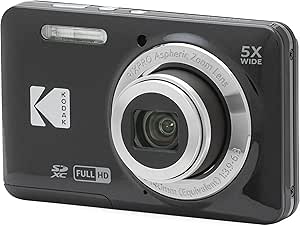 | Best Lightweight Travel Basic | Sensor: 16MP CMOS, 1/2.3-inch | Optical zoom: 5× | Lens: 28mm wide angle | VIEW LATEST PRICE | See Our Full Breakdown |
| Canon PowerShot V10 Compact Vlogging Camera |  | Best for Hands-Free Travel Vlogging | Sensor: 15.2 MP, 1-inch back-illuminated CMOS | Lens: Fixed 19mm wide-angle (35mm equivalent) | Video: 8-bit 4K up to 30 fps; Full HD up to 60 fps | VIEW LATEST PRICE | See Our Full Breakdown |
| Sony ZV-1F Compact Digital Vlogging Camera, 4K, Black |  | Best Premium Compact for Travel Creators | Sensor: 1-inch CMOS | Still resolution: 21 MP effective | Lens: 20mm wide-angle, F2 | VIEW LATEST PRICE | See Our Full Breakdown |
| Black Friday travel camera | Sensor | Display | Lens | Video |
|---|---|---|---|---|
| Canon PowerShot SX720 HS | 20.3MP 1/2.3-inch CMOS | 3.0-inch LCD (922k dots) | — | — |
| Canon PowerShot V1 | 22.3MP 1.4-type CMOS | 3-inch articulating touchscreen | 16-50mm f/2.8-4.5 (35mm eq.) | — |
| Canon PowerShot G7 X Mark III | 20.2MP 1-inch Stacked CMOS | 3.0-inch tilting touchscreen | 24-100mm f/1.8-2.8 (35mm eq.) | — |
| Panasonic LUMIX FZ80D | 18.1MP 1/2.3-inch MOS | 3.0-inch fixed LCD | 20-1200mm equivalent zoom | — |
| KODAK PIXPRO FZ45 | 16MP 1/2.3-inch CMOS | 2.7-inch fixed LCD | — | — |
| Kodak PIXPRO FZ55 Black 16MP D | 1/2.3-inch CMOS | 2.7-inch LCD | 28mm wide angle | 1080p Full HD at 30 fps |
| 64MP 4K Digital Camera with Wi | 1/3.2-inch CMOS | — | — | — |
| Panasonic LUMIX ZS99 Compact T | 20.3 MP, 1/2.3-inch BSI CMOS | 3-inch tilting touchscreen, 1,840k-dot | 24–720mm LEICA DC | 4K and 1080p |
| Duluvulu 4K Digital Camera | 1/3-inch CMOS | — | — | — |
| Canon PowerShot G7 X Mark III | 20.1 MP, 1-inch stacked CMOS | — | 4.2× optical zoom, 24–100mm equivalent | 4K up to 30 fps; Full HD up to 120 fps |
| 4K Digital Camera with Wi-Fi | CMOS, 1/4-inch | — | — | 4K UHD 2160p |
| KODAK PIXPRO FZ55 16MP Digital | 16MP CMOS, 1/2.3-inch | 2.7-inch fixed LCD | — | 1920 × 1080 (1080p), MP4 |
| Kodak PIXPRO FZ55 16MP Compact | 16MP CMOS, 1/2.3-inch | 2.7-inch fixed LCD | 28mm wide angle | 1080p Full HD |
| Canon PowerShot V10 Compact Vl | 15.2 MP, 1-inch back-illuminated CMOS | — | Fixed 19mm wide-angle (35mm equivalent) | 8-bit 4K up to 30 fps; Full HD up to 60 fps |
| Sony ZV-1F Compact Digital Vlo | 1-inch CMOS | 3-inch articulating touchscreen, 921,600 dots | 20mm wide-angle, F2 | 4K (2160p) |
More Details on Our Top Picks
Canon PowerShot SX720 HS
This camera stands out for its 40x optical zoom, which is rare in this size class. Compared to the Panasonic LUMIX FZ80D, the SX720 HS is significantly lighter and more pocketable, making it ideal for travelers who prioritize weight over viewfinder utility. The DIGIC 6 processor handles low-light scenarios reasonably well for a 1/2.3-inch sensor, though it lacks the raw power of newer models. While the 1080p video is standard, the stabilization is excellent for handheld shooting at full zoom. However, the lack of 4K video and an electronic viewfinder are notable omissions for modern standards. This is a specialist tool: if you need to reach distant subjects without carrying a heavy bridge camera, this remains a strong contender despite its age.
Pros:- Massive 40x optical zoom in a compact body
- Excellent Intelligent IS for steady handheld shots
- Lightweight and highly portable design
Cons:- No 4K video recording capability
- No electronic viewfinder for bright conditions
Best for: Travelers who need extreme reach for wildlife or architecture but refuse to carry a heavy bridge camera.
Not ideal for: Videographers who need 4K resolution or street photographers who require an electronic viewfinder for bright sunlight.
- Sensor:20.3MP 1/2.3-inch CMOS
- Optical Zoom:40x (24-960mm equivalent)
- Video Resolution:1080p Full HD at 60p
- Display:3.0-inch LCD (922k dots)
- Connectivity:Wi-Fi, NFC, Micro-HDMI
- Weight:0.25 kg (approx. 8.8 oz)
Our verdict“Choose this if you prioritize maximum reach and portability over video features or viewfinder comfort.”
Canon PowerShot V1
The PowerShot V1 is engineered specifically for content creation, featuring a built-in cooling fan that allows for extended 4K recording sessions without overheating. This is a critical advantage over the Canon PowerShot G7 X Mark III, which can throttle during long shoots. With a 1.4-type sensor, it offers better low-light performance and dynamic range than smaller-sensor competitors like the KODAK PIXPRO FZ45. The 16-50mm lens is versatile for travel vlogs, though it lacks the telephoto reach of bridge cameras. The inclusion of Canon Log 3 provides serious grading flexibility for editors. However, the lack of an electronic viewfinder and limited zoom range means it is strictly a hybrid camera for creators, not a general-purpose stills shooter.
Pros:- Built-in cooling fan prevents overheating during long 4K shoots
- Canon Log 3 support for professional color grading
- 1.4-type sensor offers superior low-light performance
Cons:- Limited zoom range (16-50mm equivalent) restricts distant subjects
- No electronic viewfinder for bright outdoor shooting
Best for: Travel vloggers and content creators who need reliable 4K video and color grading options.
Not ideal for: Photographers who need telephoto reach or prefer using an electronic viewfinder for composing stills.
- Sensor:22.3MP 1.4-type CMOS
- Lens:16-50mm f/2.8-4.5 (35mm eq.)
- Video Resolution:4K UHD
- Cooling:Built-in active cooling fan
- Display:3-inch articulating touchscreen
- Connectivity:Wi-Fi, Bluetooth, USB-C
Our verdict“This is the definitive choice for video-centric travelers who need sustained 4K performance and cinematic color profiles.”
Canon PowerShot G7 X Mark III (Bundle)
The G7 X Mark III remains a benchmark for compact travel photography due to its 1-inch stacked CMOS sensor and fast f/1.8-2.8 lens. This combination delivers shallow depth of field and low-light capabilities that significantly outperform the smaller sensors in the KODAK PIXPRO FZ45 or Panasonic LUMIX FZ80D. The bundle adds substantial value with a 64GB card and tripod, removing immediate accessory costs. While the 4.2x optical zoom is modest compared to super-zoom cameras, it covers the essential 24-100mm range perfectly for street and portrait work. The addition of vertical video support and live streaming features makes it highly relevant for social media. It is a more versatile tool than the video-focused V1, offering a better balance of stills and video quality for general travelers.
Pros:- 1-inch sensor provides excellent image quality and bokeh
- Fast f/1.8 aperture excels in low-light and portraits
- Bundle includes essential accessories like tripod and memory card
- Supports vertical video and live streaming
Cons:- Limited 4.2x optical zoom range
- No electronic viewfinder
Best for: Travelers who want a balance of high-quality stills and social-media-ready video in a pocketable package.
Not ideal for: Wildlife photographers or those needing significant zoom reach beyond 100mm.
- Sensor:20.2MP 1-inch Stacked CMOS
- Lens:24-100mm f/1.8-2.8 (35mm eq.)
- Video Resolution:4K UHD 30p, Full HD 120p
- Display:3.0-inch tilting touchscreen
- Connectivity:Wi-Fi, Bluetooth
- Bundle Items:64GB SD Card, Tripod, Bag, Reader
Our verdict“A versatile hybrid powerhouse that balances stills and video quality, ideal for the general travel photographer.”
Panasonic LUMIX FZ80D
The LUMIX FZ80D offers an extraordinary 20-1200mm equivalent zoom, allowing you to capture everything from wide landscapes to distant wildlife without changing lenses. Compared to the Canon PowerShot SX720 HS, the FZ80D adds a critical electronic viewfinder, which is invaluable for composing shots in bright sunlight where LCDs fail. The 4K Photo feature lets you extract high-resolution stills from video, a unique advantage for capturing fast-moving subjects. However, the 1/2.3-inch sensor is small, leading to noise in low light, and the fixed LCD screen limits creative angles compared to the articulating screen on the G7 X Mark III. It is a tool for reach and utility, not for low-light elegance or compactness.
Pros:- Massive 20-1200mm zoom range covers all focal lengths
- Built-in electronic viewfinder for bright sunlight
- 4K Photo mode extracts 8MP stills from video
Cons:- Fixed LCD screen limits shooting angles
- Small 1/2.3-inch sensor struggles in low light
Best for: Travelers who need extreme zoom range and an electronic viewfinder for bright outdoor conditions.
Not ideal for: Pockets-packing minimalists or low-light specialists who need a larger sensor.
- Sensor:18.1MP 1/2.3-inch MOS
- Lens:20-1200mm equivalent zoom
- Video Resolution:4K UHD
- Viewfinder:Electronic (2,360k dots)
- Display:3.0-inch fixed LCD
- Stabilization:Optical POWER O.I.S.
Our verdict“The ultimate do-it-all bridge camera for travelers who refuse to miss a distant subject.”
KODAK PIXPRO FZ45
This is the most affordable and simplest option in the lineup, designed for users who want a dedicated camera without complexity. The 4x optical zoom is modest, and the 16MP sensor is dated, but it captures 1080p video and fits in a small bag. Unlike the Canon PowerShot SX720 HS, it lacks Wi-Fi and advanced stabilization, making it less connected and less steady. However, it uses AA batteries, which are easy to find anywhere in the world, unlike proprietary lithium-ion packs. Compared to the Panasonic LUMIX FZ80D, it is far less capable but also far lighter and cheaper. It is a nostalgic, no-frills device for casual snapshots, not for serious travel photography or content creation.
Pros:- Extremely lightweight and compact
- Uses easily replaceable AA batteries
- Simple point-and-shoot operation
Cons:- No Wi-Fi or Bluetooth connectivity
- Limited 4x optical zoom range
Best for: Casual travelers or families who need a simple, cheap, and ultra-portable camera for everyday snapshots.
Not ideal for: Photographers who need zoom reach, low-light performance, or modern connectivity features.
- Sensor:16MP 1/2.3-inch CMOS
- Optical Zoom:4x (27-108mm equivalent)
- Video Resolution:1080p Full HD
- Display:2.7-inch fixed LCD
- Power:2 AA Batteries
- Weight:4.1 ounces
Our verdict“A basic, budget-friendly snapshot machine for those who prioritize simplicity and battery availability over performance.”
Kodak PIXPRO FZ55 Black 16MP Digital Camera 5X Optical Zoom 28mm Wide Angle 1080P Full HD Video 2.7″ LCD Camera + 64GB Card and Reader + Case + Memory Wallet + Tripod + Cleaning Bundle
For a straightforward travel camera with useful extras in the box, the Kodak PIXPRO FZ55 bundle is an approachable choice. Its 5× optical zoom gives more framing flexibility than the 16× digital zoom on the 64MP 4K Digital Camera, while the 28mm-wide lens suits group shots and everyday scenes. The included card, case, tabletop tripod, reader, and spare storage wallet reduce the amount of accessory shopping before a trip. It also records 1080p video, though it cannot match the 4K options here. The tradeoffs are a small 2.7-inch screen, modest 1/2.3-inch sensor, and digital-only stabilization. I’d choose it for simple snapshots, not for low-light shooting or polished video.
Pros:- 5× optical zoom is more useful for distant subjects than digital zoom alone.
- 28mm-wide lens suits landscapes and group photos.
- Bundle includes a 64GB card, case, tabletop tripod, and card reader.
- Simple compact setup records Full HD video.
Cons:- Records up to 1080p rather than 4K.
- Small 2.7-inch LCD offers less comfortable framing than the 3-inch screens on several alternatives.
- Digital image stabilization and a small sensor limit its appeal for low-light or moving footage.
Best for: Travelers who want a familiar point-and-shoot with a memory card, protective case, and basic accessories included.
Not ideal for: Vloggers and travelers prioritizing detailed 4K footage, stronger stabilization, or a large screen.
- Photo resolution:16 MP
- Sensor:1/2.3-inch CMOS
- Lens:28mm wide angle
- Optical zoom:5×
- Video:1080p Full HD at 30 fps
- Display:2.7-inch LCD
- Stabilization:Digital
- Bundle:64GB card, reader, case, memory wallet, tabletop tripod, and cleaning accessories
Our verdict“Choose the FZ55 bundle for uncomplicated travel snapshots and included accessories, but pick a 4K model if video quality is a priority.”
64MP 4K Digital Camera with Wi-Fi, 180° Flip Screen and 16× Digital Zoom
The 64MP 4K Digital Camera is aimed at travelers who want to frame themselves and send clips to a phone without carrying a separate vlogging setup. Its 180° flip screen helps with selfies and walk-and-talk recording, while Wi-Fi supports transfers and app-based remote control. Compared with the Kodak PIXPRO FZ55, it offers 4K capture and a larger screen; compared with the Panasonic LUMIX ZS99, though, its 16× zoom is digital, not optical. That distinction matters when cropping into distant details, where image quality can suffer. The supplied 32GB card and two batteries are handy for day trips, but the camera is not water resistant and its small 1/3.2-inch sensor makes it a less convincing choice for dim interiors. I’d favor it for casual creator-style travel, not demanding photography.
Pros:- 180° flip screen makes self-framing easier.
- Wi-Fi supports wireless transfers and app-based remote control.
- Includes a 32GB memory card and two rechargeable batteries.
- Records 4K video and offers autofocus.
Cons:- 16× zoom is digital, so distant subjects may lose detail when enlarged.
- Not water resistant, limiting use in rain or around water.
- Small 1/3.2-inch sensor is a compromise for dim travel settings.
Best for: Solo travelers and casual vloggers who want a flip screen, wireless phone transfers, and a second battery in the kit.
Not ideal for: Travel photographers who need genuine optical reach, weather protection, or dependable image quality in low light.
- Photo resolution:64 MP
- Video resolution:4K UHD (2160p) at 30 fps
- Sensor:1/3.2-inch CMOS
- Screen:3-inch LCD, 180° flip
- Zoom:16× digital
- Connectivity:Wi-Fi
- ISO range:100–6400
- Included kit:32GB SD card and two rechargeable lithium-ion batteries
- Water resistance:Not water resistant
Our verdict“Pick this camera for casual self-filming and phone sharing, but choose the Panasonic ZS99 for more dependable reach through optical zoom.”
Panasonic LUMIX ZS99 Compact Travel Camera with 30x Optical Zoom, 4K Video and Photo, Black
When a trip includes wildlife, distant landmarks, or stage performances, the Panasonic LUMIX ZS99 makes more sense than the selfie-oriented cameras in this group. Its 30× optical zoom spans 24–720mm, letting you frame faraway subjects without relying on digital enlargement; the Canon PowerShot G7 X Mark III has a brighter lens and larger sensor, but only 4.2× optical zoom. Panasonic also pairs that reach with 5-axis stabilization, 4K video, and a tilting touchscreen in a 322g body. The compromises are a small 1/2.3-inch sensor and no built-in flash, so it is less compelling for dim restaurants or night scenes. For travelers who value framing flexibility over a larger sensor, this is the clearest specialist pick.
Pros:- 30× optical zoom covers wide scenes through distant subjects.
- 5-axis stabilization helps steady handheld shooting at longer focal lengths.
- Records 4K video and supports 4K photo capture.
- Tilting touchscreen and USB-C charging suit travel use.
Cons:- Small 1/2.3-inch sensor is less suited to low-light scenes than the G7 X Mark III’s 1-inch sensor.
- No built-in flash for dark indoor settings.
- Its zoom reach comes with a slower low-light proposition than a shorter, brighter lens.
Best for: Travelers photographing wildlife, distant architecture, or events who want a compact camera with substantial optical reach.
Not ideal for: Travelers who mostly shoot indoors or at night, or who prefer a larger sensor and a brighter lens over zoom range.
- Lens:24–720mm LEICA DC
- Optical zoom:30×
- Sensor:20.3 MP, 1/2.3-inch BSI CMOS
- Image stabilization:5-Axis HYBRID O.I.S.+
- Video:4K and 1080p
- High-speed video:Up to 120 fps
- Display:3-inch tilting touchscreen, 1,840k-dot
- Connectivity and charging:Bluetooth 5.0, Wi-Fi, USB Type-C
- Weight:322 g
Our verdict“Choose the ZS99 if optical zoom is your main travel need; choose the Canon G7 X Mark III if low-light performance matters more.”
Duluvulu 4K Digital Camera, 48MP with Autofocus, 180° Flip Screen, 16x Digital Zoom, SD Card and Two Batteries, Black
The Duluvulu 4K puts a broad set of beginner-friendly tools in one small package: a 180° flip screen, webcam mode, time-lapse, slow motion, and two batteries. That makes it more geared toward experimenting with self-recorded travel clips than the Kodak PIXPRO FZ55, which offers optical zoom but only Full HD video. Against the 64MP 4K Digital Camera, Duluvulu has a similar digital-zoom limitation and flip-screen approach, but its listed extras include an LED fill light and webcam connectivity. Neither should be mistaken for a long-reach travel camera: its 16× digital zoom cannot replace optical zoom, and the 1/3-inch sensor is small. The supplied 32GB card is useful, but support tops out at 128GB. I’d treat it as a starter creator camera rather than a stills-first upgrade.
Pros:- 180° flip screen supports self-framing for vlogs and selfies.
- Includes two rechargeable batteries and a 32GB SD card.
- Webcam mode adds a use beyond travel photography.
- Time-lapse, slow motion, and LED fill light offer extra shooting options.
Cons:- 16× zoom is digital rather than optical.
- Small 1/3-inch sensor is a limitation in low light.
- SD card support is capped at 128GB.
Best for: New vloggers who want a flip screen, webcam mode, creative video features, and two batteries for casual travel recording.
Not ideal for: Travel photographers who need optical zoom, larger-sensor image quality, or more than 128GB of supported SD storage.
- Photo resolution:48 MP
- Video resolution:4K (4096 × 2160)
- Sensor:1/3-inch CMOS
- Screen:3-inch LCD, 180° flip
- Zoom:16× digital
- Image stabilization:Digital
- Storage:32GB SD card included; supports cards up to 128GB
- Video and image formats:AVI video, JPEG images
- Included batteries:Two rechargeable lithium-ion batteries
Our verdict“Choose the Duluvulu as a feature-rich starter for casual vlogging, not as a substitute for the Panasonic ZS99’s optical travel zoom.”
Canon PowerShot G7 X Mark III Digital Camera, Black
The Canon PowerShot G7 X Mark III is the premium compact choice here for travelers who care more about image quality and video control than extreme zoom. Its 1-inch stacked sensor is substantially larger than the small sensors in the Kodak FZ55 and the two flip-screen 4K cameras, while the f/1.8–f/2.8 lens and optical stabilization help when light fades or handheld footage wobbles. The 24–100mm-equivalent range is much shorter than the Panasonic LUMIX ZS99’s 24–720mm reach, so distant wildlife is not its strength. In return, Canon offers 4K video, Full HD slow motion up to 120 fps, a tilting touchscreen, vertical video support, and an external microphone terminal. There is no listed viewfinder, and this camera is a less suitable pick for buyers who need long zoom more than video flexibility.
Pros:- 1-inch stacked sensor offers a larger imaging area than the smaller-sensor compact alternatives.
- Bright f/1.8–f/2.8 lens and optical stabilization suit handheld and lower-light shooting.
- Records 4K and Full HD video up to 120 fps.
- External microphone terminal and tilting touchscreen support video creation.
Cons:- 4.2× optical zoom is far shorter than the Panasonic ZS99’s 30× range.
- No viewfinder is listed.
- At 13.12 oz, it is heavier than the Panasonic ZS99’s 322g body.
Best for: Travel creators and photographers who want a pocketable camera with a larger sensor, bright lens, and external microphone support.
Not ideal for: Travelers focused on distant wildlife or landmarks, or buyers who want an electronic viewfinder and extensive optical zoom.
- Sensor:20.1 MP, 1-inch stacked CMOS
- Image processor:DIGIC 8
- Lens:4.2× optical zoom, 24–100mm equivalent
- Maximum aperture:f/1.8–f/2.8
- Image stabilization:Optical
- Video:4K up to 30 fps; Full HD up to 120 fps
- Screen:3-inch tilting LCD touchscreen
- Connectivity:Wi-Fi, NFC, Micro-HDMI
- Weight:13.12 oz
Our verdict“Choose the G7 X Mark III for stronger low-light and video tools in a compact body, but choose the ZS99 if distant subjects are your priority.”
4K Digital Camera with Wi-Fi, 64MP Autofocus, Flip Screen, and 32GB Card
For travelers who want a ready-to-go kit for casual photos and video, this camera bundles a flip screen, two batteries, and a 32GB card. Its 4K recording and autofocus offer more video capability than the KODAK PIXPRO FZ55, which is limited to 1080p, while Wi-Fi can simplify transfers to a compatible phone. The flip screen and webcam mode suit selfie clips and calls, and the included accessories reduce the number of extras to pack. The tradeoff is the small 1/4-inch sensor; the headline 64MP resolution does not by itself promise better travel photos, particularly in dim settings. It also relies on digital zoom, which can soften detail, and the body is not water resistant. I’d choose it for convenience and features, not for demanding image quality.
Pros:- 4K video, autofocus, and anti-shake support casual travel clips.
- 180° flip screen is useful for selfies and self-recording.
- Wi-Fi supports remote control and transfers to a compatible phone.
- Includes two batteries, a 32GB microSD card, charger, and bag.
Cons:- The 1/4-inch sensor is small, limiting its appeal for challenging light.
- 16× digital zoom can reduce image detail when framing distant subjects.
- Not water resistant, so it needs protection in wet travel conditions.
Best for: First-time travel vloggers who want a flip screen, basic wireless sharing, and spare battery and storage included in one kit.
Not ideal for: Travel photographers who prioritize low-light quality, dependable optical reach, or a camera that can handle rain and splashes.
- Photo resolution:64 MP
- Video:4K UHD 2160p
- Sensor:CMOS, 1/4-inch
- Screen:3-inch LCD, 180° flip
- Connectivity:Wi-Fi, Micro USB
- Zoom:16× digital
- Included storage:32GB microSD card
- Batteries:Two lithium-ion polymer batteries
Our verdict“Choose this kit for accessible self-recording and included accessories, but pick a camera with a larger sensor or optical zoom if image quality is your priority.”
KODAK PIXPRO FZ55 16MP Digital Camera with 5x Optical Zoom, 1080p Video, 32GB SD Card and Case
This FZ55 bundle makes a practical choice for travelers who want a simple camera with useful reach and basic protection included. Its 5× optical zoom covers a 28–140mm-equivalent range, giving it more framing flexibility than the fixed-wide-angle Canon PowerShot V10 for distant landmarks or candid moments. Unlike the V10, it is built around straightforward still photography rather than vlogging, and its included 32GB card and case mean less shopping before a trip. The limits are clear: video tops out at 1080p, the 2.7-inch display is fixed, and stabilization is digital. It is also not water resistant, so the case helps with carrying but is no substitute for weather protection. I’d favor this bundle over a more video-focused model when simple optical zoom matters most.
Pros:- 5× optical zoom covers a useful 28–140mm-equivalent range.
- Compact design suits everyday travel and sightseeing.
- Records Full HD 1080p video with digital stabilization.
- Includes a 32GB SD card and protective case.
Cons:- Video resolution is limited to 1080p rather than 4K.
- The fixed 2.7-inch LCD is less flexible for selfies and self-recording.
- Not water resistant, and digital stabilization has limits for movement.
Best for: Travelers who want an easy-to-use point-and-shoot with optical zoom, a memory card, and a case for everyday sightseeing.
Not ideal for: Vloggers seeking 4K, a selfie-facing screen, or strong subject-tracking features, and travelers who need weather sealing.
- Sensor:16MP CMOS, 1/2.3-inch
- Optical zoom:5×
- Lens range:28–140mm equivalent
- Video:1920 × 1080 (1080p), MP4
- Display:2.7-inch fixed LCD
- ISO range:100–3200
- Stabilization:Digital
- Included accessories:32GB SD card and camera case
Our verdict“Pick this FZ55 bundle for simple travel photos and optical zoom, not for 4K video or vlogging-focused controls.”
Kodak PIXPRO FZ55 16MP Compact Digital Camera, 5x Optical Zoom, Black
At 3.7 ounces, this FZ55 is the straightforward pick for travelers who want a small camera rather than another vlogging setup. Its 5× optical zoom offers more framing options than the fixed 19mm lens on the Canon PowerShot V10, while the Canon is the stronger fit for 4K video and self-recording. This Kodak records 1080p and keeps controls and framing simple on a fixed 2.7-inch screen. Compared with the FZ55 bundle in this roundup, this version’s listed contents do not include a card or case, but it supports SD, SDHC, and SDXC cards up to 512GB—useful for longer trips if you bring your own. The main compromises are digital stabilization and an estimated 200 shots per charge. I’d pack it as a light everyday camera, with a spare battery or charging plan.
Pros:- Light 3.7-ounce body fits easily in a small bag or pocket.
- 5× optical zoom and 28mm wide-angle framing suit varied sightseeing shots.
- Records 1080p Full HD video.
- Supports SD, SDHC, and SDXC cards up to 512GB.
Cons:- Battery life is approximately 200 shots per charge.
- Digital stabilization is less suited to keeping moving footage steady.
- Fixed LCD and no listed included card or case make it less ready to pack than the bundled FZ55.
Best for: Light-packing travelers who want a pocketable point-and-shoot with optical zoom and are comfortable supplying their own memory card.
Not ideal for: Travelers who need 4K footage, a screen that faces forward, weather resistance, or long shooting days without charging.
- Sensor:16MP CMOS, 1/2.3-inch
- Optical zoom:5×
- Lens:28mm wide angle
- Video:1080p Full HD
- Display:2.7-inch fixed LCD
- Battery life:Approximately 200 shots per charge
- Memory card support:Class 10 SD, SDHC, or SDXC up to 512GB
- Weight:3.7 ounces
Our verdict“Choose this version when low weight and optical zoom matter more than 4K video or bundled travel accessories.”
Canon PowerShot V10 Compact Vlogging Camera
The PowerShot V10 is the most purpose-built option here for travelers who want to record themselves without carrying a separate stand. Its folding built-in stand, front-facing screen, wide 19mm-equivalent lens, and three-microphone setup make quick hotel-room updates or walking introductions easier to frame and hear. The 1-inch sensor and 4K recording give it a stronger video foundation than the FZ55 models, while the Sony ZV-1F adds Eye AF, a larger articulating touchscreen, and a wind-screen accessory for creators who want more dedicated controls. The V10’s advantage is its integrated stand and compact shape; its fixed lens has no optical zoom, so it cannot match the Kodak’s reach for distant subjects. It is not water resistant, and stabilization modes require firmware version 1.2.0 or later.
Pros:- Pocket-sized body with a folding stand for hands-free shooting.
- Fixed 19mm-equivalent wide-angle lens suits arm’s-length video.
- Records 4K up to 30 fps and Full HD up to 60 fps.
- Stereo microphones plus a third noise-reduction microphone support onboard audio.
Cons:- Fixed lens offers no optical zoom for distant travel subjects.
- Not water resistant.
- Stabilization modes require firmware version 1.2.0 or later.
Best for: Solo travelers who frequently record wide-angle updates and want a built-in stand, front-facing screen, and onboard stereo audio.
Not ideal for: Travelers who need optical zoom, weather protection, or a larger screen with advanced autofocus controls.
- Sensor:15.2 MP, 1-inch back-illuminated CMOS
- Lens:Fixed 19mm wide-angle (35mm equivalent)
- Video:8-bit 4K up to 30 fps; Full HD up to 60 fps
- Screen:2-inch LCD
- Audio:Stereo microphones and a third noise-reduction microphone
- Connectivity:Wi-Fi and Bluetooth compatible
- Weight:7.52 oz
- Water resistance:Not water resistant
Our verdict“Pick the V10 for compact, hands-free travel vlogging, but choose a zoom camera for varied sightseeing photos.”
Sony ZV-1F Compact Digital Vlogging Camera, 4K, Black
For travel creators who value reliable subject focus and an easy-to-use screen, the ZV-1F is the strongest dedicated vlogging camera in this group. Its 1-inch sensor, F2 lens, Eye AF, and autofocus tracking are a more creator-focused combination than the simpler kit camera, while its side-articulating touchscreen gives more control than the Canon PowerShot V10’s 2-inch display. The directional three-capsule microphone and included wind screen also make it better equipped for spoken clips outdoors. The tradeoff is its fixed 20mm lens: it works well for arm’s-length scenes but offers no optical zoom, unlike the KODAK PIXPRO FZ55. Digital stabilization is not a replacement for optical stabilization, and there is no viewfinder or built-in flash. I’d choose it for 4K travel video and autofocus, not for flexible still-photo framing.
Pros:- 1-inch sensor and F2 lens support low-light scenes and background separation.
- Eye AF and autofocus tracking help keep people in focus.
- 3-inch articulating touchscreen supports self-recording and touch control.
- Directional three-capsule microphone includes a wind screen accessory.
Cons:- Fixed 20mm lens has no optical zoom for distant subjects.
- Digital stabilization can be less effective for handheld movement.
- No viewfinder or built-in flash.
Best for: Travel vloggers who want a pocketable 4K camera with subject tracking, a flip-out touchscreen, and directional onboard audio.
Not ideal for: Travelers who want optical zoom, a viewfinder, a built-in flash, or strong stabilization for handheld walking footage.
- Sensor:1-inch CMOS
- Still resolution:21 MP effective
- Lens:20mm wide-angle, F2
- Video:4K (2160p)
- Autofocus:Eye AF and autofocus tracking
- Display:3-inch articulating touchscreen, 921,600 dots
- Microphone:Directional three-capsule microphone with wind screen accessory
- Weight:254 g
Our verdict“Choose the ZV-1F for creator-focused 4K video and subject tracking, but favor a zoom-equipped compact for varied travel photography.”
How We Picked
I ranked these cameras around the demands of travel: useful optical reach, manageable size, video capability, simple operation, and the practical value of the listed kit. I gave more weight to real optical zoom and clearly stated camera features than to large megapixel claims or digital zoom figures, which do not provide the same framing advantage. For video-oriented picks, I considered features that help with self-recording and day-to-day content capture; for point-and-shoots, I emphasized portability and straightforward use.
The order reflects how well each model fits a distinct travel need, not a claim that every buyer should choose the same camera. The ZS99 ranks first for its balance of compact travel design and long optical zoom; the G7 X Mark III follows for creators who value video and lens performance over reach. Lower-cost or accessory-heavy options rank lower when their listings offer less evidence of a clear advantage, while vlogging-first cameras remain strong choices for the right user but less versatile for general sightseeing.
Factors to Consider When Choosing Black Friday Travel Cameras
Black Friday listings can make a camera decision look like a contest of megapixels, bundle size, and headline zoom. I would start with how you actually travel and shoot, then check whether the camera’s core capabilities match that use. These factors help separate useful deals from packages that add extras without solving your main need.
Choose Optical Reach for Distant Travel Subjects
Optical zoom changes framing through the lens, while digital zoom crops or enlarges the image and cannot replace genuine reach. That difference matters for wildlife, architecture details, and stage performances where moving closer may be impossible. A long-zoom compact such as the ZS99 or FZ80D serves those situations better than a camera advertising a large digital zoom number. The tradeoff is that long-range cameras can be bulkier and may be harder to hold steady at their longest settings. If most of your photos are street scenes, meals, and travel companions nearby, a shorter zoom may be easier to carry and use. Match the range to the subjects you expect, rather than buying the biggest zoom figure on the listing.
Think About the Whole Carry Kit, Not Just Camera Size
A camera that stays in your bag because it feels cumbersome is a poor travel companion, even if its specifications look appealing. Compare the camera body with the accessories you will actually carry: charger, spare battery, memory cards, and any case. A bundled tripod or reader can help at home, but it may add little value if you travel light or already own those items. Check whether the camera meets your pocketability needs before treating a bundle as a better deal. Small point-and-shoot models often suit casual sightseeing, while larger bridge-style cameras trade space for reach and handling. For flights and long walking days, portability is a practical feature, not a minor convenience.
Pick a Camera for Your Video Style
Video specifications matter most when paired with the way you plan to film. A flip screen and a front-facing recording setup help when you speak to camera, while a travel zoom is more useful for clips of distant action. Models such as the Canon V10 and Sony ZV-1F are built around vlogging workflows, which may suit a creator better than a general sightseeing camera. If you want one device for both stills and video, check the lens flexibility and controls as well as the resolution label. A camera’s stated 4K capability alone does not tell you whether it is comfortable to frame yourself or record while walking. Decide whether your priority is self-recording, varied travel footage, or still photos before paying for video features.
Treat Megapixels and Digital Zoom as Only Part of the Picture
Large megapixel claims can dominate budget-camera listings, but they do not establish how a camera performs across lighting conditions or at its zoom limits. Digital zoom also differs from optical reach, so compare the stated optical range when distant subjects matter. Look for clear information about the lens, video features, screen, and battery arrangement rather than letting one number decide the purchase. A simpler camera can be the more sensible option if it has the controls and framing range you will use. Be cautious when a listing emphasizes headline figures but gives little detail about the underlying camera or how features work. For travel, dependable usability and a camera you can operate quickly often matter more than a spec-sheet standout.
Read Bundle Listings as Separate Buying Decisions
Accessory bundles can appear to offer a complete travel setup, but the camera itself is still the main purchase. Check exactly what is included, including card capacity, case, batteries, tripod, and reader, and ask whether each item suits your plans. The two G7 X Mark III listings, for example, differ in packaging rather than camera identity, so the bundle should not be mistaken for a camera upgrade. The FZ55 listings also vary by included accessories, while the core model name remains similar. Extra accessories can save a separate purchase if they are useful and compatible, but they do not improve the camera’s lens or core capabilities. Compare the contents carefully and favor the package that fills a real gap in your kit.
Prioritize Ease of Use for Fast-Moving Trips
Travel rarely leaves time to adjust settings for every shot, so intuitive controls and quick framing can be more valuable than advanced options you will not use. Beginners may prefer a straightforward point-and-shoot approach, while creators may accept a learning curve for more video control. Before choosing, think about who will use the camera and whether they need a flip screen, simple zoom controls, or a view suited to quick snapshots. A feature-rich camera can be frustrating if menus slow down basic shooting. The simplest choice is not automatically the best: it should still cover your usual subjects and recording needs. Favor a model whose controls fit your habits, especially if you expect to share the camera with family or travel companions.
Frequently Asked Questions
Which camera in this roundup is the best all-around choice for a sightseeing trip?
I would start with the Panasonic LUMIX ZS99 if your trip includes a mix of nearby scenes and distant subjects. Its 30x optical zoom gives it a clear travel advantage over the compact models built around shorter optical ranges. If you care more about creator-friendly video and a bright lens than distant framing, the Canon PowerShot G7 X Mark III is a better match. The right all-around pick depends on whether you expect to zoom often or record yourself and companions. For a camera that needs to handle varied sightseeing without a lens change, the ZS99 is the strongest fit in this group.
Should I choose a long-zoom camera or a vlogging camera for a mixed photo-and-video trip?
Choose based on the shots you would regret missing. A long-zoom model is more useful for distant landmarks, wildlife, and candid details, while a vlogging camera makes self-recording and direct-to-camera clips easier. The ZS99 and FZ80D favor reach, whereas the Canon V10 and Sony ZV-1F focus more on recording the person holding the camera. If your trip includes both needs, look closely at how often you will film yourself versus photograph distant subjects. A camera that handles one priority particularly well may still be a compromise for the other.
Is a bundle listing a better Black Friday buy than the camera-only version?
Only if the included accessories match what you need and are compatible with the camera. In this roundup, the bundled G7 X Mark III is the same camera as the camera-only G7 X Mark III, and several FZ55 listings mainly differ in included items. A memory card, case, or reader may be useful for a traveler starting from scratch, but a large kit can add clutter if you already own those supplies. Compare the exact bundle contents rather than assuming that more items make a better purchase. Put the camera’s fit for your trip ahead of accessory count.
Are the Kodak PIXPRO FZ55 listings different cameras?
The listed FZ55 options appear to share the same core model, with differences mainly in whether a card, case, reader, or other accessories are included. That means you should compare package contents rather than treating each listing as a separate camera upgrade. The FZ55’s 5x optical zoom and 1080p video make it a straightforward compact option, not a long-range or creator-first choice. If you need stronger reach or more video-focused features, other models in this roundup are better suited. Check the exact listing details before choosing a package.
Should I trust a budget camera’s 64MP or 16x digital zoom claim for travel photos?
Use those figures as listing details, not as a complete measure of travel performance. A high megapixel number does not tell you how the lens handles a scene, and digital zoom does not provide the same benefit as optical zoom. If photographing distant subjects matters, prioritize a clearly stated optical range, such as the ZS99’s 30x optical zoom, over a larger digital zoom claim. For casual snapshots, an inexpensive compact may still fit your needs if its controls and portability appeal to you. Decide based on the camera’s stated core features and your expected subjects, not a single prominent number.
Conclusion
For most travelers who want one compact camera with meaningful reach, I recommend the Panasonic LUMIX ZS99 as best overall. The best value depends on the package: the KODAK PIXPRO FZ55 is a simple option for casual snapshots, while the SX720 HS offers a stronger travel zoom proposition for buyers who want more range. My best premium and creator-focused pick is the Canon PowerShot G7 X Mark III, especially for buyers who value video and a bright lens more than long zoom. For beginners who want straightforward point-and-shoot use, I would look at the Canon SX720 HS or a suitable FZ55 package, depending on how much reach they need. For self-recording, choose the Canon V10 or Sony ZV-1F; for extensive zoom in a larger body, consider the Panasonic FZ80D. Pick according to the subjects you expect to photograph and the gear you are willing to carry.