
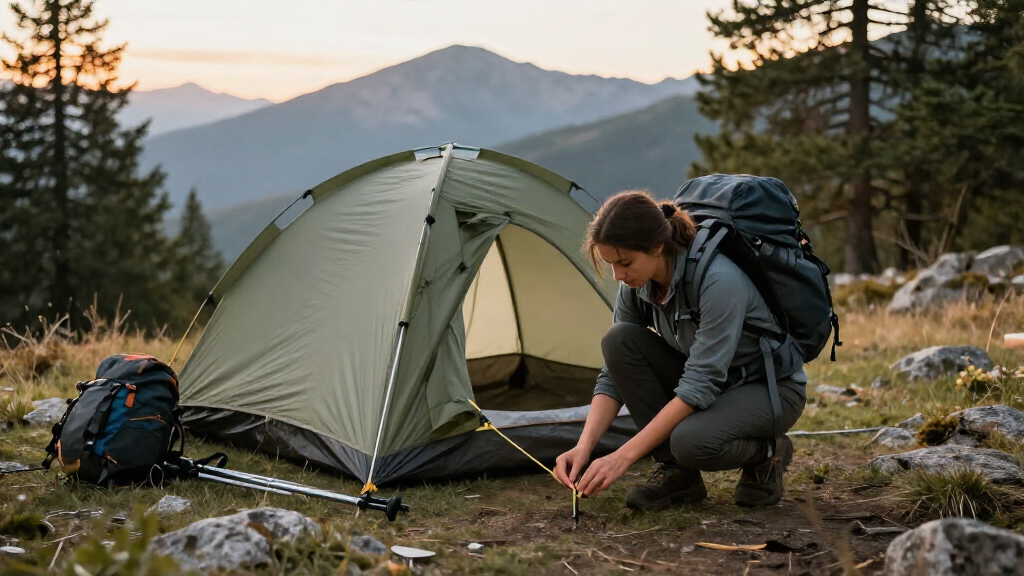

For a lightweight travel tent that can handle two people without giving up useful space, I’d start with the Night Cat two-person tent with aluminum poles: its 4.4-pound listed weight, two doors, and dual vestibules make it the most balanced option here. Solo travelers who prize a fast camp setup may prefer the Night Cat pop-up, while hikers who want a compact, familiar dome design can look at the Night Cat single-layer backpacking tent. Each pick solves a different travel problem, and none is a weight-free compromise.

Get travel and outdoor gear delivered free with Prime
- Fast, free delivery on millions of items
- Prime Video, Amazon Music and more included
- Member-only deals all year
The tradeoffs are easy to miss if you compare only the word “lightweight.” The Wind Tour is the lightest listed at 2.56 pounds, but its 1,000 mm water-resistance rating is lower than the other models with stated ratings. The aluminum-pole Night Cat weighs more but offers two doors and vestibules. Meanwhile, the 2 kg models sit in a similar weight class yet differ in sleeping capacity, construction, and layout. I’ve ranked these tents by how well their stated weight, shelter features, setup, and usable space fit common travel needs—not by a claim that one tent suits every trip.
Complete the kit
Key Takeaways
- Best balanced two-person layout: The Night Cat with aluminum poles is listed at 4.4 pounds and adds two doors plus two vestibules, which make sharing a tent more convenient.
- Lowest listed weight: Wind Tour weighs 2.56 pounds, but its stated 1,000 mm water resistance makes it a better fit for fair-weather trips than sustained wet conditions.
- Fastest solo shelter setup: The Night Cat pop-up opens in about three seconds, though its 3.3-pound weight and folding routine may not suit every backpacking itinerary.
- Compact rain-focused option: The Night Cat single-layer model is listed at 2 kg with a 3,000 mm rating, but its narrow one-person layout and single door limit flexibility.
- Check what “two-person” means: Floor dimensions and vestibule access matter as much as occupancy labels; the 1-2-person Night Cat offers less room and only one door than the wider aluminum-pole tent.


| lightweight travel tent | Occupancy | Listed weight | Water resistance | Dimensions |
|---|---|---|---|---|
| Night Cat 2-Person Backpacking | 2 person | 4.4 lb | Waterproof with 3,000 mm rating | 82.6 × 55.1 × 43.3 in |
| Night Cat Backpacking Tent for | Listed for 1 person; marketed for 1-2 | 2 kg / 4.4 lb | 3,000 mm | 2.2 × 1.2 m |
| Night Cat Upgraded Backpacking | 1-2 person | 2 kg | Waterproof; numeric rating not supplied | 83 × 45 × 45 in |
| Wind Tour Easy Setup Breathabl | 2 person | 2.56 lb | 1,000 mm | 77 × 57 × 41 in |
| Night Cat Pop-up Camping Tent: | 1 person | 3.3 lb | 2,000 mm | 92.5 × 39 × 35.5 in |
More Details on Our Top Picks
Night Cat 2-Person Backpacking Tent Waterproof Lightweight Camping Tent for Two with Aluminum Poles and Rainfly Green
I rank this Night Cat first because it makes the strongest case as a shared travel shelter. At a listed 4.4 pounds, it is not the lightest tent in this group, but its 82.6-by-55.1-inch footprint, two doors, and two vestibules address the everyday friction of camping as a pair: climbing over a partner and keeping all gear inside the sleeping area. That layout is more accommodating than the one-door Night Cat models, even though those weigh about 2 kg.
The supplied description lists a 3,000 mm waterproof rating, a seam-taped waterproof floor, and aluminum poles. Those details give it a more reassuring stated rain setup than Wind Tour’s 1,000 mm rating, while the aluminum supports distinguish it from the fiberglass-pole options. Its three-season rating still sets a clear boundary: I would not choose it as a winter tent. The listed 4.33 square feet of vestibule area is modest despite having two vestibules, so the benefit is divided access more than expansive gear storage.
Setup is described as taking about three minutes, which is quick enough for routine camp stops, though less immediate than the pop-up’s three-second opening. First-time users may need extra practice because the instructions could be clearer. I’d choose this model for two people who value separate entry points and a more usable footprint over the very lowest carry weight. Solo hikers or strict gram-counters should compare it with the lighter Wind Tour, and anyone wanting a one-person shelter should avoid carrying its extra space.
Pros:- Two doors and two vestibules make entry and gear access easier for a pair.
- Listed 4.4-pound weight remains portable for a two-person tent.
- Stated 3,000 mm waterproof rating and seam-taped floor suit trips where rain is possible.
- Aluminum poles distinguish it from the fiberglass-supported models in this roundup.
Cons:- Heavier than the Wind Tour and the two 2 kg Night Cat options.
- Three-season rating does not make it a winter shelter.
- Setup instructions may take extra practice for first-time users.
Best for: Two-person hikers who want separate doors, vestibule access, and stronger stated rain protection in a still-portable tent.
Not ideal for: Solo travelers, winter campers, and weight-focused backpackers who would rather carry less than gain a more convenient shared layout.
- Occupancy:2 person
- Listed weight:4.4 lb
- Water resistance:Waterproof with 3,000 mm rating
- Doors / vestibules:2 doors / 2 vestibules
- Floor area:31.24 sq ft
- Pole material:Aluminum
- Dimensions:82.6 × 55.1 × 43.3 in
Our verdict“I’d pick this as the most practical two-person travel tent here if shared access matters more than carrying the absolute minimum weight.”
Night Cat Backpacking Tent for 1-2 Persons, Lightweight Waterproof Camping and Hiking Tent, Easy Setup, Single Layer, 2.2×1.2m
This Night Cat is a compact choice for hikers who want a simple dome shelter with a stated 3,000 mm water-resistance rating. Its 2 kg listed weight is close to the upgraded Night Cat model, but its 2.2-by-1.2-metre footprint and one-door layout make it much better suited to one person than to two adults sharing space. The “1-2 person” label should not be read as a promise of comfortable room for a pair, especially when both campers need sleeping space and bags.
Compared with the aluminum-pole Night Cat, this model gives up the second door, second vestibule, and aluminum supports. In return, it keeps the design straightforward and is listed at the same approximate 2 kg weight as the clip-setup model. Its stated 4.4-pound weight is heavier than Wind Tour’s 2.56 pounds, but the 3,000 mm rating is a more appealing figure for rain-prone travel than Wind Tour’s 1,000 mm rating. The product description calls it single layer, so buyers should not assume it has the same fly-and-inner arrangement as a conventional double-wall tent.
The fiberglass pole and single entry are practical limits rather than reasons to dismiss it. Fiberglass needs careful handling, and the narrow footprint can make entry and gear organization awkward. The 4-season label is also broader than the supplied details can fully explain; I would not treat that label alone as proof of suitability for severe winter conditions. This is a sensible candidate for a solo traveler who wants a compact footprint and a stronger stated water rating, but the two-person aluminum-pole model is the better choice for shared trips.
Pros:- Listed 2 kg weight is manageable for a compact backpacking shelter.
- Stated 3,000 mm water-resistance rating is higher than Wind Tour’s stated rating.
- Simple dome layout and clip-supported fiberglass pole system.
- Mesh door and roof window are listed as ventilation features.
Cons:- Narrow 1.2 m width and one door make it a tight shared tent.
- Fiberglass pole requires careful handling compared with the aluminum-pole model.
- Single-layer construction may not suit buyers seeking a conventional separate inner and rainfly.
Best for: Solo backpackers seeking a compact dome tent with a stated 3,000 mm water-resistance rating and a simple setup.
Not ideal for: Two adults who need roomy sleeping space, campers who want dual access, or winter travelers relying on the season label alone.
- Occupancy:Listed for 1 person; marketed for 1-2
- Listed weight:2 kg / 4.4 lb
- Water resistance:3,000 mm
- Dimensions:2.2 × 1.2 m
- Floor area:28.8 sq ft
- Doors:1
- Pole material:Fiberglass
Our verdict“I’d choose this for solo trips where compact dimensions and a higher stated water rating matter more than shared-room comfort.”
Night Cat Upgraded Backpacking Tent for 1-2 Persons, Easy Clip Setup, Heavy Rainproof, Lightweight, Compact
The upgraded Night Cat earns a place for travelers who want quick clip assembly without moving to a pop-up design. It is listed at 2 kg and described as assembling in about one minute, making it easier to pitch quickly than the aluminum-pole Night Cat’s roughly three-minute setup claim. Its stated footprint is 83 inches long by 45 inches wide, notably narrower than the aluminum model’s 55.1-inch width. That difference matters more than the shared two-person label: this is a roomier solo shelter or a close fit for two, not the group’s most comfortable option for a pair.
Compared with the older single-layer Night Cat, this model also weighs 2 kg and uses fiberglass poles, but offers a stated 26.6-square-foot floor area and a clip attachment system. The product description highlights waterproof materials and a windproof design, though it does not provide a numerical water-resistance rating. For buyers who want a rating they can compare directly, the 3,000 mm older Night Cat or the 3,000 mm aluminum-pole model gives clearer information. I would treat the general rainproof language as less specific than a stated rating.
There is one door and one vestibule, so a pair cannot enter from opposite sides, and gear storage is more limited than on the dual-vestibule alternative. The fiberglass pole also needs gentle handling. On the plus side, a mesh door and roof window are listed for ventilation, helping this model feel less closed in than its narrow dimensions might suggest. I’d shortlist it for a solo traveler who values a fast, familiar pitch and wants a compact 2 kg shelter; for regular two-person trips, I’d spend the weight on the aluminum-pole model’s more generous width and access.
Pros:- Listed 2 kg weight supports backpacking and compact travel.
- Clip setup is described as taking about one minute.
- Mesh door and roof window provide stated ventilation features.
- One vestibule offers a separate place for some gear outside the sleeping area.
Cons:- One door and a 45-inch width make it less convenient for two adults than the aluminum-pole option.
- No numeric water-resistance rating is supplied.
- Fiberglass poles need careful handling.
Best for: Solo campers or close-sharing pairs who value fast clip setup, compact carry, and a straightforward three-season tent.
Not ideal for: Two campers who want separate entries, spacious shoulder room, or a numeric water-resistance rating for comparison.
- Occupancy:1-2 person
- Listed weight:2 kg
- Water resistance:Waterproof; numeric rating not supplied
- Dimensions:83 × 45 × 45 in
- Floor area:26.6 sq ft
- Doors / vestibules:1 door / 1 vestibule
- Pole material:Fiberglass
Our verdict“I’d select this model for quick, compact solo camping, but choose the aluminum-pole Night Cat for more comfortable two-person use.”
Wind Tour Easy Setup Breathable Mesh Tent for Backpacking & Outdoor Use
At a stated 2.56 pounds, Wind Tour is the clear weight pick in this group. For a traveler counting every pound, that gap is meaningful against the 3.3-pound pop-up and the 4.4-pound Night Cat tents. Its 77-by-57-inch footprint is also broad for a two-person tent, so the listed dimensions may appeal to hikers who want room to sleep without carrying the heavier dual-door model. The product listing describes quick clip setup and a breathable mesh design, giving it a different appeal from the more enclosed single-layer Night Cat.
The main compromise is weather information. Wind Tour’s stated 1,000 mm water resistance is below the 3,000 mm ratings supplied for both the aluminum-pole Night Cat and the older Night Cat dome. That does not by itself predict performance in every storm, but it is a meaningful specification difference for buyers who expect regular rain. The tent is listed as three-season, and the supplied details do not mention a vestibule, so I would not make it my first choice for wet trips where storing damp or muddy gear outside the sleeping space matters.
Its two fiberglass poles and four stakes keep the setup relatively uncomplicated, while the one-door design is less convenient for two occupants than the aluminum-pole Night Cat’s dual entrances. Wind Tour is also listed at 41 inches high, lower than the 43.3-inch aluminum model, though both are low-profile shelters rather than standing-height tents. I’d rank it below the stronger all-round two-person choice because its lower stated water resistance and single entry narrow its use case. For dry-weather backpacking where carry weight leads the decision, it is the most compelling pick in the lineup.
Pros:- Lowest listed weight in this roundup at 2.56 lb.
- Wide 57-inch dimension provides a generous stated footprint for its weight.
- Clip attachment and two-pole design are intended for straightforward setup.
- Mesh-focused design supports ventilation.
Cons:- Stated 1,000 mm water resistance is lower than the 3,000 mm Night Cat ratings.
- One door is less convenient for two occupants than the dual-door alternative.
- No vestibule area is listed.
Best for: Weight-conscious solo hikers or pairs planning fair-weather trips who prioritize a low listed carry weight and a broad floor.
Not ideal for: Travelers expecting sustained rain, wanting separate doors, or needing a listed vestibule for gear storage.
- Occupancy:2 person
- Listed weight:2.56 lb
- Water resistance:1,000 mm
- Dimensions:77 × 57 × 41 in
- Doors:1
- Poles:2 fiberglass poles
- Floor material:190T polyester
Our verdict“I’d choose Wind Tour when the lowest listed weight matters most and the trip forecast is relatively dry.”
Night Cat Pop-up Camping Tent: 1 Person Waterproof Instant Setup Outdoor Tent
The Night Cat pop-up is built around a single advantage: it opens in about three seconds. That makes it the easiest choice here for travelers who want to avoid threading or arranging a conventional pole structure after reaching camp. Its 3.3-pound listed weight is still portable for a solo tent, although Wind Tour is lighter at 2.56 pounds and the compact Night Cat backpacking models are listed at 2 kg. The pop-up prioritizes convenience over minimum carry weight.
Its 92.5-inch length gives a solo sleeper more room to stretch out than the narrow 83-by-45-inch upgraded Night Cat, while its 39-inch width keeps the sleeping area firmly for one. Two windows and a porch area are described as ventilation features, but the porch setup excludes trekking poles, so buyers should not assume that extension is ready without extra support. The listed 2,000 mm water resistance sits between Wind Tour’s 1,000 mm and the 3,000 mm Night Cat ratings. That makes the specification more reassuring than Wind Tour’s for occasional rain, but still below the highest stated ratings in this roundup.
The challenge comes at pack-up time: folding a pop-up tent can take practice, so the instant opening does not make the whole camp routine instant. Its one-door design also rules it out for pairs, and its 35.5-inch height offers limited headroom. Compared with the clip-setup Night Cat, it is faster to open and dedicated to solo use; compared with Wind Tour, it is heavier but has a stronger stated water-resistance figure. I’d pick it for short solo trips where fast pitching is the priority, not for hikers who want the most compact carry or frequent adjustments to their camp layout.
Pros:- Opens in about three seconds without a conventional pole assembly.
- Listed 3.3-pound weight is portable for a solo tent.
- Two windows and a porch area are described as ventilation features.
- Stated 2,000 mm water resistance is above Wind Tour’s 1,000 mm figure.
Cons:- Folding it back down requires practice.
- One-person capacity and 39-inch width do not suit sharing.
- Porch setup needs trekking poles, which are not included.
Best for: Solo campers who value near-instant opening for quick overnight stops, roadside camping, or simple camp routines.
Not ideal for: Two-person trips, strict weight-focused backpacking, or travelers who want an easy-to-pack pole tent rather than a folding pop-up.
- Occupancy:1 person
- Listed weight:3.3 lb
- Water resistance:2,000 mm
- Dimensions:92.5 × 39 × 35.5 in
- Floor size:7.7 × 2.95 ft
- Doors / windows:1 door / 2 windows
- Support poles:2 fiberglass poles
Our verdict“I’d choose this pop-up for solo convenience when fast opening matters more than the lightest pack or the simplest pack-down.”

How We Picked
I ranked these tents around the demands of lightweight travel: carrying weight, sleeping footprint, setup approach, weather protection, and the practical details that make a shelter easier to share or pack. I used the supplied product information and did not treat marketing claims as proof of performance. Where a rating or dimension was provided, I compared it directly; where information was missing, I’ve avoided filling the gap with assumptions.
Weight alone does not decide the order. Wind Tour is the lightest listed, but its 1,000 mm water-resistance rating places it behind tents with stronger stated rain protection for trips where showers are likely. The aluminum-pole Night Cat ranks first because it combines a two-person footprint with two doors and two vestibules, giving it a more practical shared-camping layout than the single-door alternatives. Its 4.4-pound listed weight is a real compromise, not a minor detail.
I also separated tents by the way a traveler uses them. The pop-up earns a solo convenience role for quick camp setup, while the older single-layer Night Cat is a compact, rain-focused choice with a 3,000 mm rating. The clip-setup Night Cat sits between those categories, offering quick assembly and a 2 kg weight but less access and less sleeping room than the aluminum-pole model. My order reflects these distinct jobs rather than implying that every tent is suited to the same route, weather, or party size.
There are limits to the supplied data. Packed dimensions are not listed for most models, and waterproof ratings do not reveal every detail of construction, such as seam treatment, floor bathtub height, or how the tent behaves in prolonged exposure. I’ve included only stated specifications and call out tradeoffs where the information suggests a clear decision point. For frequent wet-weather or demanding trips, I would verify current manufacturer details and practice pitching before leaving.
| lightweight travel tent | Pole material |
|---|---|
| Night Cat 2-Person Backpacking | Aluminum |
| Night Cat Backpacking Tent for | Fiberglass |
| Night Cat Upgraded Backpacking | Fiberglass |
| Wind Tour Easy Setup Breathabl | — |
| Night Cat Pop-up Camping Tent: | — |
Factors to Consider When Choosing Lightweight Travel Tents
I’d compare lightweight travel tents by the weight you actually carry, the number of people who need to sleep inside, and the conditions you expect—not by the word “lightweight” on the packaging. These five options span a 2.56-pound two-person tent, 2 kg compact dome designs, a 3.3-pound pop-up, and a 4.4-pound tent with a more practical shared layout. Their roles are different, so the right choice depends on which compromise you can live with.
Treat listed weight as one part of the carry system
The listed weights place Wind Tour first at 2.56 pounds, followed by the two 2 kg Night Cat designs, the 3.3-pound pop-up, and the 4.4-pound aluminum-pole tent. That order helps identify a weight leader, but it does not settle the buying decision. Check whether the listing’s figure includes stakes, guylines, or a packed carry bag; those details are not consistently supplied here. A slightly heavier tent can make sense if its separate doors, vestibules, or clearer weather specifications reduce hassle at camp.
For a solo hiker, the Wind Tour’s low listed weight may justify its lower stated water resistance on a fair-weather itinerary. For two people, sharing the 4.4-pound aluminum-pole tent means the load can be split, while its dual-door layout removes a common annoyance. I’d compare weight per traveler alongside the overall carry load, not just the number attached to the tent.
Check floor width against real sleeping arrangements
“Two-person” describes claimed capacity, not necessarily elbow room. The aluminum-pole Night Cat lists a 55.1-inch width and 31.24 square feet of floor area; Wind Tour lists 57 inches across, while the upgraded Night Cat is listed at 45 inches wide. That is a substantial difference for two sleeping pads. The 1.2-metre width of the older Night Cat is also better understood as a close solo fit than a roomy couple’s shelter.
If you share a tent, measure your sleeping pads side by side and compare that combined width with the tent floor. Add space for bags only if the layout has room to spare. A solo traveler may prefer a narrow shelter to reduce bulk, while two people who sleep shoulder to shoulder may accept it for short trips. I’d favor the wider models for frequent shared use and treat the pop-up’s 39-inch width as strictly solo space.
Use waterproof ratings as a comparison, not a guarantee
The stated ratings are 1,000 mm for Wind Tour, 2,000 mm for the pop-up, and 3,000 mm for two Night Cat models. The upgraded clip-setup model is described as waterproof but has no numeric rating in the supplied specifications. These figures are useful for comparing the listed information, but they do not describe every part of a tent’s performance. Seam construction, floor design, pitching, fabric condition, and exposure can all affect how shelter behaves in rain.
For a trip with a stronger chance of wet weather, I’d favor a model with a stated higher rating and look for current details on seam treatment and rainfly coverage. The aluminum-pole Night Cat lists a seam-taped waterproof floor; that is a specific detail not supplied for every option. None of these three-season tents should be treated as a dedicated winter shelter based only on a waterproof figure. Wind Tour’s lighter weight may still be attractive for dry trips, but its rating is the clearest reason to reserve it for milder forecasts.
Decide whether one or two doors matter
A second door is most useful when two people share a tent. It lets each camper leave without climbing over the other and can improve airflow when conditions allow. In this group, the aluminum-pole Night Cat is the only model with two doors and two vestibules. The other four are single-door designs, with differing vestibule information. The upgraded Night Cat has one vestibule, but its stated area is not provided; Wind Tour does not list one.
For a solo traveler, a single entrance can be a fair weight-and-simplicity tradeoff. For pairs who travel often, separate access can make daily routines easier and keep some gear out of the sleeping space. Don’t assume a pair of vestibules means generous storage: the aluminum model lists 4.33 square feet total, so check how that space is divided and whether your packs fit before relying on it.
Match setup style to the whole camp routine
The pop-up opens fastest, at about three seconds, but folding it back down takes practice. The upgraded Night Cat is described as using clips for an approximately one-minute setup, while the aluminum-pole Night Cat is described as taking about three minutes. These are distinct conveniences: a pop-up reduces pitching steps, while a pole tent may be easier for travelers who want a more familiar pack-and-pitch format. The supplied Wind Tour and older Night Cat descriptions also emphasize easy setup, but do not give an equally precise time.
If you expect to make frequent stops, consider both opening and packing away the shelter. Practice at home with whichever design you choose, especially a pop-up or fiberglass-pole tent. A fast setup claim cannot replace familiarity with staking and guyline placement, and a shelter pitched quickly but poorly can be less useful when weather turns.
Choose poles and season labels with care
The aluminum-pole Night Cat separates itself from the fiberglass-supported options. Pole material alone does not settle durability, but it is a useful construction distinction when comparing these listings. The fiberglass tents need careful handling, and spare-pole availability is worth checking if the shelter will see frequent use. The products carry three-season labels except for the older Night Cat, which is listed as four-season. The available specifications do not provide enough detail to compare winter structure, snow loading, or severe-weather performance.
I would use a season label as a starting point, not as a substitute for the tent’s full construction details. Buyers planning shoulder-season trips should check ventilation, rainfly coverage, and pitching options. Anyone expecting winter conditions should look for a dedicated model with appropriate structural information rather than assuming the compact four-season-labeled tent is a match just because that label appears in its listing.
Frequently Asked Questions
Which tent is the lightest in this roundup?
Wind Tour has the lowest supplied weight at 2.56 pounds. It is the clearest pick for a buyer focused on the listed carry weight, but its 1,000 mm water-resistance rating is below the 2,000 mm pop-up and the two Night Cat models listed at 3,000 mm. I’d pair it with fair-weather plans or check the maker’s current weather-protection details before relying on it for wet travel.
Which option makes the most sense for two adults?
The aluminum-pole Night Cat is the strongest shared-use choice because it lists a 55.1-inch width, two doors, and two vestibules. Those features make it easier for each camper to enter and organize gear than the single-door tents. It weighs 4.4 pounds, so it is not the lightest option, but two travelers can divide the tent load. The 45-inch-wide upgraded Night Cat may suit close-sharing pairs on short trips, but it offers less room and only one entry.
Is the pop-up tent a good choice for backpacking?
It can work for a solo traveler who values opening a shelter in about three seconds, but it is not the lightest solo option here. At 3.3 pounds, it is heavier than Wind Tour and the 2 kg Night Cat models, and folding it away takes practice. Its 39-inch width suits one sleeper, while the porch setup needs trekking poles that are not included. I’d choose it for convenience-led trips rather than for a strict weight-cutting itinerary.
Can I use these tents in heavy rain or winter conditions?
The supplied ratings provide a useful starting comparison: the older Night Cat and aluminum-pole Night Cat are listed at 3,000 mm, the pop-up at 2,000 mm, and Wind Tour at 1,000 mm. Ratings alone do not establish performance in prolonged rain, and the upgraded Night Cat has no numeric rating in the information provided. Most are labeled three-season, while the older model is labeled four-season; I would verify construction, seam treatment, and intended weather use before choosing any of them for demanding conditions.
What should I check before buying a lightweight travel tent?
Start with the weight and confirm what the listed figure includes, then compare floor dimensions with your sleeping pads and the number of people who will actually sleep inside. Check door and vestibule count, stated water resistance, pole material, season rating, and whether the setup method suits the way you travel. Since packed dimensions and some construction details are missing from these listings, I’d also verify current manufacturer information and practice pitching the tent before a trip.
Conclusion
My recommendation depends on who is carrying the tent and where it will be used. For two-person travel with convenient entry and gear access, I’d choose the Night Cat with aluminum poles, accepting its 4.4-pound weight for two doors and vestibules. For the lowest listed weight on fair-weather trips, Wind Tour is the standout, with its 1,000 mm rating as the key limit. Solo hikers who want a compact shelter with a higher stated water-resistance figure can look at the older Night Cat, while the upgraded clip-setup model suits campers who want a quick pitch in a narrow package.
If fast setup is the deciding factor for a solo outing, I’d pick the pop-up, provided its folding routine and 3.3-pound weight fit the trip. Before choosing any of these, I’d compare the actual packed load, confirm the sleeping footprint, and check updated weather and construction details. The best lightweight travel tent is the one whose weight savings do not force a compromise you will notice every night.