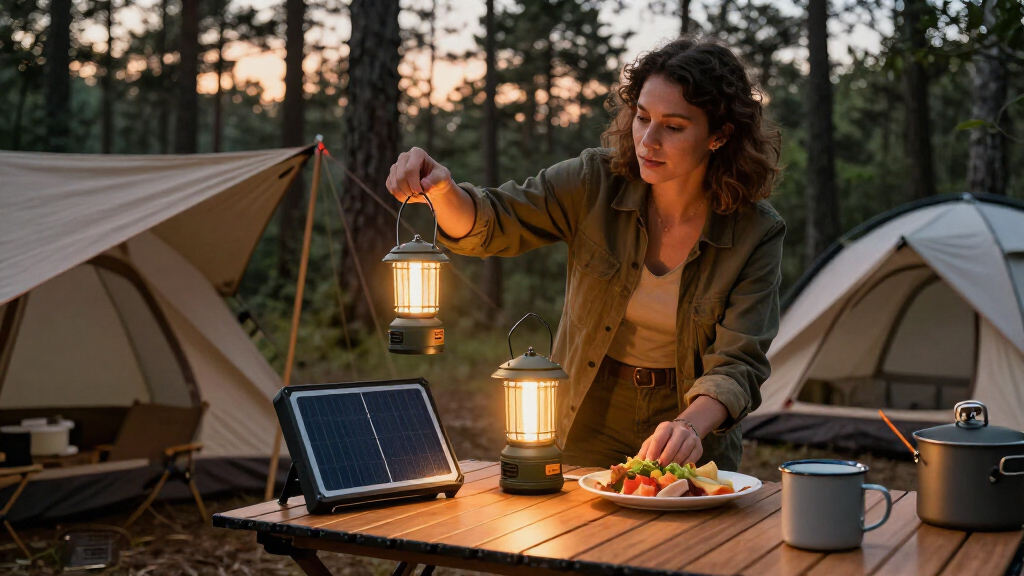

Among these portable solar camping lanterns, I’d pick the Westinghouse 1000-Lumen Solar Camping Lantern as the best overall for campers who want high stated brightness, while the BioLite Luci Original stands out for an inflatable, compact design and the Glocusent 400H for its rechargeable 5000mAh battery. The main tradeoff is between a brighter, more traditional lantern and lighter, packable lights that may suit smaller camps better. Multi-packs from Lichamp, ENOMY, DIBMS, and LETMY offer several lights at once, but buyers should compare their charging and flashlight features rather than assume the sets perform alike. Solar charging can add flexibility, though it depends on sunlight and may not replace USB charging when time or weather is limited. Read on for how each option differs and which one fits your camping setup.

Get travel and outdoor gear delivered free with Prime
- Fast, free delivery on millions of items
- Prime Video, Amazon Music and more included
- Member-only deals all year
Complete the kit


Key Takeaways
- Westinghouse is the brightness-led pick: its stated 1000-lumen output puts it ahead for buyers prioritizing a powerful camp lantern, though the lineup also includes more packable designs.
- BioLite Luci favors portability over a traditional lantern form: its inflatable solar design may appeal to campers who want a light that packs down, rather than a rigid multi-function unit.
- Glocusent combines rechargeable lighting with a 5000mAh battery: it is a distinct single-lantern choice for buyers who prefer a named battery capacity over a four-pack of lights.
- The four-packs solve a different problem: Lichamp, ENOMY, DIBMS, and LETMY provide multiple units, but their solar, USB, and collapsible flashlight details should guide the choice between them.
- Solar works best as a supplement, not a scheduling guarantee: across this group, buyers should value USB charging or another backup path if they need dependable light after cloudy days.
| Lichamp 4-Pack Collapsible Solar Camping Lanterns and USB Rechargeable Flashlights |  | Best Multi-Light Set | Pack size: 4 | Light output: Up to 300 lumens | Beam angle: 360 degrees | VIEW LATEST PRICE | See Our Full Breakdown |
| ENOMY 4-Pack LED Camping Lantern Collapsible Solar USB Emergency Light (Gold) |  | Best for Compact Group Storage | Pack size: 4 | Maximum light output: 150 lumens | Light distribution: 360-degree wide-area illumination | VIEW LATEST PRICE | See Our Full Breakdown |
| Westinghouse 1000-Lumen Solar Camping Lantern |  | Best for Bright Campsite Coverage | Light output: Up to 1000 lumens | Color temperature: 5000 K | Lighting modes: High, medium, low, SOS | VIEW LATEST PRICE | See Our Full Breakdown |
| Glocusent 400H Rechargeable Camping Lantern, 5000mAh |  | Best Adjustable Lantern | Maximum light output: 1200 lumens | Adjustable output: 15–250 lumens | Brightness control: 5 levels with stepless adjustment | VIEW LATEST PRICE | See Our Full Breakdown |
| BioLite Luci Original Camping Lantern, Solar Inflatable, Clear |  | Best Ultralight Solar Lantern | Maximum light output: 65 lumens | Runtime: Up to 24 hours per charge | Battery: 1000mAh lithium-ion | VIEW LATEST PRICE | See Our Full Breakdown |
| DIBMS 4-Pack Solar Camping Lanterns with Collapsible Flashlight |  | Best Multi-Use Four-Pack | Pack count: 4 | Maximum brightness: Up to 300 lumens | Battery capacity: 1,600 mAh | VIEW LATEST PRICE | See Our Full Breakdown |
| LETMY 4-Pack Rechargeable Solar Camping Lanterns |  | Best Backup-Power Flexibility | Pack size: 4 lanterns | Maximum light output: 600 lumens | Light source: COB LED | VIEW LATEST PRICE | See Our Full Breakdown |
| portable solar camping lantern | Water resistance | Charging | Weight | Maximum light output |
|---|---|---|---|---|
| Lichamp 4-Pack Collapsible Sol | Water resistant; rating unspecified | Solar and USB rechargeable | 1.2 kg | — |
| ENOMY 4-Pack LED Camping Lante | Waterproof; rating unspecified | USB and solar | — | 150 lumens |
| Westinghouse 1000-Lumen Solar | IPX4 | Solar and USB-C | — | — |
| Glocusent 400H Rechargeable Ca | — | — | 153 g | 1200 lumens |
| BioLite Luci Original Camping | IP67 | Solar panel and USB-C | 4.4 oz (125 g) | 65 lumens |
| DIBMS 4-Pack Solar Camping Lan | IPX4 | USB (about 4 hours) or solar (about 9 hours in direct sunlight) | 8.02 oz | — |
| LETMY 4-Pack Rechargeable Sola | Described as water-resistant; rating not specified | — | — | 600 lumens |
More Details on Our Top Picks
Lichamp 4-Pack Collapsible Solar Camping Lanterns and USB Rechargeable Flashlights
For campers who want several lights ready for a group campsite, the Lichamp four-pack combines a collapsible lantern with a push-button flashlight in each unit. Its 360-degree illumination and output of up to 300 lumens suit tent entrances, cooking areas, or a shared table better than the dimmer ENOMY four-pack, which tops out at 150 lumens. Solar and USB charging give you two ways to replenish the lights, while the USB output can provide emergency power to Android devices. That versatility comes with a tradeoff: the listed 1.2 kg weight is substantial for a set intended to be portable, and the water-resistance description gives no rating. I’d choose it for car camping or a base camp where carrying several lights matters more than minimizing pack weight.
Pros:- Four lights provide broad coverage for a group campsite.
- Each unit combines a collapsible lantern with a push-button flashlight.
- Solar and USB charging offer flexible ways to recharge.
- USB output can provide emergency charging for Android devices.
Cons:- The listed 1.2 kg weight is a burden for weight-conscious trips.
- Water resistance is described without a specific protection rating.
Best for: Car campers and families who want four combination lanterns and flashlights for a shared campsite.
Not ideal for: Backpackers counting every gram, or campers who need a clearly rated level of protection from heavy rain.
- Pack size:4
- Light output:Up to 300 lumens
- Beam angle:360 degrees
- Charging:Solar and USB rechargeable
- Battery:3 AAA batteries required; included
- USB output:Can charge Android devices
- Dimensions:3.7 × 3.7 × 5.4 in
- Weight:1.2 kg
- Water resistance:Water resistant; rating unspecified
Our verdict“Choose the Lichamp set for group car camping when multiple lantern-flashlight combos matter more than a light pack.”
ENOMY 4-Pack LED Camping Lantern Collapsible Solar USB Emergency Light (Gold)
The ENOMY four-pack is a space-saving way to keep several campsite lights together: each lantern collapses for storage and spreads light across a 360-degree area when opened. Solar and USB charging add flexibility, and the stated runtime of up to 25 hours may suit trips where the lanterns are used intermittently. Compared with the Lichamp four-pack, ENOMY offers a lower maximum output at 150 lumens, so it is better for tent interiors and close-range tasks than illuminating a large cooking area. Its listed waterproof protection is a stronger outdoor-use claim than Lichamp’s unspecified water resistance, though the battery details are inconsistent: the data mentions both lithium-ion and three included AA batteries. I’d favor this set for compact storage, but not as my pick for maximum brightness or clear battery specifications.
Pros:- Four collapsible lanterns pack down for easier storage.
- Solar and USB charging provide two charging options.
- Listed waterproof protection suits wet outdoor conditions.
- Up to 25 hours of stated battery life supports intermittent campsite use.
Cons:- Maximum output of 150 lumens is modest for larger areas.
- Battery information conflicts, listing lithium-ion and three AA batteries.
Best for: Car campers who want several collapsible lights that store compactly and are mainly used inside tents or near camp.
Not ideal for: Campers lighting a large shared area, or buyers who want an unambiguous battery configuration and higher output.
- Pack size:4
- Maximum light output:150 lumens
- Light distribution:360-degree wide-area illumination
- Charging:USB and solar
- Battery life:Up to 25 hours
- Battery details:Lithium-ion listed; 3 AA batteries required (included)
- Water resistance:Waterproof; rating unspecified
- Material:ABS
- Color temperature:6000 K
Our verdict“Pick ENOMY for a compact, multi-lantern set for close-range camp lighting, not for bright area coverage.”
Westinghouse 1000-Lumen Solar Camping Lantern
When a campsite lantern needs to illuminate more than a tent, the Westinghouse stands apart with output up to 1000 lumens and four modes, including SOS. That makes it a stronger area-lighting choice than the 150-lumen ENOMY four-pack, though it lacks ENOMY’s multiple-light format for spreading illumination around camp. Solar and USB-C charging pair with a 4000mAh battery, and the integrated handle helps with carrying or hanging. The IPX4 rating covers splashes and light rain, not immersion or sustained exposure to heavy weather. I also can’t compare its runtime or USB-C charging time because neither is specified. This is the pick for a bright, single lantern with a defined rechargeable battery, rather than for ultralight packing or a set of lights for several people.
Pros:- Up to 1000 lumens provides substantially more output than the ENOMY lanterns.
- High, medium, low, and SOS modes suit different lighting needs.
- Solar and USB-C charging support flexible recharging.
- IPX4 protection helps handle splashes and light rain.
Cons:- IPX4 protection does not cover immersion or heavy, sustained rain.
- Battery runtime and USB-C charging time are not specified.
Best for: Car campers who need one bright lantern for a cooking area, picnic table, or larger shared campsite.
Not ideal for: Backpackers seeking a lightweight packable lantern, or campers who need a published runtime or protection beyond splashes and light rain.
- Light output:Up to 1000 lumens
- Color temperature:5000 K
- Lighting modes:High, medium, low, SOS
- Charging:Solar and USB-C
- Battery:4000mAh lithium-ion, included
- Water resistance:IPX4
- Dimensions:4.54 × 4.04 × 7.95 in
- Mounting:Tabletop
- Warranty:1-year limited
Our verdict“Choose Westinghouse when bright, adjustable area lighting matters more than a multi-light set or a compact backpacking form.”
Glocusent 400H Rechargeable Camping Lantern, 5000mAh
The Glocusent 400H is the most adaptable lighting tool here for campers who switch between a soft tent glow and brighter task lighting. Its five brightness levels, stepless adjustment, three white color temperatures, and red SOS mode give it more control than the Westinghouse’s four fixed modes. The 5000mAh battery can also charge other devices, while the hook and flat base make placement flexible. At 153 g, it is far easier to carry than the Lichamp four-pack, but its solar panel is best treated as a backup: a full solar charge is listed at about 40 hours, compared with 3.5 hours over USB-C. There is also a specification gap between the stated 1200-lumen maximum and adjustable output listed only up to 250 lumens. I’d pick it for tuning light, not for relying on solar alone or assuming maximum output is continuously adjustable.
Pros:- Five levels and stepless adjustment allow fine control of brightness.
- Three white color temperatures and red SOS broaden its uses.
- USB-C charging and device output add power flexibility.
- Lightweight 153 g body includes a hook, flat base, and storage pouch.
Cons:- A full solar charge is listed at about 40 hours, making solar auxiliary rather than fast charging.
- The listed 1200-lumen maximum does not align with adjustable output specified up to 250 lumens.
Best for: Campers who want adjustable brightness, multiple white-light tones, and a lightweight lantern that can also provide device charging.
Not ideal for: Campers relying on solar as their main charging method, or buyers who need clear, consistent output specifications.
- Maximum light output:1200 lumens
- Adjustable output:15–250 lumens
- Brightness control:5 levels with stepless adjustment
- Color modes:3000 K, 4500 K, 6000 K, and red SOS
- Battery capacity:5000mAh
- Battery life:Up to 120 hours
- Charging time:USB-C: 3.5 hours; solar: 40 hours
- Water and drop protection:IPX5; 1-meter drop protection
- Weight:153 g
Our verdict“Choose Glocusent for lightweight, customizable lighting and USB-C charging, while treating its solar panel as a backup.”
BioLite Luci Original Camping Lantern, Solar Inflatable, Clear
For backpackers who want a lantern that takes almost no packed space, the BioLite Luci Original collapses to about one inch and weighs just 4.4 oz. Its inflatable construction prioritizes packability in a way the taller Glocusent 400H does not, and the IP67 rating offers more clearly defined water protection than the Westinghouse’s splash-only IPX4. The tradeoff is modest output: at up to 65 lumens, it is suited to tent interiors and close-range use, not bright cooking-area lighting like the Westinghouse can provide. Solar and USB-C charging give you options, with up to 24 hours of runtime stated. The clear finish may create glare in direct sunlight, and this small lantern lacks the adjustable brightness and device-charging function offered by Glocusent. I’d choose it when packed size and waterproofing come before output.
Pros:- Collapses to about one inch for compact packing.
- Weighs just 4.4 oz, making it well suited to weight-conscious trips.
- Solar and USB-C charging give two ways to recharge.
- IP67 waterproof rating offers stronger specified water protection than the Westinghouse IPX4.
Cons:- Maximum output of 65 lumens is limited to close-range lighting.
- Clear finish may cause glare in direct sunlight.
- No device-charging output or adjustable color temperatures are listed.
Best for: Backpackers and paddlers who need a lightweight, waterproof lantern for tent lighting and have limited pack space.
Not ideal for: Campers needing bright area lighting, adjustable color temperatures, or a lantern that can charge other devices.
- Maximum light output:65 lumens
- Runtime:Up to 24 hours per charge
- Battery:1000mAh lithium-ion
- Charging:Solar panel and USB-C
- Water resistance:IP67
- Weight:4.4 oz (125 g)
- Collapsed dimension:1 in diameter
- Light source:10 LEDs
Our verdict“Choose the Luci Original when minimal packed size and IP67 protection matter more than brightness or lighting controls.”
DIBMS 4-Pack Solar Camping Lanterns with Collapsible Flashlight
The DIBMS four-pack suits campers who want each light to work as both a lantern and a handheld flashlight. Its collapsible body switches between 360-degree lantern illumination and a separate flashlight beam, while a folding hook gives each unit a way to hang inside a tent or near a campsite. Compared with the LETMY 4-Pack, DIBMS lists a more modest maximum output of 300 lumens, but its flashlight function is a useful distinction when moving around after dark. USB charging takes about four hours; solar charging is a backup that needs about nine hours of direct sunlight, not a quick daytime top-up. The 6–11-hour runtime varies with use, and IPX4 protection covers splashes rather than immersion. Choose it for flexible group lighting, not maximum brightness or dependable solar-only charging.
Pros:- Four units provide separate lights for a group, tent, or emergency kit.
- Collapsible design switches between 360-degree lantern lighting and a separate flashlight.
- USB charging is available alongside solar charging.
- Folding hook and IPX4 water resistance suit hanging use and splashes.
Cons:- Solar charging takes about nine hours in direct sunlight.
- Listed runtime varies from 6 to 11 hours depending on use.
- At up to 300 lumens, it offers less maximum output than the LETMY lantern’s stated 600 lumens.
Best for: Campers and households wanting four compact lights that can serve as tent lanterns or handheld flashlights, with USB charging and solar as a backup.
Not ideal for: Buyers who need a brighter single lantern, want solar charging to replenish the battery quickly, or need a precisely predictable runtime.
- Pack count:4
- Maximum brightness:Up to 300 lumens
- Battery capacity:1,600 mAh
- Charging:USB (about 4 hours) or solar (about 9 hours in direct sunlight)
- Runtime:6–11 hours, depending on use
- Water resistance:IPX4
- Weight:8.02 oz
- Light sources:6 lantern LEDs and 1 flashlight LED
- Materials:ABS and PC
Our verdict“Choose the DIBMS set if you want four versatile lanterns with built-in flashlight use, and skip it if brightness or fast solar recharging is your priority.”
LETMY 4-Pack Rechargeable Solar Camping Lanterns
The LETMY four-pack stands out for giving each lantern three power options: solar, USB charging, or three AA batteries. That flexibility can help when a battery runs low away from a charging source, though AA cells are not included and add separate gear to pack. Its stated 600-lumen maximum is higher than the DIBMS lantern’s 300 lumens, making LETMY the stronger paper choice for a brighter camp or emergency light. Both sets offer four collapsible units, but DIBMS adds a separate flashlight LED; LETMY instead offers a backup battery option. One caution is the conflicting runtime information: the description says up to 12+ hours, while product information lists two hours. The water-resistant ABS body is described as shock-resistant and heat-resistant, but no specific water-resistance rating is supplied. I would choose this set for power-source choice, while treating its runtime claim cautiously.
Pros:- Three power options: solar, USB rechargeable, or three AA batteries per lantern.
- Stated maximum output of 600 lumens is higher than the DIBMS set’s 300 lumens.
- Four collapsible lanterns pack down for storage and transport.
- ABS body is described as shock-resistant and water-resistant.
Cons:- AA batteries are not included and require extra packing.
- Runtime information conflicts: the description says up to 12+ hours, while product information lists 2 hours.
- Water resistance is stated without a specific rating.
Best for: Car campers and emergency-kit planners who want four collapsible lanterns and the option to use AA batteries when USB or solar charging is unavailable.
Not ideal for: Backpackers seeking a single lightweight lantern, buyers who do not want to carry spare AA batteries, or anyone who needs a clearly stated runtime and water-resistance rating.
- Pack size:4 lanterns
- Maximum light output:600 lumens
- Light source:COB LED
- Power sources:Solar, USB rechargeable, or 3 AA batteries per lantern
- Battery life:Up to 12+ hours in the description; 2 hours in product information
- Material:ABS
- Water resistance:Described as water-resistant; rating not specified
- Included accessories:USB cable
Our verdict“Pick LETMY if AA-battery backup and higher stated brightness matter more than a consistent runtime claim or a specified water-resistance rating.”
How We Picked
I compared these seven options as portable camping lights, not as interchangeable emergency products. The main criteria were the kind of light each design provides, portability and storage, stated power or brightness details, charging flexibility, and how useful the included features are at camp. A lantern that is easy to pack serves a different buyer from a high-output model or a multi-pack intended to spread light across several spots.
The ranking favors clear use-case fit and practical versatility over the number of features alone. Westinghouse leads for its stated 1000-lumen output; BioLite and Glocusent earn distinct places through their compact inflatable and battery-focused designs. The four multi-packs are useful when several lights matter more than a single premium-style lantern, but their similarities make charging methods and flashlight functions key points of comparison. Product names and specifications alone do not establish runtime, weather resistance, or real-world solar charging speed, so I avoid treating those as proven advantages.
| portable solar camping lantern | Charging | Water resistance |
|---|---|---|
| Lichamp 4-Pack Collapsible Sol | Solar and USB rechargeable | Water resistant; rating unspecified |
| ENOMY 4-Pack LED Camping Lante | USB and solar | Waterproof; rating unspecified |
| Westinghouse 1000-Lumen Solar | Solar and USB-C | IPX4 |
| Glocusent 400H Rechargeable Ca | — | — |
| BioLite Luci Original Camping | Solar panel and USB-C | IP67 |
| DIBMS 4-Pack Solar Camping Lan | USB (about 4 hours) or solar (about 9 hours in direct sunlight) | IPX4 |
| LETMY 4-Pack Rechargeable Sola | — | Described as water-resistant; rating not specified |
Factors to Consider When Choosing Portable Solar Camping Lanterns
Choosing a solar lantern is less about finding one light that does everything and more about matching its form, charging plan, and light distribution to your campsite. I’d start with how you pack and use light, then decide whether solar is your main charging method or a backup.
Choose One Strong Light or Several Smaller Ones
A single lantern can simplify packing and provide a central light source, while a multi-pack lets you light a tent, table, and path at the same time. More units do not automatically mean more useful illumination: several modest lights may be less effective for a large shared area than one brighter lantern. Before choosing a set, map where you actually need light and whether you can hang or place each unit safely. A four-pack makes particular sense for group camping or keeping lights in separate bags. Solo campers may prefer a single compact model and fewer loose items. Avoid buying extra units simply because the pack count looks generous.
Treat Solar Charging as One Part of the Power Plan
Solar charging depends on access to direct sunlight, the angle of the panel, and time available during the day. Shade from trees, short winter days, or overcast weather can leave a lantern less charged than planned. Check whether the model also supports USB charging and decide how you will recharge it before a trip. For dependable evening light, a known backup power route matters more than the promise of solar charging alone. A small power bank can help, but it adds weight and should be included in your packing plan. Do not assume that a solar feature guarantees a full charge by nightfall.
Match Brightness to the Job, Not Just the Biggest Number
High stated brightness is useful for lighting a cooking area or a larger campsite, but it can be excessive inside a small tent or when preserving battery is a priority. A lower-output light may work better for reading, close-up tasks, or a softly lit sleeping area. Think about whether you need broad ambient light, a directed beam, or both; models with a flashlight feature can cover a different task than lantern-only designs. If a product listing gives a lumen figure, check which mode it describes rather than assuming every setting reaches that level. A useful lantern should suit the spaces where you will use it, not simply lead on output.
Account for Packability and Shape
Rigid lanterns can be straightforward to handle, while collapsible or inflatable designs may take up less room when stored. That difference matters when you are backpacking or sharing limited vehicle space, but it may matter less at a drive-in campsite. Consider how the lantern fits alongside your other gear and whether its shape is convenient to hang, hold, or set down. Multi-function designs can reduce the number of items you carry, yet extra parts or features may complicate storage. If you already have a headlamp or flashlight, a compact lantern may add more value than another combined light. Choose a form that fits your packing style rather than focusing only on its collapsed size.
Check the Fine Print on Runtime and Durability
Brightness, battery capacity, and charging options do not tell the whole story about how long a light will last on a particular setting. Compare runtime figures only when they are stated for similar modes, and look for clear information about battery charging and care. Outdoor use also makes handles, hanging points, switches, and surfaces worth checking. Do not infer water resistance or ruggedness from the word “camping” in a product name; look for a specific rating or manufacturer guidance. If a lantern will be exposed to rain, dust, or frequent packing, those details can matter more than a small feature difference. When specifications are missing, treat performance claims cautiously rather than filling in the gaps.
Frequently Asked Questions
Can a solar camping lantern be my only light source?
I would not rely on solar charging as the only plan for trips where darkness creates a safety concern. Sunlight, weather, and camp location affect how much charge a lantern can gain, and charging time can be limited on travel days. Choose a model with another charging option if available, and pack a separate headlamp or flashlight for tasks that need hands-free or directed light. That backup also helps if the lantern is misplaced or its battery runs low. Solar is most useful as an additional way to replenish power when conditions allow.
Is a four-pack a better choice than one brighter lantern?
It depends on whether your campsite needs light in several places or concentrated light in one area. A four-pack can spread illumination among a tent, cooking space, and nearby path, which is handy for groups. One brighter lantern may be simpler to manage when you want a central light source or have limited storage. Compare each model’s brightness and charging details before assuming the combined set will match a single high-output lantern. For solo or minimalist trips, multiple lights may add unnecessary bulk.
What should I use to judge whether a lantern is bright enough?
Start with the task: reading in a tent, lighting a table, and illuminating a larger campsite call for different levels and styles of light. A stated lumen figure can help compare products, but check which mode the number applies to and whether lower settings are offered. Diffused lantern light is suited to general visibility, while a flashlight beam is better for looking down a trail or finding gear. The Westinghouse’s stated 1000 lumens makes it the brightness-led choice in this roundup, but that does not make it the right fit for every small tent. Consider how close you will sit to the light and whether you want adjustable output.
Should I pick an inflatable solar lantern for backpacking?
An inflatable design can be appealing when pack space matters, because it can store differently from a rigid lantern. The BioLite Luci Original is the clearest fit in this lineup for buyers drawn to that format. Before choosing it, check the product’s instructions for inflation, care, and charging, and decide whether you need a flashlight function or a more traditional lantern shape. For a car-camping setup, packability may matter less than brightness or having several lights. Match the design to how you carry gear rather than assuming inflatable always means lighter or more durable.
Is USB charging still useful if a lantern has solar charging?
Yes. USB charging gives you a more predictable way to prepare a lantern before leaving home or to recharge it from a suitable power source at camp. Solar charging can be helpful when the lantern sits in good sunlight, but shade and cloud cover may reduce what it gains. For multi-day trips, consider how you will supply power after the first charge and whether you can spare capacity from a power bank. The Glocusent’s stated 5000mAh battery is a useful specification to compare, but capacity alone does not establish runtime. Check the charging method and expected use together.
Conclusion
For most campers who want one main light and prioritize stated output, I’d choose the Westinghouse 1000-Lumen Solar Camping Lantern as the best overall. The best value by use case is one of the Lichamp, ENOMY, DIBMS, or LETMY four-packs when you genuinely need multiple lights; compare their charging and flashlight details before deciding between them. For a more distinctive compact format, the BioLite Luci Original is the best premium-style pick here, while the Glocusent 400H is a strong choice for buyers who want a rechargeable lantern with a specified 5000mAh battery. Beginners who want several lights to distribute around camp may find a four-pack easier to put to work, while backpackers should give extra weight to the packability of the BioLite design. Choose based on where the light must reach, how you will recharge it, and how many units your campsite actually needs.