
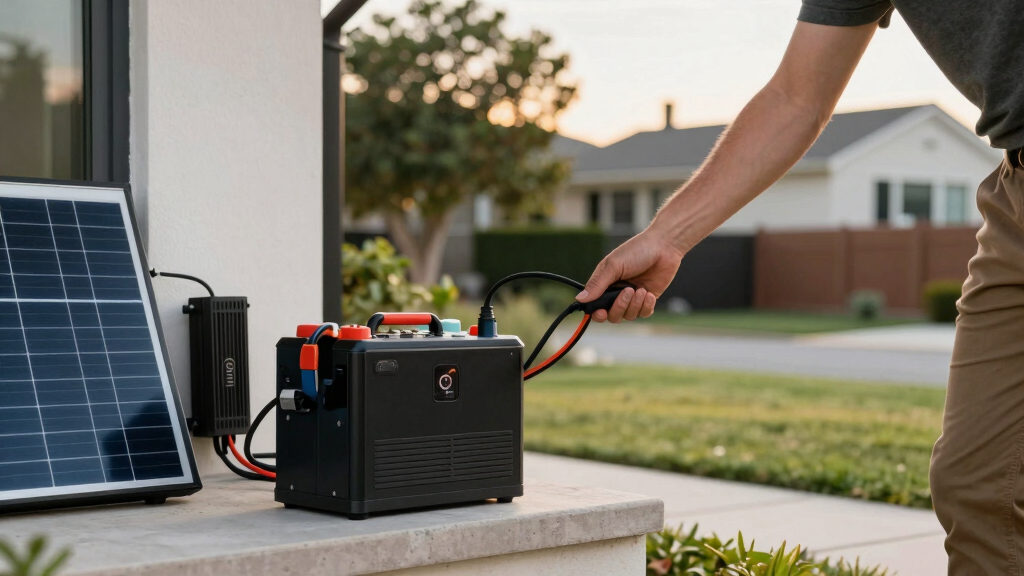

When power outages strike, having a reliable home battery backup system can keep essentials running and provide peace of mind. The CyberPower CP1500PFCLCD stands out as the best overall choice for its balanced capacity, surge protection, and ease of use. For outdoor and portable needs, the Anker SOLIX C1000 Gen 2 offers high power and fast charging, making it ideal for off-grid scenarios. Meanwhile, the APC UPS BE600M1 shines for small electronics and home office setups during outages. These options highlight the main tradeoffs: size versus capacity, portability versus power, and price versus features. Keep reading for the full breakdown and help choosing the right system for your needs.

Get travel and outdoor gear delivered free with Prime
- Fast, free delivery on millions of items
- Prime Video, Amazon Music and more included
- Member-only deals all year


More Details on Our Top Picks
MARBERO Portable Power Station 88Wh Camping Lithium Battery Solar Generator Fast Charging with AC Outlet 120W Peak Power Bank(Solar Panel Optional) for Home Backup Outdoor Emergency RV Van Hunting
This option stands out for its ultra-compact size, making it ideal for outdoor adventures and quick home backups. Compared with larger systems like the Anker SOLIX C1000, the MARBERO’s small form factor sacrifices capacity but offers remarkable portability, perfect for users who prioritize mobility over long-term power. Its 88Wh capacity is best suited for charging phones, small devices, or running a mini fridge for a few hours—a significant tradeoff for its size. The multiple output ports (8 in total) ensure you can power several devices simultaneously, while its fast recharge time (2 hours to 80%) adds convenience. The built-in LED flashlight with SOS mode enhances its emergency utility. However, the limited capacity means it isn’t suitable for powering larger appliances or long outages. Its lightweight (3.2 lbs) design makes it a top choice for outdoor enthusiasts or those needing quick, portable backup, but not for extended power needs.
Pros:- Extremely portable and lightweight, easy to carry in small bags or backpacks
- Fast charging with the included adapter (0-80% in 2 hours)
- Multiple output ports to power several devices simultaneously
- Bright LED with SOS mode for emergencies
Cons:- Limited capacity (88Wh) restricts use to small devices or short-term backup
- Not suitable for powering larger appliances or during extended outages
Best for: Hikers, campers, or homeowners who need a lightweight backup for essential devices during short outages or outdoor trips.
Not ideal for: People seeking to run multiple home appliances for extended periods, as its capacity is too limited for such use.
- Capacity:88Wh
- Weight:3.2 lbs
- Charging Time:2 hours to 80%
- Output Ports:8, including AC, USB, USB-C, car DC
- Size:6.5 x 4.6 x 3.1 inches
- Built-in Light:Yes, with SOS mode
Bottom line: This power station is perfect for outdoor use and short-term emergency needs where portability outweighs capacity.
Jackery Portable Power Station Explorer 300, 292Wh Backup LiFePO4 Battery, Solar Generator for Outdoors Camping Travel Hunting Blackout (Solar Panel Optional)
This pick makes the most sense for those who want a reliable, portable power source with enough capacity for multiple devices. Compared with the DaranEner station, the Explorer 300 offers a higher capacity (292Wh vs. 192Wh) and better support for a variety of devices, including laptops via USB-C and AC outlets. Its 2-hour recharge time (via wall or PD USB-C) enables quick turnaround between uses, especially when paired with solar panels like the SolarSaga 100, which is compatible for off-grid recharging. The 2 AC outlets and multiple USB ports provide ample versatility, while its light weight (7.1 lbs) makes it suitable for camping, home backup, or travel. However, it has fewer output ports than larger systems like the Anker SOLIX C1000, limiting simultaneous device connections. Its steady, safe sine wave output supports sensitive electronics, making it ideal for everyday backup needs without overwhelming portability or capacity.
Pros:- High capacity (292Wh) sufficient for multiple devices or short-term home backup
- Fast recharge (2 hours) via wall or PD USB-C
- Supports a wide range of devices with multiple output options
- Lightweight and portable for outdoor and travel use
Cons:- Limited to about 6 devices at once, fewer ports than larger units
- Not designed for powering high-wattage appliances or long-term outages
Best for: Outdoor enthusiasts, small families, or remote workers who need a portable yet capable backup power source.
Not ideal for: Homeowners needing to power larger appliances or during prolonged outages, as its capacity may fall short.
- Capacity:292Wh
- Weight:7.1 lbs
- Recharge Time:2 hours
- Output Ports:2 AC, USB-C, USB-A, DC
- Battery Type:LiFePO4
- Supports Solar:Yes, with compatible panels
Bottom line: This portable generator strikes a practical balance between capacity and portability for outdoor and emergency use.
CyberPower CP1500PFCLCD PFC Sinewave UPS Battery Backup and Surge Protector, 1500VA/1000W, 12 Outlets, AVR, Mini Tower, UL Certified
This model excels at protecting and maintaining power for computers, network equipment, and sensitive electronics during outages. Unlike portable power stations, it is a UPS designed to provide immediate backup with virtually no interruption—a key advantage for home or office setups. Its 1500VA/1000W capacity supports multiple devices, including desktops, monitors, and routers, with automatic voltage regulation (AVR) to handle minor fluctuations and extend battery life. The LCD display provides real-time info on battery status, while the 12 outlets (half with battery backup) ensure comprehensive coverage. It includes USB ports for quick device charging. However, its size and power capacity are not suitable for powering larger household appliances or high-wattage equipment. Its primary focus is safeguarding electronics during power fluctuations and outages, making it less versatile for off-grid or outdoor use.
Pros:- Provides seamless, immediate backup with no switch-over delay
- Supports multiple devices via 12 outlets with surge protection
- Color LCD panel shows detailed status and alerts
- Automatic Voltage Regulation (AVR) extends battery life
Cons:- Bulkier and less portable than portable power stations
- Limited to supporting electronics, not high-wattage appliances
Best for: Home or small office users who need reliable, immediate backup for critical electronics and network gear.
Not ideal for: Those seeking portable or long-term backup solutions for appliances or outdoor activities.
- Capacity:1500VA/1000W
- Outlets:12
- Type:Pure sine wave
- Warranty:3 years
- Additional Features:AVR, LCD display
- UL Certified:Yes
Bottom line: This UPS is ideal for protecting home and office electronics from power fluctuations and outages without the need for mobility.
Anker SOLIX C1000 Gen 2 Portable Power Station, 2,000W (Peak 3,000W) Solar Generator, Full Charge in 49 Min, 1,024Wh LiFePO4 Battery for Home Backup, Power Outages, and Camping (Optional Solar Panel)
This system stands out for its impressive 2,000W continuous output and rapid recharge time of just 49 minutes, making it suitable for powering larger appliances and sustaining longer outages. Compared with the Jackery Explorer 300, the C1000 offers significantly more power and capacity, ideal for home backup or off-grid living. Its 1,024Wh LiFePO4 battery ensures safety, longevity (over 4,000 cycles), and stability, supporting critical devices like refrigerators, power tools, or multiple electronics simultaneously. Its built-in UPS feature with a 10 ms switchover enhances reliability during outages. The compact size and high wattage support make it a top pick for emergency preparedness or remote work environments. The main tradeoff is its higher cost and size, which may be less convenient for casual camping or small-scale use. Overall, this makes the most sense for users who need substantial, long-term backup power with fast recharging.
Pros:- High continuous power output (2000W) supports larger appliances
- Fast recharge in under 50 minutes
- Long-lasting LiFePO4 battery with 4,000+ cycles
- Supports critical devices with UPS switchover in 10 ms
Cons:- Higher price point compared to smaller, less powerful units
- Bulkier and heavier, less suited for casual outdoor use
Best for: Homeowners, remote workers, or off-grid dwellers who require high wattage and rapid recharging for critical appliances and long-term power security.
Not ideal for: Individuals seeking a lightweight, portable solution for occasional camping or short trips, due to its size and cost.
- Wattage:2000W continuous, 3000W peak
- Capacity:1024Wh
- Recharge Time:49 minutes
- Battery Type:LiFePO4
- Weight:about 24 lbs
- Supports Solar:Yes, with optional panels
Bottom line: This generator is ideal for those needing serious backup power, especially during extended outages or off-grid situations.
DaranEner Portable Power Station, 192Wh LiFePO4 Battery Backup w/2 300W (Surge 600W) AC Outlets, 2H Fast Charging, Power Bank for Hurricane Emergency/Home/Outdoor Camping/RVs Use
This pick offers a solid 192Wh capacity with the advantage of LiFePO4 technology, which supports over 3,500 cycles—a major benefit for long-term, repeated use. Compared with the Jackery Explorer 300, it provides similar capacity but emphasizes durability and safety with its LiFePO4 cells. Its 2-hour fast recharge makes it ready quickly after use, and the dual 300W AC outlets support multiple small appliances or devices. Its compact size (about the size of a toaster) and low weight (around 5.7 lbs) make it highly portable, suitable for emergency kits, outdoor camping, or RV trips. The pure sine wave output ensures safe operation for sensitive electronics. A drawback is its limited capacity, which restricts use to small appliances or essential electronics, and it can’t support high-power devices or extended outages. It’s a dependable, long-lasting backup for basic needs.
Pros:- LiFePO4 battery with over 3,500 cycles for longevity
- Fast recharge (2 hours)
- Compact and lightweight (5.7 lbs)
- Supports multiple small devices simultaneously
Cons:- Limited capacity restricts use to small electronics
- Inadequate for high-wattage appliances or long outages
Best for: Preppers, outdoor campers, or RV owners who need durable, long-cycle power for small devices and quick recharging.
Not ideal for: People wanting to run larger appliances or needing extensive backup during long power outages, due to limited capacity.
- Capacity:192Wh
- Power Outlets:2 x 300W AC
- Recharge Time:2 hours
- Battery Type:LiFePO4
- Weight:5.73 lbs
- Supports Solar:Yes, max 60W
Bottom line: This power station is perfect for long-term, repeated use in emergency or outdoor scenarios where small device power is needed repeatedly.
APC UPS Battery Backup for Power Outages, 600VA/330W Surge Protector, 7 Outlets, USB Charging, BE600M1 Uninterruptible Power Supply for Computers, Wi-Fi Routers, and Home Office Electronics
This APC UPS offers a compact, affordable solution for maintaining internet and computer operation during brief outages. Its 23-minute runtime at 100W load surpasses many basic surge protectors, making it a reliable choice for critical electronics. Compared with larger models like the Jackery Solar Generator, this unit focuses on short-term backup rather than powering appliances for extended periods. Its replaceable internal battery keeps long-term costs down, although frequent battery swaps could be inconvenient. The multiple outlets and surge protection are ideal for home offices, but it isn’t designed to handle high-wattage appliances or serve as a primary backup system. Ideal for users needing quick, reliable, short-term power for essential electronics during outages.
Pros:- Compact and easy to place near workstations
- Swappable internal battery for cost-effective maintenance
- Provides 23 minutes of backup at 100W load
Cons:- Limited to short-term backup, not suitable for prolonged outages
- Only 7 outlets, which may be insufficient for complex setups
Best for: Home office users and small business setups needing reliable short-term backup for computers and routers.
Not ideal for: Households seeking to power large appliances or for long-duration outages, as this unit isn’t built for extended run times.
- VA Rating:600VA
- Wattage:330W
- Number of outlets:7
- Runtime at 100W:23 minutes
- Surge protection:Yes
- USB charging port:Yes
Bottom line: This UPS is best suited for users needing dependable, short-term power for essential electronics during brief outages.
GOLDENMATE 1000VA/800W Lithium UPS Battery Backup and Surge Protector, Backup Battery Power Supply with LiFePO4 Batteries(230.4 Wh), Sinewave UPS System, 10 Years Lifespan, 8 Outlets, LCD Display
Compared to the APC BE600M1, the GOLDENMATE 1000VA/800W stands out for its extended 10-year lifespan and advanced LiFePO4 batteries, making it a more cost-effective choice over time. Its eight outlets and pure sine wave output provide cleaner power for sensitive electronics, suitable for home or small office use. The integrated LCD display offers real-time insights into battery and power status, which is a major convenience. However, its 800W capacity limits its ability to power high-wattage appliances or multiple large devices simultaneously. While it’s ideal for safeguarding computers, routers, and smaller electronics, it isn’t designed for powering household appliances over longer outages. This pick makes the most sense for users prioritizing long-term reliability and detailed monitoring.
Pros:- 10-year lifespan with LiFePO4 batteries
- Real-time LCD status display
- Pure sine wave output for sensitive electronics
Cons:- Limited to 800W, unsuitable for large appliances
- Higher upfront cost compared to basic UPS units
Best for: Home users and small business owners seeking a durable, long-lasting backup for sensitive electronics.
Not ideal for: Households needing to run high-watt appliances like refrigerators or HVAC units during outages, due to its wattage limits.
- Capacity:1000VA / 800W
- Battery type:LiFePO4
- Lifespan:10 years
- Number of outlets:8
- Display:LCD
- Pure sine wave:Yes
Bottom line: This system is ideal for those who want a dependable, long-term backup with detailed system insights for sensitive devices.
Jackery Solar Generator 1000 v2 with 200W Solar Panel, 1070Wh Portable Power Station LiFePO4 Battery, 1500W AC/100W USB-C Output, 1Hr Fast Charge for Outdoor,Off-Grid Living,RV,Emergency
The Jackery Solar Generator 1000 v2 excels in portability, capacity, and versatile charging options, making it a strong choice for outdoor adventures and extended outages. Its 1070Wh LiFePO4 battery provides enough power for appliances like small refrigerators, lights, and laptops, outperforming smaller units like the Explorer 300. The 1-hour fast charge capability is a significant advantage over typical solar generators, enabling quick recharges in emergencies. Yet, its 1500W surge capacity limits power-hungry devices, and the bulk of the solar panel (200W) may be insufficient for rapid recharging in cloudy conditions. This unit is perfect for off-grid living or emergency scenarios but less suited for continuous household backup of large appliances. Best for users needing a portable, renewable power source for outdoor or emergency use.
Pros:- Large 1070Wh capacity with LiFePO4 batteries
- Fast 1-hour recharge via AC or solar
- Multiple output ports including USB-C and AC
Cons:- Limited to 1500W surge, restricting high-power devices
- Relatively heavy at nearly 24 lbs for portable use
Best for: Outdoor enthusiasts, RV travelers, and homeowners seeking portable, renewable backup power for critical devices during outages.
Not ideal for: Users expecting to power large home appliances or requiring prolonged backup, as it isn’t designed for whole-house support.
- Capacity:1070Wh
- Surge Power:1500W
- Battery type:LiFePO4
- Weight:23.8 lbs
- Fast charge time:1 hour
- Output ports:Multiple including AC, USB-C
Bottom line: This generator delivers portable, renewable power ideal for outdoor, off-grid, and emergency scenarios, but isn’t suited for full household backup.
Portable Power Station with Foldable 40W Solar Panel, 100W Solar Powered Generator with Panels, AC Outlet Camping Solar Power Bank 146Wh DC Battery Pack for Smart Device RV Outdoor Power Outage
The ZeroKor Power Station is a compact, lightweight emergency backup solution, ideal for powering small devices like smartphones, tablets, and radios during short outages. Its 146Wh capacity is modest compared to larger units like the Jackery Explorer 1000 but makes it highly portable and easy to carry on outdoor trips or in an emergency kit. The included 40W foldable solar panel adds renewable charging capability, although recharging fully can take several hours, limiting its use for prolonged outages. Its multiple USB ports and small AC outlet are perfect for charging essential small electronics, but it can’t run larger appliances or provide long-term backup. This model best fits users needing a portable, quick-charging solution for small devices in emergencies or outdoor activities.
Pros:- Highly portable and lightweight
- Includes foldable solar panel for renewable charging
- Multiple USB and DC outputs for small devices
Cons:- Limited capacity, unsuitable for powering larger appliances
- Slow recharging if relying solely on solar, especially in cloudy conditions
Best for: Campers, outdoor adventurers, and emergency kits for powering small devices during brief outages.
Not ideal for: Homes or users seeking to power larger appliances or needing extended backup capacity, as its 146Wh capacity is quite limited.
- Capacity:146Wh
- Maximum AC output:100W
- Solar panel wattage:40W
- Weight:4.4 lbs
- Recharge time:Several hours via solar
- Ports:Multiple USB, DC
Bottom line: This is a practical choice for lightweight, portable emergency power for small devices, but not for whole-house backup or long outages.

How We Picked
In evaluating these home battery backup systems, I focused on several key factors that matter most during emergencies. Performance metrics such as capacity (Wh), surge power, and runtime determine how long and effectively a device can support your essentials. Usability aspects like portability, ease of setup, and interface influence how quickly and conveniently you can deploy these systems. Build quality, safety certifications, and maintenance requirements were also considered to ensure reliability over time. Products were ranked based on a balance of power, versatility, and value—favoring systems that deliver dependable backup without unnecessary complexity or cost.Factors to Consider When Choosing Best Home Battery Backup Systems For Emergencies
Choosing the right home battery backup system involves understanding several critical factors beyond just capacity. Each situation, from small electronics to whole-home needs, demands different features. By considering these key elements, you can avoid common pitfalls like overpaying for excessive capacity or ending up with a device too small to meet your needs. The following sections highlight the most important considerations to help you make an informed decision.Capacity and Runtime
The primary factor in selecting a backup system is its capacity, measured in watt-hours (Wh). A higher capacity generally means longer runtime, but it also increases size, weight, and cost. For emergency use that covers critical devices like refrigerators, medical equipment, or lights, aim for at least 500Wh. Smaller units may suffice for charging phones or running a Wi-Fi router, but they won’t sustain larger loads. Remember, capacity isn’t everything; matching your power needs to the system’s output ensures reliable performance during outages.
Power Output and Surge Capacity
Continuous power output, rated in watts, indicates how much load the system can support at once. For essential appliances, choose a system with a continuous wattage above your total load. Surge capacity, often higher than continuous power, handles startup spikes—crucial for devices like refrigerators or compressors. Failing to account for surge needs can cause equipment to shut down unexpectedly. Balance your expected load with the system’s specs to prevent overloads and ensure smooth operation.
Portability and Size
If you need a backup during outdoor activities or for quick deployment, portability becomes a key factor. Smaller, lightweight units are easier to carry but may sacrifice capacity. Larger systems with wheels or handles are better suited for stationary use at home, especially for whole-house backup. Consider how often you’ll move the system and where it will be stored—this helps avoid buying a device that’s either too bulky or insufficiently powerful for your needs.
Charging Options and Speed
Fast charging capabilities, including AC wall charging or solar input, can significantly reduce setup time during an emergency. Some systems can recharge in under an hour, which is a plus for repeated outages or long-term power disruptions. Solar compatibility adds flexibility, especially for off-grid or wilderness use, but may involve additional costs. Think about your typical recharge environment and select a system that aligns with your preferred energy sources and time constraints.
Price and Long-Term Value
Price varies widely across these systems, but investing in a slightly more expensive model can offer better durability, capacity, or safety features. Cheaper units might be tempting for short-term needs but could lack longevity or reliable surge protection. Consider the total cost of ownership, including maintenance, replacement parts, and potential upgrade options. For critical home use, prioritizing quality and warranty coverage often provides better overall value than opting for the lowest initial price.
Frequently Asked Questions
Can I run my entire house on a home battery backup system?
Running an entire house requires a system with very high capacity and power output, typically integrated with your main electrical system through a transfer switch. Most portable backup units are designed for essential circuits or specific appliances rather than full-home coverage. For whole-house backup, dedicated stationary systems like large-scale lithium-ion batteries or generator-integration are more appropriate. Carefully assess your power needs and consult a professional for installation to avoid overloads or safety issues.
How long can a home battery backup power my devices during an outage?
The duration depends on the system’s capacity and the load connected. For instance, a 1,000Wh system running a 100W device could last around 10 hours. Larger units or lower power demands extend this time, but keep in mind that many backup systems are optimized for short-term use rather than continuous, long-term operation. Always estimate your critical device consumption and choose a system that can support those needs for the duration you expect outages to last.
Is solar compatibility necessary for a home emergency backup system?
Solar compatibility is a valuable feature if you want to recharge your system off-grid or during extended outages. It allows for renewable, silent recharging, reducing dependence on grid power. However, solar panels add extra upfront costs and require space and sunlight. If your primary concern is immediate backup during short outages, a grid-charging system might suffice. For long-term resilience, investing in solar-compatible systems can be a strategic advantage.
What safety features should I look for in a home battery backup?
Safety features like overload protection, short-circuit prevention, thermal management, and UL certification are essential. These protections prevent damage to your devices and reduce fire risks. Systems with built-in surge protection safeguard sensitive electronics, while thermal management ensures consistent operation in different environments. Always verify that the product meets recognized safety standards and includes safety certifications before purchase.
What’s the difference between portable power stations and UPS systems for emergencies?
Portable power stations are designed for mobile use, outdoor activities, and short-term backup, offering multiple outlets and the ability to recharge via solar or wall power. UPS systems, on the other hand, are intended for continuous, immediate backup of electronic devices like computers and routers, often with automatic transfer features. They typically support smaller loads but provide seamless power without interruption during outages. Your choice depends on whether you need portable power or an uninterruptible supply for sensitive electronics.
Conclusion
For most homeowners seeking reliable emergency backup, the CyberPower CP1500PFCLCD offers an excellent balance of capacity, safety, and ease of use, making it the best overall choice. If portability and outdoor use are priorities, the Anker SOLIX C1000 Gen 2 provides high power and fast recharge, ideal for off-grid scenarios. Budget-conscious buyers will find the APC UPS BE600M1 sufficient for protecting small electronics during short outages. For those wanting a premium, long-lasting solution, investing in systems with high capacity and solar compatibility can provide peace of mind during extended emergencies. Tailor your choice based on your specific needs—whether it’s whole-house backup, portable power, or critical electronics protection.
Fall Picks
fall essentials
As an affiliate, we earn on qualifying purchases.