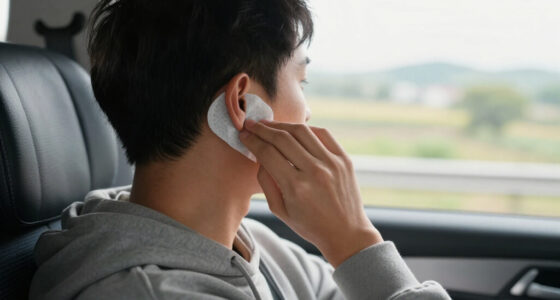

Many travelers make the mistake of wearing in-ear devices tightly during altitude changes, which traps air and prevents your ears from regulating pressure naturally. This creates a seal that blocks the equalization process, leading to discomfort, plugged ears, or even dizziness. To avoid this, keep a slight gap or switch to over-ear headphones, and use pressure-equalizing techniques like swallowing or yawning. Continue to explore how proper ear care can make your travels smoother.
Key Takeaways
- Inserting earbuds tightly during altitude changes can trap air and block pressure equalization, causing discomfort.
- Not maintaining earbud hygiene can lead to infections, affecting pressure regulation and ear health.
- Failing to use pressure-equalizing techniques like swallowing or yawning can result in ear pain or dizziness.
- Relying solely on noise canceling features without considering their impact on ear pressure can increase discomfort.
- Using over-ear headphones or leaving a slight gap helps prevent pressure buildup during altitude shifts.
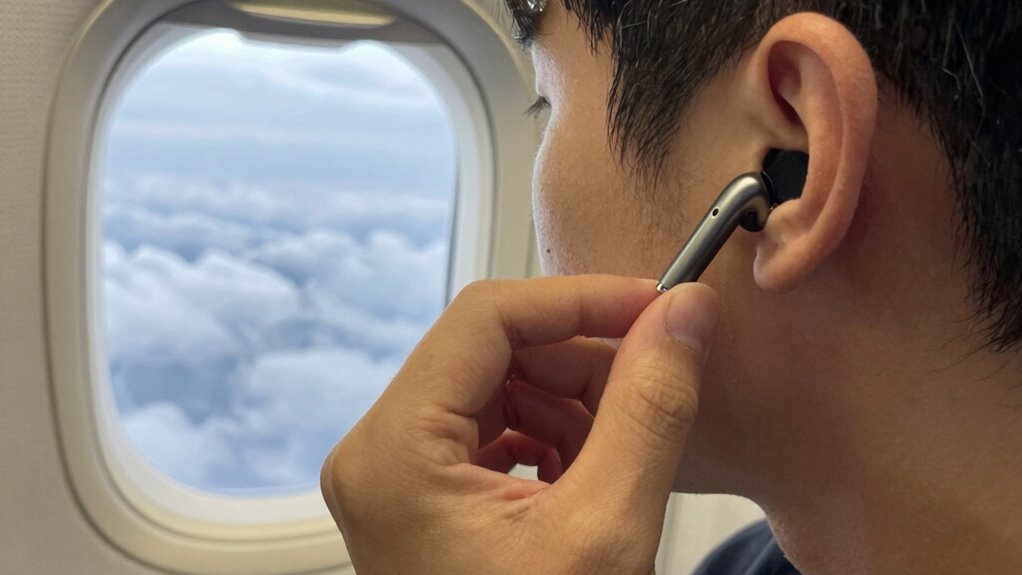
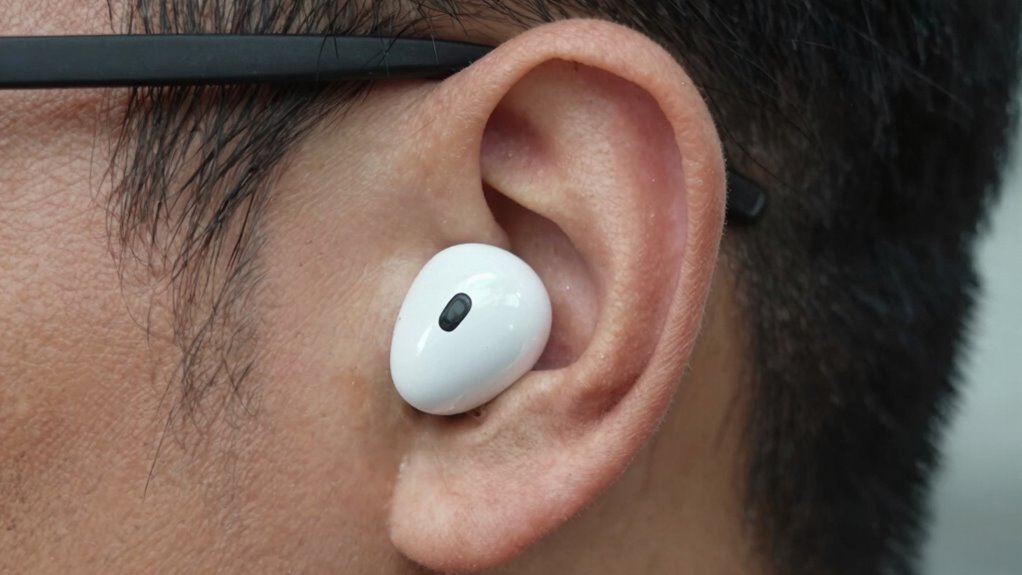
Many travelers unknowingly make a common mistake that can lead to uncomfortable ear pressure during flights or altitude changes. That mistake is using in-ear devices like earbuds or headphones without understanding how they impact your ears. While these devices offer noise canceling benefits, which can make noisy environments more tolerable, they can also contribute to discomfort if used improperly. When you insert earbuds during ascent or descent, you’re altering the way your ears equalize pressure. Instead of allowing your ears to adapt naturally, you might be creating a seal that traps air, making it harder for pressure to balance out. This can leave you feeling plugged up, painful, or even dizzy.
Using earbuds during altitude changes can trap air and cause discomfort or dizziness.
Another important aspect to contemplate is earbud hygiene. If you don’t keep your earbuds clean, you risk introducing bacteria or dirt into your ears, which can cause infections or irritation. Dirty earbuds can also affect the seal they create, making it more difficult for your ears to adjust during altitude changes. Keeping your earbuds clean is simple but essential; wipe them regularly with alcohol wipes and avoid sharing them with others. Poor hygiene combined with improper use can intensify discomfort and lead to longer-term ear health issues.
When you’re on a flight or heading uphill, it’s best to use your earbuds thoughtfully. Instead of inserting them tightly and creating a seal, try to keep a slight gap or choose over-ear headphones that do not block the ear canal as much. This allows your ears to breathe and equalize more easily. If you’re using noise canceling earbuds, be aware that their design might make pressure changes more noticeable because they block external sounds more effectively, which can sometimes intensify the feeling of ear pressure. Adjusting the fit or taking breaks from wearing them can help alleviate discomfort.
It’s also wise to incorporate pressure-equalizing techniques—like swallowing, yawning, or the Valsalva maneuver—while using your earbuds, especially during altitude shifts. These actions help open the Eustachian tubes, allowing air to flow and equalize pressure naturally. Avoid the temptation to ignore discomfort or to force earbuds deeper into your ears to block noise; doing so can worsen the problem and harm your ear health. Prioritizing earbud hygiene and understanding how your devices affect pressure regulation will make your travels more comfortable and safer. By being mindful of these factors, you can enjoy the benefits of noise canceling and high-quality audio without suffering from uncomfortable ear pressure.
As an affiliate, we earn on qualifying purchases.
Frequently Asked Questions
Can Using In-Ear Devices Cause Permanent Hearing Damage?
Using in-ear devices can cause permanent hearing damage if you ignore ear canal health and hearing loss risks. Listening at high volumes or for long periods damages delicate ear structures, increasing the chance of irreversible hearing loss. To protect yourself, keep volume levels moderate, limit usage, and maintain ear hygiene. Regular breaks and proper cleaning help prevent buildup and reduce risks, ensuring your hearing stays safe over time.
Are There Specific In-Ear Devices Safer for Frequent Travelers?
Yes, for frequent travelers, choosing in-ear devices with good hygiene features and ergonomic designs helps protect your ear canal health. Look for models with antimicrobial coatings and easy-to-clean ear tips. Proper hygiene practices, like cleaning your devices regularly and avoiding sharing, minimize risks. Prioritize in-ear devices that fit well without causing discomfort or pressure, reducing the chances of ear damage during travel.
How Long Should I Wait Before Flying After Using In-Ear Headphones?
You should wait at least 30 minutes after using in-ear headphones before flying. This helps protect your ear canal health by reducing pressure buildup and allows any moisture or wax to clear. Make sure your device hygiene is up to date to prevent infections. If you experience discomfort or pressure, give your ears extra time to recover before takeoff. Proper timing minimizes ear pressure issues and maintains overall ear health during travel.
Do Noise-Canceling In-Ear Devices Impact Ear Pressure Differently?
Noise-canceling in-ear devices can impact ear pressure differently because their device design creates a seal in your ear canal, which may increase pressure. This can affect your sound quality and comfort during flights. If you notice discomfort, try adjusting the fit or taking breaks. Being aware of how these devices influence ear pressure helps prevent discomfort and preserves sound quality, making your listening experience more enjoyable and safe during travel.
What Are the Signs of Ear Barotrauma From In-Ear Device Use?
You might notice ear discomfort, a feeling of fullness, or pain if you experience ear barotrauma from in-ear device use. Pressure buildup can cause your ears to feel plugged or even lead to temporary hearing changes. If you see fluid, notice ringing, or develop severe pain, these are signs to stop using the device immediately and seek medical help. Always be cautious to prevent damage from pressure differences.
Conclusion
Next time you reach for your in-ear device during a flight, remember that it’s easy to overlook the pressure build-up. It’s funny how such a small habit can lead to discomfort, especially when you’re already dealing with the stress of traveling. Sometimes, the tiniest oversight, like ignoring ear pressure, can turn a smooth journey into a painful one. So, be mindful—what seems minor might just be the coincidence that spoils your trip.