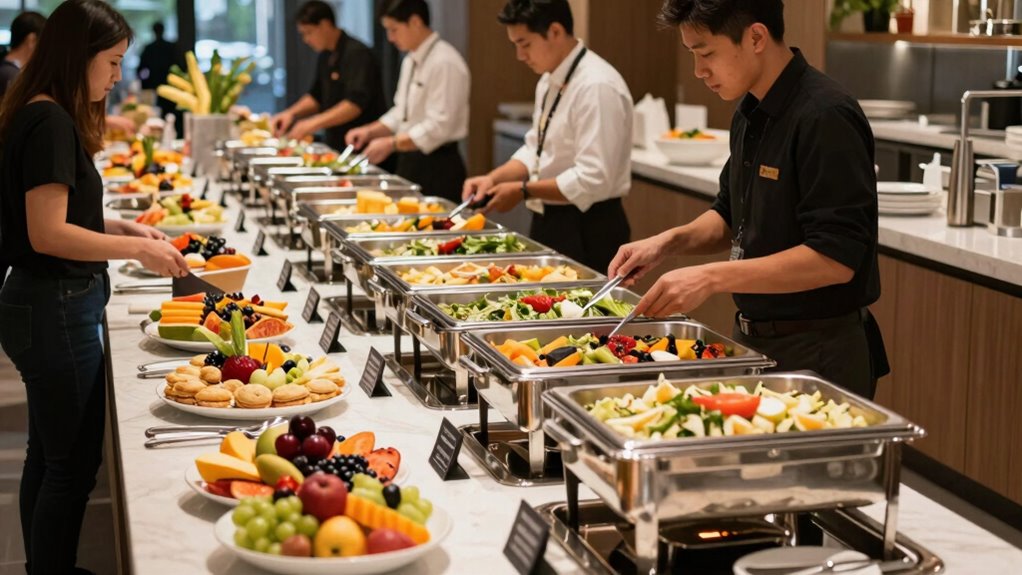

You notice some buffets run smoothly even during busy hours because they have attentive staff who are proactive without being intrusive, replenishing food and clearing plates quickly. Cleanliness is maintained by constant monitoring, which boosts your confidence. Well-trained staff adapt efficiently to challenges, keeping service consistent. The layout is thoughtfully designed to prevent congestion, and effective traffic flow manages crowds seamlessly. These strategies create a well-organized experience that makes you feel valued—continue exploring to learn more about what makes a buffet truly exceptional.
Key Takeaways
- Well-trained staff proactively monitor and replenish food, maintaining availability and reducing wait times.
- Effective layout and space management ensure smooth traffic flow and prevent congestion.
- High cleanliness standards create a hygienic environment that enhances guest confidence.
- Staff adaptability and quick response to challenges uphold consistent service quality during busy periods.
- Strategic organization and coordination optimize efficiency, making the buffet feel well-managed even at peak times.

During peak hours, it’s easy to assume that all buffets become chaotic and poorly managed, but some establishments maintain a seamless experience. You might notice that even when the crowd swells, these buffets keep things running smoothly, and a lot of it comes down to how they prioritize customer service and cleanliness standards. When you walk in, you can immediately sense the difference—staff members are attentive without being intrusive, and the space feels clean and organized. That’s no accident. These buffets understand that during busy times, excellent customer service is key to managing the chaos. Staff members often move proactively, replenishing food before it runs out and clearing plates swiftly, so you never feel neglected or overwhelmed. Their friendly attitude makes you feel valued, which encourages you to stay longer and enjoy your meal without frustration. Maintaining high cleanliness standards is also crucial, as it directly influences your overall perception of the establishment. Moreover, consistent staff training ensures that everyone is equipped to handle high-pressure situations effectively. A well-trained team can better adapt to unexpected challenges, maintaining the quality of service even during the busiest hours.
Cleanliness standards also play a *vital* role in creating an inviting atmosphere, especially when the place is crowded. At well-managed buffets, you’ll see staff constantly monitoring the food stations, wiping down surfaces, and ensuring that utensils and plates are clean and available. They recognize that during peak hours, messes can quickly pile up, but their diligence prevents the space from becoming unkempt. This attention to detail makes a significant difference in how you perceive the overall experience. When the buffet remains neat and hygienic, it boosts your confidence in the establishment’s standards and makes the meal more enjoyable. The layout design also contributes significantly, as thoughtful arrangements help maintain flow and prevent congestion.
The best-managed buffets also design their layout to handle high traffic efficiently. You’ll notice clear pathways and strategically placed stations that prevent bottlenecks, making it easier for everyone to access food without feeling crowded or rushed. This thoughtful setup, combined with attentive staff who anticipate your needs, creates a sense of order amid the rush. It’s clear that they’ve put effort into training their team to stay alert and responsive, ensuring that customer service doesn’t dip even at the busiest times. The staff’s ability to stay organized and friendly under pressure is what truly sets these buffets apart, making you feel like you’re in good hands, no matter how packed the place gets. These strategic considerations often stem from a deliberate focus on efficient layout and staff coordination. Additionally, employing effective traffic flow management techniques can further enhance the overall guest experience during peak times.
In the end, it’s all about the balance between attentive customer service, strict cleanliness standards, and smart layout planning. When these elements come together, even the busiest buffets can deliver a smooth, satisfying experience that keeps you coming back.
buffet food warmer trays
As an affiliate, we earn on qualifying purchases.
As an affiliate, we earn on qualifying purchases.
Frequently Asked Questions
How Do Buffets Handle Food Safety During Busy Hours?
During busy hours, buffets handle food safety by closely monitoring food storage and maintaining strict hygiene practices. You’ll see staff frequently checking temperatures and replenishing dishes to keep everything fresh and safe. They also guarantee proper food storage to prevent cross-contamination. Plus, employees adhere to hygiene practices like wearing gloves and sanitizing surfaces regularly, which helps maintain a safe environment for everyone even during peak times.
What Training Do Staff Receive for Peak-Time Management?
During peak times, staff receive training in staff communication and multitasking to guarantee smooth operations. You’re taught to coordinate seamlessly, quickly addressing guest needs while managing food replenishment. They learn to prioritize tasks effectively and communicate clearly, reducing chaos. This training helps staff stay organized and responsive, creating a better experience for guests even during busy hours. Your staff’s ability to multitask and communicate efficiently makes the buffet feel well-managed at all times.
How Do Buffets Monitor Customer Satisfaction in Real-Time?
You can monitor customer satisfaction in real-time by actively collecting guest feedback through comment cards, digital surveys, or direct conversations. Staff observe service speed and guest reactions, adjusting accordingly. Managers also track wait times and table turnover rates, ensuring service remains efficient. This real-time approach helps address issues promptly, making guests feel valued and improving overall satisfaction, even during busy peak times.
What Technologies Are Used to Optimize Buffet Operations?
You use smart technologies like guest flow management systems and inventory tracking software to optimize buffet operations. These tools monitor how many guests arrive and move through the space, helping you adjust staffing and food replenishment in real-time. Inventory tracking guarantees you maintain fresh, sufficient supplies without overstocking, reducing waste. By leveraging these technologies, you create a smoother experience during peak times, making your buffet feel better managed and more efficient for everyone.
How Do Buffets Prevent Food Wastage at Peak Times?
At peak times, buffets prevent food wastage through smart strategies like portion control and waste tracking. You’ll notice they carefully monitor how much food is served and consumed, adjusting portions to avoid leftovers. This proactive approach keeps waste minimal, ensuring freshness and efficiency. By tracking waste patterns, buffets can refine their offerings, creating a seamless experience that balances abundance with sustainability—leaving you satisfied without excess.
restaurant plate clearing station
As an affiliate, we earn on qualifying purchases.
As an affiliate, we earn on qualifying purchases.
Conclusion
So, next time you visit a buffet that seems to run smoothly even at its busiest, ask yourself—what’s their secret? It’s all about smart planning, clear organization, and attentive staff. When these elements come together, you feel less overwhelmed and more comfortable, no matter the crowd. Isn’t it nice to enjoy your meal without the chaos? With a well-managed buffet, everyone leaves happier—and that’s what truly matters.
hygienic buffet serving utensils
As an affiliate, we earn on qualifying purchases.
As an affiliate, we earn on qualifying purchases.
crowd flow management barriers
As an affiliate, we earn on qualifying purchases.
As an affiliate, we earn on qualifying purchases.