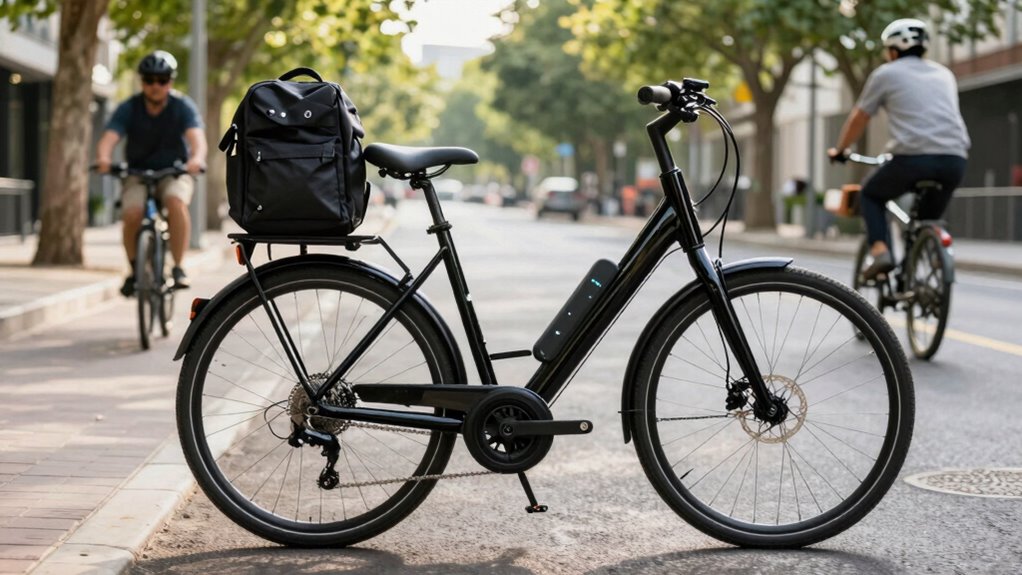

To improve your e-bike’s real-world range, you should manage your pedal assist wisely by choosing lower levels on flat terrain and turning it off when possible. Maintain steady pedaling and avoid sudden bursts of power to conserve energy. Keep your bike in good condition with regular maintenance and correct tire pressure. Planning your routes and riding efficiently can also extend your ride distances. Keep these habits consistent, and you’ll release better range and performance. Learn more to optimize your e-bike experience even further.
Key Takeaways
- Use the lowest assist level suitable for terrain to conserve battery power.
- Practice steady pedaling and avoid sudden bursts of high power.
- Regularly check and maintain tire pressure to reduce rolling resistance.
- Plan rides to prevent full battery discharges and optimize battery lifespan.
- Switch off assist on flat or short routes to extend ride distance.
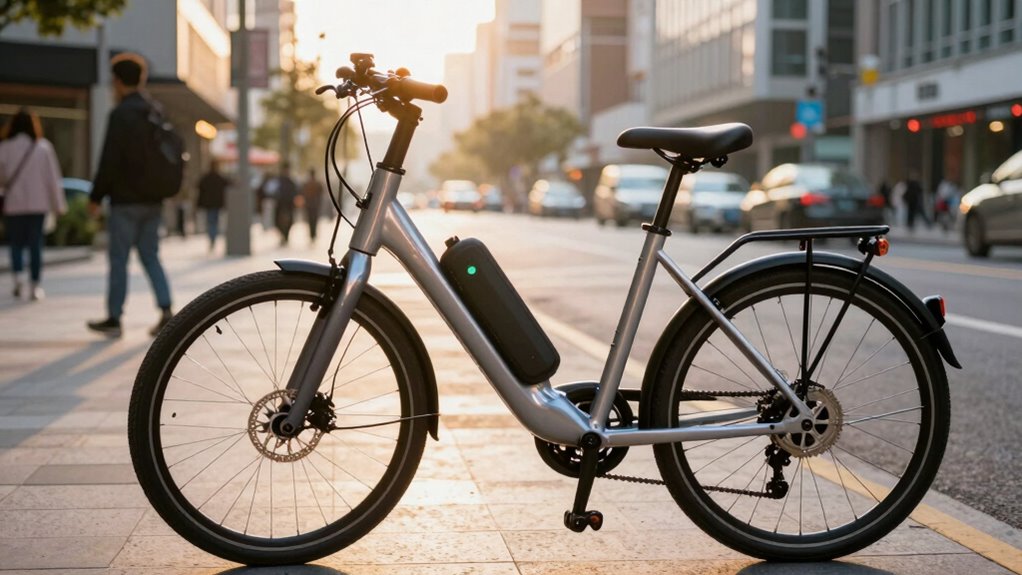
Have you ever wondered how your riding habits impact your e-bike’s range? The way you ride can significantly influence not just how far you go but also the longevity of your battery. One key habit to develop is understanding how to use pedal assist wisely. Pedal assist helps you conserve battery power by giving you a boost when pedaling, but if you’re not mindful, you might rely on it excessively, draining your battery faster and shortening its overall lifespan. Using pedal assist efficiently involves adjusting the level to match the terrain and your effort, rather than leaving it on high all the time. For example, on flat roads or gentle inclines, lower assist levels provide enough help without wasting energy. This not only extends your range but also preserves your battery’s health over time.
You should also be conscious of how often you use pedal assist versus riding without it. Many riders fall into the trap of relying heavily on assist for every pedal stroke, which can lead to quicker battery depletion and reduce battery longevity. Instead, learn to switch between assist levels or ride without assistance when possible. For short trips or flat routes, riding without assist can save battery life and give the motor and battery a break, ultimately making your battery last longer. When you use assist only when necessary, you’re more likely to enjoy longer rides without needing frequent recharges and keep your battery in good shape for years to come. Additionally, understanding your e-bike’s battery capacity can help you plan your rides more effectively and avoid unexpected power loss. Maintaining a consistent riding style can also help optimize your e-bike’s overall efficiency and battery health. Moreover, practicing efficient riding techniques can significantly improve your range and prolong your battery’s lifespan. It’s also beneficial to be aware of battery management practices, such as avoiding complete discharges, to prolong your battery’s lifespan.
Another habit that impacts your e-bike’s range is maintaining consistent pedaling effort. Sudden bursts of high power or inconsistent pedaling can drain your battery faster. Instead, aim for steady, moderate effort, especially on longer rides, to maximize efficiency. This also helps in keeping the battery healthier over its lifespan because it reduces unnecessary strain on the cells. Regularly checking your tire pressure and keeping your bike well-maintained also contributes to better range, as rolling resistance is minimized. When your bike runs smoothly, it’s easier to use pedal assist judiciously, which in turn helps prolong your battery’s longevity.

The Complete E-Bike Manual: Maintenance, Repair, Troubleshooting & DIY Conversion Guide for Batteries, Hub Motors, Controllers and Performance Upgrades
As an affiliate, we earn on qualifying purchases.
As an affiliate, we earn on qualifying purchases.
Frequently Asked Questions
How Does Weather Affect E-Bike Range?
Weather impact considerably affects your e-bike range, causing fluctuations you’ll notice during rides. Cold temperatures can reduce battery efficiency, leading to shorter distances, while hot weather might drain power faster due to increased motor demand. Wind resistance can also lower your range, especially when riding against strong gusts. To maximize your e-bike’s range, plan rides in moderate weather and avoid extreme temperatures, ensuring consistent performance and longer trips.
Can I Extend My E-Bike’s Battery Life?
Think of your e-bike battery like a garden that needs regular tending. To extend your battery’s life, practice proper battery maintenance by avoiding extreme temperatures and not fully depleting it. Smart energy conservation, like riding at moderate speeds and avoiding unnecessary acceleration, also helps. These habits guarantee your battery stays healthy longer, much like a well-cared-for garden flourishes, giving you more reliable rides and maximizing your e-bike’s lifespan.
What Accessories Impact Riding Range?
Accessories like upgraded tires and proper battery maintenance can substantially impact your riding range. Efficient tires reduce rolling resistance, helping you conserve energy and extend your ride. Meanwhile, maintaining your battery—keeping it charged properly and avoiding extreme temperatures—ensures peak performance. By focusing on these aspects, you’ll get more miles per charge, making your rides smoother and more enjoyable without needing extra accessories.
How Often Should I Charge My E-Bike?
You should charge your e-bike after every ride or when the battery drops to around 20-30%. Proper battery maintenance involves avoiding full discharges and keeping the charge between 20-80%. Follow good charging etiquette by using the recommended charger and not overcharging. Regularly charging your e-bike helps prolong battery life, ensures reliable performance, and maximizes your riding range for future adventures.
Does Rider Weight Influence Range?
Yes, rider weight affects your e-bike’s range because increased rider weight leads to higher power consumption. Studies confirm that heavier riders require more energy to pedal and maintain speed, which reduces overall range. So, if you’re heavier, expect to use more battery power, especially on hills or long rides. To optimize your e-bike’s performance, consider your weight when planning rides or managing battery life.
Conclusion
By adopting this simple e-bike range habit, you’ll unlock a smoother, more reliable ride every time. But here’s the catch—once you get used to it, you might never want to go back. The secret lies in how you manage your energy and plan your routes. So, are you ready to discover the true potential of your e-bike? The next ride could be your best yet—if you dare to change just one thing.