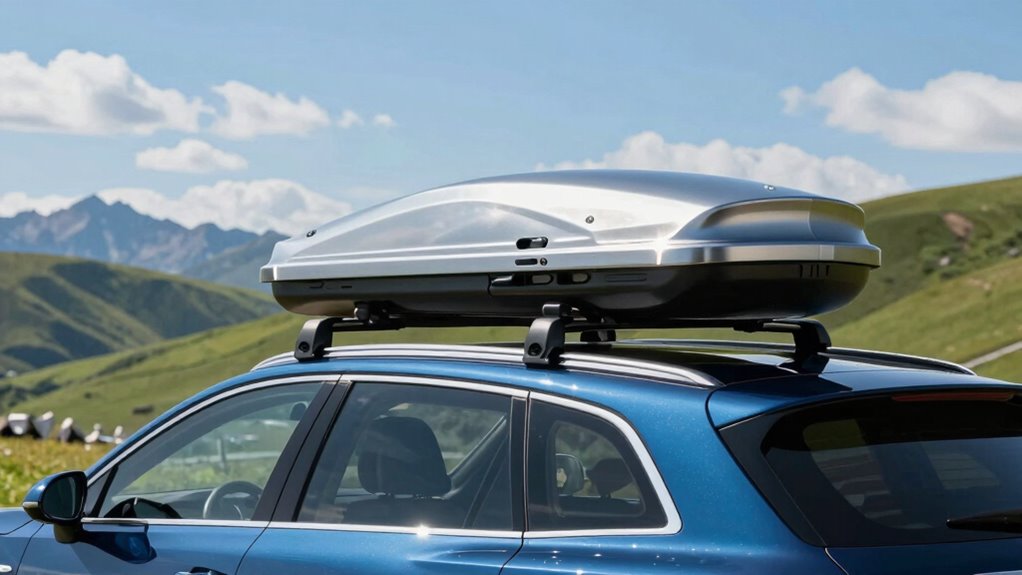

When you add a roof box to your vehicle, it impacts more than just cargo space. The design and placement affect aerodynamics, increasing air resistance and noise, which can lower fuel efficiency. Properly secured and aligned roof boxes help maintain vehicle stability and handling, especially on long drives. A poorly chosen or installed roof box can raise your vehicle’s center of gravity, making it less stable. If you’re curious about how to optimize your setup, keep exploring these important factors.

Get travel and outdoor gear delivered free with Prime
- Fast, free delivery on millions of items
- Prime Video, Amazon Music and more included
- Member-only deals all year
Key Takeaways
- Roof boxes affect vehicle aerodynamics, increasing drag and reducing fuel efficiency during long drives.
- They raise the vehicle’s center of gravity, impacting handling and stability on curves and uneven roads.
- Improperly mounted roof boxes can cause turbulence, noise, and discomfort while driving.
- Extra weight on top can strain the vehicle’s suspension and reduce overall driving safety.
- Security features and load placement influence safety and stress levels during extended trips.
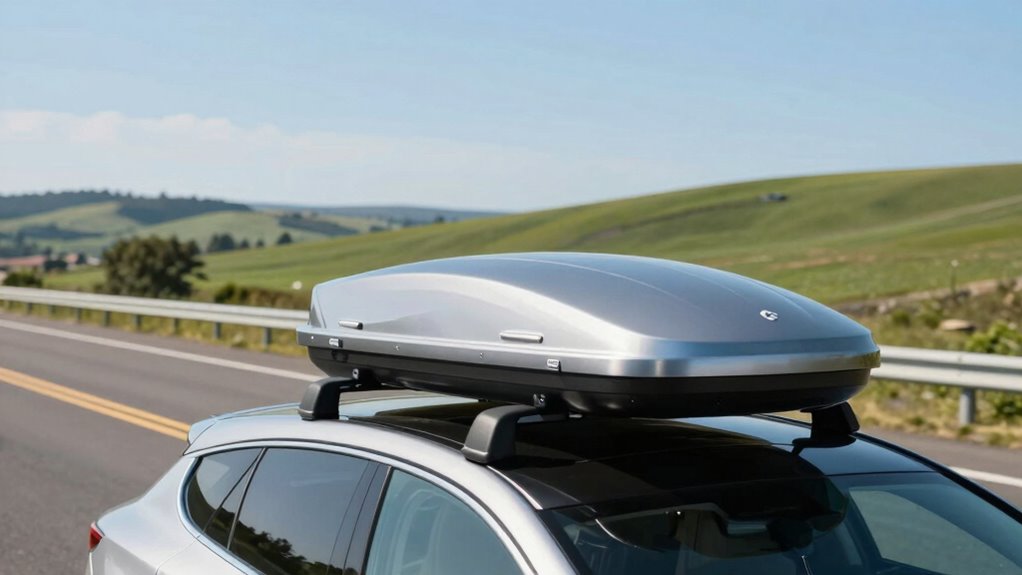
Ever wondered how to make long drives more manageable and less stressful? One of the most effective ways is by adding a roof box to your vehicle. But beyond just increasing cargo space, a roof box influences several aspects of your driving experience, especially during extended trips. For starters, the aerodynamics of your roof box plays a fundamental role. A well-designed roof box is streamlined to minimize air resistance, helping your vehicle maintain better fuel efficiency. When you choose a roof box with good aerodynamics, you reduce drag, which means your engine doesn’t have to work as hard, saving you money on fuel and lowering emissions. Conversely, an improperly designed or bulky roof box can create turbulence, increasing wind noise and making your drive noisier and less comfortable. Additionally, the aerodynamic design of a roof box directly impacts how much wind resistance it generates, affecting overall driving comfort. Ensuring your roof box is properly mounted and aligned also maximizes its aerodynamic benefits and minimizes adverse effects. Proper installation can also prevent unnecessary vibrations or noise caused by misalignment. Security is another essential factor that changes when you add a roof box. While it might seem like just an extra storage space, a roof box demands attention to roof box security. You want a model with sturdy locking mechanisms to prevent theft and guarantee your belongings stay safe, especially when you stop for breaks or overnight stays. Many roof boxes come with key locks or tamper-proof features, giving you peace of mind. Not only does this protect your gear, but it also prevents accidental opening while driving, which could be dangerous at high speeds. Investing in a roof box with reliable security measures means you won’t worry about your items falling out or being stolen, so you can focus on enjoying your trip. Properly securing your load within the roof box is crucial to prevent shifting during acceleration or braking, which could compromise safety. Adding a roof box also impacts your vehicle’s handling. The increased weight on top raises the center of gravity, which can affect stability and cornering. This change may require you to adjust your driving style — slowing down on turns and being more cautious in strong crosswinds. Understanding how vehicle dynamics change with added roof storage helps in adopting safer driving habits during long journeys. The weight distribution of your vehicle can also influence how it responds to different driving conditions, so it’s important to consider this when packing your roof box. Furthermore, being aware of your vehicle’s maximum load capacity ensures you don’t exceed safe limits, maintaining optimal safety and performance. Additionally, considering the material quality of your roof box can impact its durability and ability to withstand weather conditions during long trips. Finally, long drives become smoother when you pay attention to these factors. A well-chosen roof box with good aerodynamics and security features makes your trip less stressful by reducing noise, improving fuel economy, and keeping your belongings safe. Knowing your roof box is secure allows you to relax and focus on the road, while its aerodynamic design helps your vehicle glide through the air effortlessly. So, when planning your next long journey, consider not just how much your roof box can carry but also how it influences your driving comfort, safety, and efficiency.
As an affiliate, we earn on qualifying purchases.
Frequently Asked Questions
How Do Roof Boxes Affect Vehicle Aerodynamics During Long Trips?
Roof boxes impact your vehicle’s aerodynamics by increasing drag, which can reduce fuel efficiency on long trips. They create turbulence and disrupt airflow, leading to higher wind resistance. Additionally, roof boxes often produce more wind noise, making your drive less comfortable. To minimize these effects, choose a streamlined design and guarantee proper installation, helping you maintain better drag reduction and a quieter ride during extended journeys.
Are There Safety Concerns With Roof Boxes in Adverse Weather Conditions?
You bet there are safety concerns with roof boxes in bad weather. High wind resistance can cause instability, especially if the load isn’t secure, making your vehicle more prone to sway or even accidents. Heavy rain or snow increases the risk of water ingress and load shifting. Always double-check load stability and secure fastenings before hitting the road, because a stitch in time saves nine in rough weather.
How Do Roof Boxes Impact Fuel Efficiency Over Extended Drives?
Roof boxes increase your vehicle’s aerodynamic drag, which leads to higher fuel consumption over extended drives. As you travel, the added wind resistance forces your engine to work harder, burning more fuel. The impact is especially noticeable at higher speeds, where aerodynamic drag becomes more significant. To minimize this, consider removing the roof box when you don’t need extra cargo space, helping you save fuel and reduce costs on long journeys.
What Maintenance Is Required for Roof Boxes After Long Journeys?
Ever wonder what maintenance your roof box needs after a long journey? First, you should do some roof box cleaning to remove dirt, grime, or residue. Next, check the secure attachment tips to make sure everything stayed tight and safe during your drive. Regularly inspecting and cleaning your roof box helps maintain its condition and safety, giving you peace of mind on your next adventure.
Can Roof Boxes Cause Damage to the Vehicle’s Roof Over Time?
Roof boxes can cause damage to your vehicle’s roof over time if not properly installed or if you use low-quality materials. Poor roof box installation might lead to scratches, dents, or stress on the roof’s structure. Using roof boxes made from durable, lightweight materials can minimize damage. Regularly check the mounting system and guarantee proper weight limits to protect your vehicle’s roof during long drives.
Conclusion
As you drive down winding roads, your roof box becomes more than just extra space; it transforms into a steadfast companion, shifting with every turn and bump. With each mile, you’ll notice how it adapts, whispering stories of long journeys and open skies. So, next time you pack up for a road trip, remember—your roof box isn’t just holding your gear, it’s part of the adventure, always ready to move with you through every twist and turn.
Halloween Picks
halloween
As an affiliate, we earn on qualifying purchases.