
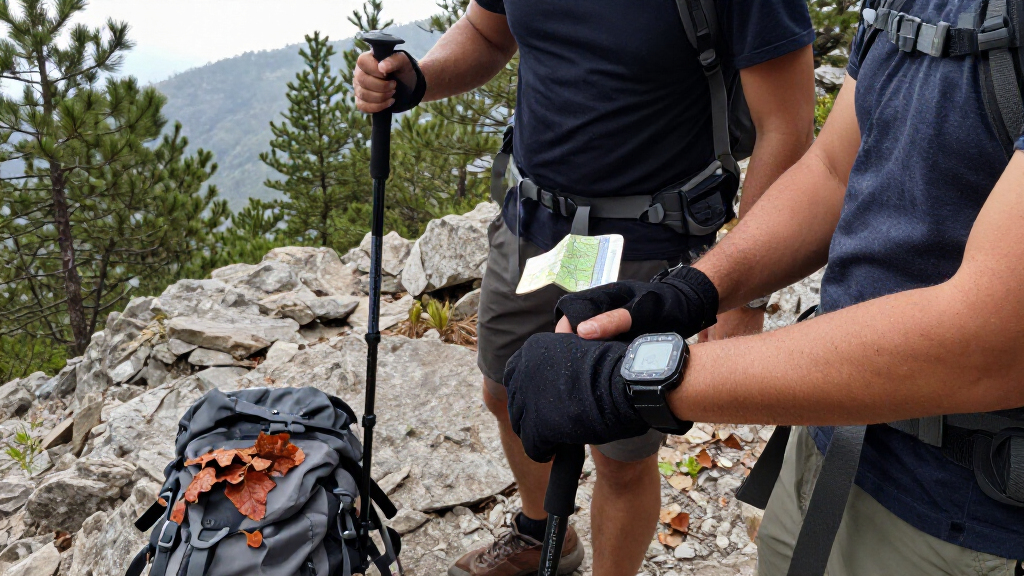

For Black Friday hiking GPS watches, my best overall pick is the Garmin Instinct 3 Solar 50 mm, which pairs a rugged build with solar charging for long days outdoors. The Instinct 3 AMOLED is a stronger fit if a vivid, easy-to-read screen matters more than maximizing battery life, while the Instinct E 45 mm offers a simpler, smaller Garmin option. The main tradeoffs are battery endurance versus display clarity, compact fit versus a larger case, and dedicated outdoor navigation features versus lower-cost smartwatch extras. This roundup compares 13 options by their fit for hiking, practical strengths, and limitations. Read on for the full breakdown and guidance on choosing the right watch for your routes.

Get travel and outdoor gear delivered free with Prime
- Fast, free delivery on millions of items
- Prime Video, Amazon Music and more included
- Member-only deals all year
Complete the kit


Key Takeaways
The Garmin Instinct line leads this roundup for trail-focused use: its many case sizes, solar versions, and tactical variants make it easier to match a watch to a specific hiking routine.
Solar models favor endurance over screen style: the Instinct 3 Solar options prioritize extending time between charges, while the AMOLED versions trade that emphasis for a more vivid display.
Case size affects comfort as well as visibility: the 50 mm Garmin models offer a larger wrist presence, while 45 mm choices suit buyers who want a less bulky fit.
Tactical editions are specialized rather than automatic upgrades: buyers should choose them for their particular outdoor or operational needs, not assume those features improve every hike.
Low-cost generic GPS watches need closer scrutiny: their added smartwatch functions may appeal to casual users, but a long feature list alone does not establish hiking-grade navigation or battery endurance.
| Rugged Smartwatch for Men with GPS, Flashlight, Compass, and Long Battery Life |  | Best Value-Style Feature Set | GPS: Built-in GPS with route recording | Display: 1.91-inch HD TFT touchscreen | Battery: 900mAh; up to 100+ days standby or 20 days regular use | VIEW LATEST PRICE | See Our Full Breakdown |
| Garmin Instinct 3 AMOLED Rugged GPS Smartwatch, 50 mm, Charcoal |  | Best Overall for GPS Clarity | Display: 1.3-inch AMOLED | Case size: 50 mm | Battery life: Up to 24 days in smartwatch mode | VIEW LATEST PRICE | See Our Full Breakdown |
| Garmin Instinct 3 Tactical Solar GPS Smartwatch, 50 mm, Black |  | Best for Tactical Trail Use | Model: Instinct 3 Tactical Solar | Case size: 50 mm | GPS: Built-in multi-band GPS with SatIQ | VIEW LATEST PRICE | See Our Full Breakdown |
| Garmin Instinct 3 Solar Rugged GPS Smartwatch, 50 mm, Charcoal |  | Best Solar Pick for General Hiking | Display: 1.1-inch | Case size: 50 mm | Battery: Unlimited smartwatch-mode battery life with solar charging under specified sunlight conditions | VIEW LATEST PRICE | See Our Full Breakdown |
| Garmin Instinct 2X Solar Tactical Edition GPS Smartwatch, Black |  | Best for Long GPS Trips and Tactical Tools | Case size: 50 mm | Display: 1.1-inch LED, 480 x 272 | Battery life: Up to 40 days average; up to 145 hours in GPS mode with solar charging | VIEW LATEST PRICE | See Our Full Breakdown |
| Garmin Instinct 2 Camo Edition Rugged GPS Smartwatch |  | Best for Long Treks | Display: 1.12 inches; 480 x 272 resolution | Battery life: Up to 28 days in smartwatch mode; up to 30 hours in GPS mode | Navigation: GPS, GLONASS, Galileo, and TracBack routing | VIEW LATEST PRICE | See Our Full Breakdown |
| Jugeman Military Smartwatch with GPS and LED Flashlight, Black |  | Best for Built-In Flashlight | Display: 1.43-inch AMOLED touchscreen | GPS: Built-in; GPS, GLONASS, BeiDou, Galileo, NAVIC, and QZSS | Battery life: 7–10 days per charge; about 3 days of continuous GPS use | VIEW LATEST PRICE | See Our Full Breakdown |
| Garmin Instinct E Rugged GPS Smartwatch, 45 mm, Charcoal |  | Best Straightforward Garmin Pick | Case size: 45 mm | Battery life: Up to 16 days | Water resistance: 10 ATM; 100 meters | VIEW LATEST PRICE | See Our Full Breakdown |
| Garmin Instinct 3 Solar Rugged GPS Smartwatch, 45 mm, Black |  | Best for Solar Endurance | Case size: 45 mm | Display: 0.9-inch display | Battery life: Unlimited in smartwatch mode with solar charging under specified conditions | VIEW LATEST PRICE | See Our Full Breakdown |
| Garmin Instinct 2 Solar Rugged GPS Smartwatch, Graphite |  | Best Solar Value | Display: 1.27-inch LED; 480 x 272 resolution | Battery life: Unlimited smartwatch mode under specified solar conditions; up to 48 hours in GPS mode with continuous direct sunlight | Water resistance: 100 meters | VIEW LATEST PRICE | See Our Full Breakdown |
| Military Smartwatch for Men with Built-In GPS and 2.02-Inch Display |  | Best for a Large, Easy-to-Read Display | GPS: Built-in GPS | Display: 2.02-inch HD touchscreen with scratch-resistant tempered glass | Outdoor sensors: Compass, altimeter, and barometer | VIEW LATEST PRICE | See Our Full Breakdown |
| Garmin Instinct 3 AMOLED Rugged GPS Smartwatch, 45 mm, Black |  | Best Premium Compact GPS Watch | Display: 1.2-inch AMOLED | Case size and material: 45 mm; fiber-reinforced polymer | GPS and navigation: Multi-band GPS with SatIQ, 3-axis compass, and barometric altimeter | VIEW LATEST PRICE | See Our Full Breakdown |
| Smart Watch for Men with GPS, 1.46″AI Smartwatch, BT Call/Text Reply, 24/7 Heart Rate/Sleep Monitor/Health Analysis, 100+ Sports Modes, 5ATM Waterproof Fitness Tracker for Android iOS – 2 Bands |  | Best for Offline Maps and Multi-System GPS on a Budget | Display: 1.46-inch AMOLED touchscreen | Satellite systems: GPS, GLONASS, Galileo, and QZSS | Map features: GPS tracking mode and GPS + Offline Maps mode with route viewing and waypoint marking, as described by the product information | VIEW LATEST PRICE | See Our Full Breakdown |
| Black Friday hiking GPS watch | Water resistance | Display | Battery life | GPS |
|---|---|---|---|---|
| Rugged Smartwatch for Men with | IP68; not for swimming, diving, sauna, or hot water | 1.91-inch HD TFT touchscreen | — | Built-in GPS with route recording |
| Garmin Instinct 3 AMOLED Rugge | 10 ATM; listed as 100 meters | 1.3-inch AMOLED | Up to 24 days in smartwatch mode | Multi-band GPS with SatIQ, GLONASS, and Galileo |
| Garmin Instinct 3 Tactical Sol | 10 ATM; 100 meters | — | — | Built-in multi-band GPS with SatIQ |
| Garmin Instinct 3 Solar Rugged | 10 ATM; 100 meters | 1.1-inch | — | Multi-band GPS with SatIQ, GLONASS, and Galileo |
| Garmin Instinct 2X Solar Tacti | 10 ATM | 1.1-inch LED, 480 x 272 | Up to 40 days average; up to 145 hours in GPS mode with solar charging | — |
| Garmin Instinct 2 Camo Edition | 100 meters (IP68) | 1.12 inches; 480 x 272 resolution | Up to 28 days in smartwatch mode; up to 30 hours in GPS mode | — |
| Jugeman Military Smartwatch wi | 5ATM; listed depth of 50 meters | 1.43-inch AMOLED touchscreen | 7–10 days per charge; about 3 days of continuous GPS use | Built-in; GPS, GLONASS, BeiDou, Galileo, NAVIC, and QZSS |
| Garmin Instinct E Rugged GPS S | 10 ATM; 100 meters | — | Up to 16 days | Built-in GPS with multi-GNSS support |
| Garmin Instinct 3 Solar Rugged | 10 ATM; 100 meters | 0.9-inch display | Unlimited in smartwatch mode with solar charging under specified conditions | — |
| Garmin Instinct 2 Solar Rugged | 100 meters | 1.27-inch LED; 480 x 272 resolution | Unlimited smartwatch mode under specified solar conditions; up to 48 hours in GPS mode with continuous direct sunlight | — |
| Military Smartwatch for Men wi | 2 ATM; listed depth of 20 meters | 2.02-inch HD touchscreen with scratch-resistant tempered glass | — | Built-in GPS |
| Garmin Instinct 3 AMOLED Rugge | 10 ATM; 100 meters | 1.2-inch AMOLED | Up to 18 days in smartwatch mode | — |
| Smart Watch for Men with GPS | Claimed 5 ATM; listed depth of 1.5 meters | 1.46-inch AMOLED touchscreen | — | — |
More Details on Our Top Picks
Rugged Smartwatch for Men with GPS, Flashlight, Compass, and Long Battery Life
This watch combines built-in GPS, a compass, and an SOS flashlight with everyday extras such as Bluetooth calling and health tracking. That mix gives it more practical trail tools than a basic fitness watch, while the included silicone and nylon straps let buyers adjust the fit for different outings. Its claimed battery life—up to 20 days of regular use—also looks appealing for trips when charging is inconvenient, though it is not directly comparable to Garmin’s solar models, which can extend smartwatch use in suitable sunlight.
The main compromise is trail-readiness: the listing specifies IP68 protection but rules out swimming, and it does not provide the same multi-band GPS or barometric-altimeter details as the Garmin Instinct 3 AMOLED. I’d choose it for general hiking and smartwatch features, not for demanding navigation or wet-weather confidence. Health readings are estimates, not medical measurements.
Pros:- Built-in GPS and compass add basic route and direction tools.
- LED flashlight includes an SOS mode for added utility.
- Long stated battery life and two included straps support extended everyday wear.
- Bluetooth calling and more than 150 sports modes broaden its use beyond hiking.
Cons:- The listing says it is not suitable for swimming, diving, sauna, or hot water.
- GPS and navigation details are less extensive than the multi-band Garmin options in this roundup.
- Health tracking is not intended for medical diagnosis.
Best for: Casual hikers who want GPS, a compass, a flashlight, and call notifications in one watch, plus a second strap for changing comfort needs.
Not ideal for: Hikers who swim, cross water often, or need the more detailed navigation sensor package and 10 ATM rating found on Garmin Instinct models.
- GPS:Built-in GPS with route recording
- Display:1.91-inch HD TFT touchscreen
- Battery:900mAh; up to 100+ days standby or 20 days regular use
- Water resistance:IP68; not for swimming, diving, sauna, or hot water
- Navigation tools:Compass and LED flashlight with SOS mode
- Sports modes:150+
- Connectivity:Bluetooth calling and notifications
- Compatibility:Android 4.4+ and iOS 13.0+
- Included straps:Silicone and nylon
Our verdict“Choose this for a broad feature set and long stated battery life on casual hikes, but pick a Garmin Instinct if rugged water resistance and advanced navigation matter more.”
Garmin Instinct 3 AMOLED Rugged GPS Smartwatch, 50 mm, Charcoal
The Instinct 3 AMOLED is the strongest all-around pick here for hikers who want a readable screen without giving up serious navigation hardware. Its multi-band GPS with SatIQ, compass, and barometric altimeter give it a more capable trail toolkit than the non-Garmin rugged smartwatch in this group. The 1.3-inch AMOLED display is also a clear step toward richer visuals than the 1.1-inch display on the Instinct 3 Solar, making maps and data easier to read at a glance.
That screen comes with a battery tradeoff: Garmin lists up to 24 days in smartwatch mode, but this model lacks the solar charging advantage of the Instinct 3 Solar and Tactical Solar. Its 50 mm case is substantial, and it is best suited to buyers who value visibility and navigation over a smaller, lighter wrist presence. A built-in flashlight and 10 ATM water rating round out a capable hiking package.
Pros:- Multi-band GPS with SatIQ supports more reliable positioning in challenging environments.
- AMOLED display is larger and more visually vivid than the Instinct 3 Solar’s 1.1-inch screen.
- Reinforced bezel, scratch-resistant lens, and 10 ATM rating suit rugged outdoor use.
- Built-in flashlight offers variable intensities and strobe modes.
Cons:- No solar charging, unlike the Instinct 3 Solar and Tactical Solar models.
- The 50 mm case may be bulky on smaller wrists.
- Pulse Ox availability varies by country, and health metrics are estimates.
Best for: Hikers who want multi-band GPS, a bright AMOLED display, and rugged construction for regular trips in varied conditions.
Not ideal for: Buyers prioritizing solar-assisted battery life or a smaller watch; the Instinct 3 Solar offers solar charging, while the 50 mm AMOLED case may feel large.
- Display:1.3-inch AMOLED
- Case size:50 mm
- Battery life:Up to 24 days in smartwatch mode
- GPS:Multi-band GPS with SatIQ, GLONASS, and Galileo
- Navigation sensors:3-axis compass and barometric altimeter
- Water resistance:10 ATM; listed as 100 meters
- Case and bezel:Fiber-reinforced polymer case with metal-reinforced bezel
- Storage:4 GB
- Connectivity:Bluetooth, USB, and Wi-Fi
Our verdict“Pick the Instinct 3 AMOLED if display clarity and capable GPS matter more to you than solar charging or a compact fit.”
Garmin Instinct 3 Tactical Solar GPS Smartwatch, 50 mm, Black
This is the most specialized hiking pick in the group. The Instinct 3 Tactical Solar pairs multi-band GPS and core navigation sensors with tools such as stealth mode, waypoint projection, and a kill switch. Those features suit buyers who have a specific use for reduced wireless visibility or tactical navigation; most recreational hikers will not need them. Solar charging can also extend smartwatch-mode battery life under the stated outdoor conditions, a different advantage from the Instinct 3 AMOLED’s brighter screen.
Compared with the standard Instinct 3 Solar, this model adds tactical functions rather than focusing on a general outdoor setup. It retains a 50 mm case, 10 ATM water resistance, and a built-in flashlight, but the supplied information does not state a specific battery-life figure. Some features have limits: the Applied Ballistics solver requires a separate app purchase, Garmin Pay needs a supported bank, and Pulse Ox availability varies by country. For ordinary hiking, the standard Solar model is the simpler choice.
Pros:- Tactical tools include stealth mode, kill switch, waypoint projection, and a rucking activity.
- Solar charging can extend smartwatch-mode battery life under stated outdoor-use conditions.
- Multi-band GPS, compass, and barometric altimeter support trail navigation.
- 10 ATM water resistance and reinforced construction suit demanding outdoor use.
Cons:- Tactical features add complexity that many recreational hikers will not use.
- The Applied Ballistics solver requires a separate one-time purchase through the AB Quantum app.
- The listing provides no specific battery-life figure, and Pulse Ox availability varies by country.
Best for: Experienced hikers and outdoor users who specifically need tactical navigation tools, solar charging, and a rugged multi-band GPS watch.
Not ideal for: Casual trail walkers who have no use for tactical modes and would rather choose the general-purpose Instinct 3 Solar or the brighter-screen Instinct 3 AMOLED.
- Model:Instinct 3 Tactical Solar
- Case size:50 mm
- GPS:Built-in multi-band GPS with SatIQ
- Navigation sensors:3-axis compass and barometric altimeter
- Water resistance:10 ATM; 100 meters
- Tactical features:Jumpmaster, waypoint projection, dual-position GPS format, stealth mode, kill switch, and rucking activity
- Charging:Solar charging
- Additional features:LED flashlight, Garmin Pay, and smart notifications
- Storage:128 MB
Our verdict“Choose this over the standard Instinct 3 Solar only if you will use its tactical tools alongside solar-assisted GPS capability.”
Garmin Instinct 3 Solar Rugged GPS Smartwatch, 50 mm, Charcoal
For hikers who would rather stretch time between charges than get a vivid screen, the Instinct 3 Solar is the more practical choice over the AMOLED version. Its solar charging can provide unlimited smartwatch-mode battery life when the stated conditions are met, while multi-band GPS, SatIQ, a compass, and a barometric altimeter give it a useful navigation foundation. The 10 ATM rating and rugged case design also make it a better match for wet, rough trails than the IP68-rated general smartwatch in this roundup.
The tradeoff is a smaller 1.1-inch display that prioritizes battery endurance over visual richness. Compared with the Tactical Solar model, this one skips specialized functions such as stealth mode and waypoint projection, keeping the feature set focused on everyday outdoor use. Solar performance depends on wearing the watch all day and receiving the specified sunlight, so buyers should not treat unlimited battery life as a guarantee on shaded routes or during indoor-heavy weeks.
Pros:- Solar charging can substantially extend smartwatch-mode battery life under specified sunlight conditions.
- Multi-band GPS, compass, and barometric altimeter support outdoor navigation.
- 10 ATM water resistance and rugged construction suit demanding trail conditions.
- Built-in flashlight includes variable intensities and strobe modes.
Cons:- Unlimited smartwatch-mode battery life depends on all-day wear and specified daily sunlight exposure.
- The 1.1-inch display is less vivid and smaller than the Instinct 3 AMOLED’s screen.
- Pulse Ox availability varies by country, and some safety features require a paired phone and network coverage.
Best for: Regular hikers who spend long days outdoors and prefer solar-assisted battery life, multi-band GPS, and a straightforward outdoor feature set.
Not ideal for: Buyers who want an AMOLED screen or tactical controls; the Instinct 3 AMOLED is more vivid, and the Tactical Solar adds specialized modes.
- Display:1.1-inch
- Case size:50 mm
- Battery:Unlimited smartwatch-mode battery life with solar charging under specified sunlight conditions
- GPS:Multi-band GPS with SatIQ, GLONASS, and Galileo
- Navigation sensors:3-axis compass and barometric altimeter
- Water resistance:10 ATM; 100 meters
- Case and bezel:Fiber-reinforced polymer case with metal-reinforced bezel
- Connectivity:Bluetooth, USB, and Wi-Fi
- Payments:Garmin Pay with a supported bank
Our verdict“Choose this general-purpose Garmin if solar-assisted endurance matters more than AMOLED visuals or tactical-specific tools.”
Garmin Instinct 2X Solar Tactical Edition GPS Smartwatch, Black
The Instinct 2X Solar Tactical stands out for buyers who care more about endurance and specialized field tools than a polished display. Its stated battery figures reach up to 40 days in smartwatch mode and 145 hours in GPS mode with solar charging, giving it a stronger documented GPS-use figure than the newer Instinct 3 models listed here. Multi-band satellite navigation, ABC sensors, a multi-LED flashlight, Stealth Mode, and a data-wipe Security Switch make it a functional trail and tactical option.
Compared with the Instinct 3 Tactical Solar, this model has clearly stated GPS battery figures, but it uses a small 1.1-inch display and lists 64 MB of memory. Its solar benefit depends on outdoor conditions, and the supplied data does not specify SatIQ or a barometric-altimeter feature set beyond the listed ABC sensors. I’d favor it for long GPS outings and tactical tools, not for buyers seeking a larger, more vivid screen.
Pros:- Solar charging supports up to 145 hours in GPS mode under the stated conditions.
- Multi-LED flashlight includes variable intensities and a green light mode.
- Tactical functions include Stealth Mode and a data-wipe Security Switch.
- GPS, GLONASS, Galileo, and ABC sensors provide a broad navigation toolset.
Cons:- The 1.1-inch display is small compared with the Instinct 3 AMOLED.
- The listed 64 MB storage is limited compared with the 4 GB listed for the Instinct 3 AMOLED.
- Solar-assisted battery figures depend on suitable outdoor conditions.
Best for: Hikers planning long GPS-tracked outings who want solar charging, a flashlight, and tactical controls such as Stealth Mode and a data-wipe switch.
Not ideal for: Buyers who want an AMOLED display or a more modern screen experience; the Instinct 3 AMOLED is the better visual choice, while this model’s display is only 1.1 inches.
- Case size:50 mm
- Display:1.1-inch LED, 480 x 272
- Battery life:Up to 40 days average; up to 145 hours in GPS mode with solar charging
- Water resistance:10 ATM
- Satellite navigation:GPS, GLONASS, and Galileo
- Sensors:Altimeter, barometer, and compass
- Tactical features:Stealth Mode, data-wipe Security Switch, night vision compatibility, and ballistics calculator
- Flashlight:Multi-LED flashlight with variable intensities and green light mode
- Included protection plan:Two-year premium extended service protection
Our verdict“Pick the Instinct 2X Solar Tactical for long GPS sessions and field controls, but choose the Instinct 3 AMOLED if screen readability is your priority.”
Garmin Instinct 2 Camo Edition Rugged GPS Smartwatch
The Instinct 2 Camo Edition is my pick for hikers who want a rugged watch with long stretches between charges, rather than the newer solar hardware of the Instinct 3 Solar. Its up to 28 days in smartwatch mode and 30 hours of GPS use give it a practical advantage for multi-day outings, while GPS, GLONASS, Galileo, a compass, an altimeter, and TracBack support route awareness and retracing your path. The 100-meter water rating and thermal and shock resistance suit rough weather and hard use.
The tradeoff is its small, lower-detail display: hikers who prioritize a vivid screen may prefer the Jugeman AMOLED, though that model lists much shorter continuous GPS runtime. Pulse Ox availability varies by country, and its health readings are estimates, not medical measurements.
Pros:- Up to 28 days of battery life in smartwatch mode and up to 30 hours in GPS mode.
- GPS, GLONASS, and Galileo support, plus compass, barometric altimeter, and TracBack routing.
- 100-meter water resistance and thermal and shock resistance for demanding outdoor use.
- Tracks activity and health metrics including heart rate, Pulse Ox, Body Battery, and VO2 Max.
Cons:- The 1.12-inch, 480 x 272 display is less detailed than an AMOLED screen.
- Pulse Ox is not available in every country, and health metrics are estimates rather than medical measurements.
Best for: Hikers planning multi-day trips who prioritize battery life, rugged construction, and backtracking tools over a high-resolution display.
Not ideal for: Buyers who want a bright AMOLED screen or solar-assisted battery life; the Instinct 2 Camo has a lower-detail display and no listed solar charging.
- Display:1.12 inches; 480 x 272 resolution
- Battery life:Up to 28 days in smartwatch mode; up to 30 hours in GPS mode
- Navigation:GPS, GLONASS, Galileo, and TracBack routing
- Navigation sensors:3-axis compass and barometric altimeter
- Water resistance:100 meters (IP68)
- Case and lens:Fiber-reinforced polymer case; Corning Gorilla Glass lens
- Weight:52 g
- Health sensors:Wrist-based heart rate and Pulse Ox
Our verdict“Choose the Instinct 2 Camo for long hikes where ruggedness and dependable battery life matter more than a vivid display or solar charging.”
Jugeman Military Smartwatch with GPS and LED Flashlight, Black
The Jugeman Military Smartwatch takes a different approach from Garmin’s trail-focused Instinct watches: it pairs multi-system GPS with a one-button LED flashlight, Bluetooth calling, and a 1.43-inch AMOLED touchscreen. That mix may appeal to hikers who want a bright, easy-to-read screen and a light for camp chores or brief close-range tasks. Its GPS supports six satellite systems, including GPS, GLONASS, Galileo, BeiDou, NAVIC, and QZSS, alongside a compass.
Compared with the Garmin Instinct 2 Camo, though, the Jugeman lists about three days of continuous GPS use, versus up to 30 hours for the Garmin—so check how each maker defines runtime before choosing for an extended trip. Its 5ATM rating is also below the Garmin models’ 10ATM rating, and the supplied data does not describe trail-specific route tools such as TracBack. Treat it as a feature-rich everyday outdoor watch, not my first pick for remote navigation.
Pros:- Built-in GPS supports six satellite systems and pairs with a compass.
- One-button LED flashlight offers convenient close-range illumination.
- 1.43-inch AMOLED touchscreen is larger and more vivid than the Garmin Instinct 2 Camo display.
- Adds Bluetooth calling, health tracking, and more than 160 sports modes.
Cons:- Continuous GPS use is listed at about three days per charge, limiting its appeal for long trips.
- 5ATM water resistance is lower than the 10ATM rating on the Garmin Instinct E and Instinct 3 Solar.
- The product details do not specify route-back navigation tools comparable to the Instinct 2 Camo’s TracBack.
Best for: Day hikers and campers who want a large AMOLED screen, a built-in flashlight, calls, and broad sport tracking in one watch.
Not ideal for: Backpackers relying on long continuous GPS sessions, or hikers seeking specified route-back features and a 10ATM water rating.
- Display:1.43-inch AMOLED touchscreen
- GPS:Built-in; GPS, GLONASS, BeiDou, Galileo, NAVIC, and QZSS
- Battery life:7–10 days per charge; about 3 days of continuous GPS use
- Water resistance:5ATM; listed depth of 50 meters
- Battery capacity:520mAh
- Navigation feature:Compass
- Additional features:LED flashlight, Bluetooth calls, and AI voice assistant
- Sports modes:More than 160
Our verdict“Pick the Jugeman for day hikes where its AMOLED screen and flashlight are useful, but choose a Garmin Instinct for more clearly specified trail tools and rugged water protection.”
Garmin Instinct E Rugged GPS Smartwatch, 45 mm, Charcoal
The Garmin Instinct E is a straightforward choice for hikers who want core Garmin outdoor tools in a 45 mm rugged watch without making solar charging the deciding factor. Its multi-GNSS support, compass, and barometric altimeter cover the basics for tracking position and elevation, while 10ATM water resistance and MIL-STD-810 thermal and shock resistance suit rough conditions. The listed battery life of up to 16 days is useful for regular outings, though it falls short of the Instinct 2 Camo’s 28-day smartwatch claim.
Compared with the Instinct 3 Solar, the Instinct E gives up solar charging and the built-in flashlight, but remains a simpler fit for hikers who do not need those extras. Its 128 MB storage is listed, and smart notifications or app downloads require a compatible phone. Pulse Ox availability varies by country, and Garmin describes health measurements as estimates.
Pros:- Multi-GNSS GPS, 3-axis compass, and barometric altimeter support outdoor orientation.
- 10ATM water resistance and stated thermal and shock resistance suit demanding conditions.
- Up to 16 days of battery life in the listed product data.
- Tracks heart rate, sleep, stress, hydration, and other health or activity metrics.
Cons:- Listed battery life is shorter than the Instinct 2 Camo’s up to 28 days in smartwatch mode.
- No solar charging or built-in flashlight is specified, unlike the Instinct 3 Solar.
- Smart notifications and app downloads depend on pairing with a compatible smartphone.
Best for: Hikers who want Garmin’s core GPS, compass, and altimeter functions in a rugged 45 mm watch, without paying attention to solar features.
Not ideal for: Remote-trip hikers seeking solar-assisted endurance, a built-in flashlight, or a longer listed battery life than the Instinct 2 Camo.
- Case size:45 mm
- Battery life:Up to 16 days
- Water resistance:10 ATM; 100 meters
- Durability:MIL-STD-810 thermal and shock resistance
- GPS:Built-in GPS with multi-GNSS support
- Navigation sensors:3-axis compass and barometric altimeter
- Case and lens:Fiber-reinforced polymer case; scratch-resistant lens
- Connectivity:Bluetooth, USB, and Wi-Fi
Our verdict“Choose the Instinct E if you want a rugged Garmin with core navigation sensors and do not need the longer endurance or solar features of other Instinct models.”
Garmin Instinct 3 Solar Rugged GPS Smartwatch, 45 mm, Black
For hikers whose main concern is keeping a watch running between charging opportunities, the Instinct 3 Solar is the strongest solar-focused choice here. Under specified solar-charging conditions, Garmin lists unlimited battery life in smartwatch mode; that claim depends on adequate sunlight, so it is not a promise of unlimited GPS tracking. Its 45 mm case, 10ATM water rating, multi-band GPS with SatIQ, compass, and barometric altimeter make it better equipped for outdoor use than the Jugeman, whose listing does not specify comparable route tools.
The tradeoff is that the product data does not give a fixed GPS-mode battery figure, unlike the Instinct 2 Camo, which lists up to 30 hours. A built-in flashlight adds practical utility, while incident detection and Assistance require a paired phone and network coverage. Garmin Pay also depends on a supported bank, and health metrics are estimates.
Pros:- Solar charging can support unlimited smartwatch-mode battery life under specified conditions.
- Multi-band GPS with SatIQ, GLONASS, and Galileo is paired with a compass and barometric altimeter.
- 10ATM water resistance and rugged construction suit outdoor use.
- Built-in LED flashlight offers variable intensities and strobe modes.
Cons:- Solar battery claims depend on specified charging conditions and do not establish unlimited GPS-mode runtime.
- Incident detection and Assistance require a compatible paired smartphone and network coverage.
- Garmin Pay requires a supported bank, and Pulse Ox availability varies by country.
Best for: Frequent hikers with reliable sun exposure who want solar-assisted smartwatch endurance, multi-band GPS, and a built-in flashlight.
Not ideal for: Hikers who need a clearly stated GPS-mode runtime, often travel in low-sun conditions, or expect safety features to work without a paired phone and network coverage.
- Case size:45 mm
- Display:0.9-inch display
- Battery life:Unlimited in smartwatch mode with solar charging under specified conditions
- Water resistance:10 ATM; 100 meters
- Navigation:Multi-band GPS with SatIQ, GLONASS, and Galileo
- Navigation sensors:3-axis compass and barometric altimeter
- Case and bezel:Fiber-reinforced polymer case with metal-reinforced bezel
- Safety features:Incident detection and Assistance when paired with a compatible smartphone
Our verdict“Choose the Instinct 3 Solar if solar-assisted smartwatch endurance and multi-band navigation outweigh the need for a specified GPS runtime.”
Garmin Instinct 2 Solar Rugged GPS Smartwatch, Graphite
The Garmin Instinct 2 Solar offers a useful middle ground for hikers who want solar charging without the newer Instinct 3 Solar’s specified multi-band GPS and built-in flashlight. It supports GPS, GLONASS, and Galileo, and adds a compass, barometric altimeter, and TracBack routing to help retrace a route. Garmin lists unlimited smartwatch-mode battery life under specified sunlight conditions and up to 48 hours in GPS mode with continuous direct sunlight, giving this model a stated solar GPS figure that the Instinct 3 Solar listing does not provide.
That endurance still depends on sunlight and all-day wear, so it should not be treated as a guarantee for shaded trails or poor weather. Its 1.27-inch, 480 x 272 display is practical rather than vivid, while the Instinct 2 Camo has a clearer non-solar battery claim of up to 30 GPS hours. Pulse Ox availability varies by country, and health metrics are estimates.
Pros:- Solar charging can extend smartwatch and GPS battery life under specified sunlight conditions.
- Lists up to 48 hours in GPS mode with continuous direct sunlight.
- GPS, GLONASS, and Galileo combine with a compass, altimeter, and TracBack routing.
- 100-meter water resistance and thermal and shock resistance suit outdoor activities.
Cons:- Unlimited smartwatch-mode battery life depends on all-day wear and specified daily sunlight exposure.
- The 1.27-inch, 480 x 272 display is less vivid than the Jugeman’s AMOLED screen.
- Pulse Ox availability varies by country, and health metrics are estimates rather than medical measurements.
Best for: Hikers who want solar charging, TracBack route support, and a specified solar GPS runtime, and can spend time outdoors in suitable sunlight.
Not ideal for: Those who hike under heavy tree cover or need solar-independent battery expectations, a vivid AMOLED screen, or multi-band GPS.
- Display:1.27-inch LED; 480 x 272 resolution
- Battery life:Unlimited smartwatch mode under specified solar conditions; up to 48 hours in GPS mode with continuous direct sunlight
- Water resistance:100 meters
- Navigation:GPS, GLONASS, Galileo, and TracBack routing
- Navigation sensors:3-axis compass and barometric altimeter
- Case and glass:Fiber-reinforced polymer case; scratch-resistant Corning Gorilla Glass
- Connectivity:Bluetooth and USB
- Band:Silicone with buckle closure
Our verdict“Choose the Instinct 2 Solar if you want solar-supported GPS endurance and TracBack, provided your hikes offer the sunlight its longest battery claims require.”
Military Smartwatch for Men with Built-In GPS and 2.02-Inch Display
I’d shortlist this watch for hikers who prefer oversized on-screen information and want GPS plus basic outdoor sensors without stepping up to a dedicated Garmin-style tool. Its 2.02-inch touchscreen and enlarged fonts give route and workout data more room than the 1.2-inch display on the Garmin Instinct 3 AMOLED 45 mm. A compass, altimeter, and barometer add useful context for heading, elevation, and changing weather, while built-in GPS can record outdoor activity without a phone in hand.
The tradeoff is that the large display and broad smartwatch feature set don’t make it a clear navigation choice: the listed data doesn’t specify offline maps or multi-band GPS, unlike the Garmin. I’d also treat the battery figures cautiously, since the information gives both up to 12 days with calling enabled and up to 30 days. Its 2 ATM water rating is a more limited fit for wet, demanding outings than Garmin’s 10 ATM rating.
Pros:- Built-in GPS records outdoor routes, pace, and distance without requiring a smartphone.
- Compass, altimeter, and barometer provide useful outdoor readings.
- Large touchscreen with enlarged fonts is easier to read at a glance than the Garmin Instinct 3 AMOLED 45 mm display.
- Bluetooth calling and more than 170 sport modes add everyday versatility.
Cons:- Battery information gives conflicting figures: up to 12 days with calling enabled and up to 30 days.
- 2 ATM water resistance is less suited to demanding water exposure than the Garmin Instinct 3 AMOLED’s 10 ATM rating.
- Health readings are reference estimates, not professional medical measurements.
Best for: Hikers who want a large, readable touchscreen for basic GPS activity tracking, outdoor sensors, and smartwatch functions.
Not ideal for: Hikers who need clearly specified offline maps, multi-band GPS, or higher water resistance for frequent immersion and rough conditions.
- GPS:Built-in GPS
- Display:2.02-inch HD touchscreen with scratch-resistant tempered glass
- Outdoor sensors:Compass, altimeter, and barometer
- Sport modes:More than 170
- Battery:450 mAh; product information states up to 12+ days with Bluetooth calling enabled and up to 30 days
- Water resistance:2 ATM; listed depth of 20 meters
- Case:Metal with aluminum alloy bezel
- Compatibility:iOS 9.0 and Android 9.0 or later
Our verdict“Choose this model if display size and everyday smartwatch features matter more than advanced navigation and higher water resistance.”
Garmin Instinct 3 AMOLED Rugged GPS Smartwatch, 45 mm, Black
For hikers who want serious GPS capability in a smaller rugged watch, I’d put the Garmin Instinct 3 AMOLED 45 mm ahead of the general-purpose models in this batch. Its multi-band GPS with SatIQ is the standout: it is designed to help maintain positioning in challenging surroundings while managing satellite use. A compass and barometric altimeter support outdoor orientation, and the built-in flashlight adds practical help when setting up camp or moving in low light. Compared with the 50 mm Garmin Instinct 3 AMOLED, this 45 mm version is the more compact choice.
The AMOLED screen is vivid, but hikers prioritizing longer intervals between charges may prefer one of the Instinct Solar models elsewhere in the roundup. Garmin lists up to 18 days in smartwatch mode, not a universal GPS-use figure, so activity settings will affect runtime. This is also a more specialized buy than the 2.02-inch military smartwatch: it favors rugged navigation and outdoor tools over a large display and expansive general smartwatch feature list.
Pros:- Multi-band GPS with SatIQ supports positioning in challenging environments.
- Compass and barometric altimeter add useful navigation and elevation context.
- Built-in LED flashlight has variable intensities and strobe modes.
- Rugged case, metal-reinforced bezel, scratch-resistant lens, and 10 ATM water rating suit outdoor use.
Cons:- Up to 18 days is specified for smartwatch mode; GPS activity use will affect battery life.
- The 1.2-inch display is much smaller than the 2.02-inch screen on the military smartwatch.
- Pulse Ox availability varies by country, and health metrics are estimates rather than medical readings.
Best for: Hikers seeking multi-band GPS and rugged outdoor tools in a 45 mm watch, especially those who want a built-in flashlight.
Not ideal for: Buyers who prioritize solar charging, a large touchscreen, or the longest possible battery runtime during frequent GPS activities.
- Display:1.2-inch AMOLED
- Case size and material:45 mm; fiber-reinforced polymer
- GPS and navigation:Multi-band GPS with SatIQ, 3-axis compass, and barometric altimeter
- Battery life:Up to 18 days in smartwatch mode
- Water resistance:10 ATM; 100 meters
- Flashlight:Built-in LED with variable intensities and strobe modes
- Storage:4 GB
- Connectivity:Bluetooth, USB, and Wi-Fi
Our verdict“Pick this Garmin if compact sizing, multi-band GPS, and rugged trail features matter more than solar charging or a larger screen.”
Smart Watch for Men with GPS, 1.46″AI Smartwatch, BT Call/Text Reply, 24/7 Heart Rate/Sleep Monitor/Health Analysis, 100+ Sports Modes, 5ATM Waterproof Fitness Tracker for Android iOS – 2 Bands
This is the most map-focused option of the two non-Garmin watches here: its listed GPS + Offline Maps mode can show pre-downloaded routes and let hikers mark waypoints without cellular service. Support for GPS, GLONASS, Galileo, and QZSS, alongside a compass, altimeter, and barometer, gives it a broader outdoor-navigation pitch than the military smartwatch, whose listed details don’t include offline maps or multiple satellite systems. Its 5 ATM rating also exceeds that model’s 2 ATM rating.
I’d still weigh the claims carefully. The product information describes offline maps and GPS modes, but doesn’t specify map storage, route-planning limits, or battery life during GPS use; its several-days battery statement is for normal use. The 1.46-inch AMOLED screen is smaller than the military watch’s display, and the listed water depth of 1.5 meters sits awkwardly beside its 5 ATM claim. The leather and silicone straps add flexibility, though the silicone is the more practical hiking choice.
Pros:- Offline map mode is listed for pre-downloaded hiking routes and waypoint marking without cellular service.
- Supports GPS, GLONASS, Galileo, and QZSS, plus compass, altimeter, and barometer.
- 5 ATM water-resistance claim is higher than the military smartwatch’s 2 ATM rating.
- Includes both leather and silicone straps, with the silicone option better suited to hiking.
Cons:- GPS-use battery life and the offline-map limits are not specified; battery information only promises several days of normal use.
- Water-resistance information is inconsistent, pairing a 5 ATM claim with a listed depth of 1.5 meters.
- Its 1.46-inch display is smaller than the 2.02-inch screen on the military smartwatch.
Best for: Hikers and travelers who want offline route viewing, multiple satellite systems, waypoint marking, and a choice of silicone or leather strap.
Not ideal for: Buyers who need clearly documented GPS-mode battery endurance, detailed map capabilities, or unambiguous water-resistance specifications.
- Display:1.46-inch AMOLED touchscreen
- Satellite systems:GPS, GLONASS, Galileo, and QZSS
- Map features:GPS tracking mode and GPS + Offline Maps mode with route viewing and waypoint marking, as described by the product information
- Outdoor sensors:Compass, altimeter, and barometer
- Battery:550 mAh; several days of normal use, with fast charging
- Water resistance:Claimed 5 ATM; listed depth of 1.5 meters
- Bands:Leather strap and spare silicone strap
- Compatibility:Android 5.0 or later and iOS 9.0 or later
Our verdict“Consider this watch if offline route viewing and multi-system GPS appeal, but verify map and water-resistance details before relying on it for demanding hikes.”
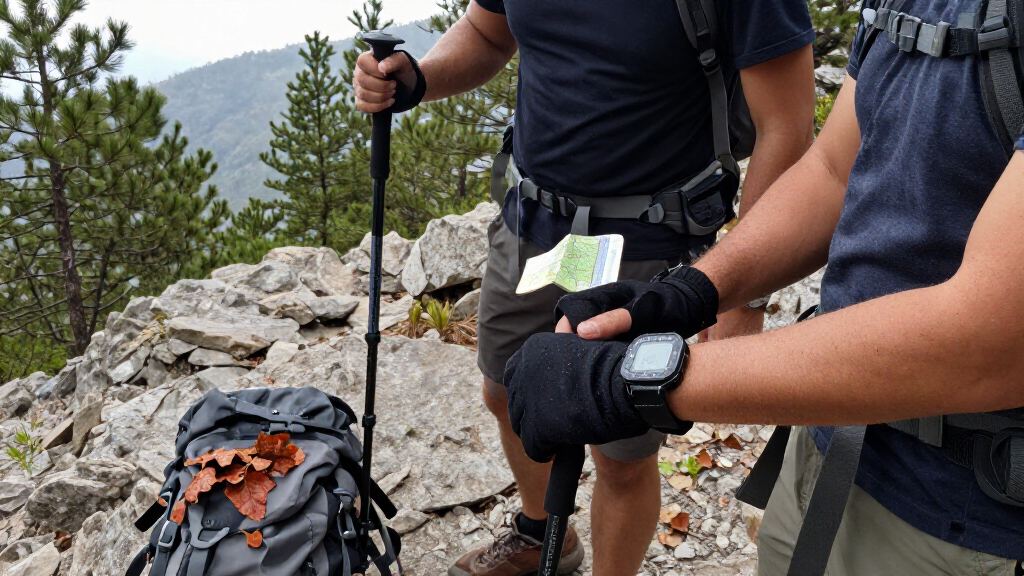
How We Picked
I ranked these watches by how well their stated features serve real hiking needs: reliable GPS use, outdoor-ready construction, battery approach, screen readability, and practical fit. I also weighed whether a model appears centered on trail use or broad smartwatch functions, since a bright display, call features, or many sport modes do not automatically make a watch a stronger hiking companion.
The Garmin Instinct models rank ahead because the lineup offers more clearly differentiated outdoor-focused options, including solar, AMOLED, tactical, and smaller-case versions. Within that group, I favor models with a useful balance of hiking capability and everyday usability over specialized versions unless their distinct features suit the buyer. The generic smartwatches remain in the roundup for shoppers prioritizing basic functions or a lower-cost entry point, but rank lower because their product descriptions provide less evidence of dedicated navigation depth and long-trip performance. I do not treat Black Friday as a reason to overlook fit, charging needs, or feature limitations.
| Black Friday hiking GPS watch | GPS |
|---|---|
| Rugged Smartwatch for Men with | Built-in GPS with route recording |
| Garmin Instinct 3 AMOLED Rugge | Multi-band GPS with SatIQ, GLONASS, and Galileo |
| Garmin Instinct 3 Tactical Sol | Built-in multi-band GPS with SatIQ |
| Garmin Instinct 3 Solar Rugged | Multi-band GPS with SatIQ, GLONASS, and Galileo |
| Garmin Instinct 2X Solar Tacti | — |
| Garmin Instinct 2 Camo Edition | — |
| Jugeman Military Smartwatch wi | Built-in; GPS, GLONASS, BeiDou, Galileo, NAVIC, and QZSS |
| Garmin Instinct E Rugged GPS S | Built-in GPS with multi-GNSS support |
| Garmin Instinct 3 Solar Rugged | — |
| Garmin Instinct 2 Solar Rugged | — |
| Military Smartwatch for Men wi | Built-in GPS |
| Garmin Instinct 3 AMOLED Rugge | — |
| Smart Watch for Men with GPS | — |
Factors to Consider When Choosing Black Friday Hiking GPS Watches
Picking a hiking GPS watch is less about collecting the most features and more about matching the watch to your routes, wrist, and charging habits. These broader checks can help you avoid paying for functions you will not use—or choosing a watch that feels capable at home but falls short on a long day outside.
Choose navigation for the routes you actually hike
Not every watch described as having GPS offers the same kind of route support. Before buying, check whether you need basic location tracking, a route breadcrumb, saved courses, or offline maps; those needs are not interchangeable. A marked local trail may call for less guidance than a remote route where rerouting or map detail matters. Do not infer navigation depth from the word “GPS” in a product title. If you rely on a phone for maps, check that your watch can still provide the location data and guidance you expect when the phone is packed away. For unfamiliar or demanding terrain, verify the specific navigation functions in the manufacturer’s documentation.
Treat battery claims as a use-pattern question
Battery life changes with how often GPS is active, which sensors run, and how the screen is used. A watch that lasts through everyday wear may not last through repeated GPS tracking on a multi-day trip. Solar charging can help under suitable light, but it should not be treated as a substitute for checking the watch’s GPS-mode endurance or carrying a charging plan. Bright AMOLED screens can be easier to read at a glance, while a solar-focused model may better suit buyers who value longer time between charges. Look for battery estimates in the mode closest to your hiking habits, not only the largest headline number. For remote trips, bring a backup navigation method regardless of the watch.
Match the case and display to your wrist and conditions
A larger watch face can make data easier to read, but a bulky case may snag on sleeves or feel uncomfortable during a full day outdoors. Smaller models may sit more comfortably on a narrow wrist, though their displays can leave less room for information. Think about whether you read metrics in motion, with gloves, or in changing light. Screen technology also affects the experience: a vivid display can make menus appealing, while a simpler outdoor-focused display may put endurance ahead of visual polish. If possible, check case dimensions and strap fit rather than relying on a product photo. Comfort matters because a watch left at home cannot help track a route.
Separate rugged styling from useful outdoor capability
A rugged appearance does not confirm that a watch has the navigation, durability, or battery behavior your hikes demand. Check water resistance, temperature guidance, button usability, and the maker’s stated limits rather than assuming a military-style design covers every outdoor condition. A built-in flashlight, compass, or health feature can be handy, but it does not replace a map, a dedicated headlamp, or sound trip planning. Tactical functions are worthwhile only when they match a real use case. Buyers comparing generic smartwatches with established outdoor models should focus on documented GPS modes and support, not the number of listed features. This keeps novelty from crowding out the basics.
Decide which smartwatch extras earn their place
Call handling, text replies, sleep tracking, and broad sport profiles can make a watch more useful between hikes. They can also add setup steps, notifications, and battery demands that matter little to someone who wants a dependable trail companion. Consider whether you want one watch for daily life and hiking or a focused outdoor tool. Health tracking can offer useful trends, but it is not a substitute for medical advice or a safety feature. Confirm phone compatibility and which functions work without a phone nearby before choosing a feature-rich model. Paying for extras makes sense only when they fit your routine.
Use Black Friday to compare fit and capability, not just features
Seasonal shopping can make it tempting to pick the model with the longest feature list or the biggest apparent markdown. Instead, compare case size, navigation functions, battery modes, and warranty or return terms across the options you are considering. Older generations may still suit straightforward hikes, while a newer model may be a better match if its specific display or solar setup solves a problem for you. Check the exact edition: standard, tactical, and solar versions can differ in ways that matter more than the shared product-family name suggests. Set your must-haves before browsing so a deal does not push you toward an ill-fitting watch. The right choice is the one that suits your routes and charging habits, not the one with the most impressive title.
Frequently Asked Questions
Is a Garmin Instinct watch a better hiking choice than a generic GPS smartwatch?
For buyers who want an outdoor-focused watch, the Instinct lineup is the stronger starting point in this selection because it offers several trail-oriented versions and case sizes. Generic models may suit casual walking or buyers who mainly want calls, notifications, and activity tracking. Their product descriptions, however, may not establish the same depth of navigation support or GPS battery performance. Compare the exact route tools and GPS modes before deciding, rather than judging by feature count. If your hikes are remote or long, prioritize documented navigation functions and endurance over smartwatch extras.
Should I choose an AMOLED or solar Garmin Instinct for hiking?
Choose AMOLED if screen clarity and a vivid interface matter most in your day-to-day use. A solar model makes more sense if you value extending battery life outdoors and are comfortable with a display that prioritizes endurance over visual richness. Neither label alone tells you how long the watch will last with GPS active, so compare the relevant battery modes. Your access to sunlight and charging opportunities also affect the value of solar charging. If you hike overnight or for several days, plan around GPS-mode performance rather than assuming solar will remove the need to recharge.
Is the 50 mm case too large for hiking?
It depends on your wrist size, comfort preferences, and how you wear layers. A larger case can make screen information easier to read, but may feel heavy or catch on cuffs during a long hike. The 45 mm Instinct options provide a smaller alternative within this lineup. Case diameter is only part of fit; thickness, strap adjustment, and wrist shape matter too. If possible, try the watch on or check return terms before choosing a size for all-day wear.
Do I need a tactical edition for regular hiking?
Most recreational hikers do not need a tactical model simply because it sounds more rugged. The Instinct 3 Tactical Solar and Instinct 2X Solar Tactical Edition are aimed at buyers whose use calls for their specialized features. For ordinary trail tracking, a standard Instinct solar or AMOLED version may be a more direct match. Check the feature list for the exact function you want before paying for a specialized edition. A tactical label should not replace checking navigation, battery, and fit.
Can I rely on a hiking GPS watch as my only navigation tool?
I would not treat any watch as the sole safety plan for a remote hike. Battery depletion, poor satellite conditions, damage, or unfamiliar controls can leave you without guidance when you need it. Learn the watch’s navigation functions before leaving, and carry a backup such as an offline map or another navigation device suited to the route. Keep your phone protected and charged if it is part of your plan, and tell someone where you are going. The watch can support good preparation, but it cannot replace it.
Conclusion
Best overall: I recommend the Garmin Instinct 3 Solar 50 mm for hikers who want a rugged, solar-equipped option. Best premium: pick the Garmin Instinct 3 AMOLED if screen presentation is your priority and you accept the battery tradeoff. Best value: compare the Garmin Instinct 2 Solar with the smaller Instinct E; the better fit depends on whether solar support or a simpler, compact choice matters more. Best for beginners: the Instinct E 45 mm is the most approachable Garmin pick here for someone who wants an outdoor-focused watch without a large case. Best for specialized needs: choose a tactical Instinct only when its distinct functions match your use; casual buyers can favor a standard model. The generic GPS smartwatches make more sense for basic tracking and everyday extras than for hikers seeking proven, dedicated trail tools.