
To prevent leaks and mold in your basement, start by ensuring proper waterproofing techniques like sealing cracks, installing vapor barriers, and maintaining a reliable drainage system that directs water away from your foundation. Adding a sump pump with regular checks also helps manage excess water. Combining these strategies creates a strong barrier against moisture issues, protecting your home’s structure and indoor air quality. If you want to learn more about effective waterproofing methods, keep exploring this topic.
Key Takeaways
- Install proper drainage systems like French drains and sump pumps to divert water away from the basement foundation.
- Seal cracks and joints with waterproof sealants or epoxy to prevent water entry.
- Use vapor barriers on walls and floors to reduce moisture seepage and mold growth.
- Maintain and regularly test sump pumps and drainage systems to ensure reliable operation during heavy rains.
- Combine multiple waterproofing strategies for comprehensive protection against leaks and mold development.

Waterproofing your basement is vital to protect your home from water damage and mold growth. One of the most effective ways to do this is by improving your basement drainage system. Proper basement drainage directs water away from your foundation, preventing it from seeping through cracks or porous walls. If your yard tends to collect water during heavy rains, you’ll want to consider installing a drainage system that channels runoff to a safe drainage point away from your house. French drains, gravel trenches, and sump pump systems all work together to guarantee water doesn’t pool near your foundation. Regularly maintaining and clearing these drainage pathways prevents clogs and ensures they function correctly when you need them most.
Another vital step is sump pump installation. A sump pump acts as a last line of defense, actively removing water that accumulates in your basement or crawl space. When water levels rise, the sump pump kicks in automatically, pumping out water before it can cause damage or lead to mold growth. If you live in an area prone to flooding or heavy rainfall, installing a sump pump is a smart investment. It not only protects your belongings but also minimizes the risk of structural issues caused by prolonged dampness. Make sure your sump pump is connected to a reliable power source and has a battery backup to operate during power outages. Regular testing of the sump pump ensures it’s ready to perform when needed.
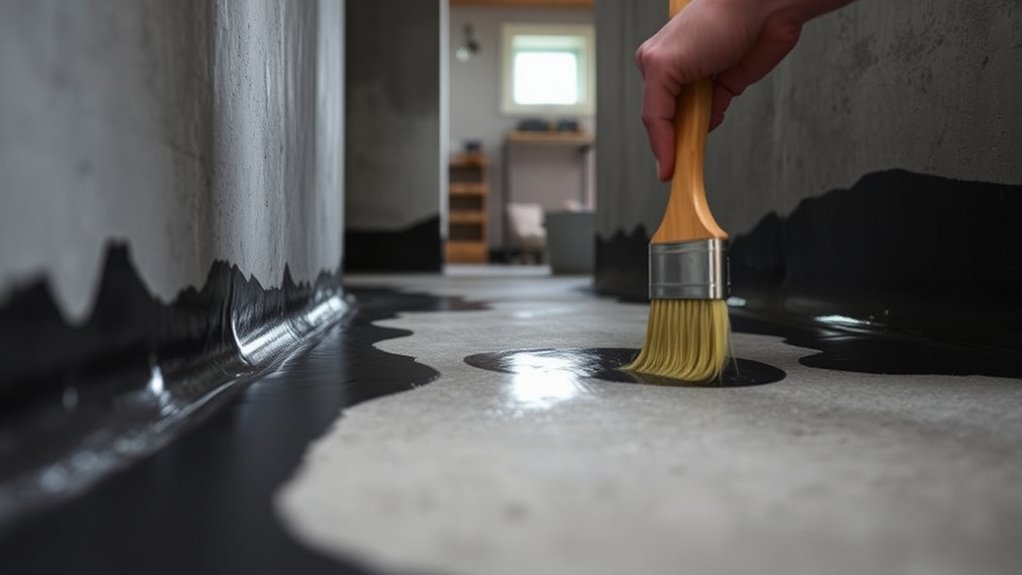
Beyond drainage and sump pump systems, you should also focus on sealing any cracks or gaps in your basement walls and floors. These small openings can serve as entry points for water, especially during storms or rapid snowmelt. Waterproof sealants and epoxy injections can reinforce these vulnerabilities, keeping water out. Additionally, consider installing a vapor barrier on basement walls and floors to prevent moisture from seeping through porous surfaces, which can lead to mold growth over time. Choosing high-quality waterproofing materials and techniques plays a crucial role in long-term protection.
Ultimately, waterproofing your basement involves a combination of strategies. Improving basement drainage and installing a sump pump are foundational steps that considerably reduce water intrusion risks. Maintaining these systems, along with sealing cracks and employing vapor barriers, creates an extensive defense against water-related issues. By taking these proactive measures, you’re not only protecting your home’s structural integrity but also creating a healthier, mold-free environment for your family.
As an affiliate, we earn on qualifying purchases.
Frequently Asked Questions
How Often Should I Inspect My Basement for Waterproofing Issues?
You should inspect your basement for waterproofing issues at least twice a year, ideally in spring and fall. Regular inspections help catch basement moisture problems early and guarantee your waterproofing maintenance is effective. Check for cracks, water stains, or mold growth on walls and floors. Staying proactive keeps leaks at bay, prevents mold, and protects your home’s foundation, saving you money and hassle in the long run.
Can DIY Waterproofing Solutions Be as Effective as Professional Work?
Did you know that DIY waterproofing solutions can be up to 80% effective, but typically fall short of professional work? You might save money upfront, but professional waterproofing offers tailored, long-lasting results. DIY effectiveness depends on your skill level and the problem’s complexity. For serious issues or persistent leaks, professionals use advanced techniques, ensuring better protection against water damage and mold, which DIY methods might not fully prevent.
What Are the Signs of Hidden Water Damage in My Basement?
You might notice signs of hidden water damage in your basement like a persistent basement odor or wall discoloration. These indicate moisture problems that aren’t always obvious. You could also see mold growth or peeling paint, which suggests hidden leaks. Regularly inspect for dampness, warping, or unusual stains, and address issues promptly. Detecting these signs early helps prevent costly repairs and keeps your basement dry and healthy.
How Long Does a Typical Basement Waterproofing Project Take?
Ever wondered how long a basement waterproofing project takes? The timeline duration varies based on project phases, like assessment, preparation, and sealing. Typically, it can take from a few days to a week, depending on the size and complexity of your basement. Are you prepared for the process? Knowing the project phases helps you plan better, ensuring a smooth and efficient waterproofing experience that keeps your basement dry and mold-free.
Are There Specific Materials Best Suited for Waterproofing Basements?
When choosing materials for waterproofing your basement, you should consider using high-quality basement sealants and waterproof membranes. Basement sealants help fill cracks and prevent water infiltration, while waterproof membranes create a barrier on walls and floors. You’ll want products that are durable, flexible, and resistant to mold. Properly applying these materials guarantees a long-lasting seal, protecting your basement from leaks and moisture damage effectively.
Conclusion
By taking these simple steps to waterproof your basement, you’re creating a more comfortable and secure space for your family to enjoy. Think of it as giving your home a gentle hug, shielding it from life’s little storms. With a little effort, you’ll preserve your sanctuary’s warmth and tranquility for years to come. Remember, a well-protected basement isn’t just about avoiding trouble—it’s about nurturing a safe haven where memories can flourish.