
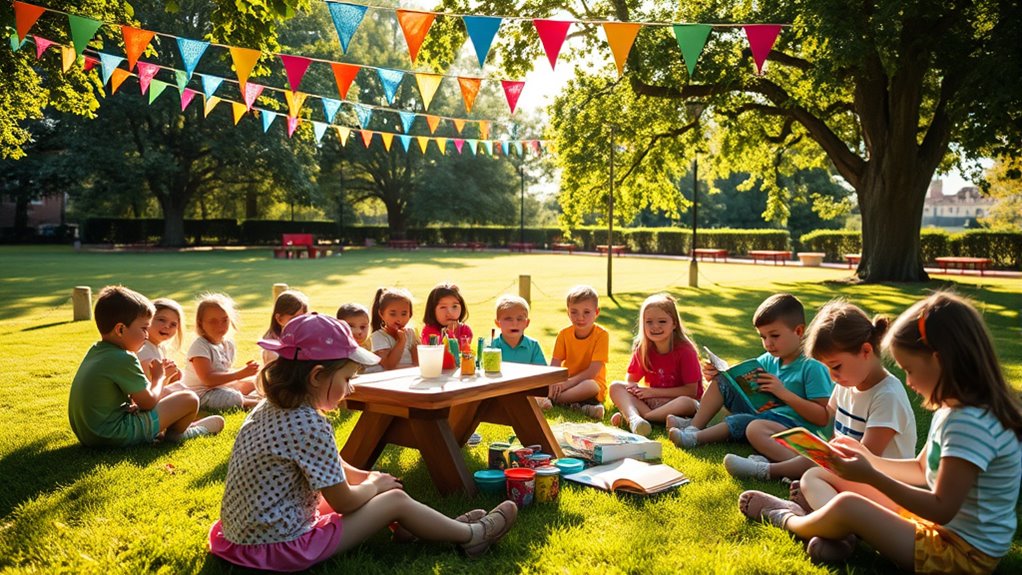

Children’s clubs are great for offering a safe, fun space where your child can connect with peers, explore new interests, and build important skills. They provide structured activities like sports, arts, or community service that promote independence, responsibility, and social growth. With routines and supervision, your child stays safe while gaining confidence and learning teamwork. Want to discover more ways these clubs support your child’s overall development? Keep exploring to find out how they can benefit your family.
Key Takeaways
- Children’s clubs provide safe, structured environments for socialization, skill development, and exploring interests appropriate for their age.
- They promote social skills like sharing, cooperation, and conflict resolution through regular peer interactions.
- Participation encourages independence, responsibility, and confidence through decision-making and leadership opportunities.
- Clubs help establish routines, teach time management, and foster discipline in a supervised setting.
- Overall, they support children’s emotional, social, and personal growth while offering a safe alternative to risky activities.
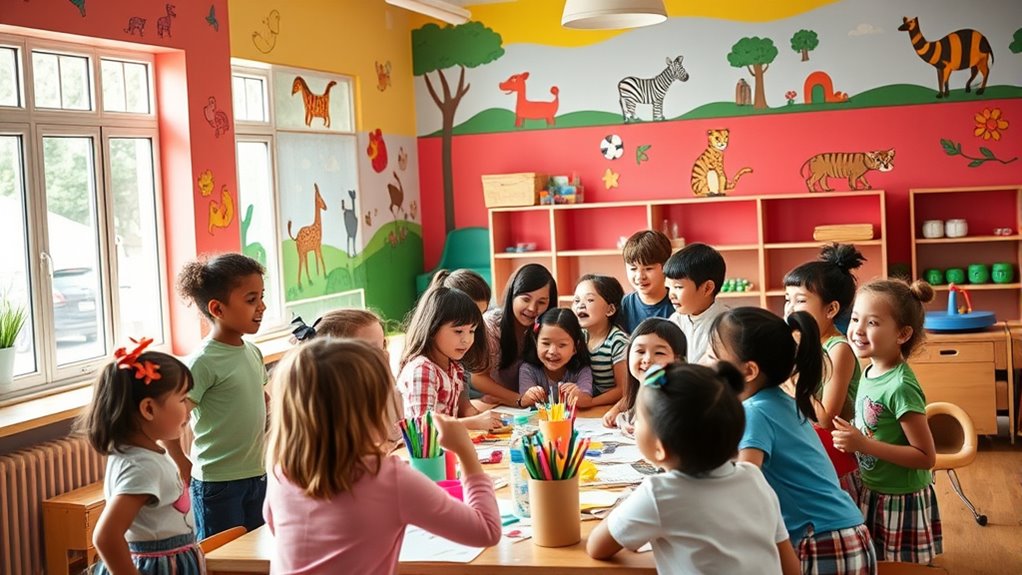
Have you ever wondered how children find safe spaces to make friends and explore new interests? One of the most effective ways is through children’s clubs. These clubs serve as welcoming environments where kids can participate in various activities tailored to their age and preferences. When your child joins a club, they gain access to a structured setting filled with engaging activities that promote not only fun but also essential aspects of their growth. Club activities are designed to be diverse, ranging from sports and arts to science and community service, giving children the opportunity to discover their passions in a safe and supportive space. As they participate, they develop skills and interests that can shape their future.
A significant benefit of children’s clubs is their positive impact on social development. When your child interacts regularly with peers in a club setting, they learn important social skills, such as sharing, taking turns, and cooperating. These interactions help them build confidence and emotional resilience. As your child navigates group dynamics, they also learn how to communicate effectively, resolve conflicts, and develop empathy—all essential qualities that will serve them well throughout life. Children’s clubs often encourage teamwork and collective problem-solving, which further enhances their ability to work well with others. Over time, these experiences help your child form meaningful friendships rooted in trust and mutual understanding.
Another aspect to consider is how club activities foster independence. When your child makes choices about which clubs to join and what activities to pursue, they start to develop a sense of autonomy. This independence boosts their self-esteem and motivates them to take on new challenges. Additionally, many clubs have leaders or mentors who guide children without micromanaging, allowing kids to learn responsibility and accountability. This sense of ownership over their participation encourages your child to stay committed and enthusiastic about their interests.
Furthermore, children’s clubs often have a structured schedule that helps children develop routines and discipline. Knowing they have designated times for activities creates a sense of stability and predictability, which is especially beneficial during uncertain times. These routines help children manage their time effectively and develop organizational skills. Parents can also feel reassured knowing that children are engaging in constructive, supervised environments rather than unsupervised or risky situations.
As an affiliate, we earn on qualifying purchases.
Frequently Asked Questions
How Do I Choose the Right Children’s Club for My Child?
You should choose a children’s club that matches your child’s age and interests. Look for one with age-appropriate activities that keep your child engaged and safe. Check if they offer a variety of activities so your child can explore different skills and hobbies. Visit the club beforehand, ask about their safety measures, and observe how staff interact with children to guarantee it’s a supportive, fun environment for your little one.
Are Children’s Clubs Safe and Properly Supervised?
Children’s clubs are generally safe when accident prevention measures are in place, and staff training is thorough. You can trust that well-managed clubs prioritize supervision, actively monitor kids, and follow safety protocols. Always ask about staff qualifications and safety policies before enrolling your child. When a club invests in ongoing staff training and accident prevention, it shows they’re committed to providing a secure environment where your child can play and learn confidently.
What Is the Typical Cost of Joining a Children’s Club?
The membership fees for children’s clubs typically range from $50 to $200 annually, depending on the club’s amenities and location. You should also budget for additional expenses like activity fees, special events, and equipment. These costs can add up, so it’s wise to inquire about all potential charges upfront. By understanding the total expenses, you can ensure the club fits your budget and provides a valuable experience for your child.
Can Children With Special Needs Participate in Children’s Clubs?
Did you know that over 80% of children’s clubs now offer inclusive activities? Yes, children with special needs can participate. Many clubs prioritize accessibility accommodations, ensuring all kids can join in the fun. They often provide trained staff, sensory-friendly spaces, and adaptive equipment. As a parent, you’ll find many clubs dedicated to creating a welcoming environment where every child can enjoy socializing, learning, and playing without barriers.
How Do Children’s Clubs Support Children’s Social Development?
Children’s clubs support your child’s social development by encouraging peer interactions and fostering friendships. They provide a safe space for children to practice communication, share experiences, and develop empathy. Through group activities and teamwork, your child builds confidence and learns social skills that benefit them long-term. By participating regularly, they become more comfortable in social settings, helping them grow into confident, socially adept individuals.
Conclusion
As you navigate the world of children’s clubs, remember that these gatherings are like gentle streams guiding your child’s growth. With careful choices, you can help them flourish in safe, nurturing environments that feel just right. Trust your instincts and embrace the journey, knowing that each experience shapes their bright future. Your thoughtful guidance guarantees they’ll find joy and friendship along the way, creating memories that shimmer softly like stars in a peaceful night.