

Tendering involves using small shuttle boats to transfer passengers or cargo when port space is limited or shallow. Docking means the ship moors directly alongside a pier with infrastructure like mooring buoys and cargo cranes. You’ll notice tendering keeps ships offshore until they’re ready, while docking allows for immediate cargo or passenger transfers. If you want to understand how these methods guarantee safe, efficient port operations, exploring further will give you more details.

Get travel and outdoor gear delivered free — and shop member deals
- Fast, free delivery on millions of items
- Access to Prime Big Deal Days deals on October 6–7
- Prime Video, Amazon Music and more included
Key Takeaways
- Tendering involves using shuttle boats to transfer crew or cargo when port infrastructure is limited or shallow.
- Docking requires the vessel to moor directly at a quay or pier with dedicated infrastructure for cargo and passenger handling.
- Tendering minimizes port congestion and provides flexibility in transfer timing, especially in congested or shallow ports.
- Docking enables quicker cargo operations and passenger boarding by allowing direct access at the port facility.
- Both methods are regulated for safety, with tendering relying on schedule coordination and docking requiring precise navigation and mooring procedures.
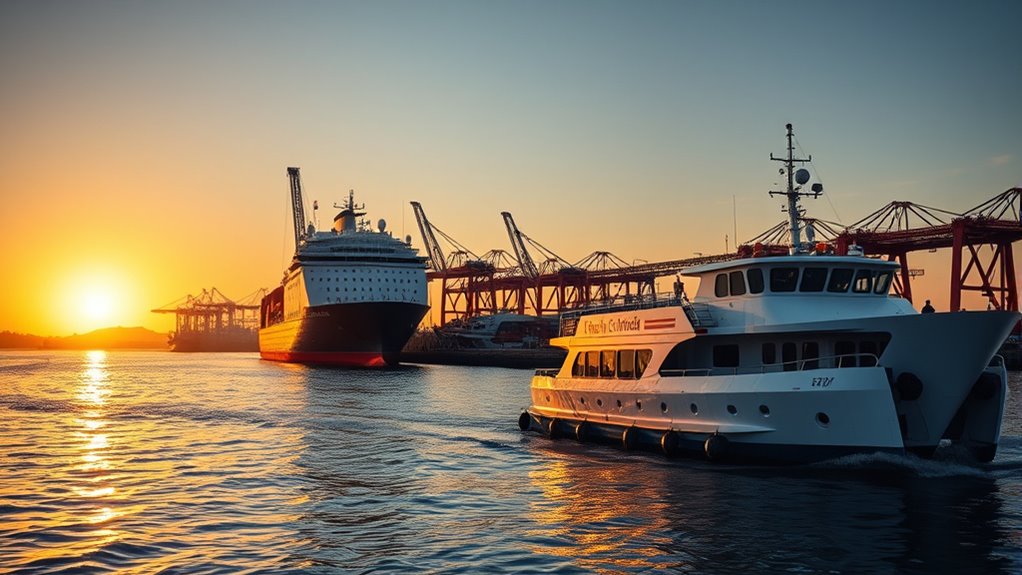
Have you ever wondered how ships shift smoothly between the open sea and port? It’s a carefully coordinated process that involves more than just the vessel’s maneuvering skills. When approaching a port, ships often utilize either tendering or docking methods, each governed by strict harbor management and maritime regulations to guarantee safety and efficiency.
Tendering is a process where boats, called tenders or shuttle boats, ferry crew, passengers, or supplies between the ship and the port. This method is common when the port’s infrastructure isn’t equipped for large vessels to dock directly or when space is limited. As you approach the harbor, port authorities coordinate with the ship’s crew to determine if tendering is necessary based on harbor management plans and maritime regulations. These rules guarantee that the transfer is safe, minimizing risks of accidents or delays. The process involves precise timing and communication, with the tenders operating according to established schedules to avoid congestion in the harbor. Tendering is especially beneficial in shallow or congested ports, where docking might be challenging or impossible for certain vessels. It also allows ships to stay offshore until they’re ready to unload or load cargo, providing flexibility for operations. Additionally, maritime regulations ensure that all transfer procedures adhere to safety standards, reducing potential hazards during port operations.
On the other hand, docking involves the vessel physically mooring alongside a quay, pier, or berth. This approach usually requires the port to have appropriate infrastructure, such as mooring bollards, cranes, and cargo handling equipment. When a ship docks, harbor management plays a vital role in coordinating the process, making sure all procedures follow maritime regulations. These regulations specify how ships must approach and secure themselves, what safety measures to take, and how to handle environmental concerns. Docking allows for quicker cargo operations and easier passenger embarkation or disembarkation, but it demands more precise navigation and adherence to port rules. The process begins with the ship’s crew signaling their intention to dock, after which harbor authorities guide the vessel into position using signals or radio communication. Once secured, the ship can unload or load cargo, passengers, or supplies directly, streamlining the entire operation.
As an affiliate, we earn on qualifying purchases.
Frequently Asked Questions
How Do Tendering and Docking Impact Port Operational Efficiency?
Tendering and docking markedly impact your port’s operational efficiency by influencing vessel turnaround times and reducing port congestion. When tendering is well-managed, vessels spend less time waiting and more time unloading or loading, speeding up operations. Docking strategies ensure ships are efficiently assigned berths, minimizing delays. This streamlined process helps prevent congestion, allowing your port to handle more ships smoothly and boosting overall productivity.
What Are the Environmental Considerations for Tendering and Docking Practices?
You need to take into account environmental impacts when tendering and docking, focusing on reducing marine pollution and habitat disruption. Implement eco-friendly practices like using cleaner fuels, minimizing waste discharge, and avoiding sensitive ecological zones. By adopting sustainable procedures, you protect marine life, lessen pollution, and preserve habitats. These efforts ensure your operations stay environmentally responsible while maintaining efficiency, ultimately balancing economic goals with ecological integrity.
Are There Industry Standards Governing Tendering Versus Docking Procedures?
Yes, industry regulations govern tendering and docking procedures to guarantee safety, environmental compliance, and procedural consistency. You need to follow these standards closely to avoid penalties or delays. Regulations set clear guidelines on how to conduct each process, emphasizing safety protocols, waste management, and operational efficiency. Staying updated on these regulations helps you maintain compliance and promotes best practices, ultimately ensuring smooth and responsible vessel handling.
How Do Costs Differ Between Tendering and Docking Processes?
Imagine balancing a scale—you’ll find tendering often involves higher upfront costs due to extensive cost analysis and competitive bidding, while docking tends to be more predictable and potentially cheaper, with fewer contractual obligations. Tendering requires significant administrative effort and negotiations, raising expenses. Docking, on the other hand, streamlines processes, reducing costs, but may limit options. Your choice depends on balancing initial investment against long-term operational costs.
What Safety Protocols Are Associated With Each Method?
You should always prioritize safety by using proper safety equipment, like life jackets and helmets, during both tendering and docking. Follow strict emergency procedures, such as evacuation plans and communication protocols, to guarantee everyone’s safety. Regularly inspect safety gear and stay alert for hazards. By adhering to these protocols, you minimize risks, protect yourself and others, and ensure a smooth, safe operation whether you’re tendering or docking.
Conclusion
So, next time you hear about tendering and docking, remember they both serve essential roles in maritime operations. While tendering is often seen as a more flexible way to transfer passengers or cargo, docking provides a secure way to perform maintenance. Some say tendering is just a quick fix, but it’s actually a crucial part of the logistics puzzle. Understanding how they work helps you see the bigger picture of how ships stay afloat and ready for action.
Fall Picks
fall essentials
As an affiliate, we earn on qualifying purchases.