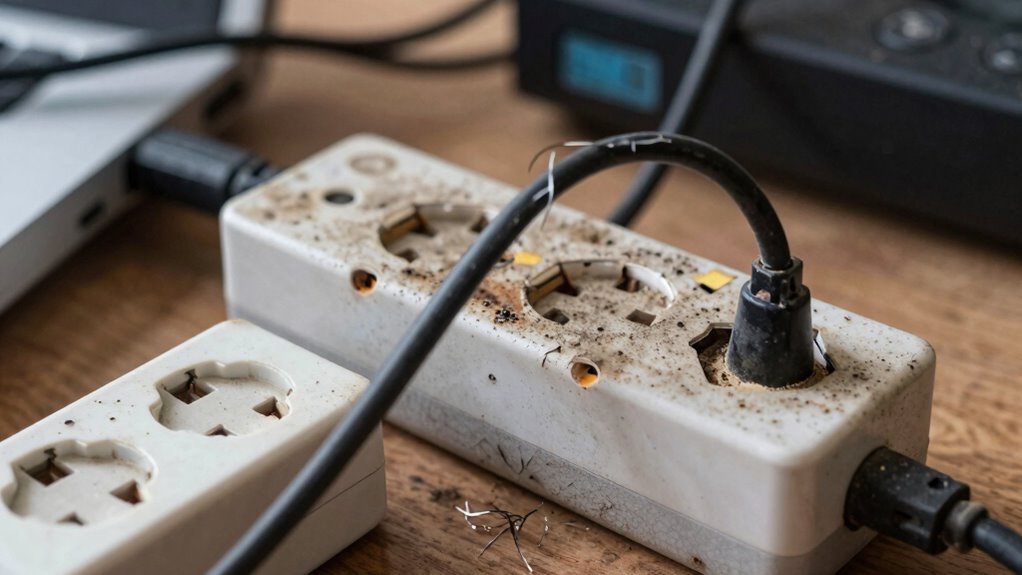

Your surge protector can become useless over time because its internal parts, like metal-oxide varistors, wear out after absorbing multiple surges. Signs of failure include a burnt smell, visible damage, or it simply stops working. To tell if yours is still effective, check for indicator lights or signs of physical damage. If you’re unsure, understanding how these protectors age will help you know when it’s time for a replacement. Keep going to learn more about maintaining your protection.

Get travel and outdoor gear delivered free with Prime
- Fast, free delivery on millions of items
- Prime Video, Amazon Music and more included
- Member-only deals all year
Key Takeaways
- Surge protectors have a limited lifespan; their internal components wear out after absorbing surges.
- Physical signs like a burnt smell, damage, or indicator lights suggest the surge protector may no longer be effective.
- Regular inspections and understanding manufacturer ratings help determine if your surge protector is still functioning properly.
- Using a surge protector beyond its rated Joule capacity or after signs of damage reduces its protective ability.
- Proper replacement and combining with other safety measures ensure continued protection for your devices.
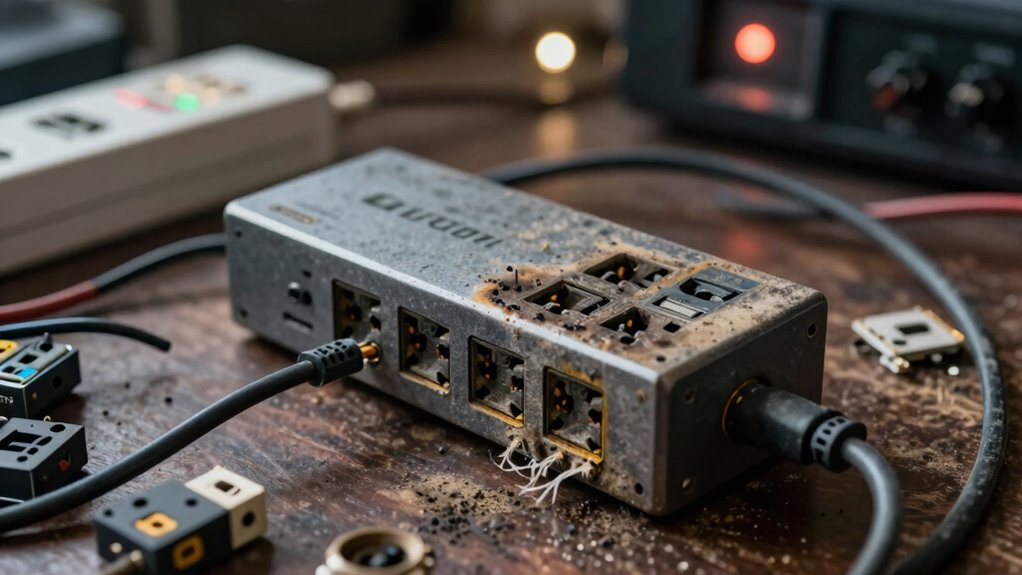
Many people assume that once they plug in a surge protector, their devices are fully protected forever. But this is a misconception. All surge protectors have a limited lifespan because their components, like metal-oxide varistors (MOVs), wear out after absorbing a surge. When these components reach their capacity, they no longer provide the same level of protection. If you don’t replace your surge protector periodically, you risk exposing your electronics to harmful power surges. Some signs that your surge protector might be useless include a burnt smell, physical damage, or if it stops functioning altogether. Checking the status indicator light (if it has one) can also help you determine its health; if the light is off or shows a warning, it’s time to replace it. Regularly inspecting and understanding your surge protector’s performance capacity ensures you’re not relying on outdated or ineffective protection. To guarantee your surge protector remains effective, look for models with a high Joule rating, which indicates a greater capacity to absorb surges. Also, opt for units with a clear warranty and a reputable brand. Remember, surge protectors are most effective when used with other electrical safety measures, such as circuit breakers and proper wiring. While they aren’t foolproof, investing in a quality surge protector and replacing it when needed can considerably reduce the risk of damage caused by power surges, giving you peace of mind that your electronics are protected. In the end, knowing how to evaluate your surge protector’s condition and understanding its limitations can save you money and frustration. Protecting your electronics isn’t just about plugging in; it’s about choosing the right device and maintaining it properly.
high Joule rating surge protector
As an affiliate, we earn on qualifying purchases.
As an affiliate, we earn on qualifying purchases.
Frequently Asked Questions
Can Surge Protectors Be Repaired After a Surge?
Surge protectors can’t be repaired after surge damage, as their internal components are typically compromised. When you notice surge protector damage, it’s best to replace it rather than attempt repair options, which are generally ineffective and unsafe. Trying to fix a damaged surge protector risks further damage or electrical hazards. Always dispose of a damaged surge protector properly and invest in a new one to ensure your devices stay protected.
How Often Should I Replace My Surge Protector?
You should replace your surge protector every 3 to 5 years to make certain it effectively safeguards against power surges. Over time, its protector lifespan diminishes, making it less reliable during a power surge. Signs like frayed cords or frequent tripping indicate it’s time for a new one. Regular replacement helps keep your electronics safe and ensures you’re always protected against unexpected electrical issues.
Do All Surge Protectors Provide the Same Level of Protection?
Not all surge protectors offer the same level of protection. You should look for units that meet strict manufacturing standards and come from reputable brands, as these factors guarantee better safety and durability. Cheaper options or unknown brands might not provide adequate protection against power surges. Always check the specifications and reviews to choose a protector that reliably shields your devices from voltage spikes.
What Signs Indicate My Surge Protector Is No Longer Effective?
You’ll notice your surge protector isn’t effective if it stops protecting against power surges, which can cause electrical damage to your devices. Signs include a tripped indicator light, a burnt smell, or physical damage like scorch marks. If your protector feels warm or if your devices still get damaged during a storm, it’s time to replace it. Regularly testing and replacing your surge protector guarantees continued protection from electrical damage.
Are Expensive Surge Protectors Worth the Extra Cost?
Expensive surge protectors can be worth the extra cost because they often offer better protection and longer-lasting components. When comparing costs, consider the brand reputation and warranty coverage, which can save you money in the long run. Cheaper options may seem attractive, but investing in a higher-quality surge protector guarantees your devices stay safe. Ultimately, a well-made surge protector provides peace of mind and reliable performance.
Conclusion
If you think all surge protectors are equally reliable, think again. Studies show that nearly 40% of surge protectors fail within just a few years, leaving your devices vulnerable. To keep your electronics safe, always check the joule rating and replace old units regularly. Remember, a high-quality surge protector is an investment—so don’t cut corners. Staying vigilant can save you hundreds in potential damages, making it worth the extra effort.
Halloween Picks
halloween
As an affiliate, we earn on qualifying purchases.