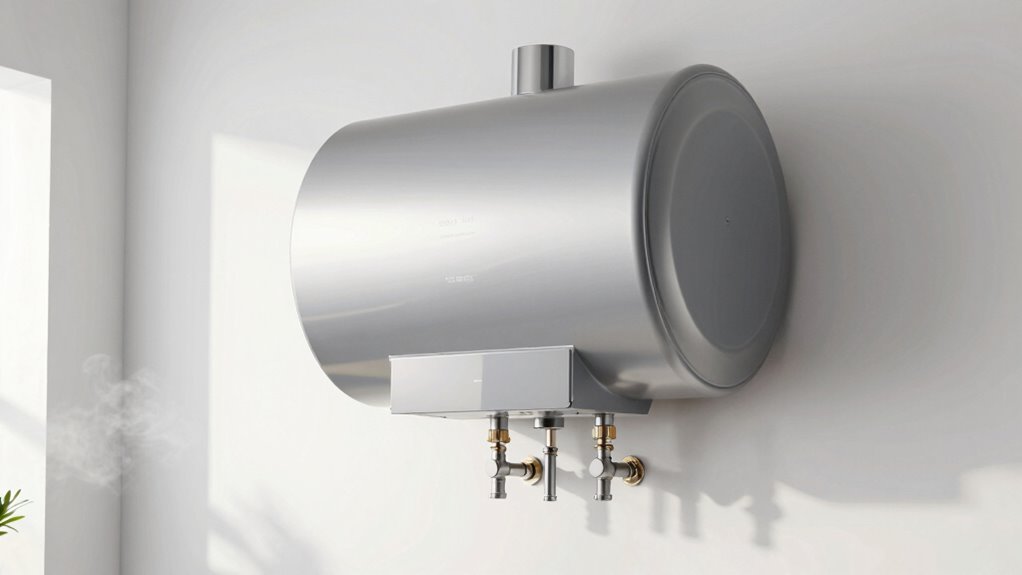

Tankless water heaters can provide endless hot water if they’re properly sized and installed correctly. However, many users underestimate their limitations and costs. If your household demand exceeds the unit’s capacity, you might run out of hot water during busy times. Proper sizing, installation, and sometimes upgrades are essential to maximize benefits. Want to discover how to make these systems truly work for your home? Keep exploring to learn more.

Get travel and outdoor gear delivered free with Prime
- Fast, free delivery on millions of items
- Prime Video, Amazon Music and more included
- Member-only deals all year
Key Takeaways
- Tankless water heaters provide hot water on demand, but their capacity may limit simultaneous usage in large households.
- Proper sizing and installation are crucial to ensure truly endless hot water and avoid performance issues.
- They don’t store hot water, so flow rate and demand can affect continuous availability during peak use.
- Overloading or undersizing the system can result in reduced flow or inconsistent hot water supply.
- Regular maintenance helps sustain efficiency and ensures the heater delivers on its “endless” hot water promise.
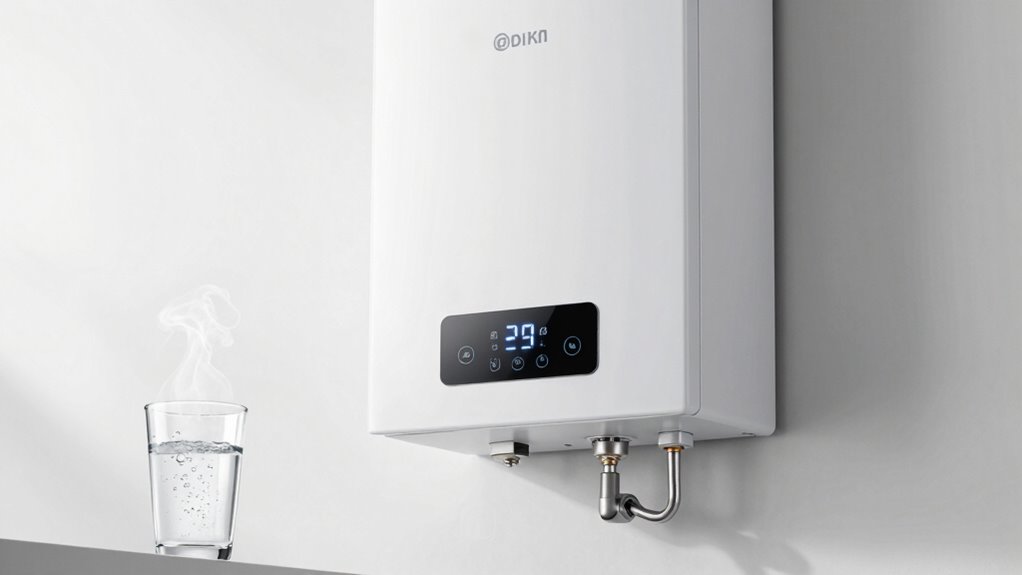
Tankless water heaters, also known as on-demand water heaters, have become a popular choice for homeowners seeking an efficient and space-saving hot water solution. Unlike traditional tank models that store a set amount of hot water, tankless units heat water only when you need it, which can lead to significant energy savings over time. This on-demand operation means you’re not constantly maintaining the temperature in a large tank, reducing standby heat loss and making your household more energy-efficient. However, while the benefits are clear, it’s important to contemplate the initial costs involved, particularly installation costs, which can vary depending on your home’s existing plumbing and electrical setup.
Tankless water heaters offer energy savings and space efficiency but require careful consideration of installation costs.
One of the main advantages of tankless water heaters is their potential for increased energy efficiency. Because they only generate hot water when you turn on the tap, they use less energy compared to traditional storage tank models, which continuously heat water even when it’s not being used. This can translate into lower utility bills, especially if you switch from a conventional tank system. But, keep in mind that the energy efficiency gains depend on proper sizing and installation. If you select a unit that’s too small, it won’t meet your household’s hot water demands, forcing you to run multiple units or experience inconsistent hot water. On the other hand, an oversized unit might waste energy and increase installation costs unnecessarily.
Speaking of installation costs, they can be higher upfront than traditional water heaters. Installing a tankless system often involves upgrades to your home’s electrical system or gas line, especially if your current setup isn’t compatible. You might also need additional components like ventilation or larger gas lines, which can add to the overall cost. While these installation costs are an initial investment, many homeowners find that the long-term savings on energy bills offset the higher upfront expense. Plus, tankless units tend to last longer—typically around 20 years—making them a more durable and cost-effective choice over time.
It’s also worth noting that the installation process can be more complex and may require professional expertise. You should budget for this, especially if your home needs modifications. Proper system sizing and installation are crucial to maximize efficiency and performance. But once installed, the compact size of tankless water heaters frees up space in your utility closet or basement, and their efficiency can contribute to a more eco-friendly household. Overall, while the installation costs might seem steep at first, the energy efficiency benefits and long lifespan make tankless water heaters an attractive option for many homeowners looking to upgrade their hot water system.
tankless water heater sizing kit
As an affiliate, we earn on qualifying purchases.
As an affiliate, we earn on qualifying purchases.
Frequently Asked Questions
Do Tankless Water Heaters Work During Power Outages?
No, tankless water heaters typically don’t work during power outages because they rely on electricity for operation, making them power dependent. If you want hot water during an outage, consider a solar backup or a tank-style heater. These options can provide a reliable supply when grid power is unavailable. Keep in mind, without power, your tankless unit won’t produce hot water until you restore electricity.
How Long Do Tankless Water Heaters Typically Last?
You can expect your tankless water heater to last around 20 years, depending on usage and maintenance. Its lifetime expectancy is higher than traditional units, but replacement costs can add up if it’s not properly maintained or if it breaks prematurely. Regular flushing and servicing help extend its lifespan, saving you money in the long run. Keep an eye on performance to ensure you get the most out of your investment.
Are There Different Types of Fuel Sources for Tankless Heaters?
Think of fuel options for tankless water heaters as different tools in your toolbox—they come in various energy sources. You can choose electric, natural gas, propane, or even solar-powered models. Each type taps into a unique energy source, offering flexibility based on your home’s infrastructure and energy preferences. Choosing the right fuel option guarantees efficient, endless hot water, tailored to your needs and the energy sources available in your area.
Can Tankless Water Heaters Be Installed Outdoors?
Yes, you can install tankless water heaters outdoors, but you should consider weather conditions. Outdoor installation is convenient, especially for pools or outdoor kitchens, but make sure the unit is weatherproof and rated for outdoor use. You may need to add protective enclosures or insulation to prevent damage from cold temperatures, rain, or snow. Proper planning ensures your outdoor tankless heater functions efficiently and lasts longer.
What Maintenance Is Required for Optimal Performance?
To keep your tankless water heater running efficiently, you should regularly flush the system to prevent mineral buildup, perform filter maintenance, and check for corrosion prevention. Clean the inlet filter every few months to guarantee proper water flow, and inspect the unit for any signs of corrosion or leaks. These simple steps help extend your heater’s lifespan and ensure you always have hot water when you need it.
Conclusion
While tankless water heaters promise endless hot water, remember they’re like a firework—bright and impressive but limited in duration. You might stand under a warm cascade, feeling the comforting heat, only to realize it’s a fleeting moment before the flame dims. Knowing their true capabilities helps you plan better, ensuring your showers stay warm and your day flows smoothly. With the right expectations, you’ll enjoy the steady warmth without surprises—a cozy, continuous embrace when you need it most.
Halloween Picks
halloween
As an affiliate, we earn on qualifying purchases.