
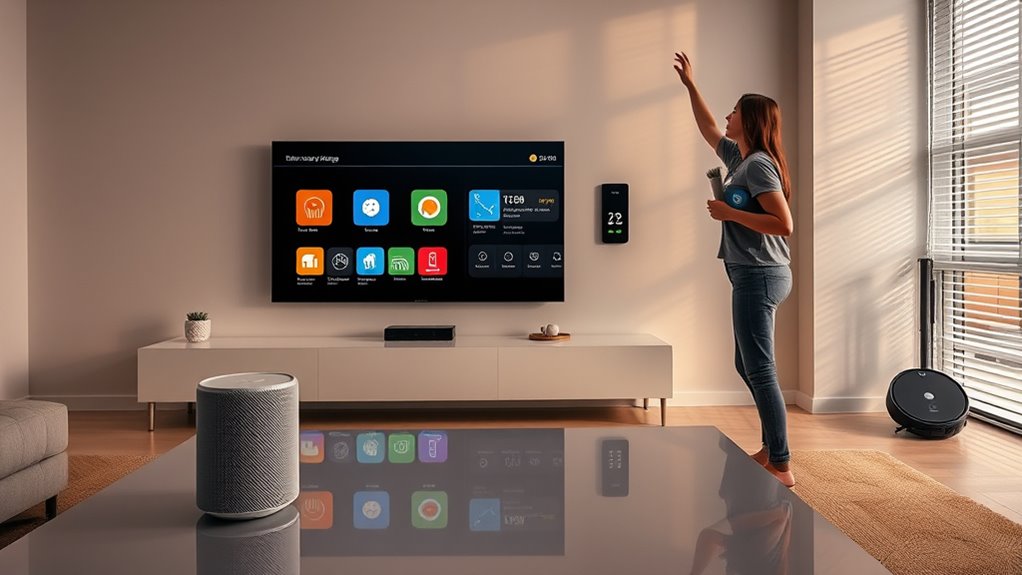

AI transforms your smart home by enabling voice control to easily adjust lighting, temperature, and music, making daily tasks more effortless. It learns your routines to create personalized experiences and uses predictive automation to anticipate your needs, like preparing your coffee or adjusting climate settings before you ask. While these features boost convenience and energy efficiency, it’s important to stay aware of privacy risks. To discover how these innovations can work for you, keep exploring the possibilities.
Key Takeaways
- AI enables voice control for effortless management of lighting, temperature, and entertainment systems in smart homes.
- Predictive automation allows devices to learn routines and anticipate residents’ needs, enhancing convenience.
- AI-driven systems optimize energy efficiency by adapting settings based on user behavior and weather forecasts.
- Smart homes collect data on habits, raising privacy concerns that require proper security measures and settings.
- Overall, AI transforms homes into personalized, responsive environments that improve comfort, efficiency, and sustainability.

Have you ever wondered how artificial intelligence is transforming your living space? AI-powered smart homes are revolutionizing the way you interact with your environment, making daily routines more convenient, efficient, and personalized. With voice control, you can effortlessly adjust your lighting, temperature, or play your favorite music just by speaking, creating a seamless experience. But as these devices become more integrated into your life, concerns about privacy also grow. Smart home systems gather a significant amount of data about your habits and preferences, raising questions about how that information is stored, used, and protected. It’s essential to understand that while AI enhances your comfort, it also introduces potential privacy risks that you should stay aware of and manage.
AI smart homes revolutionize daily living but raise important privacy concerns to manage carefully.
One of the key benefits AI brings to your smart home is improved energy efficiency. Smart thermostats learn your schedule and temperature preferences, automatically adjusting settings to save energy when you’re away or asleep. Lights turn off when rooms are unoccupied, and appliances operate during off-peak hours, reducing energy consumption and lowering utility bills. These features not only help you save money but also contribute to a more sustainable lifestyle. AI-driven automation ensures that your home remains comfortable without wasting resources, making it easier for you to adopt eco-friendly habits effortlessly.
The shift to an AI-enabled home also means your devices become smarter over time. Predictive automation anticipates your needs before you even voice them. For example, if you usually turn on the coffee maker in the morning, the system can learn this pattern and prepare coffee for you at the usual time, saving you effort. Similarly, AI can adjust your home’s climate based on weather forecasts or your daily routines, creating a more responsive environment. This predictive capability makes your home not just reactive but proactive, improving your overall living experience. Incorporating home organization strategies can further optimize your space and ensure your smart devices function seamlessly within an organized environment.
However, these advances come with the responsibility of managing privacy concerns. As your devices collect more data to better serve you, it’s important to ensure that this information is protected against breaches. Many smart home systems offer privacy settings, but it’s up to you to review and configure them properly. Regular updates and choosing reputable brands can help safeguard your data. While AI in smart homes offers incredible convenience and efficiency, balancing these benefits with privacy considerations is essential for a safe and enjoyable experience. Ultimately, AI is transforming your living space into a more intelligent, energy-efficient environment—if you stay informed and proactive about your privacy.
smart home voice control devices
As an affiliate, we earn on qualifying purchases.
As an affiliate, we earn on qualifying purchases.
Frequently Asked Questions
How Secure Are Ai-Powered Smart Home Systems?
You might wonder how secure AI-powered smart home systems really are. While they offer convenience, there are security vulnerabilities like hacking risks and unauthorized access. However, manufacturers often use data encryption to protect your information. Staying updated with firmware and using strong passwords can further enhance your security. Remember, no system is foolproof, but taking these steps helps minimize risks and keep your smart home safer.
Can AI Adapt to Individual Household Routines?
You’ll find that AI can adapt to your household routines through advanced personalization techniques and routine learning. It observes your habits, adjusts settings automatically, and predicts your needs, making your smart home more intuitive. By continuously learning from your behavior, AI creates a seamless experience, ensuring comfort and efficiency. This adaptability means your smart home becomes more tailored to your lifestyle over time, enhancing convenience and energy savings.
What Are the Privacy Implications of AI in Smart Homes?
Imagine waking up to your smart home knowing your privacy concerns are addressed. AI’s collecting data to personalize experiences, but you might wonder who owns that data. Privacy concerns arise when sensitive information is stored or shared without clear consent. You should stay informed about data ownership policies, use secure devices, and enable privacy settings. Being proactive helps protect your personal space from potential misuse or breaches.
How Does AI Improve Energy Efficiency?
AI improves energy efficiency by enabling energy optimization through smart sensors and data analysis. You benefit from appliance scheduling that automatically adjusts your devices’ operation times, reducing unnecessary energy use. This proactive approach guarantees your home consumes less power during peak hours and when you’re away. As a result, you save on energy costs while contributing to a greener environment, all through intelligent automation tailored to your lifestyle.
Are AI Smart Home Systems Cost-Effective Long-Term?
Imagine a gentle breeze guiding your home’s energy use, making every dollar stretch further. AI smart home systems often lead to significant cost savings over time, offsetting initial investment costs through reduced energy bills. While the upfront expense might seem substantial, the long-term benefits—like less wasted energy and increased efficiency—make these systems a wise investment, paying off in comfort and savings for years to come.
AI-powered smart thermostats
As an affiliate, we earn on qualifying purchases.
As an affiliate, we earn on qualifying purchases.
Conclusion
As you embrace smart home technology, AI becomes your trusted partner, seamlessly adapting to your routines like a loyal assistant. From voice control to predictive automation, it transforms your living space into a personalized haven. As you continue exploring, remember that AI’s role is only growing, making your home smarter and more intuitive every day. Just like a compass guiding your journey, AI helps you navigate the future of comfortable, connected living.
predictive automation home systems
As an affiliate, we earn on qualifying purchases.
As an affiliate, we earn on qualifying purchases.
smart lighting with voice control
As an affiliate, we earn on qualifying purchases.
As an affiliate, we earn on qualifying purchases.