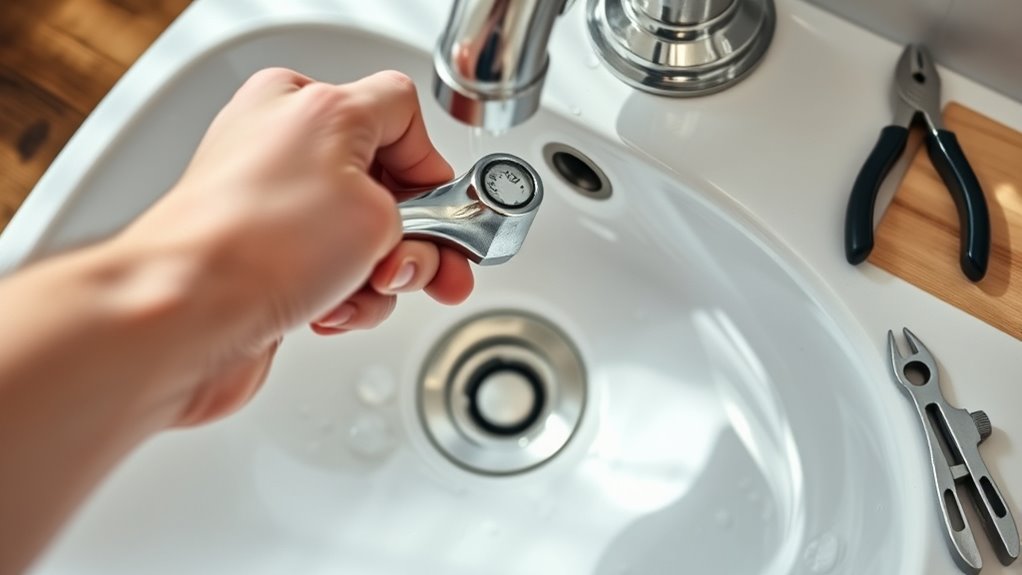

To fix a leaky faucet and other small plumbing issues, start by turning off the water supply and inspecting the problem. For a leaky faucet, you may need to replace worn-out washers or cartridges. Check for clogs or damaged pipes if water flow drops or leaks occur elsewhere. Regular maintenance and understanding basic components will help prevent bigger problems. Keep exploring to learn helpful tips that’ll keep your plumbing working smoothly.
Key Takeaways
- Turn off the water supply before repairing a leaky faucet to prevent water damage.
- Identify the type of faucet (compression, cartridge, ball, or ceramic) to determine the correct repair method.
- Replace worn-out washers, O-rings, or cartridges to fix common leaks and restore proper function.
- Use appropriate tools like a wrench and screwdriver, and follow safety precautions during repairs.
- Regular maintenance, such as checking for corrosion and replacing faulty parts, prevents future leaks and issues.
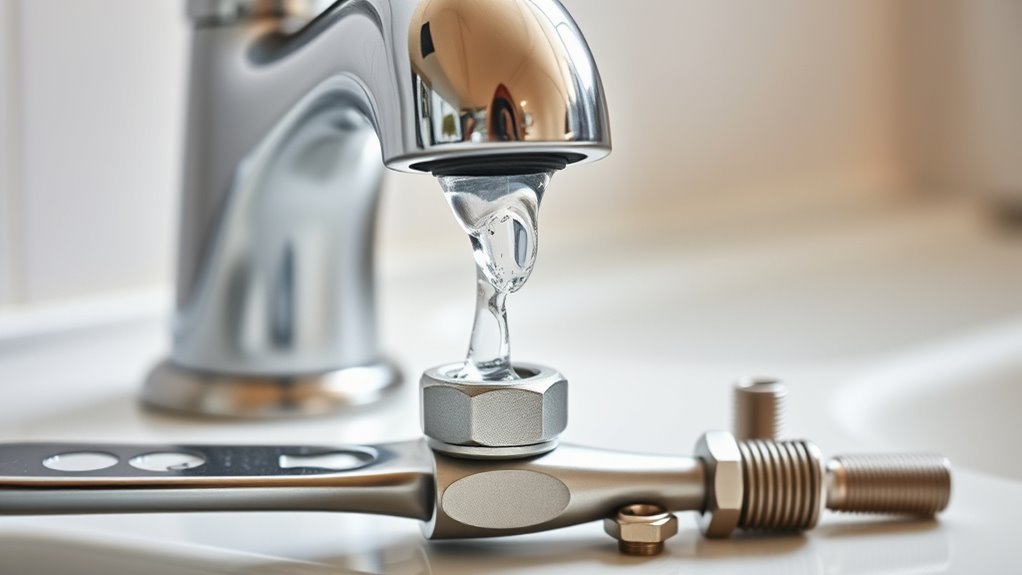
Have you ever wondered how water smoothly flows through your home or what keeps leaks at bay? The secret lies in a well-maintained plumbing system, where even simple components play a crucial role. One often overlooked element is pipe insulation. Not only does it help regulate water temperature, but it also prevents pipes from freezing in cold weather, which can cause bursts and leaks. When pipes are properly insulated, water pressure remains steady and consistent, ensuring your faucets and appliances work efficiently. Without insulation, cold pipes may freeze, expanding and cracking the pipes, leading to costly repairs and water damage. So, investing in good pipe insulation is a smart move to keep your plumbing running smoothly and protect your home from preventable issues. Additionally, understanding water pressure is essential for maintaining a healthy plumbing system.
Understanding water pressure is equally important. High water pressure can cause stress on your pipes and fixtures, increasing the likelihood of leaks and damage over time. Conversely, low water pressure might make everyday tasks frustrating, like washing dishes or taking a shower. You can easily check your water pressure using a gauge attached to a hose bib or faucet. If you notice that it’s too high—say, above 80 psi—you might want to install a pressure regulator to keep it in a safe range. This device helps maintain a steady flow, reducing strain on your plumbing system and extending the lifespan of your fixtures. On the other hand, if your water pressure is too low, it could be due to clogged pipes or a failing pressure regulator, which may require professional inspection.
As an affiliate, we earn on qualifying purchases.
Frequently Asked Questions
How Do I Identify Different Types of Plumbing Pipes?
To identify different types of plumbing pipes, examine the pipe material and surface. For example, copper pipes are usually shiny and reddish, while PVC pipes are white or gray and lightweight. Look for markings or labels that indicate pipe identification, such as type or pressure ratings. You can also tap gently to hear the sound—metal pipes produce a solid noise, while plastic pipes sound hollow. This helps you distinguish between various pipe types.
What Tools Are Essential for Basic Plumbing Repairs?
For basic plumbing repairs, you need essential tools like a wrench, pliers, and a screwdriver. Don’t forget pipe insulation to prevent freezing and leaks, and a water pressure testing gauge to check system performance. These tools help you efficiently fix issues, guarantee proper water flow, and safeguard pipes from damage. Having these on hand makes small repairs straightforward and safe, saving you time and money.
How Often Should I Inspect My Home’S Plumbing System?
You should inspect your home’s plumbing system at least once a year. Look for signs of pipe corrosion and check water pressure regularly to catch issues early. If you notice rust or decreased water flow, it’s time to address problems before they worsen. Regular inspections help prevent costly repairs and guarantee your plumbing stays efficient and reliable. Stay proactive, and you’ll keep your system running smoothly.
Can I Fix a Clogged Drain Without Chemicals?
Think of your drain as a river that needs gentle guiding, not harsh chemicals. You can fix a clogged drain naturally with baking soda and vinegar, which act like a gentle current clearing debris. Try pouring boiling water first, then add baking soda, followed by vinegar. Let it sit, then flush with hot water. These natural remedies promote drain maintenance without the harsh effects of chemicals, keeping your plumbing healthy.
When Should I Call a Professional Plumber Instead of DIY?
When should you call a professional plumber instead of DIY? If your issue involves complex plumbing maintenance or you’re unsure about cost-effective solutions, it’s best to get expert help. For persistent clogs, leaking pipes, or water pressure problems, a professional can diagnose and fix the problem efficiently. Attempting these repairs yourself might lead to bigger issues or costly damages, so don’t hesitate to contact a plumber when necessary.
Conclusion
Now that you’ve learned the basics, tackling small plumbing issues is like tending to a garden—you just need the right tools and a little patience. Think of yourself as a skilled gardener, nurturing your home’s water system back to health. With each fix, you build confidence and keep things flowing smoothly. Remember, even the tiniest leak can become a flood if ignored—so stay attentive, and your home’s plumbing will serve you well, just like a well-tended garden.