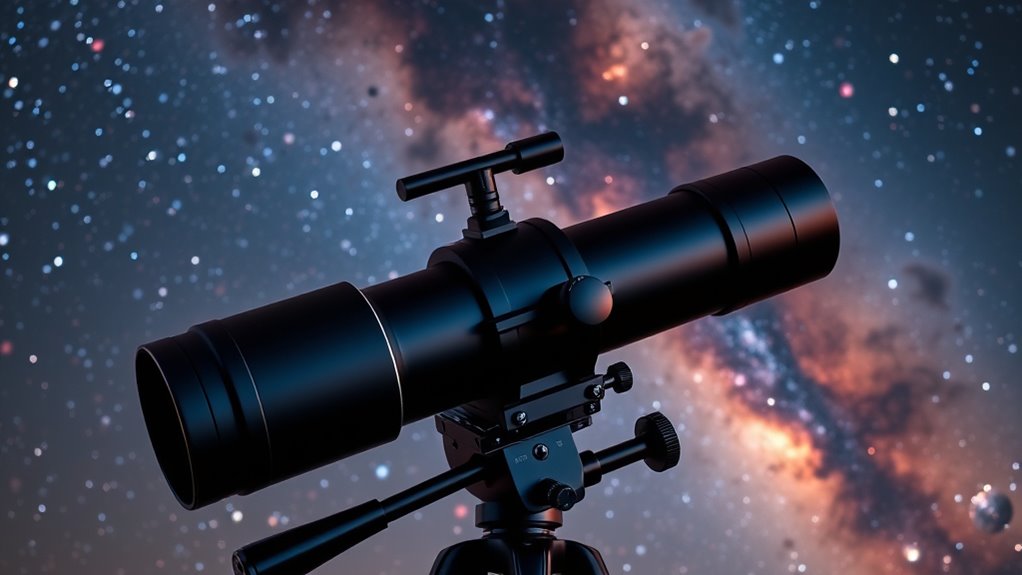

Choosing the right 130mm triplet apo refractor for astrophotography can be challenging, especially with so many options claiming to deliver high-quality images. For those prioritizing portability and ease of use, the Explore Scientific ED80 offers excellent image quality in a compact design, but lacks motorized tracking. Conversely, the SVBONY SV550 80mm Triplet APO provides superior optics and accessories for dedicated astrophotographers willing to handle a heavier setup. For versatile imaging with built-in features like field flatteners and precise focus, the SVBONY SV550 Refractor with Field Flattener stands out. However, its complexity and weight may not suit beginners or portable users. This guide compares these options to help you identify the best fit based on your experience level, portability needs, and imaging goals.

Get travel and outdoor gear delivered free with Prime
- Fast, free delivery on millions of items
- Prime Video, Amazon Music and more included
- Member-only deals all year
Complete the kit



Key Takeaways
- The Explore Scientific ED80 excels in portability and high-contrast images but lacks motorized tracking.
- The SVBONY SV550 80mm Triplet APO offers premium optics and accessories, ideal for dedicated astrophotographers willing to manage a heavier, more complex setup.
- Built-in field flatteners and camera angle adjusters are features that significantly enhance astrophotography quality but may add weight and complexity.
- Manual focus is common across these models, which can be a drawback for those seeking quick adjustments or automated focusing.
- Weight and setup complexity vary widely, influencing whether a model is suitable for portable use or fixed observatory setups.


| 130mm triplet apo refractors for astrophotography | Focal Ratio | Objective Lens Diameter | Weight |
|---|---|---|---|
| 70mm Aperture 300mm Focal Leng | — | 70mm | 1.76 kg |
| SVBONY SV550 80 Triplet APO Te | F6 | — | 3.75 kg |
| SVBONY SV550 Telescope | F6 | — | — |
| SVBONY SV550 Telescope | F6 | 80mm | — |
| Explore Scientific ED80 Essent | f/6 | 80mm | 6 pounds |
More Details on Our Top Picks
70mm Aperture 300mm Focal Length Refractor Telescope with 15-150x Magnification and Equatorial Mount
This compact refractor excels in portability and ease of use, making it ideal for beginners and casual astrophotographers. Its bright, sharp images benefit from multi-coated optics, and the equatorial mount provides smooth tracking, which is crucial for long-exposure astrophotography. Compared to larger, more complex models, its limited magnification range and manual focus might restrict advanced imaging. The lightweight design makes it easy to carry to dark-sky sites, but the lack of motorized tracking means you’ll need steady hands for long exposures.
Pros:- Bright, high-clarity images with multi-coated optics
- Lightweight and portable for outdoor use
- Smooth tracking with equatorial mount
Cons:- Limited to manual focus
- Magnification range may not satisfy experienced users
- No electronic or motorized tracking
Best for: Beginners or those seeking a lightweight, versatile telescope for quick astrophotography sessions
Not ideal for: Advanced astrophotographers requiring motorized tracking or extensive customization
- Objective Lens Diameter:70mm
- Focal Length:300mm
- Magnification:15-150x
- Mount Type:Equatorial
- Weight:1.76 kg
- Dimensions:435×220×117 mm
Our verdict“A practical, portable choice for beginners and casual users who prioritize ease of use over advanced features.”
SVBONY SV550 80 Triplet APO Telescope Kit
The SVBONY SV550 80mm Triplet APO offers exceptional optical quality with true-to-life color and high contrast, making it a favorite among dedicated astrophotographers. Its lightweight, portable design allows for easy transport, and it’s compatible with a range of accessories like field flatteners and guide scopes. Compared with simpler models, this kit’s high-quality optics significantly reduce chromatic aberration, but the inverted image when used with eyepieces can require additional correction. Its manual operation may be less convenient for quick adjustments, yet it delivers impressive image sharpness once properly set up.
Pros:- High-quality triplet APO optics for sharp, true-to-life images
- Portable and lightweight design
- Compatible with astrophotography accessories
Cons:- Inverted images may need correction
- Requires careful handling and setup
Best for: Intermediate to advanced users focused on astrophotography with a need for high image fidelity
Not ideal for: Casual observers or those seeking fully motorized, automated setups
- Optical Structure:Triplet APO
- Aperture:80mm
- Focal Ratio:F6
- Weight:3.75 kg
- Included Accessories:SV209 1.0x Flattener, SV165 Mini Guide Scope
Our verdict“An excellent choice for astrophotographers seeking high optical quality in a portable package, provided they’re comfortable with manual setup.”
SVBONY SV550 Telescope, 80mm APO Triplet Refractor OTA Bundle with Field Flattener and Camera Angle Adjuster
This bundle emphasizes high-contrast, low-chromatic aberration imaging with included accessories like a built-in field flattener and camera angle rotator. Its dual-speed focus mount allows for precise focusing, which is essential for astrophotography requiring fine detail. While the setup can be complex and somewhat heavy, it compensates with superior image quality, especially suited for capturing galaxies and nebulae. It’s best suited for experienced users who want a dedicated, high-performance imaging platform, though novices might find the assembly challenging.
Pros:- High-quality, chromatic aberration-free optics
- Includes field flattener and camera rotator
- Precise dual-speed focus for sharp images
Cons:- Heavy and less portable
- Requires careful setup and alignment
Best for: Experienced astrophotographers seeking a high-end, feature-rich refractor for deep-sky imaging
Not ideal for: Beginners or those prioritizing portability over advanced features
- Optical Design:Triplet APO
- Aperture:80mm
- Focal Ratio:F6
- Focus Mount:Dual-speed 2.5-inch
- Included Accessories:Field Flattener, Camera Angle Adjuster
Our verdict“A high-performance, feature-packed option for dedicated astrophotographers willing to handle its complexity and weight.”
SVBONY SV550 Telescope, 80ED F6 Triplet Apochromatic Refractor with Field Flattener and Camera Angle Adjuster
The SV550 ED80 F6 combines high-quality S-FPL51 low-dispersion ED glass with a triplet design, producing stunning, chromatic aberration-free images. Its high-precision focus mount and included accessories like the field flattener and rotator make it a strong choice for serious astrophotographers. However, its weight and complexity may challenge portability and setup speed, especially for those new to astrophotography. This model is best suited for users with some experience who want excellent image quality and flexible imaging options.
Pros:- High-quality ED optics with minimal chromatic aberration
- Includes field flattener and rotator for optimal imaging
- Dual-speed focus for precise adjustments
Cons:- Heavy and more complex to set up
- Requires some assembly and familiarity with astrophotography gear
Best for: Experienced astrophotographers seeking a premium, versatile refractor for deep sky imaging
Not ideal for: Beginners or those seeking a lightweight, portable setup
- Apochromatic Refractor:Yes
- Objective Lens Diameter:80mm
- Focal Ratio:F6
- Optical Design:Triplet ED
- Focus Mount:Dual-speed 2.5-inch
Our verdict“A high-end, versatile refractor that delivers exceptional images for serious astrophotographers willing to handle its setup demands.”
Explore Scientific ED80 Essential Series Air-Spaced Apochromatic 80mm Triplet Refractor Telescope for Astrophotography
The ED80 Essential Series from Explore Scientific offers a compact, lightweight design that still provides detailed, high-contrast images, thanks to its air-spaced triplet apochromatic optics. It is particularly appealing for those who want a reliable, portable telescope for spontaneous astrophotography or travel. Its manual focus and lack of motorized tracking limit its use for extended, automated imaging sessions, but its high-quality optics make it a favorite for quick shots of the Moon, planets, and bright deep-sky objects. Its moderate weight and straightforward setup make it accessible for intermediate users.
Pros:- Excellent color correction and high contrast
- Portable and easy to set up
- Suitable for astrophotography with high-quality optics
Cons:- Manual focus only
- Limited to non-motorized operation
- Heavy for extended handheld use
Best for: Intermediate users seeking a portable, high-quality imaging refractor
Not ideal for: Advanced astrophotographers requiring full automation and heavy-duty setups
- Objective Lens Diameter:80mm
- Focal Length:480mm
- Focal Ratio:f/6
- Weight:6 pounds
- Mount Type:Equatorial
Our verdict“A well-balanced choice for those who want high-quality optics in a portable form, perfect for spontaneous astrophotography and travel.”

How We Picked
Our selection process focused on 130mm triplet apo refractors that are highly regarded in the astrophotography community, emphasizing optical quality, build durability, and accessory compatibility. We compared specifications like aperture, focal ratio, and included features such as field flatteners and camera adapters. Practical considerations like weight, portability, and ease of use played a key role, alongside reviews and reputation among experienced astrophotographers. Since astrophotography demands precise optics and stable mounts, models with high-quality coatings, minimal chromatic aberration, and robust construction were prioritized. Finally, we balanced these technical factors against price and user feedback to present a curated list suited for varying skill levels and imaging ambitions.
| 130mm triplet apo refractors for astrophotography | Focal Ratio |
|---|---|
| 70mm Aperture 300mm Focal Leng | — |
| SVBONY SV550 80 Triplet APO Te | F6 |
| SVBONY SV550 Telescope | F6 |
| SVBONY SV550 Telescope | F6 |
| Explore Scientific ED80 Essent | f/6 |
Factors to Consider When Choosing 130mm Triplet Apo Refractors For Astrophotography
When selecting a 130mm triplet apo refractor for astrophotography, several factors influence the best choice for your needs. Understanding optical quality, portability, feature set, and your experience level can help narrow down options. For those new to astrophotography or seeking a lightweight setup, models like the Explore Scientific ED80 provide high-quality images without the complexity. More advanced users aiming for deep-sky imaging with precise control and accessories should consider models like the SVBONY SV550 with Field Flattener. This guide breaks down key considerations to help you make an informed decision based on your goals and setup preferences.
Optical Quality and Image Performance
Optical excellence is paramount in astrophotography, especially with triplet apochromatic designs that minimize chromatic aberration and produce sharp, vibrant images. High-quality ED glass, multi-coatings, and precise collimation contribute significantly to final image clarity. When comparing options, look for models with proven optical coatings and low dispersion glass. While premium models like the SV550 ED80 excel here, even more affordable options such as the Explore Scientific ED80 can deliver remarkable results for most amateur astrophotographers.
Portability and Ease of Use
If you plan to shoot from different locations or travel frequently, weight and size become critical. The lightweight ED80 series is ideal for quick setups, but models with more advanced features, like field flatteners, tend to be heavier and more complex. Manual focus is common but can slow down imaging sessions. Consider whether you prefer quick, spontaneous shots or are willing to handle heavier, more intricate setups for high-end imaging. Balance your portability needs with the desired image quality and feature set.
Features and Accessories
Features like built-in field flatteners, camera rotators, and motorized focusers significantly impact astrophotography quality and convenience. These features help achieve sharp, flat images across the frame and reduce setup time. However, they may increase weight and complexity, making the telescope less suitable for beginners or portable use. Determine which accessories are essential for your workflow and choose a model that offers a good balance of features without overwhelming your setup or budget.
Budget and Skill Level
While high-end models deliver exceptional images, they often come with increased cost and setup demands. Beginners might prefer more straightforward, lightweight options like the Explore Scientific ED80, which offers excellent optical performance without complex accessories. Intermediate and advanced users willing to invest in accessories and handling heavier gear will benefit from models with enhanced features like field flatteners and precise focusing mechanisms. Match your budget and skill level with the complexity and capabilities of the refractor to ensure a satisfying experience.
Frequently Asked Questions
Why is a triplet APO refractor preferred for astrophotography?
Triplet apochromatic refractors excel in astrophotography because their three-element optical design minimizes chromatic aberration and produces sharp, color-corrected images. This results in clearer, more detailed captures of celestial objects, especially when imaging deep-sky targets like nebulae and galaxies. The high optical quality of triplet designs makes them a favorite among serious astrophotographers seeking high-contrast, accurate colors in their images.
What should I consider when choosing a 130mm triplet apochromatic refractor?
Key factors include optical quality—look for low-dispersion ED glass and multi-coatings—portability, weight, and the availability of useful accessories like field flatteners and camera rotators. Consider whether manual or motorized focusing suits your workflow, and match the scope’s features to your experience level. Your target objects and preferred imaging style will also influence whether a more compact, simple model or a feature-rich, heavier setup is best for you.
Are these refractors suitable for beginner astrophotographers?
Some models, like the Explore Scientific ED80, are well-suited for beginners due to their simplicity, portability, and high optical quality. However, more advanced models with accessories like field flatteners and precise focusers may be overwhelming for newcomers and require a higher skill level to operate effectively. Beginners should start with simpler setups before progressing to more complex configurations.
How important are accessories like field flatteners and camera rotators?
These accessories significantly improve the quality of astrophotography by providing flatter image fields and easier framing. Field flatteners help eliminate distortion at the edges of wide-field images, while camera rotators simplify composing and capturing images at different angles. For serious deep-sky imaging, investing in these accessories can make a noticeable difference in final image quality, though they do add weight and complexity to your setup.
What are the tradeoffs between portability and image quality?
Generally, smaller, lighter scopes like the ED80 series are easier to transport and set up, making them suitable for quick shots and travel. In contrast, larger, feature-rich models with field flatteners and advanced focusers tend to be heavier and more cumbersome, but they deliver higher-quality, flatter images. Your choice depends on whether you prioritize ease of use and mobility or maximum image fidelity and advanced features.
Conclusion
For beginners or casual astrophotographers, the Explore Scientific ED80 offers a compelling balance of portability and high-quality optics. Intermediate users looking to expand their imaging capabilities should consider the SVBONY SV550 80mm Triplet APO, which provides more advanced features and accessories. Experienced astrophotographers aiming for professional deep-sky imaging will find the SVBONY SV550 with Field Flattener or similar high-end models to be worth the investment, despite their heavier weight and setup complexity. Matching your skill level, imaging goals, and portability needs will guide you toward the best choice among these excellent options.
Columbus Day / Indigenous Peoples' Day Picks
long weekend sales
As an affiliate, we earn on qualifying purchases.