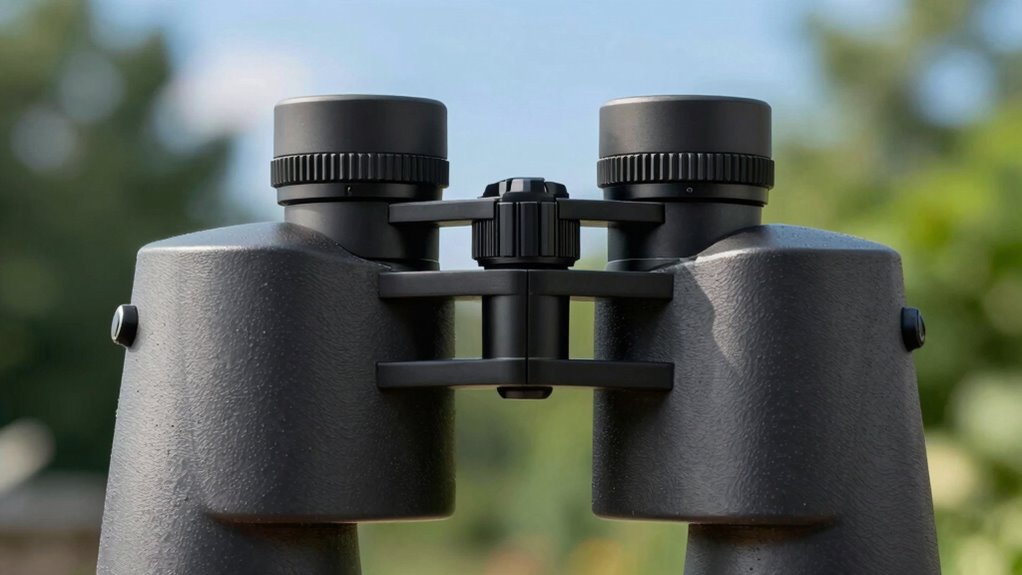

For premium binoculars for bird watching, I’d start with the Nikon Monarch M7 10×42 for its higher magnification and broad field of view, while the Nikon Monarch M5 8×42 is a steadier all-around choice and the Athlon Midas UHD 8×42 brings ED glass to the comparison. The main tradeoff is between 8x models, which are easier to hold steady and follow birds with, and 10x models, which show more detail at a distance but magnify hand shake. Weather protection, optical glass, fit, and weight also shape how enjoyable a pair is to carry through a long day outdoors. I rank these nine options by how well their features support real birding needs, not by magnification alone. Read on for the differences, drawbacks, and buyer type each pick suits.

Get travel and outdoor gear delivered free with Prime
- Fast, free delivery on millions of items
- Prime Video, Amazon Music and more included
- Member-only deals all year
Complete the kit



Key Takeaways
- The Monarch M7 10×42 leads for distant subjects, pairing higher magnification with a wide field of view; its 10x image can be harder to steady than an 8x pair.
- The Monarch M5 8×42 is the more forgiving all-around choice for woodland walks and moving birds, where quick acquisition and a stable view matter.
- ED glass separates several specialist contenders—including Athlon Midas UHD, SVBONY SV202, Celestron Nature DX ED, and Glosseek Gen-2—but glass type alone does not determine fit or ease of use.
- The Celestron Nature DX and DX ED are distinct options: the ED version adds a glass feature aimed at cleaner color edges, while both serve shoppers seeking waterproof 8×42 formats.
- Magnification and purpose should guide the shortlist: Vortex Triumph HD, Bushnell H2O Xtreme, and Glosseek Gen-2 offer 10×42 configurations, while the 8×42 models favor a steadier, wider-feeling birding view.
| Nikon Monarch M5 8×42 Binoculars |  | Best Overall for Steady Birding | Magnification: 8x | Objective lens diameter: 42 mm | Close focus: 8.2 ft | VIEW ON AMAZON | See Our Full Breakdown |
| Athlon Optics Midas UHD 8×42 Binoculars with ED Glass |  | Best for Wide-View Scanning | Magnification: 8x | Objective lens diameter: 42 mm | Glass: ED glass | VIEW ON AMAZON | See Our Full Breakdown |
| Vortex Triumph HD 10×42 Binoculars |  | Best for Long-Range Detail | Magnification: 10x | Objective lens diameter: 42 mm | Optical system: HD | VIEW ON AMAZON | See Our Full Breakdown |
| Celestron Nature DX 8×42 Waterproof Binoculars |  | Best for Stable, Extended Viewing | Magnification: 8x | Objective lens diameter: 42 mm | Prism type: BaK-4, phase-coated | VIEW ON AMAZON | See Our Full Breakdown |
| Nikon Monarch M7 10×42 Binoculars |  | Best Premium Reach | Magnification: 10x | Objective lens diameter: 42 mm | Field of view: 357 ft at 1,000 yd | VIEW ON AMAZON | See Our Full Breakdown |
| SVBONY SV202 8×42 ED Binoculars |  | Best Wide-View Pick | Magnification: 8x | Objective lens diameter: 42 mm | Field of view: 8.12° | VIEW ON AMAZON | See Our Full Breakdown |
| Celestron Nature DX ED 8×42 Waterproof Birding Binoculars |  | Best Weather-Ready 8×42 | Magnification: 8x | Objective lens diameter: 42 mm | Lens glass: Extra-Low Dispersion (ED) | VIEW ON AMAZON | See Our Full Breakdown |
| Bushnell H2O Xtreme 10×42 Waterproof Binoculars |  | Best for Wet-Weather 10x Viewing | Magnification: 10x | Objective lens diameter: 42 mm | Prisms: BaK-4 | VIEW ON AMAZON | See Our Full Breakdown |
| Glosseek Gen-2 10×42 ED Binoculars |  | Best for Glasses Wearers Seeking 10x ED | Magnification: 10x | Objective lens diameter: 42 mm | Prism type: BAK4 | VIEW ON AMAZON | See Our Full Breakdown |
| binoculars for bird watching premium | Magnification | Objective lens diameter | Field of view |
|---|---|---|---|
| Nikon Monarch M5 8×42 Binocula | 8x | 42 mm | — |
| Athlon Optics Midas UHD 8×42 B | 8x | 42 mm | 8.1° angular; 144 m at 1,000 m |
| Vortex Triumph HD 10×42 Binocu | 10x | 42 mm | — |
| Celestron Nature DX 8×42 Water | 8x | 42 mm | 7.4° angular |
| Nikon Monarch M7 10×42 Binocul | 10x | 42 mm | 357 ft at 1,000 yd |
| SVBONY SV202 8×42 ED Binocular | 8x | 42 mm | 8.12° |
| Celestron Nature DX ED 8×42 Wa | 8x | 42 mm | — |
| Bushnell H2O Xtreme 10×42 Wate | 10x | 42 mm | — |
| Glosseek Gen-2 10×42 ED Binocu | 10x | 42 mm | 7° (122 m/1000 m) |
More Details on Our Top Picks
Nikon Monarch M5 8×42 Binoculars
The Nikon Monarch M5 8×42 is my balanced pick for birders who want a bright view and a forgiving field of view for following moving birds. Its ED glass helps reduce color fringing, while dielectric-coated prisms support bright, natural-looking detail. Compared with the 10x Nikon Monarch M7, the M5’s 8x magnification should be easier to hold steady and gives a wider viewing experience, though it offers less reach for distant subjects. An 8.2-foot close focus also makes it useful for nearby wildlife, a detail not supplied for several alternatives here. The tradeoff is that the provided product information gives no field-of-view measurement, so I can’t compare its tracking area precisely with the Athlon Midas UHD’s stated 8.1 degrees. It is a strong all-rounder, but not the reach-first choice.
Pros:- ED glass helps reduce distracting color fringing
- 8x magnification supports a steadier view and easier tracking
- Close focus reaches 8.2 feet for nearby wildlife
- Waterproof, fogproof, nitrogen-purged body with adjustable eyecups
Cons:- 8x magnification offers less detail at long distances than the 10x Monarch M7
- The supplied specifications do not quantify its field of view
Best for: Birders who want one full-size pair for woodland walks, nearby wildlife, and steady handheld viewing
Not ideal for: Birders who regularly watch distant birds and prioritize the extra reach of 10x magnification
- Magnification:8x
- Objective lens diameter:42 mm
- Close focus:8.2 ft
- Optics:Extra-low Dispersion (ED) glass
- Prism coating:Dielectric high-reflective multilayer
- Weatherproofing:Waterproof and fogproof
- Housing:Nitrogen-purged, O-ring sealed, rubber-armored
- Eyecups:Adjustable turn-and-slide; suitable for eyeglass wearers
Our verdict“Choose the Monarch M5 if you want bright, steady 8x birding views with useful close focus in a weather-sealed body.”
Athlon Optics Midas UHD 8×42 Binoculars with ED Glass
For birders who scan hedgerows, treetops, and open habitat, the Athlon Midas UHD 8×42 has a useful advantage: its stated 8.1-degree field of view gives a clear basis for judging how much scene fits at once. That makes locating and keeping up with a moving bird easier than relying on magnification alone. ED glass and fully multi-coated lenses aim for sharp, bright, accurate-color views, while the dielectric prism coating reflects over 99% of light. Compared with the Nikon Monarch M5, the Midas provides a published field-of-view figure, but the M5’s supplied details include an 8.2-foot close focus that may appeal more to watchers of nearby wildlife. Argon purging supports weather resistance and thermal stability. The eye relief is described only as long, without a measurement, so eyeglass wearers have less precise fit information.
Pros:- 8.1-degree field of view helps locate and follow moving birds
- ED glass helps control color fringing
- Fully multi-coated lenses and dielectric prisms support light transmission and color
- Argon purging supports waterproofing and thermal stability
Cons:- Eye relief is described as long but has no supplied measurement
- The provided specifications do not state close focus, limiting comparison for nearby wildlife viewing
Best for: Birders who scan wide habitats and want a published field-of-view measurement alongside ED optics
Not ideal for: Eyeglass wearers who need a specific eye-relief measurement before choosing binoculars
- Magnification:8x
- Objective lens diameter:42 mm
- Glass:ED glass
- Prism coating:ESP dielectric coating; reflects over 99% of light
- Lens coating:Fully multi-coated
- Purge gas:Argon
- Field of view:8.1° angular; 144 m at 1,000 m
- Eye relief:Long; specific measurement not provided
Our verdict“Pick the Midas UHD if wide-area scanning and a stated field of view matter more to you than a documented close-focus distance.”
Vortex Triumph HD 10×42 Binoculars
The Vortex Triumph HD 10×42 suits birders who want more magnification for distant birds and a carrying setup ready for the trail. Its 10x view offers more reach than the 8x Nikon Monarch M5, which is useful when a bird stays far across a field; the corresponding tradeoff is a view that can be harder to hold steady and scan quickly. The HD optical system and fully multi-coated lenses are described as providing clear images, accurate color, and strong light transmission. Waterproofing, fog resistance, rubber armor, and the included GlassPak harness make this a practical outdoor package. Compared with the Nikon Monarch M7, the Vortex supplies a harness and tripod adaptability, while the M7’s listed optics include ED glass and oil- and water-repellent coatings. Its full-size body may be less convenient to pack.
Pros:- 10x magnification provides more reach than 8x options such as the Nikon Monarch M5
- HD optical system and fully multi-coated lenses support clear, accurate-color views
- Waterproof, fogproof, shock-resistant rubber-armored construction
- Includes an adjustable GlassPak harness and supports tripod mounting
Cons:- Full-size design may be less compact to carry
- 10x magnification can make handheld scanning less steady than 8x binoculars
Best for: Field birders who prioritize distant subject detail and want a harness included for carrying full-size binoculars
Not ideal for: Walkers seeking a compact setup or birders who prefer the steadier, wider-feeling view of 8x binoculars
- Magnification:10x
- Objective lens diameter:42 mm
- Optical system:HD
- Lens coating:Fully multi-coated
- Weatherproofing:Waterproof and fogproof
- Chassis:Polycarbonate with rubber armor
- Tripod adaptable:Yes
- Included accessories:Neck strap and adjustable GlassPak harness
- Warranty:Transferable lifetime VIP Warranty
Our verdict“Choose the Triumph HD if distant detail and an included carrying harness matter more than compactness or the steadier handling of 8x optics.”
Celestron Nature DX 8×42 Waterproof Binoculars
The Celestron Nature DX 8×42 is aimed at birders who value a stable view during longer watches. Its 8x magnification is easier to keep steady than the 10x Vortex Triumph HD when following birds by hand, and the tripod socket offers another option for sustained observation. Fully multi-coated optics and phase-coated BaK-4 prisms support bright, detailed views, while the nitrogen-purged, waterproof housing suits changing weather. The field of view is listed at 7.4 degrees, narrower than the Athlon Midas UHD’s 8.1 degrees, so the Athlon has the clearer edge for scanning broad areas. This Celestron also requires a separate tripod adapter, adding a piece to source before mounting. It makes most sense when stable viewing is a priority and the included optical features fit your needs.
Pros:- 8x magnification balances useful detail with a steady handheld view
- Phase-coated BaK-4 prisms and fully multi-coated optics support bright, detailed images
- Waterproof, nitrogen-purged housing resists wet and fog-prone conditions
- Tripod adaptable for extended stationary viewing
Cons:- 7.4-degree field of view is narrower than the Athlon Midas UHD’s stated 8.1 degrees
- Tripod adapter is not included
Best for: Birders who spend time watching from a fixed position and want the option to mount their binoculars on a tripod
Not ideal for: Birders who scan wide open habitats and want the broadest stated field of view or an adapter included
- Magnification:8x
- Objective lens diameter:42 mm
- Prism type:BaK-4, phase-coated
- Lens coating:Fully multi-coated
- Field of view:7.4° angular
- Housing:Rubber-armored polycarbonate
- Weather resistance:Waterproof and nitrogen-purged
- Tripod adaptable:Yes; adapter not included
- Warranty:Limited lifetime warranty in the US
Our verdict“Choose the Nature DX if you want stable 8x birding optics with tripod compatibility and can supply the adapter separately.”
Nikon Monarch M7 10×42 Binoculars
The Nikon Monarch M7 10×42 is the reach-focused pick for birders who want to inspect distant subjects with a premium optical feature set. Its 10x magnification brings faraway birds closer than the 8x Monarch M5, while ED glass and multilayer lens and prism coatings support bright, detailed viewing. Oil- and water-repellent lens coatings can help keep surface grime and droplets from interrupting observation outdoors. Nikon lists a field of view of 357 feet at 1,000 yards, a narrower perspective than the Athlon Midas UHD’s stated 8.1 degrees, so the Athlon is better suited to broad scanning. The M7’s higher magnification also demands a steadier hold than the 8x models. Its rubber-armored, waterproof and fogproof body and turn-and-slide eyecups round out a capable field option.
Pros:- 10x magnification helps reveal detail on distant birds
- ED glass and multilayer coatings support bright, detailed views
- Oil- and water-repellent coatings help shed surface droplets and grime
- Waterproof, fogproof body with adjustable eyecups
Cons:- Narrower field of view than the Athlon Midas UHD’s stated 8.1 degrees
- 10x magnification is less forgiving for handheld steadiness than the 8x Monarch M5
Best for: Experienced birders who often identify distant birds and want ED optics with water- and oil-repellent lens coatings
Not ideal for: Birders who prioritize a wide scanning view or the easier handheld steadiness of 8x binoculars
- Magnification:10x
- Objective lens diameter:42 mm
- Field of view:357 ft at 1,000 yd
- Optics:ED glass; multilayer lens and prism coatings
- Construction:Waterproof, fogproof, rubber-armored
- Eyecups:Turn-and-slide
- Lens coatings:Oil- and water-repellent
Our verdict“Pick the Monarch M7 if you favor distant detail and weather-ready optics over the wider, steadier view of an 8x model.”
SVBONY SV202 8×42 ED Binoculars
The SV202 is a strong fit for birders who want an easy-to-scan view when following birds through branches or across open ground. Its 8.12° field of view is wider than the Glosseek Gen-2’s 7° view, which can make it simpler to find and keep a moving subject in sight. ED glass and phase-corrected prisms are intended to reduce color fringing and preserve detail, while the 8x magnification is a steadier handheld choice than the Bushnell H2O Xtreme’s 10x. Waterproofing and rubber armor suit damp trails, and the integrated tripod mount helps for prolonged observation. The tradeoff is that no weight or dimensions are provided, so I can’t judge carrying comfort against the other 8×42 options, and buyers must verify the precise weather rating before relying on it in severe conditions.
Pros:- Wide 8.12° field of view aids tracking birds
- ED glass and phase correction help reduce color fringing
- Waterproof design and rubber armor suit outdoor use
- Integrated tripod mount supports stable extended viewing
Cons:- Weight and dimensions are not provided
- The description does not specify a waterproof rating
Best for: Birders who prioritize a broad view for tracking active wildlife and want 8x magnification for steadier handheld viewing.
Not ideal for: Buyers who need published weight and dimensions to assess long walks or pack fit, or who want a specified waterproof rating.
- Magnification:8x
- Objective lens diameter:42 mm
- Field of view:8.12°
- Optics:ED glass, multi-layer coating, phase correction
- Weather protection:Waterproof
- Body protection:Impact-resistant rubber armor
- Tripod mount:Integrated
Our verdict“Choose the SV202 if a wide field and steady 8x handheld view matter more than having published carrying dimensions.”
Celestron Nature DX ED 8×42 Waterproof Birding Binoculars
The Nature DX ED gives birders a defined set of outdoor protections alongside its 8×42 ED optics. BaK-4 prisms with dielectric and phase coatings are designed to support bright, sharp views with natural color, while nitrogen purging and waterproof construction suit changing weather. Against the standard Celestron Nature DX 8×42 in this roundup, the ED glass is the main distinction for viewers seeking less color fringing; against the SVBONY SV202, this model supplies a clearer weather-protection description and a stated lifetime US warranty. The 8x magnification favors a steadier view in hand than the 10x Bushnell H2O Xtreme, though it gives less enlargement. One practical catch: the tripod adapter is not included, so stable viewing requires an extra accessory.
Pros:- ED lenses help reduce color fringing
- BaK-4 prisms have dielectric and phase coatings
- Waterproof, nitrogen-purged housing resists weather and internal fogging
- Built-in tripod threads allow adapter-based mounting
Cons:- Tripod adapter is not included
- 8x magnification provides less enlargement than the 10x models in this batch
Best for: Birders seeking an 8×42 ED binocular with specified waterproof, nitrogen-purged construction for regular outdoor use.
Not ideal for: Viewers who want tripod mounting straight from the box or prefer 10x magnification for more distant subjects.
- Magnification:8x
- Objective lens diameter:42 mm
- Lens glass:Extra-Low Dispersion (ED)
- Prisms:BaK-4, dielectric and phase coated
- Construction:Rubber-armored polycarbonate
- Weather protection:Waterproof and nitrogen-purged
- Tripod adaptable:Yes; adapter not included
- Warranty:Celestron Limited Lifetime US Warranty
Our verdict“Pick the Nature DX ED for specified weather protection and 8x ED viewing, provided you are prepared to supply a tripod adapter.”
Bushnell H2O Xtreme 10×42 Waterproof Binoculars
The H2O Xtreme suits birders who want 10x magnification and put weather protection ahead of premium glass features. Fully multi-coated optics and BaK-4 prisms support bright viewing, while the IPX7 rating and nitrogen purging address rain, accidental submersion, and internal fogging. Compared with the Celestron Nature DX ED, the Bushnell trades ED glass for a higher specified water-resistance rating and 10x power; compared with the Glosseek Gen-2, it does not list ED optics, close focus, or eye relief. More magnification can help reveal distant birds, but hand shake is also more visible than with the 8x SVBONY SV202. The rubber armor and non-slip grips help maintain a secure hold in wet conditions. Its main buying uncertainty is physical fit: weight and dimensions are not provided.
Pros:- 10x magnification gives more reach than 8x models
- IPX7 waterproof design withstands accidental submersion
- Nitrogen purging helps prevent internal fogging
- Fully multi-coated optics and BaK-4 prisms support bright views
Cons:- No ED glass is specified
- Higher magnification can make hand movement more noticeable
- Weight and dimensions are not provided
Best for: Birders who often watch from wet locations and want 10x reach with a clearly stated IPX7 rating.
Not ideal for: People who need a steadier handheld view, ED glass, or published size and weight before choosing their gear.
- Magnification:10x
- Objective lens diameter:42 mm
- Prisms:BaK-4
- Optics coating:Fully multi-coated
- Fog protection:Nitrogen-purged
- Grip:Rubber armor with non-slip grips
- Included accessories:Strap, carrying case, ocular and objective covers
Our verdict“Choose the H2O Xtreme if wet-weather protection and 10x reach take priority over ED optics and a steadier 8x view.”
Glosseek Gen-2 10×42 ED Binoculars
The Glosseek Gen-2 pairs 10x magnification with ED glass, making it the most feature-specific choice here for birders who want extra reach and reduced color fringing. Its 18 mm eye relief and twist-up eyecups are a practical advantage for glasses wearers over models in this batch whose eye relief is not stated. A 3 m close-focus distance also gives it a useful role for nearby birds, while the IPX7, fogproof aluminum body adds protection. Compared with the Bushnell H2O Xtreme, Glosseek specifies ED optics, close focus, and eye relief; the Bushnell, however, weighs less if its weight is unknown, so direct carry comparisons aren’t possible. The Glosseek’s known 1.4 lb weight may tire arms during long handheld sessions, and its 7° view is narrower than the SVBONY SV202’s 8.12°.
Pros:- ED glass and fully multi-coated BAK4 optics support color-accurate views
- 18 mm eye relief and twist-up eyecups suit glasses wearers
- 3 m close focus covers nearby subjects
- IPX7 waterproof, fogproof, shockproof aluminum body
Cons:- At 1.4 lb, it may feel heavy during extended handheld viewing
- 7° field of view is narrower than the SVBONY SV202’s 8.12°
- No tripod is included
Best for: Glasses-wearing birders who want 10x reach, specified long eye relief, and a close-focus option for nearby wildlife.
Not ideal for: Birders who prioritize a wide field for tracking fast birds or a lightweight binocular for extended handheld use.
- Magnification:10x
- Objective lens diameter:42 mm
- Prism type:BAK4
- Optics:ED glass; fully multi-coated
- Field of view:7° (122 m/1000 m)
- Close focus:3 m
- Eye relief:18 mm
- Weight:1.4 lb
- Body and warranty:Aluminum alloy; lifetime warranty
Our verdict“Pick the Glosseek Gen-2 if you wear glasses and want 10x ED optics, provided its weight and narrower view suit your birding style.”

How We Picked
I compared these binoculars around the tasks that shape birding: finding a bird quickly, holding a steady view, resolving detail, and carrying the pair comfortably. I weighed magnification alongside field of view and handling, since a stronger close-up is of little help if a bird disappears before it reaches the eyepieces. Optical features such as ED glass, weather protection, and build also informed the rankings, with attention to what each feature can and cannot do for a buyer.
The order gives priority to balanced birding performance and usability, then to models with a clearer specialty or value case. The Monarch M7 ranks first for buyers seeking reach without giving up a broad view; the Monarch M5 follows as the easier 8x all-rounder. Other positions reflect distinct tradeoffs among glass features, magnification, and practical outdoor use. Product specifications do not establish how every person will find the fit, eye relief, or weight, so I treat those as reasons to handle a pair before committing when possible.
Factors to Consider When Choosing Binoculars For Bird Watching Premium
Premium birding binoculars are a balance of optics and handling. I’d decide where and how you watch before paying for a particular magnification or glass feature.
Choose 8x or 10x around your birding setting
Eight-power binoculars usually make it easier to keep a moving bird in view, and their image tends to look steadier when hand-held. That can matter more in woods or marsh edges than extra reach, because nearby birds often move between branches quickly. Ten-power models can reveal more detail on distant birds across open water or fields, but hand shake becomes more visible and the viewing area can feel less forgiving. A common mistake is choosing the largest magnification on the assumption that it is always better. If you watch in mixed habitats, an 8×42 is often the safer starting point; choose 10x when distance is a regular challenge and you can hold the view steadily.
Treat field of view as a bird-finding tool
Field of view affects how much landscape you see while looking through the binoculars, which can make locating and following birds easier. A wide view is especially useful for scanning foliage or tracking flight, while fine detail matters more once the bird is centered. Compare published field-of-view figures only when they use the same distance convention, since manufacturers may present them differently. Eye placement and eyecup adjustment also affect how much of that view you can actually see. Buyers who wear glasses should check eye relief and try the eyecups in their usual viewing position. A nominally wide view will not help much if blackouts or an awkward fit keep you from seeing it.
Understand what ED glass can and cannot improve
Extra-low-dispersion glass is designed to reduce color fringing around high-contrast edges, such as a dark bird against a bright sky. That can make fine outlines appear cleaner, but it does not guarantee a brighter or sharper image across the whole view. Lens coatings, optical alignment, and the overall design contribute too. ED models may suit birders who often watch in strong contrast or who value cleaner color edges, but the label alone is not a reason to choose one pair over another. Compare the complete specification and, when practical, look through the binoculars in daylight. For many buyers, steadiness, focus control, and fit will matter more often than a glass acronym.
Match size, weight, and fit to a full day outside
A pair that feels comfortable for a brief look can become tiring after hours on a neck strap. Check the listed weight, grip shape, balance, and how naturally the focus wheel falls under your fingers. If you wear glasses, confirm that the eyecups and eye relief let you see the full image without pressing the binoculars tightly to your face. People with smaller hands may find focus controls or barrel width more decisive than a small difference in optical specifications. Try adjusting focus while keeping the binoculars raised, since awkward controls can slow down bird identification. For long walks, comfort is part of performance: a pair that stays accessible is more useful than one left in a bag.
Read weather protection as a practical safeguard
Waterproof construction can protect binoculars from rain, splashes, and damp conditions, while fog-resistant designs are intended to limit internal condensation after temperature changes. These features make outdoor use less stressful, but they do not make a pair indestructible or remove the need for basic care. Check the manufacturer’s care instructions and avoid assuming that waterproof means suitable for submersion. A protective case and lens caps help prevent scratches and knocks during transport. Buyers who watch near water or in wet climates may value sealing more than a modest optical upgrade. In dry settings, handling comfort and optical fit may deserve greater weight.
Pay for upgrades that match how you watch
Premium features make sense when they solve a recurring problem, such as needing more reach, clearer high-contrast edges, or dependable use in wet weather. A more feature-rich specification can still be a poor match if the binoculars feel heavy or difficult to hold steady. Set your priorities before comparing model names, and treat accessories, warranty terms, and service support as part of ownership. Beginners often benefit more from a comfortable 8×42 with simple controls than from the most specialized optics available. Experienced birders who routinely scan distant shorelines may have a stronger case for 10x magnification. The right upgrade is the one that improves the conditions you encounter most often.
Frequently Asked Questions
Should I choose 8×42 or 10×42 binoculars for bird watching?
I’d choose 8×42 for woodland birding, nearby subjects, and a steadier view while following movement. A 10×42 can help when birds are often far away, such as across a broad wetland, but it also makes hand shake more apparent. The Monarch M5 illustrates the more forgiving 8x role, while the Monarch M7 offers a higher-magnification option with a wide field of view. Your usual habitat matters more than a general belief that higher magnification is always an upgrade. If you are uncertain, compare both powers hand-held before deciding.
Is ED glass worth prioritizing in birding binoculars?
ED glass is worth a closer look if you frequently view dark birds against bright skies or want reduced color fringing around high-contrast edges. It is not a stand-alone measure of overall image quality, and it does not replace a comfortable fit or stable handling. This roundup includes ED options across several brands, so the feature does not uniquely identify one price or performance tier. I’d compare the view, focus control, and eye relief alongside the glass specification. If those basics do not suit you, ED glass is unlikely to make the binoculars the right choice.
Can I use 10×42 binoculars without a tripod?
Yes, many people use 10×42 binoculars hand-held, though the view is more sensitive to movement than with 8x models. A relaxed stance, elbows supported when possible, and a steady grip can help. The tradeoff becomes noticeable during long scans or when trying to identify a small, moving bird. If you have unsteady hands or mostly watch nearby birds in dense cover, 8×42 may be easier to use well. Try holding a 10x pair for several minutes before choosing it for all-day birding.
What should eyeglass wearers check before choosing binoculars?
Check the stated eye relief and whether the eyecups can be adjusted to give you a full view while wearing your glasses. If you see a clipped image or dark rings around the view, your eye position may not be far enough back or the fit may not suit you. Eye relief numbers help screen options, but the shape of your glasses and face also affect comfort. Test both eyes and check that the image stays clear when you move slightly. This fit check can matter more than a small difference in magnification or glass type.
Do waterproof binoculars need special care?
Waterproofing helps protect against wet outdoor conditions, but lenses still need sensible handling and cleaning. Brush away grit before wiping glass so particles do not scratch the coatings, and follow the maker’s instructions for moisture and storage. Waterproof does not mean that every model is safe to submerge or that its seals need no care over time. Keep lens caps and a case available when the binoculars are not in use. For birders near water, weather sealing can reduce worry, but it does not replace routine protection from knocks and dirt.
Conclusion
For the strongest all-around reach among these picks, I’d choose the Nikon Monarch M7 10×42; birders who prefer a steadier, easier-to-follow view should look first at the Nikon Monarch M5 8×42. The Athlon Midas UHD 8×42 is my value-minded ED-glass choice, while the Celestron Nature DX 8×42 is a straightforward starting point for beginners who want an 8x format. For specific needs, compare the Celestron Nature DX ED or SVBONY SV202 if ED glass is a priority, and consider the Bushnell H2O Xtreme 10×42 for a waterproof 10x configuration. The Vortex Triumph HD and Glosseek Gen-2 round out the 10×42 alternatives; weigh their specifications against fit and steadiness before choosing. My final pick would depend on your usual viewing distance, how steady a 10x image feels in your hands, and whether the binoculars fit comfortably with your glasses.
Halloween Picks
halloween
As an affiliate, we earn on qualifying purchases.