
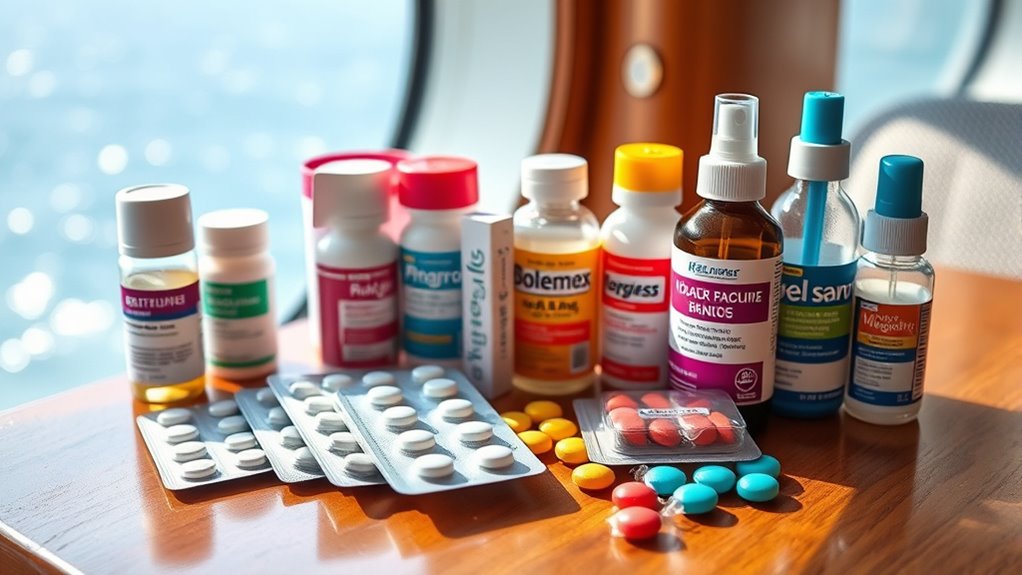

Nothing derails a cruise faster than a cold that starts somewhere between the embarkation port and your first port of call — and finding a pharmacy at sea is either impossible or priced like a specialty cocktail. That is why I put together this comparison of the best cold medicine to pack for a cruise, looking at how each option handles the specific realities of ship life: TSA screening before you board, limited cabin storage, and the reality that ship infirmaries charge per visit. My top pick is the Travel Medicine Kit with Thermometer, because a cruise cold rarely travels alone — you want fever coverage, stomach remedies, and a thermometer in one organized case. For travelers who already know colds are their main worry, the Amazon Basic Care Daytime and Nighttime Softgels deliver targeted multi-symptom relief in a two-bottle system. And if packing space is the deciding factor, the SurviveX Travel Medicine Kit slips into a personal item with room to spare. The core tradeoff across all three is breadth versus focus: full kits cover more scenarios but in smaller doses, while dedicated cold formulas treat symptoms more aggressively but leave you exposed if the illness turns out to be something else.

Get travel and outdoor gear delivered free with Prime
- Fast, free delivery on millions of items
- Prime Video, Amazon Music and more included
- Member-only deals all year
Complete the kit


Key Takeaways
- A full amazon.com/dp/B0G16SP3JH?tag=voyagerinfo-20&ascsubtag=dc-297668″ target=”_blank” rel=”nofollow sponsored noopener”>travel medicine kit beats standalone cold medicine for cruises because ship infirmaries are expensive and ports may not stock familiar US brands.
- Day/night softgel combos treat cold symptoms more directly but do nothing for stomach issues, motion sickness, or fever monitoring.
- Single-dose packet kits are the most TSA-friendly format, but they run out fast on voyages longer than five days.
- Anyone with ingredient allergies or chronic conditions should review kit contents against their medication list before packing.
- All three options are carry-on friendly, so none of them requires checked luggage or shipboard pharmacy purchases.
| Travel Medicine Kit with Thermometer, 20 OTC Medication Types, 70 Pieces |  | Best Overall | Contents: 70 pieces across 20 OTC medication types, plus thermometer and bandages | Case dimensions: 6 × 8 × 2 inches | Case features: Water-resistant, color-coded compartments | VIEW ON AMAZON | See Our Full Breakdown |
| Amazon Basic Care Cold and Flu Relief Daytime and Nighttime Softgels, 48 Count |  | Best For Direct Cold Symptom Relief | Form: Softgels | Count: 48 count (pack of 2) | Daytime use: Non-drowsy | VIEW ON AMAZON | See Our Full Breakdown |
| SurviveX Travel Medicine Kit – OTC Medications in Individual Packets |  | Best Compact Option | Includes: Diotame, Ibuprofen, Aspirin, and other OTC remedies | Packaging: Individual single-dose packets | Coverage: 3-5 days of needs for one or more travelers | VIEW ON AMAZON | See Our Full Breakdown |
More Details on Our Top Picks
Travel Medicine Kit with Thermometer, 20 OTC Medication Types, 70 Pieces
This is the pick I would hand to almost anyone sailing on a cruise for the first time, and the reason comes down to coverage per cubic inch. Seventy pieces across twenty medication types means that whether your problem is a headache from too much sun, a cough that spreads through the dining room, or an upset stomach from a port-day street taco, there is a packet for it. The included thermometer is the feature that quietly separates it from every other option here — fevers are one of the most common reasons people get charged for a sick-bay visit, and being able to check a temperature yourself changes whether you panic at 99°F or shrug it off.
Compared with the SurviveX kit, this one trades a slimmer footprint for more organizational structure: color-coded compartments and a printed contents key mean you are not dumping packets onto the bed to find the decongestant. The water-resistant case also handles the humidity and splashes of a cruise environment better than a soft zip bag. Against the Basic Care softgels, it gives up symptom-treatment strength — single-dose packets are lighter on active ingredients than a full multi-symptom softgel — but it compensates with versatility those bottles simply do not have. The honest drawback: this is an everyday-symptom kit, not a medical kit, and anyone with specific health conditions or ingredient allergies needs to read the contents list carefully before relying on it.
Pros:- Twenty medication types cover colds, fevers, pain, and stomach issues in a single case
- Color-coded compartments and a printed contents key make middle-of-the-night searches fast
- Water-resistant, compact case stands up to cabin humidity and carry-on screening
- Includes a thermometer, which no other option in this lineup provides
Cons:- Single-dose packets treat everyday symptoms only, not serious or chronic conditions
- People with allergies or specific health conditions should review contents with a physician first
Best for: Cruisers who want one organized kit that handles colds, fevers, and stomach trouble across a full voyage
Not ideal for: Travelers managing chronic conditions or ingredient sensitivities who need physician-reviewed contents
- Contents:70 pieces across 20 OTC medication types, plus thermometer and bandages
- Case dimensions:6 × 8 × 2 inches
- Case features:Water-resistant, color-coded compartments
- Medication packaging:Individually wrapped single-dose packets
- Additional features:Printed contents key; refillable
- Designed by:Physicians and pharmacists
- Kitted in:USA
- Eligibility:HSA and FSA eligible
- Travel compliance:Described as TSA-compliant for carry-on
Our verdict“The most complete answer to cruise-ship medical scarcity, and the kit I would pack first.”
Amazon Basic Care Cold and Flu Relief Daytime and Nighttime Softgels, 48 Count
If you already know that colds are your travel weakness — you catch one on every flight, your kid brings one home before every vacation — this two-bottle system is the more aggressive treatment choice. Where the kits in this lineup spread small doses across many ailments, the Basic Care softgels concentrate on knocking down a cold in progress: headache, fever, sore throat, congestion, cough, and minor aches are all addressed by a formula built around acetaminophen. The day/night split is the smartest design detail here. A non-drowsy daytime softgel keeps you functional on excursions and at the pool deck, while the nighttime version adds coverage for sneezing and runny nose so you can actually sleep in a cabin you are sharing with three other people.
The tradeoff versus the Travel Medicine Kit is obvious the moment the problem is not a cold: these bottles do nothing for motion sickness, heartburn, or dehydration, all of which are arguably more common at sea than the flu. And unlike the single-dose packet formats of both kits, full-size softgel bottles are less convenient to portion out for a family — you are opening bottles and counting capsules rather than grabbing a labeled packet. The listing also does not spell out full ingredient amounts, which matters if you are already taking acetaminophen elsewhere and want to avoid doubling up. This pick makes the most sense as a specialist alongside a generalist: pack this plus a small stomach remedy, and you have built your own kit with stronger cold coverage than either pre-made option.
Pros:- Daytime formula is non-drowsy, so shore excursions stay on the schedule
- Nighttime formula adds sneezing and runny-nose coverage for better sleep
- Acetaminophen base handles both fever and body aches effectively
- Two-bottle system is simpler and cheaper per dose than packet formats
Cons:- Zero coverage for non-cold ailments common on cruises, like motion sickness
- Nighttime formula may cause drowsiness, so timing doses matters
- Full ingredient amounts are not stated clearly in the listing
Best for: Travelers who catch colds reliably and want the strongest multi-symptom treatment rather than broad coverage
Not ideal for: Anyone who wants one purchase to cover non-cold issues like motion sickness or stomach trouble
- Form:Softgels
- Count:48 count (pack of 2)
- Daytime use:Non-drowsy
- Active ingredient:Acetaminophen
- Daytime symptoms:Headache, fever, sore throat, nasal congestion, cough, minor aches
- Nighttime symptoms:Headache, fever, sore throat, sneezing, runny nose, cough, minor aches
Our verdict“The strongest pure cold treatment in the lineup — just do not mistake it for a complete travel kit.”
SurviveX Travel Medicine Kit – OTC Medications in Individual Packets
The SurviveX kit earns its place by solving a problem the other two do not: fitting into whatever space you have left. The custom travel-size zip bag slides into a personal item, a purse, or the side pocket of a backpack, which matters if you are flying to your port with a strict carry-on-only strategy or cruising with a family where every ounce of luggage is contested. Despite the small footprint, the symptom range is respectable — headaches, allergies, upset stomach, motion sickness, heartburn, and dehydration are exactly the ailments that crop up on sea days, and the motion sickness coverage alone is something the Basic Care softgels cannot touch.
Where it falls short of my top pick is structure and depth. There is no thermometer, no color-coded layout, and no printed contents key — you are working with a simpler zip bag that prioritizes packability over organization. The 3-to-5-day supply window is also the real ceiling here: on a week-long sailing, or a trip where two people get sick, the single-dose packets run dry before you are home. Compared with the Travel Medicine Kit, this option trades half the contents for a fraction of the bulk, and that is a reasonable trade for a short three-night cruise or a solo traveler. For a transatlantic crossing, it is a starter kit rather than a full solution. I also appreciate that it sticks to familiar US-brand medications, which spares you the pharmacy hunt and language barrier in foreign ports — a genuinely cruise-specific advantage.
Pros:- Genuinely compact zip bag fits personal items and small carry-on pockets
- TSA-approved single-dose packets clear airport security without hassle
- Includes motion sickness and dehydration remedies the softgels lack
- Familiar US-brand medications avoid foreign pharmacy hunts in ports
Cons:- Supply runs out in 3-5 days, which is tight for longer sailings
- No thermometer or organizational structure compared with a hard-case kit
- Single-dose packets can feel wasteful on extended trips
Best for: Short-cruise travelers and minimal packers who need TSA-friendly coverage in the smallest possible footprint
Not ideal for: Long voyages or families who need enough doses to last beyond five days
- Includes:Diotame, Ibuprofen, Aspirin, and other OTC remedies
- Packaging:Individual single-dose packets
- Coverage:3-5 days of needs for one or more travelers
- TSA Approved:Yes
- Bag Type:Custom travel-size zip bag
- Symptoms covered:Headache, allergy, upset stomach, motion sickness, heartburn, dehydration
Our verdict“The right choice when packability outranks coverage — ideal for short sailings, thin for long ones.”

How We Picked
I judged every option through one lens: what a cruiser actually needs between embarkation and disembarkation. That meant prioritizing carry-on compliance first, since checked bags can be delayed and ship shops have limited medical stock. Second, I weighed symptom breadth against symptom depth — a kit that covers six ailments in small doses competes differently against a dedicated cold formula that hits headaches, fever, and congestion hard. Third, I looked at organization: in a dark cabin bathroom at 2 a.m., a color-coded case or labeled packets matter more than they sound. Finally, I considered trip length. A three-night Bahamas sailing and a fourteen-night transatlantic crossing place very different demands on a medicine supply, and I factored how each option scales. I did not evaluate prescription medications, since those require a physician’s involvement, and I treated kit inclusivity — thermometers, bandages, printed contents keys — as a tiebreaker rather than a core criterion.
Factors to Consider When Choosing Cold Medicine To Pack For Cruise
Choosing between these three options comes down to three questions: how long is your cruise, how much space can you spare, and how confident are you that a cold is the only thing you might catch? Here is how I would work through the decision.Kit Versus Dedicated Cold Medicine
A pre-assembled kit and a dedicated cold formula solve different problems. Kits like the Travel Medicine Kit and SurviveX hedge against uncertainty — they assume you cannot predict whether you will need motion sickness tablets or a decongestant, so they carry a little of everything. The Basic Care softgels assume you know your enemy and treat it hard. Cruisers with a history of catching colds on flights often benefit from the dedicated formula; travelers who prefer one-and-done packing tend to prefer the kit. There is also a middle path: pack a compact kit and add a small bottle of day/night softgels for heavy-duty cold coverage.
Trip Length And Dose Count
The SurviveX kit covers roughly 3-to-5 days, which fits a short Bahamas or Caribbean sailing but runs dry on anything past a week. The 48-count Basic Care pack offers far more doses for a single person, while the 70-piece Travel Medicine Kit sits in between but spreads doses across many medication types. If two people in your cabin tend to share whatever is going around, multiply your estimate — shared illness is the norm on cruises, not the exception.
TSA And Carry-On Compliance
All three options work in a carry-on, but the formats differ. Single-dose packets screen quickly and unambiguously, while full softgel bottles take more room and can look less tidy at inspection, though they are perfectly allowed. If you are flying to your port, the packet-based kits give you one less thing to think about at security. Solid-dose medications do not fall under liquid rules, so none of these require the quart bag.
Ingredients And Personal Health Factors
The Basic Care softgels contain acetaminophen, which is effective for fever and aches but dangerous in combination with other acetaminophen-containing products — read labels on anything else you take. Kit buyers with allergies or chronic conditions should scan the printed contents list against their medication history before departure, and anyone on prescription drugs should confirm compatibility with a physician or pharmacist. A cruise is the wrong place to discover a bad interaction.
Frequently Asked Questions
Can I bring cold medicine on a cruise ship?
Yes, cruise lines allow passengers to bring over-the-counter medications aboard, and it is actively wise to do so since ship infirmaries charge per visit and onboard shops carry a limited selection at marked-up prices. Keep medications in their original packaging when possible, pack them in your carry-on rather than checked luggage in case of delays, and bring enough to cover the full voyage plus a few buffer days. If any medication requires refrigeration or is prescription-strength, check your cruise line’s specific policy before sailing, as a few lines ask you to declare certain items at check-in.
Does TSA allow cold medicine in a carry-on bag?
Solid-dose medications — softgels, tablets, and capsules — are allowed in carry-on bags without quantity limits and are not subject to the liquids rule. Liquid cold medicines, such as syrup, are technically exempt from the 3.4-ounce restriction when they are medically necessary, though declaring them at security speeds things up. All three options in this roundup use solid formats, which is partly why I favor them for cruise travel: the single-dose packet kits in particular screen without any friction, and the softgel bottles pass through as standard carry-on items.
Is a pre-assembled travel medicine kit better than buying individual cold medicines?
It depends on what you expect to need. A kit hedges against uncertainty by covering headaches, stomach trouble, motion sickness, and cold symptoms in one purchase, which suits travelers who would rather not assemble their own. Individual cold medicines like the day/night softgels treat a cold more aggressively and give you more doses per symptom, but they leave you exposed if the problem turns out to be something else entirely. For cruises specifically, I lean toward a kit because ship medical care is expensive and foreign ports may not stock familiar brands, making self-sufficiency more valuable than raw treatment strength.
How much cold medicine should I pack for a week-long cruise?
A good rule is to pack enough for the full voyage length plus three extra days, and to double the estimate if two or more people in your cabin typically share illnesses. The SurviveX kit’s 3-to-5 day supply works for shorter sailings but will not stretch across a seven-night cruise for a couple. The 48-count Basic Care pack is generous for one person’s cold but covers only cold symptoms. The 70-piece Travel Medicine Kit balances this reasonably, though its doses are spread across many medication types, so the cold-specific portion is thinner than a dedicated formula.
What should I do if I get sick on the cruise despite packing medicine?
Use your packed supplies for mild symptoms first — that is exactly what they are for — and monitor your temperature if you packed a thermometer, since that data helps you decide whether the illness is routine. If symptoms worsen, you develop a persistent high fever, or you have a condition that makes illness riskier, visit the ship’s medical center; it is staffed by licensed physicians, but visits are billed like an urgent care appointment and are often not fully covered by travel insurance. For contagious illness, expect the crew to ask you to isolate in your cabin, which is another reason to pack enough medicine to ride out a day or two without leaving your room.
Conclusion
If you are packing for a first cruise or a longer sailing of seven nights or more, the Travel Medicine Kit with Thermometer is the pick I would put in your bag — the breadth of twenty medication types plus the thermometer covers the widest range of ship-life scenarios in one organized, refillable case. Frequent flyers who reliably catch colds should build around the Amazon Basic Care Daytime and Nighttime Softgels, treating them as the specialist treatment they are, ideally paired with a small stomach or motion sickness remedy to fill the gaps. And for a short three-to-five-night cruise, a solo traveler, or anyone flying to the port with a stuffed carry-on, the SurviveX kit delivers the essentials in the smallest footprint of the three. Whichever direction you choose, the real upgrade over any single product is simply having something packed at all — because the worst place to shop for cold medicine is from a cabin in the middle of the ocean.
Fall Picks
fall essentials
As an affiliate, we earn on qualifying purchases.