
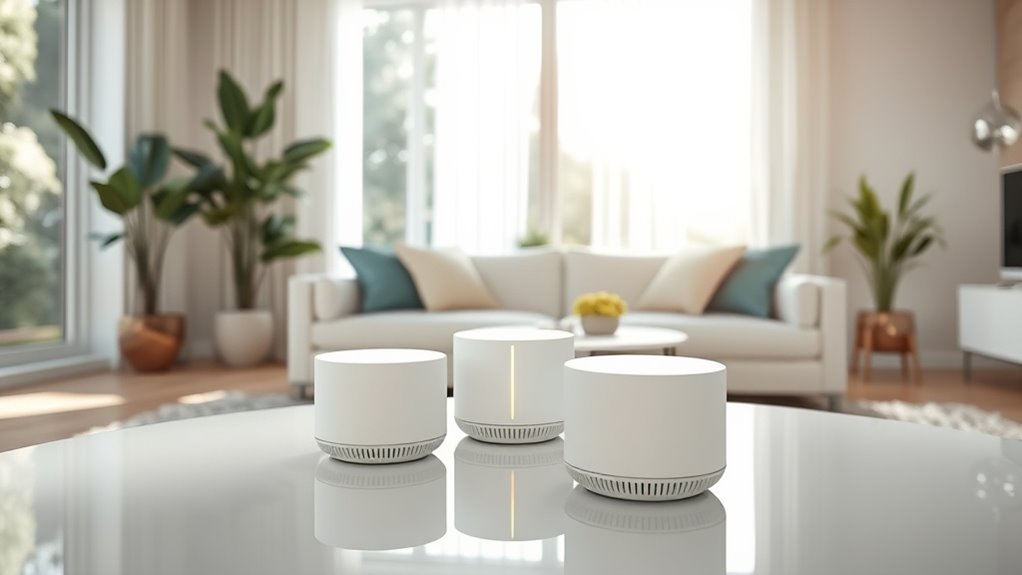

When searching for the best eero wifi mesh systems, the key considerations are coverage, speed, ease of setup, and compatibility with your existing network. The eero Pro 6E stands out as the overall top pick thanks to its extensive coverage and Wi-Fi 6E support, ideal for large homes and demanding devices. The eero 7 Dual-Band Mesh Wi-Fi 7 Router offers cutting-edge Wi-Fi 7 technology for future-proof performance, while the eero 6+ Mesh WiFi System delivers solid value for mid-sized spaces without breaking the bank. As with any mesh system, tradeoffs often involve balancing coverage, speed, and price. Keep reading for a detailed breakdown to find the right fit for your network needs.
Complete the kit

Key Takeaways
- The Pro 6E excels in large, demanding environments with Wi-Fi 6E support and extensive coverage, but comes at a higher price.
- The newer eero 7 models provide Wi-Fi 7 support, offering future-proof speeds, yet may be overkill for smaller or less demanding setups.
- The eero 6+ series offers a compelling balance of performance and affordability, making it ideal for mid-sized homes or users on a budget.
- Coverage and device capacity vary significantly; larger homes benefit from more nodes and higher-spec models, but at increased cost.
- Setup and app usability are consistent across models, but advanced features are more accessible on higher-tier systems.
| eero Pro 6E Mesh Wi-Fi System (3-Pack) |  | Best Overall for Large Homes and Future-Proofing | Coverage: 6,000 sq. ft. | Supported speeds: up to 2.3 Gbps | Number of devices supported: 100+ | VIEW ON AMAZON | See Our Full Breakdown |
| TP-Link Deco S4 Mesh AC1900 WiFi System (3-Pack) |  | Best Value for Large Homes on a Budget | Coverage: up to 5,500 sq.ft. | WiFi Standard: AC1900 | Speed: 3× 3 6 Stream | VIEW ON AMAZON | See Our Full Breakdown |
| eero 7 Dual-Band Mesh Wi-Fi 7 Router (2-Pack) |  | Best for High-Speed Future-Ready Connectivity | Wi-Fi Standards: Wi-Fi 7 (IEEE802.11a/b/g/n/ac/ax/be) | Number of Radios: 2; dual-band | Supported Channels: 2.4 GHz: 20, 40 MHz; 5 GHz: 20, 40, 80, 160, 240 MHz | VIEW ON AMAZON | See Our Full Breakdown |
| eero 6+ Mesh WiFi System (4-Pack) |  | Best for Gigabit Speeds and Smart Home Integration | Coverage: 6,000 sq. ft. | Supported speeds: AX3000 | Number of devices supported: 75+ | VIEW ON AMAZON | See Our Full Breakdown |
| eero 6 Mesh WiFi System (2-Pack) |  | Best for Compact Setup and Moderate Use | Coverage: 3,000 sq. ft. | Internet Speed Support: up to 500 Mbps | Device Capacity: 75+ | VIEW ON AMAZON | See Our Full Breakdown |
| eero 6+ Mesh WiFi System – Supports Internet Plans Up to 1 Gbps, Coverage up to 4,500 sq ft, Connects 75+ Devices, 3-Pack |  | Best Overall | Speed: Up to 1 Gbps | Coverage: 4,500 sq ft | Devices Supported: 75+ | VIEW ON AMAZON | See Our Full Breakdown |
| eero 6+ Mesh WiFi System (2-Pack) |  | Best Value for Medium Coverage | Coverage: 3,000 sq ft per unit | Supports devices: 75+ | Wi-Fi standard: Wi-Fi 6 | VIEW ON AMAZON | See Our Full Breakdown |
| eero 6 Mesh WiFi System – 3 Pack (1 Router + 2 Extenders) |  | Best for Whole-Home Coverage | Coverage: 4,500 sq ft | Wi-Fi Speed: up to 500 Mbps | Devices Supported: 75+ | VIEW ON AMAZON | See Our Full Breakdown |
| eero 7 Dual-Band Mesh Wi-Fi 7 Router (3-Pack) |  | Best for Future-Proof High-Speed Homes | Wi-Fi Standard: Wi-Fi 7 | Coverage Area: 6,000 sq ft | Supported Devices: 600+ | VIEW ON AMAZON | See Our Full Breakdown |
| eero Pro 7 Tri-Band Mesh Wi-Fi 7 Router (3-Pack) |  | Best for Enterprise-Grade Performance | Wi-Fi Standard: Wi-Fi 7 | Coverage Area: 6,000 sq ft | Supported Devices: 600+ | VIEW ON AMAZON | See Our Full Breakdown |
| eero 6 Mesh Wi-Fi Router |  | Best for Whole-Home Coverage with Wi-Fi 6 | Coverage: 1,500 sq. ft. | Wi-Fi Standard: Wi-Fi 6 (802.11ax) | Speed: 900 Mbps | VIEW ON AMAZON | See Our Full Breakdown |
| eero wifi mesh system | Coverage | Number of units | Wi-Fi standard |
|---|---|---|---|
| eero Pro 6E Mesh Wi-Fi System | 6,000 sq. ft. | 3-pack | Wi-Fi 6E (AX5400) |
| TP-Link Deco S4 Mesh AC1900 Wi | up to 5,500 sq.ft. | 3 | — |
| eero 7 Dual-Band Mesh Wi-Fi 7 | up to 4,000 sq. ft. | — | — |
| eero 6+ Mesh WiFi System | 6,000 sq. ft. | 4 | Wi-Fi 6 |
| eero 6 Mesh WiFi System | 3,000 sq. ft. | — | — |
| eero 6+ Mesh WiFi System | 4,500 sq ft | 3-pack | — |
| eero 6+ Mesh WiFi System | 3,000 sq ft per unit | 2-pack | Wi-Fi 6 |
| eero 6 Mesh WiFi System | 4,500 sq ft | 3 (1 router + 2 extenders) | — |
| eero 7 Dual-Band Mesh Wi-Fi 7 | — | — | Wi-Fi 7 |
| eero Pro 7 Tri-Band Mesh Wi-Fi | — | — | Wi-Fi 7 |
| eero 6 Mesh Wi-Fi Router | 1,500 sq. ft. | — | Wi-Fi 6 (802.11ax) |
More Details on Our Top Picks
eero Pro 6E Mesh Wi-Fi System (3-Pack)
The eero Pro 6E 3-pack stands out for its support of Wi-Fi 6E, offering faster speeds and lower latency compared to the eero 7, making it ideal for homes with high bandwidth needs and many smart devices. Its coverage of up to 6,000 sq. ft. and ability to support over 100 devices make it a top choice for large households or home offices. The system’s easy setup and advanced security features are added benefits, though the price is higher, especially when multiple units are involved, and some features require a subscription. Compared with the eero 7, it provides better future-proofing for Wi-Fi 6E-compatible devices, but if you only have Wi-Fi 6 or lower devices, the cost may not justify the benefits.
Pros:- Supports Wi-Fi 6E for cutting-edge speeds and lower latency
- Large coverage area up to 6,000 sq. ft. with a 3-pack
- Supports over 100 devices simultaneously
- Easy to set up and manage via app
Cons:- Requires compatible Wi-Fi 6E devices to access full benefits
- Higher price point for multi-unit systems
- Some advanced features need a subscription
Best for: Homeowners with large spaces, many connected devices, and plans to upgrade to Wi-Fi 6E-compatible gadgets.
Not ideal for: Small apartments or users with limited budget, as the higher price might not be justified without Wi-Fi 6E devices.
- Coverage:6,000 sq. ft.
- Supported speeds:up to 2.3 Gbps
- Number of devices supported:100+
- Number of units:3-pack
- Ethernet ports:One 2.5 Gb, one 1 Gb per unit
- Wi-Fi standard:Wi-Fi 6E (AX5400)
- Processor:1 GHz dual-core
- Warranty:1 year
Our verdict“This system is best suited for tech-savvy households seeking maximum future-proofing and large-area coverage.”
TP-Link Deco S4 Mesh AC1900 WiFi System (3-Pack)
The TP-Link Deco S4 3-pack delivers reliable WiFi coverage of up to 5,500 sq. ft. with AC1900 speeds, making it a compelling choice for budget-conscious households needing extensive coverage. Its support for up to 100 devices and easy setup through the Deco app provide seamless connectivity, comparable to the eero 6+ but at a more accessible price point. While it doesn’t support Wi-Fi 6 or Wi-Fi 6E, its compatibility with all WiFi-enabled devices and Alexa voice control make it versatile. Compared with the eero 6+, it offers similar coverage and device support but lacks the Wi-Fi 6 benefits and advanced security features, often requiring a modem for internet connectivity. It’s a solid budget-friendly option for large homes, though some users might find initial setup slightly complex.
Pros:- Extensive coverage up to 5,500 sq. ft.
- Supports up to 100 devices with AC1900 speeds
- Easy setup with mobile app and voice control
- Supports wired Ethernet backhaul
Cons:- Requires a modem for most internet providers
- No Wi-Fi 6 or 6E support, limiting future-proofing
- Some users report initial setup challenges
Best for: Large households seeking dependable WiFi without the added cost of Wi-Fi 6 or Wi-Fi 6E.
Not ideal for: Users with gigabit internet plans or those wanting the latest Wi-Fi technology, as it supports only AC1900 and lacks Wi-Fi 6/6E.
- Coverage:up to 5,500 sq.ft.
- WiFi Standard:AC1900
- Speed:3× 3 6 Stream
- Number of Units:3
- Ethernet ports per unit:2 Gigabit Ethernet
- Supports Wired Ethernet Backhaul:Yes
- Compatibility:All WiFi enabled devices
- Voice Control:Alexa
Our verdict“This mesh system offers great coverage and device support for budget-conscious homes, especially where Wi-Fi 6 isn’t critical.”
eero 7 Dual-Band Mesh Wi-Fi 7 Router (2-Pack)
The eero 7 2-pack introduces Wi-Fi 7 support, offering the latest in wireless technology with speeds up to 2.5 Gbps and coverage of 4,000 sq. ft. This system is designed for homes that want to future-proof their network, supporting over 120 devices with minimal dead spots. Its backward compatibility with previous eero models ensures easy integration into existing setups, while the advanced security options add peace of mind. Compared to the eero Pro 6E, it provides a more affordable entry into Wi-Fi 7, though it has slightly less coverage and lacks Wi-Fi 6E support. The system’s modern features make it suitable for households with demanding bandwidth needs but may be overkill for small or basic setups.
Pros:- Supports Wi-Fi 7 for cutting-edge speeds and capacity
- Covers up to 4,000 sq. ft. with 2 units
- Supports over 120 devices with advanced security
- Backward compatible with previous eero models
Cons:- Higher cost compared to Wi-Fi 6 systems
- Limited to 2 units, which may restrict coverage for very large homes
- Requires compatible internet plans for full speed
Best for: Tech enthusiasts and large households aiming to adopt Wi-Fi 7 for the best speeds and device support today and in the future.
Not ideal for: Users with lower-speed internet plans or small apartments, as the system’s advanced features and price might be unnecessary.
- Wi-Fi Standards:Wi-Fi 7 (IEEE802.11a/b/g/n/ac/ax/be)
- Number of Radios:2; dual-band
- Supported Channels:2.4 GHz: 20, 40 MHz; 5 GHz: 20, 40, 80, 160, 240 MHz
- MIMO:2×2/2×2 MU/SU-MIMO
- Supported Devices:over 120
- Ethernet ports:Two 2.5 Gb Ethernet ports
- Coverage:up to 4,000 sq. ft.
- Warranty:3 years
Our verdict“Ideal for households eager to leverage Wi-Fi 7 for the fastest speeds and most future-proof connectivity.”
eero 6+ Mesh WiFi System (4-Pack)
The eero 6+ 4-pack offers robust Wi-Fi 6 support with gigabit speeds, covering up to 6,000 sq. ft. and supporting over 75 devices. Its built-in smart home hub, compatible with Zigbee, Thread, and Alexa, makes it a strong choice for smart home enthusiasts. Its TrueMesh technology helps eliminate dead zones, and the system’s easy setup via the app ensures a smooth experience. Compared with the eero 6+ 2-pack, this larger setup provides more coverage and device capacity but at a higher cost. The system’s support for Wi-Fi 6 guarantees faster, more reliable connections now and future compatibility, though it requires a compatible internet plan for full speed. It’s ideal for large homes with a focus on smart home integration.
Pros:- Supports gigabit internet speeds with Wi-Fi 6
- Covers up to 6,000 sq. ft. with 4 units
- Includes a built-in smart home hub for Zigbee and Thread
- Easy to set up and manage via app
Cons:- Requires internet plans with at least 1 Gbps for maximum speed
- Subscription needed for advanced security features
- Higher cost compared to basic Wi-Fi routers
Best for: Smart home users needing reliable Wi-Fi 6 coverage across a large area with room for many devices.
Not ideal for: Small apartments or users with internet plans under 1 Gbps, as they won’t see the full benefit of gigabit speeds.
- Coverage:6,000 sq. ft.
- Supported speeds:AX3000
- Number of devices supported:75+
- Number of units:4
- Ethernet ports:2 gigabit ports per unit
- Built-in smart home hub:Zigbee, Thread
- Wi-Fi standard:Wi-Fi 6
- Warranty:1 year
Our verdict“Best suited for large homes with smart home needs and a gigabit internet plan for maximum performance.”
eero 6 Mesh WiFi System (2-Pack)
The eero 6 2-pack provides reliable Wi-Fi coverage of around 3,000 sq. ft. supporting over 75 devices, making it suitable for small to medium homes. Its Wi-Fi 6 support ensures faster connections and improved performance compared to older standards. The system is easy to set up via the app and supports Alexa and Zigbee for smart home integration. While the system is straightforward and budget-friendly, it’s limited to internet plans up to 500 Mbps, which may restrict performance for users with gigabit plans. Compared to the larger eero 6+ models, it’s more compact and less expensive, but offers less coverage and device capacity, making it better suited for smaller spaces or less demanding households.
Pros:- Supports Wi-Fi 6 for fast, reliable connections
- Covers up to 3,000 sq. ft. with 2 units
- Supports over 75 devices
- Includes smart home hub functionalities
Cons:- Limited to internet plans up to 500 Mbps
- Less coverage and device support than larger systems
- Requires app-based setup and management
Best for: Small households or apartments seeking reliable Wi-Fi 6 coverage with minimal setup fuss.
Not ideal for: Large homes or high-bandwidth users on gigabit plans, as coverage and speed may fall short.
- Coverage:3,000 sq. ft.
- Internet Speed Support:up to 500 Mbps
- Device Capacity:75+
- Includes:2-pack (1 router + 1 extender)
Our verdict“Ideal for smaller homes or apartments that need reliable Wi-Fi 6 with simple setup and smart home features.”
eero 6+ Mesh WiFi System – Supports Internet Plans Up to 1 Gbps, Coverage up to 4,500 sq ft, Connects 75+ Devices, 3-Pack
This 3-pack eero 6+ system stands out for its high-speed Wi-Fi 6 support and extensive coverage, making it ideal for large homes needing reliable, fast internet. Unlike the eero 6, which maxes out at 500 Mbps, this model supports gigabit plans, providing a significant boost for bandwidth-intensive activities. Its built-in smart home hub supports Zigbee and Thread devices, adding smart home flexibility. The main tradeoff involves the need for a compatible internet plan to achieve full gigabit speeds, along with optional subscription-based security features. Compared to the smaller 2-pack options, this setup offers superior coverage and device handling, but it’s more expensive and requires more space. For large households with multiple smart devices and gigabit plans, this system offers a compelling all-in-one solution.
Pros:- Supports gigabit internet speeds for fast, future-proof performance
- Covers up to 4,500 sq ft, ideal for large homes
- Handles 75+ devices efficiently, reducing congestion
- Built-in smart home hub compatible with Zigbee and Thread
Cons:- Requires a gigabit internet plan for maximum speed, which may be costly
- Additional security features may need a subscription
Best for: Homeowners with large properties and high-speed internet plans who want reliable coverage and smart home integration.
Not ideal for: Small apartments or users with internet plans below 500 Mbps, as they won’t fully utilize the system’s capabilities.
- Speed:Up to 1 Gbps
- Coverage:4,500 sq ft
- Devices Supported:75+
- Number of Units:3-pack
- Wi-Fi Technology:Wi-Fi 6
- Smart Home Hub:Yes
Our verdict“This system is best suited for large homes with high-speed internet and extensive smart device needs.”
eero 6+ Mesh WiFi System (2-Pack)
The 2-pack eero 6+ system offers a balanced mix of gigabit Wi-Fi 6 speeds and reliable coverage, supporting over 75 devices with a simple setup. While this setup provides less total coverage than the 3-pack, it’s a more affordable choice for medium-sized homes or apartments. Its TrueMesh technology helps reduce dead spots, and the built-in smart home hub adds smart device support. The main tradeoff is that it’s limited to about 3,000 sq ft per unit, so larger spaces may require additional units. Compared with the 3-pack, it’s a budget-friendly option that still supports modern Wi-Fi standards and multiple devices, but it lacks the expanded coverage for very large homes. This makes it an excellent pick for users seeking solid performance without overpaying for excess coverage.
Pros:- Supports gigabit speeds with Wi-Fi 6
- Easy to set up via mobile app
- Reliable TrueMesh technology reduces dead zones
- Built-in Zigbee and Thread smart home hub
Cons:- Limited to about 3,000 sq ft per unit, not ideal for large homes
- Requires subscription for advanced security features
Best for: Small to medium-sized homes or apartments where budget and simplicity are priorities.
Not ideal for: Very large properties or households with high gigabit internet plans, since coverage and speed may be limited.
- Coverage:3,000 sq ft per unit
- Supports devices:75+
- Wi-Fi standard:Wi-Fi 6
- Speed:up to 1 Gbps
- Number of units:2-pack
- Smart home hub:Yes
Our verdict“This 2-pack offers a practical, budget-conscious option for medium-sized homes with modern Wi-Fi needs.”
eero 6 Mesh WiFi System – 3 Pack (1 Router + 2 Extenders)
This 3-pack eero 6 system provides extensive coverage up to 4,500 sq ft with Wi-Fi 6 speeds up to 500 Mbps, supporting over 75 devices. It’s designed for large homes that need reliable internet across multiple floors or rooms, with easy setup via the app. Its built-in Zigbee hub adds smart home functionality, and automatic updates help maintain security and performance. The main tradeoff is its maximum supported internet speed of 500 Mbps, which may not suit gigabit plans. Compared with the more advanced Wi-Fi 6+ models, it offers slightly lower speeds, but it remains a solid choice for users with standard broadband packages. This setup is ideal when coverage and device support matter most, and ultra-fast speeds are less critical.
Pros:- Provides coverage up to 4,500 sq ft for large homes
- Supports many devices simultaneously with Wi-Fi 6
- Easy setup and management via app
- Built-in Zigbee smart home hub
Cons:- Limited to 500 Mbps maximum internet speed
- Setup may be complex for some users unfamiliar with mesh systems
Best for: Families in large homes or multi-story residences with internet plans up to 500 Mbps seeking reliable coverage.
Not ideal for: Gigabit internet users or households with very high-speed plans, since speeds won’t reach maximum potential.
- Coverage:4,500 sq ft
- Wi-Fi Speed:up to 500 Mbps
- Devices Supported:75+
- Number of Devices:Supports many
- Number of Units:3 (1 router + 2 extenders)
- Smart Home Hub:Yes
Our verdict“This system suits large homes with modest internet plans, prioritizing coverage and device support over ultra-fast speeds.”
eero 7 Dual-Band Mesh Wi-Fi 7 Router (3-Pack)
The eero 7 Mesh Wi-Fi 7 system leverages the latest Wi-Fi 7 standards to deliver faster, more reliable connectivity across large areas—up to 6,000 sq ft. Its support for internet plans up to 2.5 Gbps makes it ideal for tech-savvy households with high bandwidth demands. Compared to Wi-Fi 6 models, it offers higher speeds and more advanced security features like WPA3. The setup is more complex, requiring some technical familiarity, especially to optimize channels and security. The higher price reflects its premium features, but for users with gigabit or multi-gig internet, this system provides a clear upgrade. It’s a smart choice for future-proofing, especially as more devices demand higher speeds and lower latency.
Pros:- Supports Wi-Fi 7 for cutting-edge performance
- Coverage up to 6,000 sq ft with a 3-pack
- Handles multiple devices with advanced MU-MIMO
- Enhanced WPA3 security
Cons:- Requires a compatible high-speed internet plan for full benefit
- Setup complexity may be challenging for non-technical users
- Higher price point
Best for: Tech enthusiasts and households with high-speed internet plans up to 2.5 Gbps seeking the latest Wi-Fi technology.
Not ideal for: Average households with basic internet plans or those seeking simple, plug-and-play setups.
- Wi-Fi Standard:Wi-Fi 7
- Coverage Area:6,000 sq ft
- Supported Devices:600+
- Maximum Speed:3.9 Gbps
- Number of Radios:3 (tri-band)
- Security:WPA3
Our verdict“This system is perfect for early adopters and high-speed households aiming to maximize Wi-Fi 7 advantages.”
eero Pro 7 Tri-Band Mesh Wi-Fi 7 Router (3-Pack)
The eero Pro 7 offers tri-band Wi-Fi 7 connectivity and supports internet plans up to 5 Gbps, covering up to 6,000 sq ft. Its tri-band architecture, with 3 radios, supports over 600 devices, making it suitable for busy households or small businesses with heavy network demands. Compared with the dual-band eero 7, this model adds more bandwidth and better handling of multiple high-demand devices, but at a higher cost and increased setup complexity. The advanced security options, including WPA3 and optional eero Plus subscription, provide enterprise-grade protection. This system excels for users needing maximum speed, coverage, and device support, especially in highly connected environments.
Pros:- Supports internet plans up to 5 Gbps with Wi-Fi 7
- Tri-band architecture supports many devices simultaneously
- Covers up to 6,000 sq ft with ease
- Includes advanced WPA3 security and optional subscription
Cons:- Higher price point for extensive coverage and speed
- Setup can be complex for non-technical users
- Requires compatible high-speed internet plan for full performance
Best for: Large, high-traffic homes or small businesses requiring maximum speed, coverage, and device capacity.
Not ideal for: Users with basic internet needs or those seeking straightforward, budget-friendly setups.
- Wi-Fi Standard:Wi-Fi 7
- Coverage Area:6,000 sq ft
- Supported Devices:600+
- Maximum Speed:3.9 Gbps
- Radios:3 (tri-band)
- Security:WPA3
Our verdict“This high-end mesh system is best for demanding households or small offices that need maximum speed and capacity.”
eero 6 Mesh Wi-Fi Router
The eero 6 Mesh Wi-Fi Router stands out for its ability to deliver reliable coverage up to 1,500 sq. ft., making it an excellent choice for medium-sized homes. Compared with the eero 7, which offers Wi-Fi 7 and higher speeds, the eero 6 provides a solid Wi-Fi 6 experience that’s more affordable for most users. Its built-in Zigbee hub simplifies smart home integration, and automatic updates keep security tight without manual intervention. However, with only two Ethernet ports, it may fall short for users requiring wired connections for multiple devices or gaming setups. Price isn’t specified here, but it tends to be less costly than higher-end models like the eero Pro 6E, making it a balanced choice for those prioritizing simplicity and coverage. The performance depends on your internet plan, but for typical households, this router offers a reliable, straightforward mesh solution.
Pros:- Supports Wi-Fi 6 for faster speeds and more device connections
- Easy setup through the eero app with automatic updates
- Built-in Zigbee hub simplifies smart home device management
Cons:- Limited to 2 Ethernet ports, which may be insufficient for wired needs
- Price not specified but generally less feature-rich than higher-tier models like the eero Pro 6E
Best for: Small to medium-sized homes seeking Wi-Fi 6 support and smart home integration without complex setup.
Not ideal for: Power users needing multiple wired connections or ultra-high speeds, as it’s limited to 2 Ethernet ports and 900 Mbps max speed.
- Coverage:1,500 sq. ft.
- Wi-Fi Standard:Wi-Fi 6 (802.11ax)
- Speed:900 Mbps
- Number of Devices Supported:75+
- Ethernet Ports:2 gigabit ports
- Processor:1.2 GHz quad-core
- Dimensions:3.9 x 3.8 x 2.4 inches
- Compatibility:Alexa, Zigbee, Thread, Bluetooth LE 5.0
- Warranty:1-year limited
Our verdict“This router is ideal for households wanting reliable Wi-Fi 6 coverage with smart home features, but it may not satisfy power users requiring extensive wired connections.”

How We Picked
To evaluate these eero wifi mesh systems, I focused on key factors that influence real-world performance and user experience. Coverage area, maximum speed, and device capacity were primary considerations, ensuring the systems can handle typical household demands. Ease of setup and management through the app also played a major role, as user-friendly interfaces matter greatly. Additionally, I assessed build quality, future-proofing features like Wi-Fi 6E and Wi-Fi 7, and overall value for the price. Products were ranked based on how well they balance these factors for different types of users, from casual households to tech enthusiasts.| eero wifi mesh system | Wi-Fi standard |
|---|---|
| eero Pro 6E Mesh Wi-Fi System | Wi-Fi 6E (AX5400) |
| TP-Link Deco S4 Mesh AC1900 Wi | — |
| eero 7 Dual-Band Mesh Wi-Fi 7 | — |
| eero 6+ Mesh WiFi System | Wi-Fi 6 |
| eero 6 Mesh WiFi System | — |
| eero 6+ Mesh WiFi System | — |
| eero 6+ Mesh WiFi System | Wi-Fi 6 |
| eero 6 Mesh WiFi System | — |
| eero 7 Dual-Band Mesh Wi-Fi 7 | Wi-Fi 7 |
| eero Pro 7 Tri-Band Mesh Wi-Fi | Wi-Fi 7 |
| eero 6 Mesh Wi-Fi Router | Wi-Fi 6 (802.11ax) |
Factors to Consider When Choosing Eero Wifi Mesh Systems
Choosing the right eero wifi mesh system depends on your home size, device needs, and budget. Beyond basic specs, understanding how coverage, speed, and compatibility influence your experience helps you avoid common pitfalls like underestimating your space or overpaying for features you won’t use. This guide highlights key factors to consider when selecting a mesh network that complements your household’s connectivity demands.Coverage Area and Scalability
Matching your system’s coverage to your home size is vital. Larger homes may require more nodes or higher-performance models to eliminate dead zones, but this increases cost. Conversely, smaller homes can often get by with fewer units, saving money. Consider whether the system is easily expandable if your space or device needs grow over time.
Speed and Technology Standards
Look at the supported Wi-Fi standards—Wi-Fi 6, 6E, or 7—as these determine future-proofing and maximum speed. Wi-Fi 6E and 7 offer faster, more efficient connections, especially with many devices. However, to benefit fully, your devices must also support these standards, so assess your current hardware before investing heavily in the latest tech.
Device Capacity and Performance
Evaluate how many devices your network needs to support simultaneously. High-capacity systems prevent congestion when multiple users stream, game, or work online at once. Keep in mind that some systems advertise high device limits but may experience performance drops under heavy load; real-world capacity varies.
Ease of Setup and Management
An intuitive app and straightforward setup process save time and frustration. Consider whether advanced features—like parental controls or guest networks—are easy to configure. A system that’s too complex might discourage frequent adjustments or troubleshooting, especially for less tech-savvy users.
Price and Long-term Value
More expensive systems often deliver better coverage, speed, and future-proofing, but may be unnecessary for smaller spaces. Balance initial cost against ongoing value—consider how long you’ll keep the system, potential upgrades, and whether features like Wi-Fi 6E or 7 justify the premium. Budget options can work well if your needs are modest.
Frequently Asked Questions
Will my existing devices support Wi-Fi 6E or Wi-Fi 7?
Most current devices support Wi-Fi 5 or Wi-Fi 6, with Wi-Fi 6E and 7 being newer standards. To fully leverage these faster protocols, your devices need compatible hardware. If many of your devices are older, investing in a Wi-Fi 6 system might be more practical, whereas Wi-Fi 7 is more future-proof but less relevant for current gadgets.
How many nodes do I need for a large home?
The number of nodes depends on your home’s size, layout, and construction materials. Typically, a large house over 3,000 sq ft may require 3-4 nodes to ensure even coverage and consistent speeds. Consider the placement of nodes to minimize dead zones, and choose a system that supports easy expansion if your needs change.
Is Wi-Fi 6E worth the extra cost?
Wi-Fi 6E provides access to the 6 GHz band, offering less congestion and higher speeds if your devices support it. For busy households with many devices or those streaming high-resolution content, it can make a noticeable difference. However, if your current gadgets are Wi-Fi 5 or Wi-Fi 6, the benefits may be less apparent, so weigh the additional expense accordingly.
Can I mix different eero models in one network?
Yes, eero systems are designed to be compatible across models, allowing you to combine different units. This flexibility enables you to tailor your setup based on your coverage needs and budget. Just keep in mind that mixing older and newer models might limit some advanced features, and compatibility varies with firmware updates.
How important is future-proofing with Wi-Fi 7?
Wi-Fi 7 promises higher speeds and lower latency, which is appealing for demanding applications like gaming and 8K streaming. While support is still emerging, investing in Wi-Fi 7 now can prolong the relevance of your network hardware. However, if your current devices and internet plan don’t require such speeds, a Wi-Fi 6 or 6E system might be more cost-effective.
Conclusion
The best overall eero wifi mesh system for most users is the eero Pro 6E, thanks to its extensive coverage, Wi-Fi 6E support, and user-friendly setup. For those on a budget or with moderate needs, the eero 6+ offers a reliable performance at a lower price point. Tech enthusiasts or early adopters aiming for the latest technology should consider the eero 7 or eero Pro 7 systems, which support Wi-Fi 7 for enhanced future-proofing. Beginners or smaller households will find the simpler, more affordable options sufficient, while larger homes or demanding users should prioritize higher-capacity models with multiple nodes. Matching your specific network demands and budget is key to choosing the right eero system.