
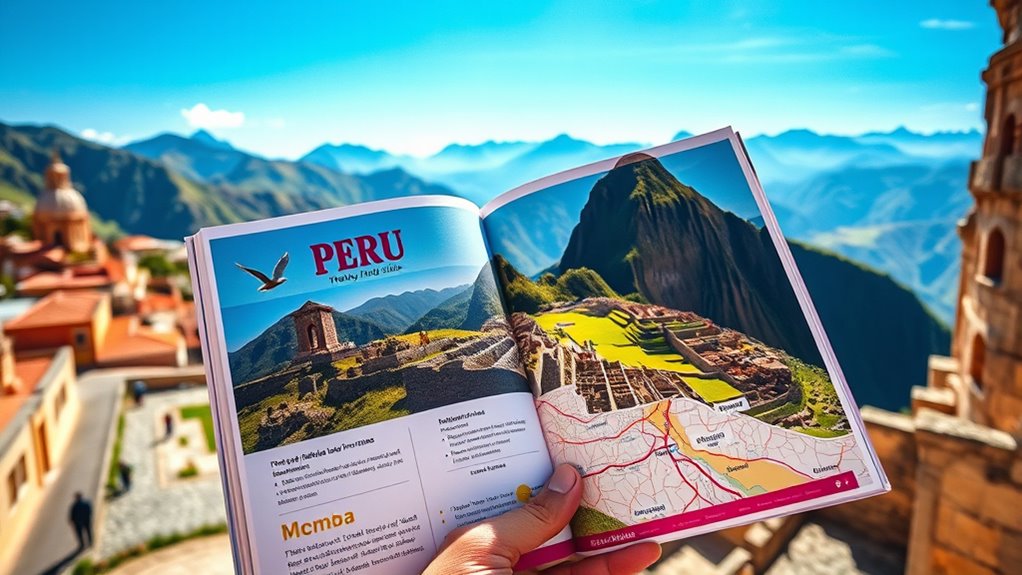

If you’re hunting for the latest Peru travel guidebook, the biggest challenge isn’t finding one — it’s choosing between updated heavyweight series and newer independent titles that promise current information but sometimes cut corners on depth. My top pick is the Rough Guides Peru (2026–2027 edition with eBook), which offers the freshest publication date combined with the most balanced coverage of Lima, Cusco, Machu Picchu, and lesser-visited regions like the northern coast. Two other standouts: the Lonely Planet Peru Travel Guide remains the strongest choice for independent travelers who want deep logistical detail, and Moon Machu Picchu is unmatched if the Inca Trail is the centerpiece of your trip. The main tradeoff you’ll face is currency versus comprehensiveness — brand-new indie guides sometimes have thinner coverage of accommodations and transport than established series with decades of on-the-ground research. Read on for the full breakdown, including who each book suits and which ones to skip.

Get travel and outdoor gear delivered free with Prime
- Fast, free delivery on millions of items
- Prime Video, Amazon Music and more included
- Member-only deals all year
Complete the kit



Key Takeaways
- Publication date mattered less than research depth: the two 2026–2027 editions (Rough Guides and Insight Guides) won on currency, but Lonely Planet’s slightly older edition still beat newer indie titles on logistical detail.
- Machu Picchu-focused guides (Moon Machu Picchu) outperformed countrywide guides on Inca Trail logistics, permit timing, and trek alternatives, but are a poor choice for travelers exploring beyond the Sacred Valley.
- Several indie titles with recent dates — including ‘Captivating Adventures through Ancient Ruins’ and ‘Things to Do, Machu Picchu, Cusco’ — offered thin listings and little verified practical data despite the fresh publication year.
- Backpacker-specific guides like ‘Secrets of Peru‘ covered hostels and budget routes the big series skim over, making them a smart supplement rather than a primary guidebook.
- Two Fodor’s editions appeared with nearly identical content; only the newer printing makes sense, which is a common trap when shopping for guidebooks by title alone.
| Peru Travel Guide: Things to Do, Machu Picchu, Cusco, Itineraries, and Travel Tips |  | Best for First-Time Planners | Destination: Peru | Featured destinations: Machu Picchu; Cusco | Planning coverage: Itineraries | VIEW ON AMAZON | See Our Full Breakdown |
| Secrets of Peru: A Complete Travel Guide for Backpackers |  | Best for Backpackers | Destination: Peru | Intended audience: Backpackers | Regional coverage: Andes; Amazon; coastal regions | VIEW ON AMAZON | See Our Full Breakdown |
| The Rough Guide to Peru: Travel Guide eBook |  | Best Digital Reference | Destination: Peru | Format: eBook | Publisher: Rough Guides | VIEW ON AMAZON | See Our Full Breakdown |
| The Ultimate Peru Travel Guide 2024, 2025, and Beyond: A Guidebook to This Amazing Country |  | Best for Peru-Only Focus | Destination: Peru | Format: Guidebook | Coverage years: 2024, 2025, and beyond | VIEW ON AMAZON | See Our Full Breakdown |
| Insight Guides Peru: Travel Guide with eBook, 2026–2027 |  | Best for Culture and Current Planning | Destination: Peru | Edition: 2026–2027 | Format: Travel guide with eBook | VIEW ON AMAZON | See Our Full Breakdown |
| Fodor’s Essential Peru: with Machu Picchu & the Inca Trail (Full-color Travel Guide) |  | Best Overall | Format: Full-color Travel Guide | Publisher: Fodor’s | Topic: Peru, Machu Picchu, Inca Trail | VIEW ON AMAZON | See Our Full Breakdown |
| Moon Machu Picchu: With Lima, Cusco & the Inca Trail (Travel Guide) |  | Best for the Classic Inca Trail Route | Format: Travel Guide (Book) | Publisher: Moon Travel Guides | Topic: Machu Picchu, Lima, Cusco, Inca Trail | VIEW ON AMAZON | See Our Full Breakdown |
| Lonely Planet Peru Travel Guide |  | Best for Independent and Budget Travelers | Format: Travel Guide | Publisher: Lonely Planet | Topic: Peru | VIEW ON AMAZON | See Our Full Breakdown |
| National Geographic Traveler Peru, 3rd Edition |  | Best for Visual Inspiration and Background | Edition: 3rd Edition | Series: National Geographic Traveler | Publisher: National Geographic | VIEW ON AMAZON | See Our Full Breakdown |
| Fodor’s Essential Peru: With Machu Picchu & the Inca Trail (Full-color Travel Guide) |  | Best Value Pick for Package-Style Planning | Format: Paperback | Publisher: Fodor’s Travel | Guide Type: Full-color Travel Guide | VIEW ON AMAZON | See Our Full Breakdown |
| Peru Travel Guide: Adventures through Ancient Ruins, Vibrant Culture, Peruvian Landmarks, Hidden Gems, and More |  | Best for Off-the-Beaten-Path Planning | Format: Book | Coverage: Ancient ruins, cultural sites, landmarks, hidden gems | Scope: Nationwide Peru | VIEW ON AMAZON | See Our Full Breakdown |
| Rough Guides Peru: Travel Guide with eBook (2026–2027) |  | Best Current-Edition Pick | Format: Travel guide with eBook | Edition: 2026–2027 | Coverage: Lima, Cusco, Machu Picchu, and more | VIEW ON AMAZON | See Our Full Breakdown |
| latest peru travel guidebook | Format | Publisher | Coverage |
|---|---|---|---|
| Peru Travel Guide: Things to D | — | — | — |
| Secrets of Peru: A Complete Tr | — | — | — |
| The Rough Guide to Peru: Trave | eBook | Rough Guides | Destinations and attractions |
| The Ultimate Peru Travel Guide | Guidebook | — | — |
| Insight Guides Peru: Travel Gu | Travel guide with eBook | — | — |
| Fodor’s Essential Peru: with M | Full-color Travel Guide | Fodor’s | Nationwide, with dedicated Machu Picchu and Inca Trail sections |
| Moon Machu Picchu: With Lima | Travel Guide (Book) | Moon Travel Guides | Southern Peru corridor focused on the classic route |
| Lonely Planet Peru Travel Guid | Travel Guide | Lonely Planet | Nationwide, including less-visited regions |
| National Geographic Traveler P | — | National Geographic | — |
| Fodor’s Essential Peru: With M | Paperback | Fodor’s Travel | — |
| Peru Travel Guide: Adventures | Book | — | Ancient ruins, cultural sites, landmarks, hidden gems |
| Rough Guides Peru: Travel Guid | Travel guide with eBook | Rough Guides | Lima, Cusco, Machu Picchu, and more |
More Details on Our Top Picks
Peru Travel Guide: Things to Do, Machu Picchu, Cusco, Itineraries, and Travel Tips
For a first Peru trip, this guide’s clearest strength is its mix of headline sights and planning basics: Machu Picchu and Cusco sit alongside itineraries, lodging, dining, and practical tips. That makes it a more general trip-planning choice than Secrets of Peru, which is framed around backpacking routes and budgets. The tradeoff is that the supplied details do not establish how current or deep its recommendations are, so travelers relying on time-sensitive logistics may want a guide with a stated recent edition. It also appears less culturally focused than Insight Guides Peru, whose description highlights society and photography. I’d choose this one when I want a single starting point for organizing a conventional Peru itinerary, while treating specific bookings and access rules as items to verify.
Pros:- Covers major first-trip draws including Machu Picchu and Cusco
- Combines itinerary ideas with hotel and restaurant information
- Includes practical travel tips alongside destination coverage
Cons:- No edition date is provided to judge how current logistics may be
- Available details do not establish the depth of its destination recommendations
Best for: First-time visitors who want destination coverage plus itinerary, hotel, restaurant, and practical planning topics in one guide
Not ideal for: Backpackers prioritizing explicit budget advice and route guidance, or travelers who need a clearly dated edition
- Destination:Peru
- Featured destinations:Machu Picchu; Cusco
- Planning coverage:Itineraries
- Lodging coverage:Hotels
- Dining coverage:Restaurants
- Additional coverage:Things to do; practical travel tips
Our verdict“Choose it as a broad planning starting point for a first Peru itinerary, provided you verify current travel details separately.”
Secrets of Peru: A Complete Travel Guide for Backpackers
Budget advice and transport planning give this guide a distinct audience: independent travelers piecing together a longer, lower-cost route. Its described coverage spans the Andes, Amazon, and coast, so it offers a broader regional frame than Moon Machu Picchu, which centers its scope on the famous site and nearby hubs. That range may help backpackers weigh different legs of a trip, while the focus on itineraries and transportation speaks to practical movement between them. The limitation is that the supplied description says little about specific lodging, food, or cultural detail, and it gives no edition date. Compared with Peru Travel Guide: Things to Do, Machu Picchu, Cusco, Itineraries, and Travel Tips, this is the more specialized pick: stronger for route and budget questions, less clearly suited to choosing hotels and restaurants.
Pros:- Explicitly addresses budget planning
- Includes itinerary and transportation guidance
- Describes routes across the Andes, Amazon, and coastal regions
- Has a clear backpacker focus for independent trip planning
Cons:- The available description does not specify lodging or dining coverage
- No edition date is provided for checking current transport details
Best for: Independent backpackers planning multi-region travel and looking for itinerary, transport, and budget guidance
Not ideal for: Travelers seeking hotel and restaurant recommendations or a guide with a specified edition date
- Destination:Peru
- Intended audience:Backpackers
- Regional coverage:Andes; Amazon; coastal regions
- Planning coverage:Itineraries
- Transport coverage:Transportation tips
- Budget coverage:Budget advice
Our verdict“Pick this for budget-minded, independent travel across several regions, but look elsewhere for clearly described lodging and dining advice.”
The Rough Guide to Peru: Travel Guide eBook
The strongest case for this title is its combination of broad destination coverage and an eBook format. The description positions it for travelers planning across cities, archaeological sites, and natural landscapes, making it a more general Peru reference than Moon Machu Picchu, whose stated focus is narrower. Digital access can suit readers who want their guide on a phone or e-reader while planning and traveling. The drawback is that the available product information offers little detail about individual chapters or practical features, so I can’t judge how deeply it handles transport, lodging, or current entry logistics. Compared with Insight Guides Peru: Travel Guide with eBook, 2026–2027, this title’s edition timing is also unspecified. It makes the most sense for readers who value a recognized guide series and digital format over a clearly stated recent edition.
Pros:- Broadly covers destinations and attractions across Peru
- Includes cities, archaeological sites, and natural landscapes in its intended scope
- eBook format suits phone and e-reader access
- Published under the Rough Guides series
Cons:- The available description does not detail practical topics such as lodging or transport
- No edition year is supplied for judging the currency of travel information
Best for: Digital-first travelers seeking a broad Peru guide for cities, archaeological sites, and natural landscapes
Not ideal for: Readers who want a stated recent edition or detailed confirmation of specific planning topics before choosing
- Destination:Peru
- Format:eBook
- Publisher:Rough Guides
- ASIN:B0D5F9KW65
- Coverage:Destinations and attractions
- Planned trip types:Cities; archaeological sites; natural landscapes
Our verdict“Choose this as a broad digital reference if format and range matter more to you than a clearly dated edition.”
The Ultimate Peru Travel Guide 2024, 2025, and Beyond: A Guidebook to This Amazing Country
This title makes a clear promise of Peru-specific coverage and names a span beginning in 2024 and extending beyond 2025. That framing may appeal to readers who want a country-focused guide rather than a site-centered companion such as Moon Machu Picchu. But the supplied description does not identify destinations, sample topics, or practical planning features, so the title alone cannot show whether the book offers detailed help for building a route. Compared with Insight Guides Peru: Travel Guide with eBook, 2026–2027, it also lacks a precise newer edition range and explicit cultural or destination highlights. I’d treat its broad date claim as a useful signal of intended longevity, not proof that time-sensitive advice is current. This is best for buyers comfortable checking the contents before relying on it.
Pros:- Focused specifically on Peru
- Presents itself as covering 2024, 2025, and later travel
- Guidebook format is identified in the product data
Cons:- Available details do not verify depth or quality
- No specific destinations or planning topics are listed
- Its stated coverage years do not specify a precise later edition
Best for: Travelers seeking a Peru-focused guidebook who can confirm its contents suit their route
Not ideal for: Planners who need documented coverage of specific destinations, logistics, or a clearly current edition
- Destination:Peru
- Format:Guidebook
- Coverage years:2024, 2025, and beyond
- ASIN:B0DK76YF9L
- Product type:Travel guidebook
- Stated scope:Peru destinations and attractions
Our verdict“Consider it if a Peru-only guidebook appeals, but verify the contents and edition details before making it your main planning source.”
Insight Guides Peru: Travel Guide with eBook, 2026–2027
Among these five, this guide offers the clearest combination of a stated 2026–2027 edition, cultural context, and named destinations. Its coverage of Machu Picchu, Cusco, and Lake Titicaca gives trip planners concrete anchors, while society insights and photographs add context that the more logistics-oriented Secrets of Peru does not emphasize. The included eBook also provides a digital option alongside the travel guide. Its tradeoff is focus: the supplied description highlights culture, sights, and expert advice but does not specify budget guidance or detailed transport coverage, so backpackers may find Secrets of Peru more directly aligned with their planning needs. For readers choosing the latest-dated guide in this batch, this is the strongest fit; verify time-sensitive access and booking details as plans take shape.
Pros:- Specifies a 2026–2027 edition
- Includes cultural and society insights
- Names Machu Picchu, Cusco, and Lake Titicaca
- Combines photographs and expert advice with an eBook
Cons:- The supplied details do not specify budget coverage
- The supplied details do not confirm the depth of transport guidance
Best for: Travelers planning a 2026–2027 Peru trip who want cultural context, photography, and coverage of major destinations
Not ideal for: Budget-focused backpackers who need explicit transport and cost planning guidance
- Destination:Peru
- Edition:2026–2027
- Format:Travel guide with eBook
- Featured destinations:Machu Picchu; Cusco; Lake Titicaca
- Cultural coverage:Culture and society insights
- Additional content:Photographs; expert travel advice
- ASIN:1839054654
Our verdict“Choose this for a recent-dated Peru guide with cultural context and major sight coverage, especially if you value a bundled eBook.”
Fodor’s Essential Peru: with Machu Picchu & the Inca Trail (Full-color Travel Guide)
This edition of Fodor’s Essential Peru earns the top spot because it balances breadth and usability better than anything else in this lineup. Unlike Moon Machu Picchu, which zooms in on the southern highlands, Fodor’s covers the whole country — Lima’s food scene, the Sacred Valley, Arequipa, Lake Titicaca, and the Amazon — while still giving Machu Picchu and the Inca Trail proper depth. The full-color layout genuinely changes how you plan: photo-rich spreads help you decide which sites deserve your limited days, and the curated itineraries do the prioritizing for you. Compared with the National Geographic Traveler volume, Fodor’s leans more practical and less coffee-table, which is what most travelers actually need on the ground. The tradeoff is familiar to any print guide buyer: prices and opening hours drift between print runs, so verify bookings independently.
Pros:- Countrywide coverage spanning Lima, the Sacred Valley, Arequipa, Titicaca, and the Amazon
- Full-color photos and maps that make visual trip planning faster
- Curated itineraries that help time-pressed travelers prioritize
- Established editorial team with a long track record of Peru coverage
Cons:- Print-only format means prices, hours, and permit rules can go stale between editions
- Heavier and bulkier than regional or digital guides for backpackers counting grams
Best for: First-time visitors planning a 1–3 week trip across multiple regions of Peru who want one book that does everything
Not ideal for: Travelers heading only to Machu Picchu and Cusco — the countrywide coverage adds weight and pages you’ll never open
- Format:Full-color Travel Guide
- Publisher:Fodor’s
- Topic:Peru, Machu Picchu, Inca Trail
- Coverage:Nationwide, with dedicated Machu Picchu and Inca Trail sections
- Visual Format:Full-color photos and maps
- Planning Tools:Curated itineraries and local insights
Our verdict“If you’re buying one Peru guidebook for a full-country trip, this is the one that gets the details and the big picture right.”
Moon Machu Picchu: With Lima, Cusco & the Inca Trail (Travel Guide)
Moon Machu Picchu takes the opposite approach to Fodor’s Essential Peru, and that focus is its whole value proposition. Rather than stretching across the country, it concentrates on the Lima–Cusco–Sacred Valley–Machu Picchu corridor, which happens to be the exact route most first-time visitors travel. That narrowness means more granular detail where it counts: trail logistics, acclimatization pacing in Cusco, and town-by-town practicalities that a countrywide guide can only summarize. Moon’s house style also tends toward the independent traveler’s perspective — more like the Rough Guide ethos than Fodor’s curated polish — which suits people arranging their own transport and treks. The honest drawback is the flip side of its strength: skip this book if Peru means Arequipa, the Amazon, or the north coast to you, because those regions simply aren’t its job.
Pros:- Deep, corridor-specific coverage of the Lima–Cusco–Machu Picchu route
- Practical Inca Trail planning information including trek logistics
- Smaller scope makes it easier to carry and faster to use on site
- Independent-traveler orientation suited to self-arranged trips
Cons:- Regional focus excludes most of Peru beyond the southern highlands
- Less editorial verification available compared with Fodor’s more extensively documented editions
Best for: Independent travelers whose trip revolves around Cusco, the Sacred Valley, and hiking to Machu Picchu
Not ideal for: Travelers building a multi-region itinerary — the regional scope leaves most of Peru uncovered
- Format:Travel Guide (Book)
- Publisher:Moon Travel Guides
- Topic:Machu Picchu, Lima, Cusco, Inca Trail
- Coverage:Southern Peru corridor focused on the classic route
- Planning Tools:Itineraries and practical trek tips
Our verdict“Buy this if Machu Picchu is the centerpiece of your trip and you want depth on that corridor instead of countrywide breadth.”
Lonely Planet Peru Travel Guide
Lonely Planet Peru fills the backpacker slot that Moon Machu Picchu only partially occupies. Where Fodor’s curates for comfort-minded travelers, Lonely Planet’s editorial DNA is budget lodging, local transport, and do-it-yourself logistics — the details that matter if you’re taking overnight buses between Arequipa and Cusco or hunting hostels in Huaraz. The brand’s Peru coverage is also among the most frequently refreshed in the category, which addresses the staleness problem that plagues National Geographic Traveler Peru, an edition that lags further behind current conditions. Be aware that this listing carries minimal published detail, so confirm you’re getting the edition you expect — paperback versus paperback-plus-ebook bundles look identical in search results. The writing prioritizes practicality over visual inspiration, so travelers who plan by photos may find the layout utilitarian compared with Fodor’s full-color treatment.
Pros:- Strong budget lodging, eating, and transport coverage across the whole country
- Independently-minded practical guidance for self-guided travel
- Frequently updated editions in a category where currency matters
- Covers adventurous regions like Huaraz and the north that shorter guides skip
Cons:- Sparse product detail on this listing makes edition and format verification necessary before buying
- Utilitarian layout with fewer photos than the full-color competition
Best for: Backpackers and independent travelers prioritizing current logistics, budget options, and overland routes
Not ideal for: Visual planners and luxury travelers who want inspiration-led, photo-rich curation like Fodor’s
- Format:Travel Guide
- Publisher:Lonely Planet
- Topic:Peru
- Coverage:Nationwide, including less-visited regions
- Traveler Type:Independent and budget travelers
Our verdict“The default choice for backpackers and independent travelers who value up-to-date logistics over glossy inspiration.”
National Geographic Traveler Peru, 3rd Edition
National Geographic Traveler Peru competes on a different axis than Fodor’s Essential Peru: it’s the book you read before you plan, not the one you carry through airport check-in. NatGeo’s signature photography and narrative-driven destination writing make it exceptional for deciding what excites you about Peru — the archaeology, the colonial architecture, the landscapes — and for understanding context that thinner guides gloss over. Compared with Lonely Planet Peru, it sacrifices granular budget logistics in exchange for depth of storytelling and imagery. The 3rd edition designation matters here: National Geographic’s update cycle runs slower than Lonely Planet’s, so practical details age faster, a real problem given how often Peru’s ticketing and permit systems change. Treat it as the inspiration and context layer of your planning stack, paired with a current practical guide for on-the-ground decisions.
Pros:- Outstanding photography that makes destination selection intuitive
- Deep historical and cultural context beyond standard guidebook boilerplate
- Trusted editorial voice with strong narrative destination writing
- Well suited to planning which regions deserve your time
Cons:- Slower edition cycle means practical details like hours and ticketing can be outdated
- Weaker on granular logistics than Lonely Planet or Moon for on-the-ground use
Best for: Travelers in the dreaming-and-deciding phase who want rich photography and historical context before committing to an itinerary
Not ideal for: Anyone needing current prices, permit procedures, or booking logistics — the update cycle lags the faster-refreshing brands
- Edition:3rd Edition
- Series:National Geographic Traveler
- Publisher:National Geographic
- Topic:Peru
- Strength:Photography, history, and cultural context
Our verdict“The best pre-trip read for context and inspiration — pair it with a current practical guide rather than relying on it solo.”
Fodor’s Essential Peru: With Machu Picchu & the Inca Trail (Full-color Travel Guide)
This paperback edition of Fodor’s Essential Peru delivers the same core content family as its sibling edition — itineraries, maps, and the trusted Fodor’s take on Machu Picchu and the Inca Trail — in a straightforward paperback package. Its role in this lineup is the pragmatic middle path: more current-feeling and practical than National Geographic Traveler Peru, more colorful and curated than the utilitarian Lonely Planet Peru. The maps and photo-driven layout translate directly into faster planning decisions, especially for travelers booking tours rather than assembling trips piece by piece. Two cautions apply. First, verify before ordering that you’re not duplicating the other Fodor’s edition already in your cart, since content overlaps heavily. Second, this listing lacks the review depth that documents the sibling edition, so treat it as the same book in different packaging unless you need a specific print run.
Pros:- Full-color maps and photos that speed up itinerary decisions
- Dedicated Machu Picchu and Inca Trail coverage
- Paperback format is the most affordable way into Fodor’s Peru content
- Backed by the same established editorial brand as the top pick
Cons:- Heavy content overlap with the sibling Fodor’s Essential Peru edition makes buying both pointless
- Limited independent review information available for this specific print run
Best for: Travelers who want the Fodor’s Essential Peru experience in a standard paperback and are deciding primarily on format
Not ideal for: Anyone who already owns the other Fodor’s Essential Peru edition — the overlap makes it redundant
- Format:Paperback
- Publisher:Fodor’s Travel
- Guide Type:Full-color Travel Guide
- Topic:Peru, Machu Picchu, Inca Trail
- Planning Tools:Detailed itineraries and maps
- Visual Format:Full-color photos
Our verdict“Choose this when format and price decide your purchase and you want Fodor’s full-color Peru planning in a standard paperback.”
Peru Travel Guide: Adventures through Ancient Ruins, Vibrant Culture, Peruvian Landmarks, Hidden Gems, and More
This title earns its place by leaning into hidden gems rather than retracing the same Machu Picchu-heavy route that dominates most guidebooks in this lineup. Where Fodor’s Essential Peru goes deep on the flagship attractions, this one positions itself as a companion for travelers who already know the highlights and want to branch into lesser-known ruins and cultural stops. That said, the tradeoff is real: with limited verified content depth, it functions better as an idea generator than a boots-on-the-ground planning tool. Compared with Secrets of Peru, which targets backpackers with a similar wandering spirit, this option skews toward a broader sightseeing audience rather than budget logistics.
Pros:- Strong emphasis on hidden gems beyond the standard tourist circuit
- Covers ancient ruins and cultural context alongside the major landmarks
- Broad national scope rather than a single-region focus
- Lightweight conceptual companion for trip brainstorming
Cons:- Limited verifiable detail on depth and accuracy of its listings
- No printed maps, itineraries, or practical logistics tools
- Not from an established guidebook publisher with updated editions
Best for: Return visitors or independent travelers who have already done the classic Cusco–Machu Picchu circuit and want leads on obscure sites
Not ideal for: First-time visitors who need verified logistics, opening hours, and transport details for a tight itinerary
- Format:Book
- Coverage:Ancient ruins, cultural sites, landmarks, hidden gems
- Scope:Nationwide Peru
- Focus:Offbeat attractions and cultural exploration
- Edition:Recent publication (2024–2025)
- Practical Tools:None listed
Our verdict“Pick this up as a second guide to spark detour ideas — not as your only planning resource for Peru.”
Rough Guides Peru: Travel Guide with eBook (2026–2027)
If having the freshest edition matters to you, this 2026–2027 release stands out as the most up-to-date option in the roundup. Where The Ultimate Peru Travel Guide 2024, 2025, and Beyond tries to hedge across years, Rough Guides commits to a dated refresh of Lima, Cusco, and Machu Picchu coverage. The bundled eBook access is the practical differentiator: you can leave the print copy at the hotel and still pull up maps on your phone. The tradeoff versus Lonely Planet Peru is tonal — Rough Guides is denser and more editorial, which some readers love and others find heavier to skim. It also lacks the lush photography of Insight Guides Peru, trading visual inspiration for more practical detail.
Pros:- Newest edition in this lineup, covering 2026–2027 travel seasons
- Includes both print guide and eBook for flexible use
- Covers the core circuit of Lima, Cusco, and Machu Picchu plus additional regions
- Maps and suggested itineraries included
Cons:- Text-heavy layout with less photography than Insight or Fodor’s
- Heftier to carry than pocket-sized or region-specific picks like Moon Machu Picchu
- Editorial, opinionated voice may not suit readers who want neutral, list-style guidance
Best for: Travelers booking a 2026–2027 trip who want current practical information plus a digital copy for on-the-ground use
Not ideal for: Visual-first planners who prioritize inspiring photography and glossy layouts over dense text
- Format:Travel guide with eBook
- Edition:2026–2027
- Coverage:Lima, Cusco, Machu Picchu, and more
- Publisher:Rough Guides
- Maps:Included
- Itineraries:Included
- Digital Access:eBook included
Our verdict“The safest choice for a near-future Peru trip if current info and a phone-friendly eBook rank above pretty pictures.”

How We Picked
I judged every guidebook against four criteria that actually determine whether a Peru guide is useful on the ground. Recency of research came first: Peru’s tourism infrastructure changes fast, from Lima restaurant closures to Inca Trail permit rules, so I weighted publication dates and whether the publisher commissions regular re-research. Depth of practical logistics came second — bus routes, altitude guidance, ticketing for Machu Picchu circuits, and realistic itinerary timings separate genuinely researched guides from repackaged web content. Third, I evaluated regional balance: strong guides cover the Amazon, Arequipa, Lake Titicaca, and the north, not just the gringo trail between Lima and Cusco. Finally, I weighed format and usability, including bundled eBooks, maps, and whether the book survives a backpack.
The ranking reflects a simple philosophy: a slightly older guide from a publisher with real on-the-ground researchers beats a flashy new title with unverified listings. That’s why established series dominate the top spots while several of the newest independent titles rank lower despite their dates. Where two editions overlapped — the duplicate Fodor’s entries — I flagged the newer printing as the only sensible purchase.
| latest peru travel guidebook | Publisher | Coverage |
|---|---|---|
| Peru Travel Guide: Things to D | — | — |
| Secrets of Peru: A Complete Tr | — | — |
| The Rough Guide to Peru: Trave | Rough Guides | Destinations and attractions |
| The Ultimate Peru Travel Guide | — | — |
| Insight Guides Peru: Travel Gu | — | — |
| Fodor’s Essential Peru: with M | Fodor’s | Nationwide, with dedicated Machu Picchu and Inca Trail sections |
| Moon Machu Picchu: With Lima | Moon Travel Guides | Southern Peru corridor focused on the classic route |
| Lonely Planet Peru Travel Guid | Lonely Planet | Nationwide, including less-visited regions |
| National Geographic Traveler P | National Geographic | — |
| Fodor’s Essential Peru: With M | Fodor’s Travel | — |
| Peru Travel Guide: Adventures | — | Ancient ruins, cultural sites, landmarks, hidden gems |
| Rough Guides Peru: Travel Guid | Rough Guides | Lima, Cusco, Machu Picchu, and more |
Factors to Consider When Choosing Latest Peru Travel Guidebook
Before you pick a Peru guidebook by cover or publication date alone, a few structural differences between titles will shape your entire trip-planning experience. Here’s what actually separates a guide you’ll use daily from one that stays in your bag.Countrywide Versus Region-Specific Guides
The single biggest decision is scope. A countrywide guide like Lonely Planet Peru or Rough Guides Peru gives you flexibility if your itinerary might shift — say, adding Arequipa or the Amazon after arriving in Cusco. A focused title like Moon Machu Picchu goes far deeper on one corridor, with trek-by-trek comparisons and circuit-by-circuit Machu Picchu guidance that countrywide books compress into a few pages. The mistake I see most often is travelers buying both and carrying redundant weight. If Machu Picchu is more than half your reason for flying to Peru, go specialized; if you’re building a two- or three-week route across regions, go countrywide. Budget backpackers stretching a month or more usually get the most from the countrywide option plus free online updates.
How to Read Publication Dates Honestly
A 2026 cover doesn’t guarantee 2026 research. Major publishers often refresh layouts and re-verify key listings every two to three years while printing a new date on the spine, and some independent titles date themselves forward as a marketing tactic. Check whether the book mentions recent, verifiable changes — Machu Picchu circuit ticketing, new airport plans near Cusco, post-2023 restaurant scenes in Lima — rather than generic timeless advice. Also watch for duplicate editions: two printings of the same Fodor’s title appear in this roundup, and buying the older one by mistake is a wasted purchase. When in doubt, a publisher that includes a bundled eBook usually offers a better path to current information, since digital editions get corrected between printings.
Practical Listings: Where Cheap Guides Cut Corners
The hardest information to fake is logistics: which bus company runs Lima to Huaraz overnight, how far in advance Inca Trail permits sell out in high season, what a taxi from Cusco airport should cost. Guides from established research teams invest in verifying these details, and it shows in dense, specific listings. Many newer budget titles pad pages with destination history and generic ‘travel tips’ while omitting the operational detail you need at 11 pm in an unfamiliar city. My advice: flip to a city chapter you know something about and see whether the guide names specific streets, transport hubs, and opening hours. If it reads like an encyclopedia entry, it will not help you on the ground.
Print, eBook, or Both
Peru travel creates a genuine format dilemma. Print guides survive battery death, sand, and rain on the Inca Trail, but weigh down a pack and can’t be updated. eBooks are searchable and light, but awkward when you’re navigating a market with one hand. The strongest current value is hybrid: Rough Guides and Insight Guides both bundle an eBook with the print edition, so you can leave the physical book at your hotel and carry your phone for the day. If you only buy digital, confirm your device handles the publisher’s app or file format before purchasing, since some eBook access is locked to proprietary readers rather than standard files.
Matching the Guide to Your Travel Style
A luxury couple doing a ten-day highlights tour needs different information than a backpacker on a six-week budget route, and guidebooks genuinely skew toward one or the other. Fodor’s and Insight Guides lean toward curated experiences, photography, and mid-to-upscale dining; Lonely Planet and Rough Guides cover the full price range with strong budget coverage; backpacker-specific indie guides focus almost exclusively on hostels, party hostels, and cheap transport. First-time international travelers also benefit from guides with strong health, safety, and altitude-sickness sections — this rules out several thin indie titles. Be honest about your travel style before buying, because a mismatch here means the book stays closed no matter how well researched it is.
Frequently Asked Questions
Do I need the newest edition of a Peru guidebook, or is a slightly older one fine?
For a country like Peru, currency matters most for three things: prices, Machu Picchu ticketing rules, and Inca Trail permit procedures. If your edition is more than two or three years old, treat every price as a rough estimate and verify trek logistics online before booking. That said, an older edition from a serious publisher — say, Lonely Planet or Rough Guides — still beats a brand-new indie title with thin research, because bus routes, geography, and neighborhood layouts change slowly. The smart play is buying the newest edition you can of a well-researched series, then cross-checking anything permit- or price-related on official sites in the weeks before departure.
Should I buy a countrywide Peru guide or a Machu Picchu-specific one?
It depends entirely on your itinerary’s center of gravity. If Machu Picchu, Cusco, and the Sacred Valley dominate a short trip of ten days or less, a focused guide like Moon Machu Picchu gives you dramatically better Inca Trail, Salkantay, and circuit detail than any countrywide book can spare space for. But if you’re visiting Arequipa, Lake Titicaca, the Amazon, or the north, a Machu Picchu guide becomes dead weight fast. Travelers on longer, flexible routes should default to countrywide and supplement with free online trek resources. Only travelers doing both a long route and serious trekking have a real case for buying both books.
Are the cheap independent Peru guidebooks on Amazon worth buying?
Some are, if you calibrate expectations. Backpacker-focused indie titles can offer genuine value on hostels, budget routes, and a casual tone that big publishers lack. The problem is quality control: several of the newer indie titles in this roundup offer destination color and inspiration but lack verified transport, accommodation, and ticketing detail, which is precisely what most travelers need a guidebook for. A useful test is to read the Machu Picchu section — if it doesn’t clearly explain the timed circuit system and permit timeline, the book is inspiration rather than a tool. Treat these titles as supplements to a properly researched main guide, not replacements.
Does the bundled eBook that comes with some Rough Guides and Insight Guides editions actually work?
Generally yes, with caveats. The bundled digital access typically requires registering the book with the publisher and using their app or a partner platform, so it’s not a plain PDF you can freely move between devices. The real benefit is practical: you can leave the heavy print edition at your hotel and carry the digital version on day trips, and digital editions sometimes receive errata updates between printings. Before relying on it mid-trip, activate and test the eBook at home while you have reliable internet. If you strongly prefer standard file formats, weigh that against the convenience before choosing a bundle edition over a plain print purchase.
Is Fodor’s or Lonely Planet better for a first trip to Peru?
For a first visit focused on the classic route, Fodor’s Essential Peru works well: it’s opinionated, well-organized for highlights travelers, and strong on dining and curated experiences in Lima and Cusco. Lonely Planet suits travelers who want to make more of their own decisions — its transport detail, budget coverage, and offbeat detours are stronger, but the sheer volume can overwhelm a first-timer on a tight schedule. If you’re booking a tour and mainly need context and restaurant picks, Fodor’s fits better. If you’re traveling independently, especially by bus between cities, Lonely Planet earns its place in your pack. Nervous first-time international travelers benefit from either book’s health and altitude sections, which the thinner indie titles gloss over.
Conclusion
After comparing all twelve titles, my recommendations split cleanly by traveler type. Best overall goes to Rough Guides Peru (2026–2027 with eBook) — the freshest research in the lineup paired with balanced regional coverage and a bundled digital edition. Best value is the Lonely Planet Peru Travel Guide, which delivers the deepest practical logistics per dollar even against newer competition. For beginners and first-time visitors, Fodor’s Essential Peru (the newest printing) offers the most confidence-building, curated introduction to the classic route. Best premium pick is Insight Guides Peru (2026–2027), whose photography and background reading justify the splurge for travelers who want context, not just directions. For specific needs: choose Moon Machu Picchu if the Inca Trail anchors your trip, and Secrets of Peru if you’re a backpacker prioritizing hostels and budget routes. Whatever you choose, verify permits and prices online before you fly — even the best guidebook is a starting point, not gospel.
Columbus Day / Indigenous Peoples' Day Picks
long weekend sales
As an affiliate, we earn on qualifying purchases.