
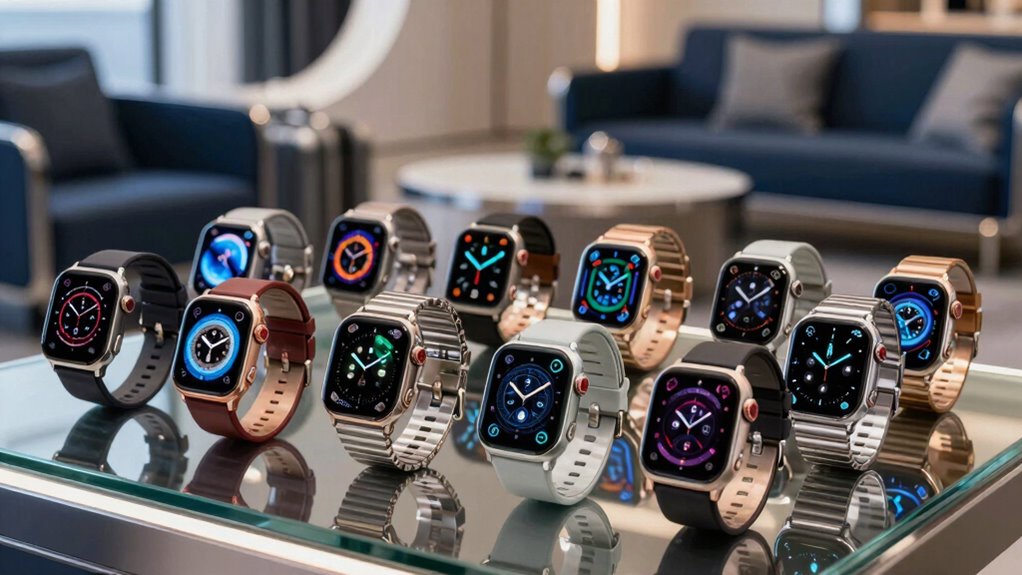

For cruising and travel, my best overall pick is the Samsung Galaxy Watch Ultra2 LTE, which pairs a rugged titanium build with cellular connectivity for travelers who want more independence from a phone. The Garmin Venu 3S is a better fit for those prioritizing health features and a smaller case, while the Garmin Instinct 3 Solar suits trips where durability and reduced charging are the main goals. The tradeoff is that LTE convenience, long battery life, compact comfort, and easy phone pairing rarely come together in one watch. Read on for how the full lineup compares and which model matches your travel style.

Get travel and outdoor gear delivered free with Prime
- Fast, free delivery on millions of items
- Prime Video, Amazon Music and more included
- Member-only deals all year
Complete the kit


Key Takeaways
- The Galaxy Watch Ultra2 LTE leads for connected travel: its cellular capability is the clearest choice for travelers who want selected watch functions away from their phone, though LTE support depends on carrier and plan.
- Garmin splits the rugged and everyday use cases: the Instinct 3 Solar favors durable outdoor travel and less frequent charging, while the Venu 3S is better suited to compact daily wear and health tracking.
- Case size is a real travel comfort decision: the 40–42 mm Samsung, Garmin, and Amazfit options are easier to wear overnight and under sleeves than 47–51 mm models.
- Sapphire glass appears across several Amazfit picks: the Active 3, Balance 3, and Active 2 Premium offer a scratch-resistant screen feature, but glass alone does not determine overall durability or travel usefulness.
- The lineup has a clear price-free value divide: the vívoactive 5 and Amazfit models cover everyday wellness and fitness needs, while the tactix 8 and Galaxy Watch Ultra2 make more sense when their specialized capabilities matter.
| Samsung Galaxy Watch Ultra2 LTE Smartwatch, Titanium Gray, 47 mm |  | Best for Off-Grid Cruising | Case size: 47 mm | Color: Titanium Gray | Connectivity: LTE | VIEW ON AMAZON | See Our Full Breakdown |
| Amazfit Active 3 GPS Running Smart Watch, 1.32″ AMOLED Sapphire Glass Display, iOS/Android Compatible |  | Best for Run-Focused Travelers | Display: 1.32-inch AMOLED, up to 3,000 nits | Glass and frame: Sapphire glass; stainless steel | GPS: Six satellite systems | VIEW ON AMAZON | See Our Full Breakdown |
| T7 Smart Watch with Bluetooth Calling, 1.83″ HD Touchscreen, 2 Bands |  | Best for Basic Calls and Health Tracking | Display: 1.83-inch HD touchscreen with 2.5D glass | Battery life: Up to 10 days; about two hours to charge | Water resistance: IP67; suitable for sweat, rain, and handwashing, not swimming | VIEW ON AMAZON | See Our Full Breakdown |
| Garmin Venu 3S GPS Fitness Smartwatch, 41 mm, French Gray |  | Best Compact Premium Pick | Case size: 41 mm | Color: French Gray | Display: Bright, colorful display | VIEW ON AMAZON | See Our Full Breakdown |
| Amazfit Balance 3 Smartwatch with 1.5-Inch AMOLED Screen and Sapphire Glass |  | Best for Long Trips Between Charges | Display: 1.5-inch AMOLED | Screen protection: Sapphire glass | GPS: Dual-band positioning with six satellite systems | VIEW ON AMAZON | See Our Full Breakdown |
| Samsung Galaxy Watch 8 (2025), Silver, 40mm, Bluetooth Smartwatch |  | Best for Android Wellness on the Go | Model year: 2025 | Case size: 40mm | Connectivity: Bluetooth | VIEW ON AMAZON | See Our Full Breakdown |
| Garmin tactix 8 Premium Tactical GPS Smartwatch, 47mm | 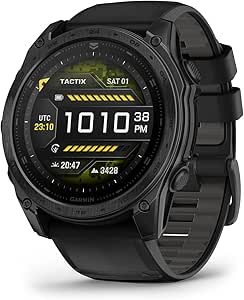 | Best for Expedition-Grade Cruising | Display: 1.4-inch AMOLED | Case size: 47mm | Bezel and lens: Titanium bezel; sapphire lens | VIEW ON AMAZON | See Our Full Breakdown |
| Garmin Venu X1 Thin & Lightweight Smartwatch 51mm Black |  | Best Large-Screen Travel Companion | Display: 2-inch AMOLED | Case thickness: 8mm | Physical size: 41 × 46 × 7.9mm | VIEW ON AMAZON | See Our Full Breakdown |
| Amazfit Active 2 Premium Smart Watch, 1.32″ Sapphire Glass, GPS, iOS/Android |  | Best Cross-Platform Travel Value | Display: 1.32-inch AMOLED | Case: 44mm stainless steel | Glass: Sapphire | VIEW ON AMAZON | See Our Full Breakdown |
| Garmin Instinct 3 Solar Rugged GPS Smartwatch, 50 mm, Charcoal |  | Best for Long, Off-Grid Trips | Display: 1.1 inches | Case size: 50mm | Case and bezel: Fiber-reinforced polymer case; metal-reinforced bezel | VIEW ON AMAZON | See Our Full Breakdown |
| Garmin vívoactive 5 Health and Fitness GPS Smartwatch, 42 mm, Ivory |  | Best for Long, Low-Maintenance Trips | Display: AMOLED | Case size: 42 mm | Color: Ivory | VIEW ON AMAZON | See Our Full Breakdown |
| premium smartwatches for cruising and travel | Display | Battery life | Case size |
|---|---|---|---|
| Samsung Galaxy Watch Ultra2 LT | — | — | 47 mm |
| Amazfit Active 3 GPS Running S | 1.32-inch AMOLED, up to 3,000 nits | Up to 12 days | — |
| T7 Smart Watch with Bluetooth | 1.83-inch HD touchscreen with 2.5D glass | Up to 10 days; about two hours to charge | — |
| Garmin Venu 3S GPS Fitness Sma | Bright, colorful display | Up to 10 days in smartwatch mode | 41 mm |
| Amazfit Balance 3 Smartwatch w | 1.5-inch AMOLED | Up to 21 days | — |
| Samsung Galaxy Watch 8 | — | — | 40mm |
| Garmin tactix 8 Premium Tactic | 1.4-inch AMOLED | Up to 16 days smartwatch mode; up to 47 hours GPS mode | 47mm |
| Garmin Venu X1 Thin & Lightwei | 2-inch AMOLED | Up to 8 days smartwatch mode; up to 16 hours GPS mode | — |
| Amazfit Active 2 Premium Smart | 1.32-inch AMOLED | Up to 10 days typical use | — |
| Garmin Instinct 3 Solar Rugged | 1.1 inches | Unlimited smartwatch mode with solar charging under specified conditions | 50mm |
| Garmin vívoactive 5 Health and | AMOLED | Up to 11 days in smartwatch mode; up to 5 days with always-on display | 42 mm |
More Details on Our Top Picks
Samsung Galaxy Watch Ultra2 LTE Smartwatch, Titanium Gray, 47 mm
For a trip that mixes sea days with remote shore excursions, I’d put the Galaxy Watch Ultra2 first for independence from a phone. Its LTE connectivity supports calls, texts, and updates nearby, while the bright 5,000-nit display and trail navigation help when a route leads away from the ship. The 100 m water-resistance rating and EN13319 dive certification also give it a stronger water-focused profile than the Garmin Venu 3S, which is better suited to everyday fitness and a smaller wrist.
The tradeoff is compatibility: this watch requires an Android phone, and its 47 mm case is substantial. I’d choose it over the Amazfit Balance 3 when standalone communication and rugged water credentials matter more than the Balance’s longer stated battery life. Skip it if you use an iPhone or want a discreet travel watch.
Pros:- LTE supports calls, texts, and updates without a phone nearby
- Bright display rated up to 5,000 nits for outdoor visibility
- Trail navigation and personalized hydration alerts support active excursions
- 100 m water resistance and EN13319 dive certification
Cons:- Requires an Android smartphone
- The 47 mm case may feel large on smaller wrists
- LTE and extensive outdoor features may be unnecessary for travelers focused on basic notifications
Best for: Android users who want LTE communication, rugged water resistance, and navigation for active port days or dive-oriented trips.
Not ideal for: iPhone owners and travelers who prefer a small, lightweight watch or need long battery life between charges.
- Case size:47 mm
- Color:Titanium Gray
- Connectivity:LTE
- Display brightness:Up to 5,000 nits
- Dust and water resistance:IP69K, 10ATM; water resistant up to 100 m
- Dive certification:EN13319
- Phone compatibility:Android smartphones
Our verdict“Choose the Galaxy Watch Ultra2 if you use Android and want a rugged, water-ready travel watch with LTE, but skip it if phone compatibility or a smaller fit comes first.”
Amazfit Active 3 GPS Running Smart Watch, 1.32″ AMOLED Sapphire Glass Display, iOS/Android Compatible
The Amazfit Active 3 makes the most sense for travelers who want mapped running routes without carrying a phone. Its offline maps with turn-by-turn directions and automatic rerouting are more directly useful for finding a shore-side running loop than the Garmin Venu 3S’s broader wellness and workout focus. Sapphire glass, a stainless-steel frame, and a 3,000-nit AMOLED display give it a durable, readable feel for bright days outdoors, while up to 12 days of battery life eases charging around excursions.
This is still a running-first pick, not my choice for the most capable cruise companion. Unlike the Samsung Galaxy Watch Ultra2, it lists Bluetooth calls rather than LTE, so calls depend on a nearby phone. Its 1.32-inch screen is also relatively small for map reading, and speech-to-text replies work only with Android. Choose it for route guidance and training; skip it if standalone communication matters more.
Pros:- Offline maps provide turn-by-turn directions and automatic rerouting
- Sapphire glass and stainless-steel frame suit frequent travel
- Up to 12 days of stated battery life
- GPS supports six satellite systems and Zepp Coach offers running plans
Cons:- Bluetooth calling does not provide the phone-independent connection offered by LTE models
- The 1.32-inch display can feel cramped when following maps
- Speech-to-text replies are limited to Android
Best for: Runners who travel with an iPhone or Android phone and want offline route guidance, training plans, and fewer charging stops.
Not ideal for: Cruisers who want LTE calls away from their phone, a larger map display, or a watch centered on water activities.
- Display:1.32-inch AMOLED, up to 3,000 nits
- Glass and frame:Sapphire glass; stainless steel
- GPS:Six satellite systems
- Navigation:Offline maps, turn-by-turn directions, and automatic rerouting
- Battery life:Up to 12 days
- Connectivity:Bluetooth calls; Zepp Flow voice commands
- Health sensors:Heart rate, blood oxygen, stress, and sleep quality
- Compatibility:iOS and Android
Our verdict“Pick the Active 3 if running routes and durable navigation matter more than LTE or a large screen.”
T7 Smart Watch with Bluetooth Calling, 1.83″ HD Touchscreen, 2 Bands
The T7 is the simple, call-friendly option in this group: its built-in speaker and microphone let travelers take Bluetooth calls when their phone is close, and its health tracking covers heart rate, blood oxygen, stress, sleep, and menstrual cycles. The 1.83-inch screen gives notifications more room than the smaller Amazfit Active 3 display, and two included bands offer a quick change of style between casual days and dinner onboard.
Its limits matter for cruising. The T7 has no built-in GPS, so it cannot record a route independently, and its IP67 rating is described for sweat, rain, and handwashing—not swimming. Compared with the Garmin Venu 3S, it offers less travel-oriented fitness functionality and a less premium plastic case, though it does include up to 10 days of battery life. I’d choose it for basic phone-linked features, not navigation or water excursions.
Pros:- Bluetooth calling uses a built-in speaker and microphone
- Health tracking includes menstrual cycle monitoring
- Up to 10 days of stated battery life with about a two-hour charge time
- Includes two bands and more than 100 customizable watch faces
Cons:- No built-in GPS for independent route tracking
- IP67 rating is not intended for swimming or hot showers
- Plastic construction may feel less premium than the metal and sapphire options
Best for: Travelers who want a large notification screen, Bluetooth calling, cycle tracking, and a straightforward watch for land-based daily wear.
Not ideal for: Cruisers planning to swim, snorkel, or explore using GPS, or buyers seeking a premium-feeling case and advanced navigation.
- Display:1.83-inch HD touchscreen with 2.5D glass
- Battery life:Up to 10 days; about two hours to charge
- Water resistance:IP67; suitable for sweat, rain, and handwashing, not swimming
- Connectivity:Bluetooth calling; compatible with iOS and Android
- Case material:Plastic with aluminum build
- GPS:No built-in GPS
- Health features:Heart rate, blood oxygen, stress, sleep, and menstrual cycle tracking
- Included bands:2
Our verdict“Choose the T7 for basic phone-linked calls and health tracking, but skip it if your trip includes swimming or you need GPS navigation.”
Garmin Venu 3S GPS Fitness Smartwatch, 41 mm, French Gray
For travelers who want a capable watch without a large case, the Garmin Venu 3S is the compact choice at 41 mm. Its up-to-10-day smartwatch battery life, sleep coaching, nap detection, stress tracking, and HRV status make it well suited to keeping up with routines across a cruise itinerary. More than 30 sports apps and animated workouts add useful variety without making the watch as expedition-oriented as the Samsung Galaxy Watch Ultra2.
The Venu 3S is a better fit for wellness and everyday travel than for phone-free communication: calls and text replies require a compatible smartphone, and Garmin Pay depends on a supported payment network. It also lacks the offline turn-by-turn navigation specified for the Amazfit Balance 3. I’d pick it for a smaller wrist and balanced fitness tracking, but travelers who prioritize mapped routes or LTE should choose elsewhere.
Pros:- Compact 41 mm case suits smaller wrists
- Up to 10 days of battery life in smartwatch mode
- Health tools include sleep coaching, nap detection, stress tracking, and HRV status
- More than 30 sports apps, music storage, and Garmin Pay
Cons:- Calls and text replies require a compatible smartphone
- Garmin Pay depends on a supported payment network
- Streaming music services require a premium subscription
Best for: Travelers with smaller wrists who want GPS fitness tracking, detailed sleep and recovery features, and a compact everyday watch.
Not ideal for: Buyers who need LTE communication, offline turn-by-turn maps, or a watch specifically rated for swimming and diving.
- Case size:41 mm
- Color:French Gray
- Display:Bright, colorful display
- Battery life:Up to 10 days in smartwatch mode
- Fitness features:More than 30 sports apps and animated workouts
- Health features:Heart rate, sleep coaching, nap detection, stress tracking, and HRV status
- Phone connectivity:Calls and text replies when paired with a compatible smartphone
- Other features:Music storage and Garmin Pay
Our verdict“Choose the Venu 3S for compact, well-rounded fitness and wellness tracking, but pick a navigation-focused model if mapped routes are central to your trip.”
Amazfit Balance 3 Smartwatch with 1.5-Inch AMOLED Screen and Sapphire Glass
The Amazfit Balance 3 is the strongest fit here for travelers who want navigation and long stretches away from a charger. Its up to 21 days of battery life outlasts the Active 3’s stated 12 days, while dual-band GPS, offline maps, turn-by-turn directions, and automatic rerouting support independent exploring ashore. Sapphire glass helps protect the 1.5-inch AMOLED screen, and the white and tactical red flashlight can be handy in dim cabins or early departures.
It is less clearly suited to water-focused cruising than the Samsung Galaxy Watch Ultra2: the provided product data does not state a water-resistance rating or dimensions, so I would not choose it for diving or if case fit is a key concern. Its health and recovery tools are broad, but described as insights rather than detailed specifications. Choose it over the Garmin Venu 3S for battery and maps, not for a compact case or established water credentials.
Pros:- Up to 21 days of stated battery life
- Dual-band GPS and offline maps provide turn-by-turn navigation and rerouting
- Sapphire glass protects the AMOLED display
- Built-in white and tactical red flashlight; listed app features require no subscription
Cons:- Product data does not specify water resistance
- Product data does not provide case dimensions or weight
- Health and recovery features are presented as insights without detailed specifications
Best for: Frequent travelers who want offline navigation, a large display, and long battery life without a subscription for the listed Zepp app features.
Not ideal for: Divers, swimmers, or buyers who need stated water-resistance details, known case dimensions, or the Ultra2’s LTE connectivity.
- Display:1.5-inch AMOLED
- Screen protection:Sapphire glass
- GPS:Dual-band positioning with six satellite systems
- Navigation:Offline maps, turn-by-turn directions, and automatic rerouting
- Battery life:Up to 21 days
- Flashlight:White and tactical red
- Health monitoring:Heart rate, HRV, blood oxygen, sleep, stress, and breathing rate
- App and connections:Zepp app; connects with Strava, TrainingPeaks, and Intervals.icu
Our verdict“Choose the Balance 3 for long battery life and offline navigation, but skip it if you need confirmed water resistance or LTE.”
Samsung Galaxy Watch 8 (2025), Silver, 40mm, Bluetooth Smartwatch
For travelers who want a compact watch focused on everyday health, the Galaxy Watch 8 pairs sleep coaching and an AI-powered Energy Score with a thinner, lighter 40mm design. That smaller case can feel less obtrusive through long travel days than the 47mm Garmin tactix 8, while its improved interface brings updates into quick view. Blood pressure monitoring and bedtime guidance add useful wellness tools, though the blood pressure feature needs a separate calibration cuff and compatible features may depend on apps or subscriptions. Unlike the cross-platform Amazfit Active 2 Premium, this Samsung watch does not support iOS, so it is a poor choice for mixed-device households. I’d rank it for Android users who value health guidance over maps, rugged expedition hardware, or extended battery life.
Pros:- Compact, lightweight 40mm design suits all-day wear
- Sleep coaching, bedtime guidance, and Energy Score support daily wellness routines
- At-a-glance interface and built-in AI assistant
- Two-year warranty
Cons:- No iOS compatibility
- Blood pressure monitoring requires a separate calibration cuff
- Some features depend on compatible apps or subscriptions
Best for: Android travelers who want a small, comfortable smartwatch with sleep coaching and health features for everyday routines.
Not ideal for: iPhone users, or travelers who prioritize detailed offline navigation and long trips between charging opportunities.
- Model year:2025
- Case size:40mm
- Connectivity:Bluetooth
- Compatibility:Samsung and other Android smartphones
- Health features:Advanced Sleep Coaching, Bedtime Guidance, blood pressure monitoring, AI-powered Energy Score
- Training:Real-time Running Coach and training programs
- Warranty:2 years
Our verdict“Choose the Galaxy Watch 8 if you travel with an Android phone and want compact wellness guidance more than rugged navigation or long battery life.”
Garmin tactix 8 Premium Tactical GPS Smartwatch, 47mm
The Garmin tactix 8 is the most specialized travel tool here: its titanium bezel, sapphire lens, multi-band GPS, TopoActive maps, aviation navigation, and dive support suit itineraries that go well beyond city stops. A built-in flashlight and up to 16 days in smartwatch mode also make it better equipped for demanding, extended trips than the Samsung Galaxy Watch 8. Tactical functions such as stealth mode, night vision compatibility, and an Applied Ballistics solver will matter to a narrow audience, not most cruise passengers. The 47mm case and feature-rich interface are a lot of watch for someone who mainly wants notifications and sleep tracking; the 51mm Garmin Venu X1 offers a larger screen in a notably thinner, lighter design. I’d choose the tactix 8 for serious outdoor or tactical use, not casual sightseeing.
Pros:- Titanium bezel and sapphire lens provide a rugged premium build
- Multi-band GPS, TopoActive maps, and aviation navigation support complex trips
- Dive support rated to 40 meters
- Up to 16 days of battery life in smartwatch mode and built-in LED flashlight
Cons:- Tactical feature set may be unnecessary for ordinary travel
- Large 47mm case may feel bulky on smaller wrists
- Pulse Ox and ECG availability varies by region, and health metrics are estimates
Best for: Travelers who combine cruising with diving, aviation, remote hikes, or tactical activities and want rugged navigation tools.
Not ideal for: Cruise passengers seeking a slim everyday companion, or buyers who do not need tactical and advanced outdoor functions.
- Display:1.4-inch AMOLED
- Case size:47mm
- Bezel and lens:Titanium bezel; sapphire lens
- Battery life:Up to 16 days smartwatch mode; up to 47 hours GPS mode
- GPS:Multi-band with SatIQ technology
- Navigation and maps:TopoActive maps, aviation navigation, golf courses, and ski resorts
- Tactical features:Jumpmaster activity, stealth mode, kill switch, night vision compatibility, Applied Ballistics solver
Our verdict“Pick the tactix 8 for rugged, feature-heavy outdoor travel, but skip it if your cruise plans call for a lighter everyday smartwatch.”
Garmin Venu X1 Thin & Lightweight Smartwatch 51mm Black
The Garmin Venu X1 makes a large display its travel advantage: the 2-inch AMOLED screen gives maps, workout data, and notifications room to breathe, while the 8mm-thin case and 34g watch weight help offset its wide 51mm format. Compared with the chunkier Garmin tactix 8, it is designed around a lighter, more screen-forward experience rather than tactical controls and 40-meter dive support. It still brings TopoActive maps, more than 100 sports apps, health tracking, a flashlight, and a speaker and microphone for calls. The tradeoff is shorter endurance: up to 8 days in smartwatch mode and 16 hours with GPS, below the Amazfit Active 2 Premium’s stated 10-day typical battery life. Its nylon band may also feel less polished for formal evenings aboard ship.
Pros:- Large 2-inch AMOLED display is easy to read at a glance
- Thin case and low watch weight help balance the wide screen
- Built-in speaker and microphone support hands-free calls
- TopoActive maps, flashlight, and more than 100 sports apps
Cons:- Large 51mm format may not suit smaller wrists
- GPS battery life is up to 16 hours
- Extra Outdoor Maps+ data requires an optional subscription, and the nylon band may not suit formal wear
Best for: Travelers who want a big, readable AMOLED screen, built-in calling, and fitness and map features in a lightweight watch.
Not ideal for: Buyers with small wrists, those wanting a more formal strap out of the box, or travelers who need long GPS sessions between charges.
- Display:2-inch AMOLED
- Case thickness:8mm
- Physical size:41 × 46 × 7.9mm
- Weight:34g; 40g with ComfortFit band
- Battery life:Up to 8 days smartwatch mode; up to 16 hours GPS mode
- Lens and band:Scratch-resistant sapphire; ComfortFit nylon
- Maps and activities:TopoActive maps, 43,000+ golf courses, 100+ preloaded sports apps
- Health features:HRV, advanced sleep tracking, Body Battery, Pulse Ox (availability varies)
Our verdict“Choose the Venu X1 if screen readability and a light, thin fit matter more than compact dimensions or the longest GPS runtime.”
Amazfit Active 2 Premium Smart Watch, 1.32″ Sapphire Glass, GPS, iOS/Android
The Amazfit Active 2 Premium is an appealing travel pick for people who want durable materials and useful navigation without committing to a single phone ecosystem. Its stainless-steel 44mm case, sapphire glass, and included leather and silicone straps make it more adaptable from dinner to shore excursions than the sportier Garmin Instinct 3 Solar. Free offline maps with turn-by-turn directions and ski resort maps can help when roaming data is unreliable, while the Zepp App has no mandatory subscription fees. The stated battery life of up to 10 days in typical use also reduces charging interruptions compared with the Garmin Venu X1’s up-to-8-day smartwatch claim. The compromises are real: speech-to-text replies work only with Android messages, and the Premium edition costs more than the Sport model. I’d favor it for flexible, cross-platform travel rather than deep expedition features.
Pros:- Compatible with iOS and Android
- Sapphire glass and stainless-steel case suit frequent travel
- Free offline maps with turn-by-turn directions and ski resort maps
- Up to 10 days of typical-use battery life and no mandatory Zepp App subscription
Cons:- Speech-to-text replies work only with Android messages
- Premium edition costs more than the standard Sport model
- Its navigation and outdoor toolkit is less specialized than the Garmin tactix 8
Best for: iPhone and Android travelers who want offline navigation, a dressier stainless-steel design, and no mandatory app subscription.
Not ideal for: Android users who rely on speech-to-text replies across messaging services, or adventurers needing specialized expedition-grade tools.
- Display:1.32-inch AMOLED
- Case:44mm stainless steel
- Glass:Sapphire
- Straps:Leather strap plus silicone sport band
- Battery life:Up to 10 days typical use
- GPS and maps:Five satellite positioning systems; free offline maps with turn-by-turn directions
- Sports and water resistance:160+ sports modes; 50m water resistance
- Compatibility and app:iOS and Android; Zepp App with no mandatory subscription
Our verdict“Choose the Active 2 Premium for cross-platform flexibility, offline maps, and polished everyday wear without a required subscription.”
Garmin Instinct 3 Solar Rugged GPS Smartwatch, 50 mm, Charcoal
For travelers who may spend long stretches away from chargers, the Garmin Instinct 3 Solar puts endurance and ruggedness ahead of display polish. Solar charging can provide unlimited smartwatch-mode battery life under specified conditions, while multi-band GPS, a compass, and a barometric altimeter support route finding beyond the ship or resort. The 10 ATM water rating and MIL-STD-810 thermal and shock resistance make it a tougher outdoor choice than the more refined Amazfit Active 2 Premium. That durability comes with a basic 1.1-inch display and oversized 50mm case, so it is less suited to map reading and dressier evenings than the bright-screen Garmin Venu X1. Solar endurance also depends on substantial daily exposure to bright outdoor conditions; it is not a promise of charge-free use in every itinerary. I’d pick it for rugged trips, not screen-first cruising.
Pros:- Solar charging can support unlimited smartwatch-mode battery life under specified conditions
- 10 ATM water resistance and MIL-STD-810 thermal and shock resistance
- Multi-band GPS, compass, and barometric altimeter
- Built-in LED flashlight and Garmin Pay
Cons:- Solar battery performance depends on substantial bright outdoor exposure
- Small 1.1-inch display is less suited to map detail than the Venu X1’s AMOLED screen
- 50mm case may be oversized for smaller wrists
Best for: Outdoor travelers on extended, sunny trips who value rugged construction, GPS navigation, and fewer charging stops.
Not ideal for: Cruisers who want a large, vivid screen, a compact case, or reliable solar gains while spending much of the trip indoors.
- Display:1.1 inches
- Case size:50mm
- Case and bezel:Fiber-reinforced polymer case; metal-reinforced bezel
- Charging:Solar
- Battery life:Unlimited smartwatch mode with solar charging under specified conditions
- Navigation:Multi-band GPS with SatIQ, 3-axis compass, barometric altimeter
- Health and connected features:Wrist-based heart rate, advanced sleep monitoring, Pulse Ox, smart notifications, Garmin Pay
Our verdict“Pick the Instinct 3 Solar for rugged, sun-exposed trips where battery endurance matters more than a bright, spacious display.”
Garmin vívoactive 5 Health and Fitness GPS Smartwatch, 42 mm, Ivory
The vívoactive 5 makes the most sense for travelers who want useful health and fitness tracking without frequent charging. Its up to 11-day smartwatch battery life can mean less time searching for an outlet between port days, though using the always-on display cuts that figure to up to five days. The bright AMOLED display and 42 mm case offer a more compact daily-wear option than the 47 mm Garmin tactix 8, while more than 30 sports apps cover workouts on board or ashore. Sleep coaching, stress tracking, HRV status, and Body Battery add context for busy travel days, but these health readings are estimates, not medical measurements. Unlike a more feature-focused travel watch such as the Garmin Venu 3S, this model’s appeal is its mix of long battery life and practical activity tracking; it is less suited to buyers seeking a premium, feature-rich smartwatch experience.
Pros:- Up to 11 days of battery life in smartwatch mode helps reduce charging stops during travel.
- More than 30 sports apps and preloaded workouts support activity on board and ashore.
- Sleep, stress, HRV, and Body Battery tracking provide useful wellness estimates across busy travel days.
- Can play downloaded music through compatible wireless headphones without a phone.
Cons:- Always-on display use reduces battery life to up to five days.
- Health metrics are estimates and should not be treated as medical measurements.
- Its feature set is less focused on premium smartwatch functions than some higher-end travel-oriented alternatives.
Best for: Cruisers and frequent travelers who want a compact Garmin with long battery life, broad workout options, and sleep and recovery tracking.
Not ideal for: Travelers who prioritize an always-on display, medical-grade health readings, or a more feature-rich smartwatch and are comfortable charging more often.
- Display:AMOLED
- Case size:42 mm
- Color:Ivory
- Battery life:Up to 11 days in smartwatch mode; up to 5 days with always-on display
- Sports apps:More than 30 indoor and GPS sports apps
- Health features:Wrist-based heart rate, sleep score and coaching, HRV status, stress tracking, menstrual cycle and pregnancy tracking
- Music:Downloads from Spotify, Amazon Music, or Deezer; wireless headphone connection
- Wheelchair mode:Tracks pushes and supports push and handcycle activities
Our verdict“Choose the vívoactive 5 if long battery life and everyday fitness tracking matter more to your trip than an always-on screen or an expansive smartwatch feature set.”

How We Picked
I ranked these watches around the needs that tend to shape a cruise or travel purchase: dependable navigation and GPS tools, battery expectations, screen readability, comfort for all-day wear, build materials, health and activity features, and ease of pairing with a phone. I also weighed travel-specific usefulness, such as whether cellular connectivity, a compact case, or a rugged design solves a genuine problem rather than adding features a buyer may rarely use. Compatibility and service limits matter too: LTE requires carrier support, and some functions depend on a compatible phone or app.
The ranking favors watches with a strong balance of travel usefulness and manageable compromises, not the longest feature list. That places the Galaxy Watch Ultra2 LTE first for connected versatility, with Garmin options close behind for battery-minded, outdoor, and wellness-focused travelers. Compact everyday models rank well for comfort and straightforward use; specialist rugged watches rank lower for general cruising because their size and advanced feature sets can be more than many passengers need. Product names alone do not establish performance, so I avoid assuming unlisted battery figures or functions.
Factors to Consider When Choosing Premium Smartwatches For Cruising And Travel
Before choosing a watch, I would start with the trip itself rather than the spec sheet. A port-heavy itinerary, a remote hiking extension, and a resort-focused cruise place different demands on connectivity, charging, and comfort.
Decide What You Need Away From Your Phone
A watch with LTE can help with selected calls or messages when your phone is not at hand, but it does not replace a phone for every travel task. Confirm that your carrier supports the watch abroad and on the networks you expect to use; roaming rules and plan fees can change the usefulness of LTE. On a ship, mobile service may be limited or expensive, so check the cruise line’s connectivity options before treating cellular as a safety net. If you mainly need notifications and activity tracking, Bluetooth pairing may be enough. A common mistake is paying for cellular hardware without checking coverage, activation, and roaming details. Choose LTE for specific communication needs, not simply because it sounds more travel-ready.
Plan for Charging Across the Whole Itinerary
Battery expectations should cover more than a normal day: GPS use, frequent notifications, screen settings, and cellular activity can all affect how often a watch needs charging. Consider whether you will have easy access to an outlet during excursions, overnight flights, or multi-day sailing. Solar charging can appeal to travelers spending time outdoors, but its benefit depends on exposure and use; it should not be treated as a substitute for checking the watch’s stated battery performance. Also check what charger the watch requires and whether it fits the adapters or USB setup you already pack. If sleep tracking matters, a watch that needs nightly charging may force a choice between battery and overnight data. Match battery strategy to your itinerary, not to a single headline feature.
Choose a Case You Can Wear All Day
Large cases can make maps, alerts, and workout data easier to read, yet they may feel bulky under cuffs or while sleeping. Smaller watches tend to disappear more comfortably into a travel routine, but compact displays can mean more scrolling or less room for glanceable information. Try to judge fit by case dimensions, wrist size, strap options, and weight rather than the screen diagonal alone. A watch that feels comfortable during a short store try-on may still bother you during a long flight or a full day of sightseeing. Check whether replacement or alternate straps are easy to source before a trip, especially if the included band is not suited to heat or water. Comfort often matters more than a marginal feature advantage when the watch stays on your wrist from morning to night.
Separate Water Resistance From Water-Sport Suitability
“Water-resistant” does not automatically mean a watch is suitable for every activity around a pool, beach, or ship. Check the manufacturer’s guidance for swimming, salt water, hot tubs, and buttons under water, since recommendations vary by model. Salt and sunscreen can leave residue around sensors and bands, so think about rinsing and drying the watch after exposure. A tougher-looking case does not remove the need to follow care instructions or check seals over time. If you plan to snorkel or dive, verify that the watch is rated and intended for that activity rather than assuming ordinary swim support is enough. Buyers who mostly want notifications on deck can prioritize comfort and screen visibility over specialized water features.
Check Phone Compatibility Before Comparing Features
Some watch functions work differently across Android and iPhone, and certain features may require a particular phone brand, app, or account. Confirm compatibility before buying, then check whether the functions you care about—such as replying to messages, health data syncing, or setup—are available on your phone. A watch can list broad iOS and Android support while still offering different experiences between platforms. Travel adds another wrinkle: app availability, language settings, and account access may affect setup when you are away from home. Pairing and updating the watch before departure can prevent a first-day configuration problem. Prioritize the features that work with your actual phone, not the full set advertised for another ecosystem.
Pay Extra Only for Features You Will Use
Premium materials, cellular support, advanced outdoor tools, and specialized activity modes can be useful, but each adds complexity or cost without helping every traveler. Make a short list of the situations the watch must handle: phone-free communication, reliable activity records, a rugged excursion, or comfortable health tracking. If none of your trips involve demanding outdoor use, a tactical or oversized rugged model may be harder to justify than a simpler everyday watch. On the other hand, travelers who regularly hike beyond towns may value durability and navigation tools more than a slim profile. Do not treat a sapphire screen or titanium case as a complete durability guarantee; the band, seals, and service support also matter. The best upgrade is the one that removes a real travel friction point.
Frequently Asked Questions
Can I rely on a smartwatch for calls and messages while cruising?
Only if the watch’s connection method works where you are, and cruise ships can complicate that expectation. LTE service depends on carrier support, an active plan, roaming rules, and available networks; shipboard connectivity may use separate services with their own terms. Bluetooth watches generally need the paired phone nearby for connected features. Before departure, check your carrier’s international and cruise coverage and the cruise line’s policies, then test the setup at home. For urgent communication, keep a separate plan that does not depend on one watch connection.
Is a GPS smartwatch useful if I already carry my phone?
It can be useful for activity recording, glanceable directions, or keeping a route record without holding your phone during a walk. A watch’s GPS does not necessarily provide full offline maps or turn-by-turn guidance, so check the exact navigation functions before relying on it in an unfamiliar city. Phone GPS can remain more practical for detailed maps, translation, and transit planning. If you mostly walk between landmarks with your phone in a bag, watch GPS may add convenience rather than replace the phone. Think of it as a companion tool unless the model’s mapping features meet your specific needs.
Should I choose a rugged watch or a smaller everyday model for a cruise?
Choose rugged construction when your itinerary includes demanding hikes, outdoor activities, or situations where knocks and long stretches away from charging are likely. For a cruise centered on ports, dining, and casual excursions, a smaller everyday model may be more comfortable and less conspicuous. Rugged watches can be larger and can include features that add little value to a relaxed trip. Compact models may be easier to wear overnight, though their screens offer less space for information. Match the case and feature set to the activities you actually plan, including any land-based days before or after the sailing.
Will one smartwatch charger work across all 11 models?
No; charging systems vary by brand and model, so I would not assume a charger is interchangeable. Check the included charging cable and connector before packing, and bring the exact charger for each watch you plan to use. A compact multi-port adapter can reduce luggage clutter, but it does not replace a watch-specific charging puck or cable. Test charging before departure and check whether a portable battery can power the charger you need. Keeping the watch charger in the same travel pouch as your phone cables can help avoid a preventable charging gap.
Can I use the health and fitness features without an internet connection?
Many watches can record basic activity or sensor data locally, but syncing, app views, weather, notifications, and some services may need a phone or internet connection. The exact offline behavior varies, so confirm whether the activities and metrics you care about are stored until you reconnect. Before traveling, set up the watch, update its software, and check that any needed maps or music are available offline. Do not assume that data will appear in every app immediately when connectivity returns. If health tracking is the priority, check how the watch handles storage, syncing, and export rather than focusing only on its sensor list.
Conclusion
For most travelers who want one watch for connected convenience and a tougher build, I would start with the Samsung Galaxy Watch Ultra2 LTE as the best overall pick, after checking carrier and phone compatibility. The Amazfit Active 2 Premium is my best value-oriented choice for shoppers seeking GPS and a sapphire-glass screen without prioritizing LTE or specialist outdoor tools. For a premium rugged option, the Garmin tactix 8 suits buyers who will use its advanced outdoor and tactical capabilities; the Garmin Venu 3S is my best pick for beginners who want a smaller, approachable everyday health and fitness watch. Choose the Garmin Instinct 3 Solar for rugged trips and a solar-focused design, the Garmin Venu X1 for a thin, lightweight profile, or the Samsung Galaxy Watch 8 40 mm if a compact Samsung watch better matches your wrist and routine. The right choice comes down to what you need away from your phone, how often you can charge, and whether your itinerary rewards a compact daily watch or a rugged specialist.
Halloween Picks
halloween
As an affiliate, we earn on qualifying purchases.