
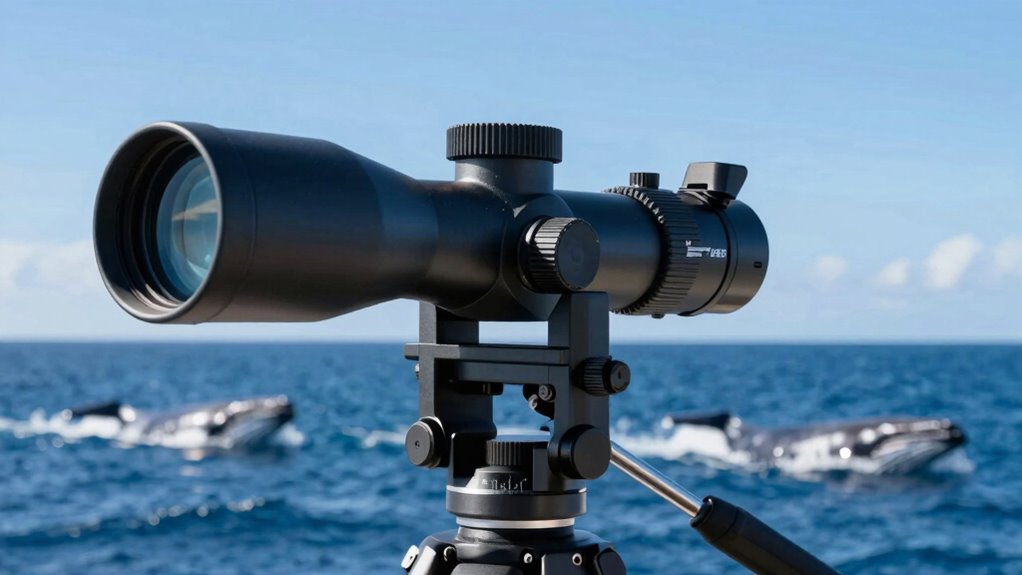

For wildlife viewing on cruises, I’d choose a scope that balances useful magnification with a bright image and a setup that stays manageable on deck. My best overall pick is the Vortex Diamondback HD 20-60×85, while the Vortex Crossfire HD 12-36×50 stands out for easier carrying and the SVBONY SV406P 20-60×80 for an angled, larger-aperture option. The tradeoff is clear: bigger objectives and higher magnification can help distant viewing, but add weight and make a steady mount more important. Compact scopes are easier to handle aboard ship, though they may give up brightness or reach. Read on for the full comparison and guidance on matching a scope to your cruise style.

Get travel and outdoor gear delivered free with Prime
- Fast, free delivery on millions of items
- Prime Video, Amazon Music and more included
- Member-only deals all year
Complete the kit


Key Takeaways
- The Vortex Diamondback HD 20-60×85 leads the roundup for buyers prioritizing an 85mm objective and a broad zoom range for distant wildlife; its larger form is less convenient to carry around a ship.
- The Vortex Crossfire HD 12-36×50 is the portability standout, trading the higher magnification and larger objectives found on many alternatives for a lighter, lower-power setup.
- The SVBONY SV406P and 80mm-class Gosky models favor larger objectives, which can help in dim conditions, but their size makes support and storage more important aboard a moving vessel.
- Scopes bundled with tripods and phone adapters are not automatically cruise-ready: included accessories can reduce setup costs, but stability and practical deck space still matter.
- Very high zoom claims do not settle the decision: the 25–75x and 30–90x models offer reach on paper, while ship movement can make the upper end harder to use steadily.


| spotting scopes for wildlife viewing on cruise | Magnification | Objective lens | Included accessories | Field of view |
|---|---|---|---|---|
| SVBONY SV406P 20-60×80 Angled | 20–60x | 80 mm | — | — |
| SVBONY SV28 Angled Spotting Sc | 25–75x | 70 mm | Phone adapter, desktop tripod, carrying case, lens covers, cleaning cloth, and user manual | 64 feet |
| NWDEY 25-75×60 Spotting Scope | 25–75x | 60 mm | Tripod, phone adapter, carry bag, lens covers, and cleaning cloth | 63 feet |
| JoyDate 20-60×80 Waterproof Sp | 20–60x | 80 mm | Phone holder, tabletop tripod, carrying case, covers, cleaning cloth, and user manual | — |
| Gosky 25–75×80 Spotting Scope | 25–75x | 80 mm | Tabletop tripod, phone adapter, carrying case, accessory pouch, lens covers, and cleaning cloth | 98 feet |
| Celestron C70 Mini Maksutov Sp | 25–75x | 70 mm | Tabletop tripod with slow-motion controls and soft carrying case | 1.55 degrees |
| Vortex Diamondback HD Spotting | 20–60x | — | — | — |
| Vortex Crossfire HD Spotting S | 12–36x | — | — | — |
| WOSPORTS 25–75×85 Spotting Sco | 25–75x | 85 mm | Table tripod, smartphone adapter, carry bag, cleaning cloth, and lens covers | 102–52.5 ft at 1,000 yards |
| Gosky 20–60×80 Spotting Scope | 20–60x | 80 mm | Tabletop tripod, smartphone adapter, carrying case, storage bag, lens and eyepiece covers, and cleaning cloth | 82.9 ft or 48 ft at 1,000 yards, as listed |
| BIBIRE 25–75×60 Spotting Scope | 25–75x | 60 mm | — | — |
| URBANCOAST 20–60×60 Waterproof | 20–60x | 60 mm | Tripod, phone adapter, retractable sunshade, carrying case | 120 feet |
| Sogries 20–60×80 HD Spotting S | 20–60x | 80 mm | — | 86.4–48.2 ft at 1,000 yards |
| 20-60×80 HD Spotting Scope Wat | 20–60x | 80 mm | Tripod, smartphone adapter, carrying case, lens cloth | — |
| 30-90×92 UHD High-Power Spotti | 30–90x | — | — | — |
More Details on Our Top Picks
SVBONY SV406P 20-60×80 Angled ED Spotting Scope for Birdwatching
For cruise wildlife viewing near dawn, dusk, or under overcast skies, I’d put the SVBONY SV406P near the top of this group. Its 80 mm objective lens gathers more light than the 60 mm NWDEY, while ED glass is intended to limit color fringing around bright, high-contrast subjects such as seabirds against water. The 20–60x zoom also starts lower than the SV28’s 25x minimum, which can make it easier to locate moving animals before increasing magnification. Dual focus wheels offer fine adjustment, but they add a learning curve, and high power can still magnify ship movement. The product details don’t specify a tripod or included accessories, so I’d budget space and setup time for a stable mount rather than count on a ready-to-use cruise kit.
Pros:- ED glass is designed to reduce color fringing around high-contrast wildlife.
- 80 mm objective lens favors brighter views than the 60 mm NWDEY.
- 20x low end is useful for finding moving wildlife before zooming in.
- IPX7 waterproof rating and fogproof construction suit changeable conditions.
Cons:- No included tripod or accessory package is specified.
- Dual focus wheels may take practice to adjust quickly on a moving ship.
- The 80 mm objective and 60x maximum magnification call for a stable mount.
Best for: Cruisers who prioritize brighter views and color control for wildlife watching in dim or changeable light, and already have a suitable tripod.
Not ideal for: Casual viewers seeking a complete, lightweight kit; the scope’s accessories and tripod are not specified, and its larger objective can take more room.
- Magnification:20–60x
- Objective lens:80 mm
- Optics:ED glass
- Eyepiece focal length:7–21 mm
- Focus system:Dual focus wheels
- Camera compatibility:Compatible with WIFI spotting scope camera
Our verdict“Choose the SV406P if brighter, more color-controlled viewing matters more than getting a complete cruise-ready kit in the box.”
SVBONY SV28 Angled Spotting Scope, 25–75×70
I’d choose the SVBONY SV28 for cruisers who want the basic accessories supplied, not for those chasing the brightest image. Its package includes a phone adapter, carrying case, and desktop tripod, giving it a more self-contained start than the SV406P, which lists no included tripod. The 70 mm objective is smaller than the 80 mm lenses on the JoyDate and Gosky, so it gives up some light-gathering potential in dim conditions. Its 25–75x range reaches farther on paper, but the high end is harder to use steadily aboard a moving vessel. The built-in sunshade can help cut glare, while the desktop tripod is better suited to a table or railing-height setup than comfortable standing observation.
Pros:- Includes a phone adapter, carrying case, and desktop tripod.
- 70 mm objective balances light gathering with a less bulky format than an 80 mm scope.
- Built-in sunshade helps reduce glare on bright water.
- Waterproof body and non-slip finish suit outdoor deck use.
Cons:- Desktop tripod may be too low for comfortable viewing from many cruise-deck positions.
- 25x minimum magnification can make locating nearby or fast-moving wildlife harder.
- Manual focus and 75x maximum magnification demand a steady setup.
Best for: Cruisers who want a bundled phone adapter and compact tabletop setup for casual wildlife viewing from a deck table or cabin balcony.
Not ideal for: Viewers who expect stable, full-height viewing while standing, or who often watch wildlife in low light and want an 80 mm objective.
- Magnification:25–75x
- Objective lens:70 mm
- Focal length:380 mm
- Field of view:64 feet
- Weight:910 g
- Focus:Manual
- Coating:FMC
- Included accessories:Phone adapter, desktop tripod, carrying case, lens covers, cleaning cloth, and user manual
Our verdict“Pick the SV28 if a supplied phone adapter and tabletop kit matter more than low-light performance or a full-height tripod.”
NWDEY 25-75×60 Spotting Scope with 60in Tripod, BAK4 Prism, FMC Lens, Phone Adapter, and Carry Bag
The NWDEY’s clearest cruise-use advantage is its 60-inch adjustable tripod, a more practical height for standing deck viewing than the tabletop tripods supplied with the SV28 and JoyDate. It also comes with a phone adapter and carry bag, so the kit is ready for basic digiscoping and transport. The tradeoff is its 60 mm objective: compared with the 80 mm SV406P, it gathers less light, which can matter when distant wildlife appears in cloudy or late-day conditions. Its 25–75x zoom offers plenty of reach, but a ship’s motion can make the upper range difficult to hold on a subject. I’d treat the tripod as a useful starting point, not a guarantee of steady images at maximum magnification.
Pros:- Included 60-inch tripod supports a more natural standing viewing position than tabletop kits.
- Phone adapter and carry bag make it a more complete carry-and-capture package than the SV406P.
- BAK4 prism and fully multi-coated lens are specified for the optical system.
- Two-year warranty is specified.
Cons:- 60 mm objective gathers less light than the 80 mm SV406P and JoyDate.
- 25x minimum magnification is less convenient for quickly finding nearby wildlife.
- High magnification is sensitive to ship movement and tripod stability.
Best for: Cruisers who prefer a standing-height tripod and want a bundled phone adapter and carry bag for daytime wildlife viewing.
Not ideal for: Wildlife watchers who prioritize dim-light viewing or expect to use high magnification from an unsteady deck.
- Magnification:25–75x
- Objective lens:60 mm
- Prism:BAK4
- Lens coating:Fully multi-coated
- Field of view:63 feet
- Eyepiece design:Straight
- Tripod height:60 inches
- Included accessories:Tripod, phone adapter, carry bag, lens covers, and cleaning cloth
- Warranty:2 years
Our verdict“Choose the NWDEY if a full-height tripod is your priority and most viewing will take place in decent daylight.”
JoyDate 20-60×80 Waterproof Spotting Scope with Tripod, Smartphone Holder, and Carrying Bag
For wildlife that appears suddenly beside a ship, the JoyDate’s 20x starting magnification is a practical advantage over the 25x-starting SV28 and NWDEY: a wider initial view can make it easier to find and follow an animal before zooming in. Its 80 mm fully multi-coated objective also gives it more light-gathering potential than those 70 mm and 60 mm alternatives. A 45-degree angled eyepiece and retractable sunshade suit shared deck viewing, though the included tabletop tripod is a limitation when there is no convenient table. The plastic enclosure is another tradeoff beside the SV406P’s ED optics: the JoyDate emphasizes a bundled viewing kit, not a stated ED-glass advantage. Its phone holder is useful for casual photos, but ship movement can still make framing difficult.
Pros:- 20x starting magnification helps locate wildlife more readily than the 25x-starting SV28.
- 80 mm objective and fully multi-coated optics offer more light-gathering potential than the NWDEY’s 60 mm lens.
- 45-degree angled eyepiece is suited to viewing from varied seated positions.
- Includes a phone holder, tabletop tripod, and carrying case.
Cons:- Plastic enclosure may feel less robust than a more substantial scope body.
- Tabletop tripod may not provide a comfortable or stable standing-height deck setup.
- Phone photography can be difficult to frame when the vessel is moving.
Best for: Cruisers who want a bundled 80 mm scope with a lower-power starting view for locating wildlife and sharing observations from a table or railing.
Not ideal for: Travelers who need a full-height tripod, a more robust enclosure, or an explicitly specified ED-glass optical system.
- Magnification:20–60x
- Objective lens:80 mm
- Prism:BAK4 Porro prism
- Lens coating:Fully multi-coated
- Eye relief:18 mm
- Exit pupil:1.33 mm
- Eyepiece angle:45 degrees
- Water resistance:Waterproof
- Included accessories:Phone holder, tabletop tripod, carrying case, covers, cleaning cloth, and user manual
Our verdict“Pick the JoyDate if you want an 80 mm, 20x-starting scope with bundled accessories and can work around a tabletop tripod.”
Gosky 25–75×80 Spotting Scope with Desktop Tripod
The Gosky combines an 80 mm objective with a 25–75x zoom, making it the reach-focused choice here for watching distant shoreline or wildlife across open water. Its nitrogen-filled, O-ring-sealed body is listed as waterproof and fogproof, a useful safeguard around sea spray and changing temperatures. Compared with the JoyDate, it offers a higher maximum magnification, but both have a tabletop tripod in the listed package; neither setup is an obvious match for steady, standing observation on a moving deck. At 4.5 pounds, this is also the heaviest clearly specified option in this group, so carrying it around the ship takes more effort. I’d treat 75x as occasional reach, not a setting to rely on when the vessel is moving.
Pros:- 80 mm objective pairs light-gathering potential with a 25–75x zoom range.
- Nitrogen-filled, O-ring-sealed construction is listed as waterproof and fogproof.
- Standard 1/4-20 tripod thread offers mounting options beyond the included tabletop tripod.
- Includes phone adapter, carrying case, pouch, and lens covers.
Cons:- At 4.5 pounds, it is heavier to carry around a cruise ship than the 910 g SV28.
- Desktop tripod may be too low for comfortable standing deck viewing.
- 75x magnification is difficult to use steadily when the ship or viewing surface moves.
Best for: Cruisers who want an 80 mm objective and extra zoom reach for distant wildlife, and are comfortable carrying a heavier scope and arranging a stable mount.
Not ideal for: Travelers who prioritize light packing, easy handheld scanning, or dependable high-magnification viewing on a moving ship.
- Magnification:25–75x
- Objective lens:80 mm
- Prism:BAK4
- Optical coating:Multi-coated
- Field of view:98 feet
- Weight:4.5 pounds
- Exit pupil:3.2 mm
- Weather protection:Waterproof and fogproof
- Included accessories:Tabletop tripod, phone adapter, carrying case, accessory pouch, lens covers, and cleaning cloth
Our verdict“Choose the Gosky if distant-target reach and weather protection outweigh its heavier carry and tabletop-tripod limits.”
Celestron C70 Mini Maksutov Spotting Scope
For cruise passengers who need a scope that takes up little cabin or day-bag space, the Celestron C70 is the most portable choice in this group. Its 9.8-inch body weighs 2.3 pounds, and the included tabletop tripod gives it a steadier platform for watching distant shorelines or wildlife from a deck rail or table. The 25–75x zoom offers more reach than the Vortex Crossfire HD’s 12–36x range, but high magnification can make locating and tracking moving animals harder. The 70 mm aperture also gathers less light than the 80 mm Gosky or 85 mm Vortex and WOSPORTS scopes, a compromise at dawn, dusk, or in overcast conditions. Manual focus needs hands-on adjustment, and this compact scope is better supported than held for extended viewing.
Pros:- Compact 9.8-inch body is easier to pack than the larger 80 mm and 85 mm scopes here.
- 25–75x built-in zoom covers a broad range of viewing distances.
- Included tabletop tripod has slow-motion controls for deliberate aiming.
- Can also be used for astronomical viewing.
Cons:- 70 mm objective gathers less light than the 80 mm Gosky and 85 mm models.
- Manual focus requires adjustments while tracking wildlife.
- Tabletop tripod may be awkward where a cruise ship offers no stable surface.
Best for: Cruise travelers with limited luggage space who want a compact scope for daytime wildlife viewing and occasional night-sky use.
Not ideal for: Passengers prioritizing bright low-light views or extended sessions on a moving deck; its smaller aperture and need for a stable support are limiting factors.
- Optical design:Maksutov-Cassegrain
- Objective lens:70 mm
- Focal length:700 mm
- Magnification:25–75x
- Field of view:1.55 degrees
- Focus:Manual
- Weight:2.3 lb
- Included accessories:Tabletop tripod with slow-motion controls and soft carrying case
Our verdict“Choose the C70 if packing space matters more than a brighter view or effortless tracking from a moving ship.”
Vortex Diamondback HD Spotting Scope 20-60×85 Angled
When wildlife viewing from a cruise includes shaded coastlines, cloudy weather, or early and late excursions, the 85 mm objective gives the Vortex Diamondback HD a useful advantage over smaller scopes such as the 50 mm Vortex Crossfire HD. Its 20–60x range starts lower than the Celestron C70 and WOSPORTS 25–75×85, making it easier to find an animal before increasing magnification. The angled eyepiece can also be more comfortable for sharing views among people of different heights. Waterproof and fogproof construction suits changing outdoor conditions, though the scope is bulky and its weight makes a tripod the practical choice. That support requirement can be inconvenient aboard a ship, where deck space and vibration complicate steady observation.
Pros:- 85 mm objective offers more light-gathering area than the 50 mm Crossfire HD.
- 20x starting magnification helps locate subjects before zooming in.
- Waterproof and fogproof construction suits wet or shifting weather.
- Compatible with Arca-Swiss and 1/4-20 tripod mounts.
Cons:- Bulky and relatively heavy for carrying around a port or keeping ready on deck.
- A tripod is needed for stable high-magnification viewing.
- Its size and support needs can be awkward in crowded cruise viewing areas.
Best for: Wildlife-focused cruise passengers who expect to view in dim or changeable conditions and can bring a stable, compatible tripod.
Not ideal for: Travelers who want a lightweight carry-on scope or expect to watch wildlife unsupported from a moving deck.
- Magnification:20–60x
- Objective diameter:85 mm
- Design:Angled
- Focus:Helical focus wheel
- Weather protection:Waterproof and fogproof
- Coatings:Multiple anti-reflective coatings and Armortek
- Tripod compatibility:Arca-Swiss and 1/4-20 threads
- Warranty:Lifetime VIP Warranty
Our verdict“Pick the Diamondback HD for brighter, more capable shore viewing if you are willing to carry and set up a tripod.”
Vortex Crossfire HD Spotting Scope (12-36×50 Angled)
The Crossfire HD takes a different approach from the higher-powered Celestron C70 and WOSPORTS scopes: its 12–36x zoom favors finding and following wildlife over extreme reach. That lower starting power gives a wider view for scanning a coastline or picking out birds as they move, which can matter more on a rolling ship than maximum magnification. The 50 mm objective keeps the scope more compact than the Vortex Diamondback HD’s 85 mm design, but it gives up light-gathering capacity when the view is dim. Waterproof, fogproof construction and a built-in sunshade suit exposed deck use; still, the product data does not include a tripod, and high magnification will benefit from one. It is a focused choice for daytime viewing, not a substitute for a large-aperture scope on low-light excursions.
Pros:- 12x starting magnification supports broad scanning and quicker subject acquisition.
- Angled viewing design can make shared observation more comfortable.
- Waterproof and fogproof body is suited to exposed outdoor use.
- Built-in sunshade helps reduce stray light during bright daytime viewing.
Cons:- 50 mm objective gathers less light than the Diamondback HD’s 85 mm objective.
- 36x maximum magnification offers less reach than the C70 and WOSPORTS scopes.
- A tripod is advisable for steady viewing, but one is not listed among the included accessories.
Best for: Cruise passengers who mainly scan moving wildlife in daylight and prefer a lower-power, wider-view scope to a high-magnification model.
Not ideal for: Viewers seeking close detail at long distances or brighter performance at dawn and dusk; the 36x ceiling and 50 mm objective are limiting.
- Magnification:12–36x
- Objective diameter:50 mm
- Eyepiece design:Angled
- Optics:HD optical system with anti-reflective coatings
- Weather protection:Waterproof and fogproof
- Additional feature:Built-in sunshade
- Body protection:Rubber armor
- Warranty:Lifetime VIP Warranty
Our verdict“Choose the Crossfire HD if wide-area daytime scanning matters more to you than high magnification or low-light brightness.”
WOSPORTS 25–75×85 Spotting Scope with Tripod and Smartphone Adapter
The WOSPORTS combines an 85 mm objective with a 25–75x zoom and a phone adapter, making it the bundle in this group most directly set up for high-magnification viewing and casual digiscoping. Its aperture matches the Vortex Diamondback HD, while its zoom reaches higher; the Diamondback starts at 20x, though, which is more forgiving when locating moving animals from a ship. The included table tripod and carry bag reduce the number of accessories a cruise passenger must pack, and nitrogen-sealed waterproof, fogproof construction suits outdoor use. The tradeoff is a high 25x minimum magnification, which narrows the initial view, plus manual focus while tracking wildlife. Warranty information is inconsistent: the specs list one year despite a separate lifetime-warranty claim, so I would not treat long-term coverage as clear.
Pros:- 85 mm objective provides a large aperture for distant viewing.
- 25–75x zoom offers more maximum magnification than the Diamondback HD.
- Includes a smartphone adapter, table tripod, and carry bag.
- Nitrogen-sealed body is listed as waterproof and fogproof.
Cons:- 25x minimum magnification gives a narrower starting view than the Diamondback HD’s 20x.
- Manual focus takes ongoing adjustment when wildlife moves.
- Warranty details conflict between a one-year listing and a separate lifetime claim.
Best for: Cruise travelers who want an included phone adapter, a large objective, and a high-power zoom for stationary wildlife viewing from a stable surface.
Not ideal for: People who need quick, wide scanning on a moving deck or who want clearly stated long-term warranty coverage.
- Magnification:25–75x
- Objective lens:85 mm
- Prism:BAK4 Porro
- Lens coating:Fully multi-coated
- Field of view:102–52.5 ft at 1,000 yards
- Focus:Manual
- Body:Nitrogen-sealed, waterproof, and fogproof
- Included accessories:Table tripod, smartphone adapter, carry bag, cleaning cloth, and lens covers
- Listed warranty:1 year; separate lifetime-warranty claim is also stated
Our verdict“Choose WOSPORTS if the phone adapter and 75x reach appeal more than easy subject acquisition or unambiguous warranty terms.”
Gosky 20–60×80 Spotting Scope with Tripod and Smartphone Adapter
The Gosky is a practical middle ground for passengers who want more aperture than the compact Celestron C70 without carrying an 85 mm scope like the Vortex Diamondback HD. Its 80 mm objective and 20–60x range suit wildlife at varied distances, while the lower 20x starting power is easier for finding a moving animal than the WOSPORTS model’s 25x minimum. A phone adapter, tabletop tripod, carrying case, and lens accessories come in the kit, so it is ready for a planned viewing stop rather than an impromptu scan while walking. The body is listed as waterproof and fogproof, but it uses manual focus, and the field-of-view figures conflict: 82.9 ft and 48 ft per 1,000 yards are both supplied. That uncertainty makes framing comparisons harder.
Pros:- 80 mm objective is larger than the Celestron C70’s 70 mm aperture.
- 20x starting magnification helps locate subjects more readily than a 25x minimum.
- Includes a smartphone adapter, tabletop tripod, carrying case, and lens accessories.
- Nitrogen-filled body is listed as waterproof and fogproof.
Cons:- Field-of-view specifications conflict between 82.9 ft and 48 ft per 1,000 yards.
- Manual focus requires user adjustments as wildlife moves.
- At 2.4 lb, it is not a lightweight option for carrying around port.
Best for: Cruise passengers seeking an 80 mm scope with a phone adapter and basic support accessories for wildlife viewing from a settled deck or shore stop.
Not ideal for: Travelers who need reliable published field-of-view information, fast one-handed operation, or a particularly compact scope.
- Magnification:20–60x
- Objective lens:80 mm
- Prism:BAK4 Porro
- Lens coating:Fully multi-coated
- Field of view:82.9 ft or 48 ft at 1,000 yards, as listed
- Focus:Manual
- Mount:Altazimuth
- Weight:2.4 lb
- Included accessories:Tabletop tripod, smartphone adapter, carrying case, storage bag, lens and eyepiece covers, and cleaning cloth
Our verdict“Pick the Gosky for a well-equipped 80 mm kit and a useful 20x starting view, provided the field-of-view discrepancy does not concern you.”
BIBIRE 25–75×60 Spotting Scope with Tripod and Phone Adapter
The BIBIRE’s 25–75x zoom gives cruise passengers room to frame a distant shoreline or a bird without changing instruments. Its 60 mm lens, BAK4 prism, and fully multi-coated optics provide a more optically specified package than the URBANCOAST 20–60×60, whose lower starting magnification favors a wider view. The included rotatable tripod and phone adapter also make it easier to set up at a ship’s rail or on deck, though a moving vessel can still make high magnification hard to hold steady. Nitrogen-filled, fogproof construction suits changing outdoor conditions, but the listing does not specify waterproofing. Manual focus means you must make adjustments yourself, and the 45° eyepiece is less natural for some low-angle shore viewing than a straight-view design.
Pros:- 25–75x zoom allows flexible framing of distant wildlife
- 60 mm fully multi-coated lens and BAK4 prism
- Includes a 360° rotatable tripod and smartphone adapter
- Nitrogen-filled, fogproof construction
Cons:- Manual focus requires hands-on adjustment while tracking wildlife
- Fogproof construction is specified, but waterproofing is not
- High magnification can amplify movement from a ship or light tripod
Best for: Cruise wildlife watchers who want a broad zoom range, an included rotating tripod, and the option to attach a phone.
Not ideal for: Travelers who prioritize verified waterproofing or quick, simple focusing while watching wildlife from a moving deck.
- Magnification:25–75x
- Objective lens:60 mm
- Eyepiece:45° angled
- Prism:BAK4
- Lens coating:Fully multi-coated (FMC)
- Focus:Manual
- Weather protection:Nitrogen-filled and fogproof
- Dimensions:12.9 × 3.3 × 5.9 inches
Our verdict“Choose the BIBIRE if zoom flexibility and included phone and tripod accessories matter more than waterproofing details or effortless tracking.”
URBANCOAST 20–60×60 Waterproof Spotting Scope with Tripod and Phone Adapter
At 1.48 lb, the URBANCOAST is the easiest of these five to justify for a cruise where luggage space and carrying comfort matter. Its IPX7 waterproofing is a useful distinction from the BIBIRE, which is described as fogproof but has no stated waterproof rating. The 20–60x range begins lower than the BIBIRE’s 25–75x, giving this model a more moderate magnification span for general shoreline viewing, while both use a 60 mm objective. A tripod, phone adapter, retractable sunshade, and carrying case are included, so the basic kit is ready to travel. The tradeoff is manual zoom and focus, which can slow adjustments when an animal moves. A ship’s vibration can also make the upper end of the zoom difficult to use steadily.
Pros:- Lightweight at 1.48 lb for easier travel and carrying
- IPX7 waterproof construction
- 20–60x magnification with a 60 mm objective lens
- Includes tripod, phone adapter, sunshade, and carrying case
Cons:- Manual zoom and focus require separate hands-on adjustments
- Maximum 60x magnification is lower than the BIBIRE’s 75x
- No digital stabilization is specified for use on a moving ship
Best for: Cruise travelers who want a relatively light scope with specified waterproofing and a basic phone-and-tripod kit.
Not ideal for: Viewers seeking the longest reach in this group, or those who want powered focus or stabilization for a moving deck.
- Magnification:20–60x
- Objective lens:60 mm
- Focus:Manual
- Weight:1.48 lb (0.67 kg)
- Field of view:120 feet
- Exit pupil diameter:3 mm
- Dimensions:12 × 3.5 × 4 inches
- Included accessories:Tripod, phone adapter, retractable sunshade, carrying case
Our verdict“Pick the URBANCOAST for a lighter, waterproof travel kit, but choose the BIBIRE if you want greater maximum magnification.”
Sogries 20–60×80 HD Spotting Scope with Phone Adapter and Tripod
The Sogries pairs an 80 mm objective with dual focusing knobs, giving it a different cruise-viewing emphasis from the lighter URBANCOAST 20–60×60. The larger aperture is intended to gather more light, which may help when watching wildlife in dimmer conditions, while the separate fine-focus adjustment can help sharpen a distant subject after rougher initial focusing. Its nitrogen-purged, waterproof and fogproof body is better specified for wet, changeable conditions than the BIBIRE, whose listing states fogproofing but not waterproofing. That added aperture and metal construction come with a portability cost: at 1.18 kg before the full package, it is a substantial item for a cruise day bag. The 20–60x range is versatile, but its high end may still be hard to steady aboard a moving ship.
Pros:- 80 mm objective with BAK4 optics and broadband multi-coating
- Dual focusing knobs support coarse and finer focus adjustments
- Nitrogen-purged, waterproof, and fogproof construction
- Includes a rotating tripod and smartphone adapter
Cons:- Scope weighs 1.18 kg, making it less convenient for travel
- 20–60x range has less maximum magnification than the BIBIRE
- No image stabilization is specified for ship movement
Best for: Wildlife viewers willing to carry a larger scope for an 80 mm objective, dual focusing controls, and stated waterproof protection.
Not ideal for: Cruisers who pack light or expect to handhold their scope while tracking animals from a moving deck.
- Magnification:20–60x
- Objective lens:80 mm
- Optics:BAK4; full broadband multi-coating
- Field of view:86.4–48.2 ft at 1,000 yards
- Eyepiece interface:Detachable 1.25 in
- Design:45° angled
- Weather protection:Waterproof and fogproof; nitrogen purged
- Item weight:1.18 kg
- Warranty:2 years
Our verdict“Choose the Sogries if you favor a larger objective and more controlled focusing over a lighter, easier-to-pack scope.”
20-60×80 HD Spotting Scope Waterproof High-Powered Telescope
This 80 mm scope is a straightforward choice for cruise passengers who want a larger objective and 20–60x zoom without relying on extra focusing features. Its included tripod, phone adapter, carrying case, and lens cloth form a ready-to-pack kit. Like the Sogries 20–60×80, it offers an 80 mm objective and waterproof, fogproof construction; the Sogries, however, specifies BAK4 optics, multi-coating, and dual focusing knobs, making it the more detailed option for buyers focused on optical controls. This model’s appeal is simpler setup, not a stated technical advantage over that alternative. Its 45° angled design supports comfortable viewing, but the supplied description gives no weight or exact dimensions. The scope is described as bulky and needs a tripod for stable high-power viewing—both relevant limits on a rolling deck.
Pros:- 80 mm objective paired with 20–60x magnification
- Waterproof and fogproof design
- Includes tripod, smartphone adapter, carrying case, and lens cloth
- 45° angled design for seated or standing observation
Cons:- Described as heavy and bulky, with no exact weight provided
- Requires a tripod for stable viewing at high magnification
- Less optical and focusing detail is provided than for the Sogries 20–60×80
Best for: Cruise wildlife watchers who want an 80 mm scope with core accessories included and prefer a basic setup.
Not ideal for: Travelers prioritizing compact packing, or buyers who want specified weight, dual focusing controls, or detailed optical data.
- Magnification:20–60x
- Objective lens:80 mm
- Waterproof:Yes
- Fogproof:Yes
- Body material:Aluminum
- Viewing design:45° angled
- Included accessories:Tripod, smartphone adapter, carrying case, lens cloth
Our verdict“Choose this model for a basic, accessory-complete 80 mm setup, but favor the Sogries if specified optics and dual focusing matter more.”
30-90×92 UHD High-Power Spotting Scope with Phone Adapter and Tripod
With a 30–90x range and a 92 mm objective, this is the reach-first choice in the group. It offers more maximum magnification and a larger objective than the 20–60×80 Sogries, a combination suited to distant wildlife when conditions allow. On a cruise, though, that power comes with a real constraint: ship motion can make the highest settings difficult to keep steady, even with a tripod. The listing describes BAK4 prisms, waterproofing, and a phone adapter, tripod, and carrying bag, but gives fewer optical and body details than the Sogries, including no weight or stated fogproofing. Phone photography also depends on careful alignment, and the scope may be tiring to carry for long stretches. This makes it a specialized pick for viewers who value reach over compactness and easy stabilization.
Pros:- 30–90x magnification offers the highest maximum power in this group
- 92 mm objective is larger than the 80 mm objectives on the Sogries and 20-60×80 scopes
- BAK4 prism type is specified
- Includes phone adapter, tripod, and carrying bag
Cons:- High magnification can make ship movement especially disruptive
- May be heavy for extended carrying, with no exact weight provided
- Waterproofing is stated, but fogproofing and detailed optical coatings are not specified
Best for: Experienced wildlife viewers who want the highest listed magnification here and can set up a stable tripod on shore or in calm conditions.
Not ideal for: Cruisers who need a lightweight scope, frequently observe from a moving deck, or want stated fogproof protection.
- Magnification:30–90x
- Objective diameter:92 mm
- Prism type:BAK4
- Weather resistance:Waterproof
- Additional features:Phone adapter, tripod, carrying bag
- Intended activities:Bird-watching, hunting, outdoor observation
Our verdict“Choose this scope for maximum reach when you can use a stable support, but skip it if cruise-deck steadiness and easy carrying come first.”

How We Picked
I ranked these scopes around the demands of wildlife viewing from a cruise: spotting animals at changing distances, coping with wind and ship movement, and carrying or setting up equipment in limited space. I weighed objective size and magnification against portability, then considered features such as angled viewing, waterproof construction, included support, and phone adapters. I treated advertised zoom ranges as one part of the comparison, not a promise of equally usable views across the full range.
The Vortex Diamondback HD ranks first for its combination of a large objective and flexible zoom range, while the Crossfire HD earns a distinct place for travelers who value a smaller setup over maximum reach. The remaining scopes are ordered by their likely fit for cruise use: larger-aperture choices for viewing potential, compact or lower-aperture models for easier handling, and bundled options for buyers who want accessories included. Where specifications or included accessories alone cannot establish real-world stability or optical performance, I avoid treating them as proof of superiority.
Factors to Consider When Choosing Spotting Scopes For Wildlife Viewing On Cruises
A cruise scope has to work in a setting that differs from a fixed observation point: the deck may move, viewing windows may be brief, and there may be little room to spread out gear. These broader factors can matter more than choosing the largest magnification number.
Match Magnification to a Moving Deck
High magnification can make distant birds or shoreline animals appear larger, but it also magnifies every small movement from your hands and the ship. A scope advertised up to 75x or 90x may be harder to use at its maximum while underway than a lower-power model. Think about where you expect to watch: a sheltered balcony or stable landing gives you more room to use high power than an exposed rail in wind. A zoom scope lets you begin at a wider, easier-to-steady setting and increase power when conditions cooperate. Many buyers make the mistake of choosing by the largest number on the box rather than by the magnification they can hold steady. Prioritize a usable low-to-mid range if most viewing will happen aboard ship.
Balance Objective Size Against Carrying Bulk
A larger objective can gather more light, which may help when wildlife is shaded or the light is fading. That gain comes with a larger body, more storage demands, and often a greater need for a sturdy support. An 85mm scope may suit a traveler who plans dedicated viewing sessions, while a 50mm class model can be easier to carry between a cabin, deck, and shore excursion. Cabin space and airline luggage limits can turn a marginal size difference into a daily inconvenience. Don’t assume the biggest aperture is always the better cruise choice; the best fit depends on how often you will carry and set up the scope. Decide whether your priority is a brighter potential image or an easier kit to keep close at hand.
Plan for Stability Before Buying Accessories
A tripod can steady a scope on land, but ship decks bring vibration, wind, crowds, and limited places to set equipment. Bundled tabletop or full-height tripods may not suit every viewing spot, and a phone adapter does not solve a shaky image. Before choosing a kit, consider whether you can safely place a tripod without blocking a walkway or creating a hazard near the rail. For quick sightings, a scope that is comfortable to brace on a stable surface may be more useful than a tall setup that takes time to assemble. Avoid relying on a lightweight included tripod as the only answer to movement. If you expect frequent use at high power, treat support quality and a secure, permitted setup as part of the scope decision.
Choose Straight or Angled Viewing for Your Usual Position
An angled eyepiece can be more comfortable when you watch for long periods or share the scope with people of different heights. A straight design may feel quicker when following a moving animal or viewing from a position where raising your head to an angled eyepiece is awkward. Cruise rails and balcony furniture can limit where you place your eye, so the best orientation depends on your typical setup rather than a universal rule. If several people will share one scope, an angled model can reduce repeated height adjustments on a tripod. Try to picture your normal viewing posture and how much room you will have behind the scope. Matching eyepiece orientation to the viewing position can matter more than a small difference in magnification.
Treat Waterproofing and Handling as Practical Features
Salt spray, damp air, and sudden showers are plausible on a cruise, so waterproof construction can add useful peace of mind. It does not make a scope immune to salt residue, impacts, or careless storage. Keep lens caps and a clean microfiber cloth accessible, and wipe the exterior after exposure to spray rather than rubbing grit across the glass. A carry bag helps with transport, but check whether it protects the scope well enough for your luggage and daily handling. Buyers sometimes focus on weather claims and overlook grip, bulk, and how quickly the scope can be packed away. For a cruise, protection and convenient handling work together: the scope has to be both ready to use and easy to put away safely.
Decide Whether Phone Digiscoping Is Worth the Extra Setup
A phone adapter can help record a distant sighting, but aligning a phone camera with an eyepiece takes time and can be fiddly when an animal appears briefly. Phone weight can also make a small or lightly supported setup less steady. If sharing photos is a priority, check that the adapter suits your phone and that you are comfortable adjusting it before the trip. If your main goal is seeing wildlife rather than documenting it, an adapter may add clutter without improving the view through the scope. Digital zoom on a phone can reduce image quality, so the adapter should not be treated as a substitute for optical magnification. Choose this extra when documentation matters to you, not just because it appears in a bundle.
Frequently Asked Questions
Is an 80mm or 85mm spotting scope too large for a cruise?
Not necessarily, but it suits a traveler willing to carry and support a larger scope. The larger objective can be useful in lower light, while the added bulk may feel inconvenient when moving around a ship or packing for shore excursions. A smaller 50mm scope such as the Vortex Crossfire HD is easier to manage, though it gives up objective size and reaches a lower maximum magnification. Consider how often you expect to set up for a long viewing session rather than a quick look. If portability matters every day, favor the smaller kit; if dedicated observation matters more, a larger scope can make sense.
Will 75x or 90x magnification help me see wildlife from a moving ship?
It can make a distant subject appear larger, but high power also makes ship motion, wind, and hand movement more visible. On a moving deck, you may find a lower setting gives a steadier, easier-to-follow view. The 25–75x and 30–90x scopes offer high advertised reach, but that does not mean their maximum setting will be comfortable in every cruise setting. A stable, safe support and calm conditions make high magnification more useful. Choose based on the lower and middle settings you expect to use often, not only the maximum figure.
Should I choose an angled scope or a straight scope for cruise wildlife viewing?
Choose based on where and how you expect to watch. An angled eyepiece can be comfortable for extended viewing and easier to share among people of different heights, especially when the scope sits on a tripod. A straight eyepiece can feel more direct when following a moving animal or looking from a constrained position. Ship rails, balcony furniture, and tripod height can affect which layout feels natural. If possible, think through your usual viewing posture before buying rather than assuming one style is best for every cruise.
Are bundled tripods stable enough for use on a cruise?
A bundled tripod may be useful for getting started, but stability depends on its construction, the surface, wind, and ship movement. A small tabletop tripod can work on a suitable stable surface, yet it may not offer the height or steadiness needed for high magnification. On deck, avoid placing equipment where it could obstruct people or become unsafe near a rail. Buyers planning frequent long sessions should give support quality as much thought as the scope itself. If a bundled tripod feels flimsy for the intended setup, a better support may matter more than another step up in magnification.
Do I need a phone adapter to photograph wildlife through a spotting scope?
No; a phone adapter is an optional tool for digiscoping, not a requirement for viewing. It can help align a phone camera with the eyepiece, but setup may take longer than a brief wildlife sighting allows. Compatibility, phone weight, and stability all affect whether the result is worthwhile. If you mostly want to watch animals, a simpler setup may be easier to use. If you want records or shareable images, practice alignment before the cruise and keep expectations realistic about movement and phone-camera limits.
Conclusion
For most cruise wildlife watchers, I’d choose the Vortex Diamondback HD 20-60×85 as the best overall for its large objective and broad zoom range, accepting the extra bulk. The best premium choice is also the Diamondback HD in this lineup for buyers who prioritize its feature combination over a compact kit. For best value and included accessories, compare the bundled NWDEY, JoyDate, and Gosky options against the stability and portability you actually need rather than choosing by accessory count alone. The best option for beginners is the Vortex Crossfire HD 12-36×50 if easy carrying and moderate magnification matter more than maximum reach. For a larger-aperture angled alternative, consider the SVBONY SV406P; for a compact travel priority, the Crossfire HD remains the clearest fit. Choose the scope whose size, viewing style, and support match your shipboard habits—not simply the one with the highest zoom claim.
Halloween Picks
halloween
As an affiliate, we earn on qualifying purchases.