

Strategy card games for adults range from bluffing duels to casual push-your-luck rounds, and Coup is my best overall pick for its sharp social reads and compact rules. For a more tactical, head-to-head feel, Risk Strike brings territory conflict to cards and dice, while Overlap is a flexible choice for groups that want spatial decisions and a wider player count. The main tradeoff is how much planning you want against how quickly a group can learn and replay a game. Some picks reward psychology and table talk; others lean on pattern recognition, hand management, or luck. Read on for the full breakdown and a guide to matching the game to your group.

Get travel and outdoor gear delivered free with Prime
- Fast, free delivery on millions of items
- Prime Video, Amazon Music and more included
- Member-only deals all year
Complete the kit


Key Takeaways
- Coup leads for adults who enjoy reading opponents: its bluffing and challenge choices give a small game more social tension than a straightforward matching game.
- Risk Strike is the clearest pick for players seeking a head-to-head strategy feel, though its dice add uncertainty that more deliberate card play avoids.
- Overlap stands out for flexible group size, while many of the other options fit narrower player counts or favor a particular table dynamic.
- Five Crowns and TACTA put pattern recognition and hand decisions ahead of direct conflict, making them better fits for quieter, lower-confrontation groups.
- Several games in this lineup are designed to be easy to teach or play casually; buyers seeking sustained strategic depth should prioritize bluffing, tactical conflict, or layered decisions over a quick party format.
| Hasbro Gaming Risk Strike Cards and Dice Game for Adults, Teens, and Kids |  | Best Overall for Quick Tactical Play | Players: 2–5 | Average play time: About 20 minutes | Recommended age: 10+ | VIEW ON AMAZON | See Our Full Breakdown |
| Oh Crud Deluxe Edition Card and Dice Game |  | Best for Large Groups | Players: 2–12 | Recommended age: 8 years and up | Game type: Trick-taking card and dice game | VIEW ON AMAZON | See Our Full Breakdown |
| Overlap Strategy Card Game for 2–8 Players |  | Best for Spatial Thinkers | Players: 2–8 | Recommended age: 8 years and up | Game type: Party and strategy card game | VIEW ON AMAZON | See Our Full Breakdown |
| TACTA Strategic Shape-Matching Card Game |  | Best for Pattern-Based Tactics | Players: 2 or more | Recommended age: 7 years and up | Playing time: About 20 minutes | VIEW ON AMAZON | See Our Full Breakdown |
| Five Crowns Rummy-Style Card Game | 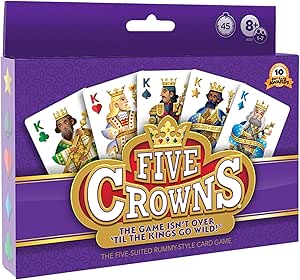 | Best for Hand-Management Strategy | Players: 2–7 | Recommended age: 8 years and up | Game style: Rummy-style card game | VIEW ON AMAZON | See Our Full Breakdown |
| Beat The Heat Game | Family Party Card Game for Kids and Adults | Ages 8+ | 2-10 Players | 20 Minutes | Easy to Learn Strategy Card Game |  | Best for Large, Mixed-Age Groups | Players: 2–10 | Recommended age: 8+ | Play time: 20 minutes | VIEW ON AMAZON | See Our Full Breakdown |
| Unstable Games Here to Slay Base Card Game |  | Best for Fantasy-Themed Party Strategy | Players: 2–6 | Recommended age: 10+ | Listed playing time: 15 minutes | VIEW ON AMAZON | See Our Full Breakdown |
| USAOPOLY Flip 7 Card Game |  | Best for Push-Your-Luck Decisions | Players: 3+ | Recommended age: 8+ | Playing time: 20 minutes | VIEW ON AMAZON | See Our Full Breakdown |
| PAYBACK Original Edition – Family Card Game with Strategy, Betrayal & Chaos |  | Best for Fast, Social Rounds | Players: 2–6 | Game duration: About 10 minutes per round | Learning curve: 2 minutes | VIEW ON AMAZON | See Our Full Breakdown |
| Twisted Cryptids Base Game |  | Best for Hidden-Trait Tactics | Players: 2–4 | Playing time: 60 minutes | Age range: 10+ | VIEW ON AMAZON | See Our Full Breakdown |
| Coup Card Game |  | Best for Bluffing and Table Psychology | Players: 2–6 | Age range: 10 years and up | Game type: Bluffing, social deduction, strategy | VIEW ON AMAZON | See Our Full Breakdown |
| Doomlings Vintage Edition Base Card Game |  | Best for Card-Ability Strategy | Players: 2–6 | Recommended age: 8 years and up | Playing time: 20–45 minutes | VIEW ON AMAZON | See Our Full Breakdown |
| SWOOP Card Game | Fun for Family & Friends | Easy to Learn & Play | Ages 7+ | 3-8 Players |  | Best for Larger Casual Groups | Players: 3–8; up to 12 with expansion | Recommended age: 7+ | Number of cards: 162 | VIEW ON AMAZON | See Our Full Breakdown |
| strategy card games for adult | Players | Recommended age | Included components |
|---|---|---|---|
| Hasbro Gaming Risk Strike Card | 2–5 | 10+ | Cards, dice, domination coins, tactic cards |
| Oh Crud Deluxe Edition Card an | 2–12 | 8 years and up | 2 card decks, 2 dice, scorepad, quick reference cards, instruction booklet |
| Overlap Strategy Card Game for | 2–8 | 8 years and up | Cards |
| TACTA Strategic Shape-Matching | 2 or more | 7 years and up | 109 cards and rules |
| Five Crowns Rummy-Style Card G | 2–7 | 8 years and up | Cards and rulebook |
| Beat The Heat Game | Family Pa | 2–10 | 8+ | — |
| Unstable Games Here to Slay Ba | 2–6 | 10+ | — |
| USAOPOLY Flip 7 Card Game | 3+ | 8+ | 94 cards and rules |
| PAYBACK Original Edition | 2–6 | — | — |
| Twisted Cryptids Base Game | 2–4 | — | One board game |
| Coup Card Game | 2–6 | — | Card game |
| Doomlings Vintage Edition Base | 2–6 | 8 years and up | 1 mystery holofoil card, 167 unique cards, official rulebook |
| SWOOP Card Game | Fun for Fami | 3–8; up to 12 with expansion | 7+ | — |
More Details on Our Top Picks
Hasbro Gaming Risk Strike Cards and Dice Game for Adults, Teens, and Kids
Risk Strike earns my lead spot for adults who want recognizable conquest strategy without committing to a long campaign. In roughly 20 minutes, players use cards and dice to pursue continents, deploy tactics, and collect domination coins, so choices matter but luck still has a say. Compared with Five Crowns, which builds its strategy around hand management across many rounds, Risk Strike puts the focus on direct competition and territory goals. Its 2–5 player range also makes it more of a small-table contest than a large-group party game. The tradeoff is depth: fans of the original Risk may find this streamlined version too brief, and players looking for a purely skill-driven contest may dislike the dice. I’d choose it for casual adults who want compact, accessible conflict.
Pros:- Conquest, tactics, and domination coins give the short game clear strategic goals.
- Around 20 minutes makes it easier to fit into a casual game night than a full-length Risk session.
- Supports 2–5 players, including smaller groups.
- Cards, dice, and coins provide varied ways to engage with the world-domination theme.
Cons:- Streamlined rules and short playtime offer less strategic depth than original Risk.
- Dice introduce luck that can blunt careful planning.
- The 2–5 player limit is less flexible for larger gatherings than Oh Crud Deluxe Edition.
Best for: Adults and families who want a short, accessible territory game with tactical choices and direct player competition.
Not ideal for: Strategy enthusiasts seeking a long, layered campaign or players who want outcomes driven mainly by planning rather than dice.
- Players:2–5
- Average play time:About 20 minutes
- Recommended age:10+
- Game style:Card and dice conquest game
- Key objective:Conquer continents and collect domination coins
- Tactical element:Tactic cards
- Included components:Cards, dice, domination coins, tactic cards
Our verdict“Choose Risk Strike if you want a quick, casual strategy contest built around conquest, but skip it if you expect original Risk’s longer tactical arc.”
Oh Crud Deluxe Edition Card and Dice Game
Oh Crud Deluxe Edition is the most group-flexible pick here: it accommodates 2–12 players, while Risk Strike tops out at five and Five Crowns at seven. Its trick-taking card play paired with dice gives a table several ways to make decisions, making it a better fit for mixed-size gatherings than a focused head-to-head strategy game. The quick reference cards and QR tutorial can help new players get started without relying on one person to teach every rule. That broad reach comes with a tradeoff: the supplied details give less evidence of layered strategy than Risk Strike’s explicit conquest and tactic-card choices. The components are also primarily cardstock, rather than rigid pieces, so it may need gentler handling during frequent travel or party use. I’d pick it when player count matters most.
Pros:- The 2–12 player range suits gatherings larger than the other reviewed games.
- Trick-taking and dice combine familiar card decisions with another gameplay element.
- Quick reference cards and a QR tutorial support easier onboarding.
- Compact components suit travel and party-game storage.
Cons:- Cardstock components may show wear sooner than more rigid pieces.
- Its broad group appeal may be a weaker fit for players seeking concentrated, high-depth strategy.
- The product information does not specify an average play time.
Best for: Hosts who want one portable card-and-dice game that can include both a small table and a large party.
Not ideal for: Buyers prioritizing a deeply tactical adult contest or sturdy, rigid components for heavy repeated use.
- Players:2–12
- Recommended age:8 years and up
- Game type:Trick-taking card and dice game
- Included components:2 card decks, 2 dice, scorepad, quick reference cards, instruction booklet
- Material:Primarily cardstock
- Edition:Deluxe
- Model year:2025
Our verdict“Choose Oh Crud Deluxe Edition when accommodating up to 12 players matters more than maximizing strategic depth or component durability.”
Overlap Strategy Card Game for 2–8 Players
Overlap stands apart by making the placement of a card part of the decision: players shed cards while judging how shapes overlap. That spatial element gives adults who enjoy visual puzzles a different kind of strategic challenge from Risk Strike’s territorial conflict or Five Crowns’ sets and sequences. Its under-two-minute rules and 2–8 player count make it easy to introduce at a casual gathering without giving up the spatial twist. The tradeoff is that a quick visual judgment may be less satisfying for players who prefer planning several moves ahead, and the cards’ small listed dimensions could make handling less comfortable for some. I’d choose Overlap for a light, portable strategy game with a distinct visual hook, not for a deep, extended contest.
Pros:- The overlap mechanic adds spatial reasoning to familiar card shedding.
- Rules are designed to be learned in under two minutes.
- Supports 2–8 players, including both pairs and larger groups.
- Lightweight, compact format suits travel.
Cons:- Judging card overlaps may feel fiddly or visually demanding for some players.
- The listed 3.5 × 2.5-inch dimensions may be small for players who prefer larger cards.
- Its quick, accessible style may not satisfy adults seeking sustained strategic depth.
Best for: Adults who enjoy spatial puzzles and want a fast-to-teach shedding game that works for two players or a group.
Not ideal for: Players who prefer long-term tactical planning, or anyone who finds small cards awkward to handle.
- Players:2–8
- Recommended age:8 years and up
- Game type:Party and strategy card game
- Core mechanic:Shedding cards based on how they overlap
- Included components:Cards
- Card dimensions:3.5 × 2.5 inches
- Weight:6.4 ounces
- Educational objectives:Strategic thinking and spatial reasoning
Our verdict“Pick Overlap if you want a portable, easy-to-teach game where spatial judgment drives the strategy rather than conquest or hand-building.”
TACTA Strategic Shape-Matching Card Game
TACTA suits adults who want a visual, turn-by-turn puzzle rather than Risk Strike’s theme of territorial conquest. Players flip, twist, and align cards to match shapes and cover opponents’ patterns, with the expanding board creating new layouts as play develops. Its roughly 20-minute playing time and quick-to-learn premise make it approachable for a casual session, while the need to match and cover patterns gives moves a competitive purpose. Compared with Overlap, TACTA’s emphasis is more on shape matching and covering an evolving layout than shedding cards through overlap judgments. That focus will not suit everyone: it requires at least two players and offers little appeal to adults who prefer bluffing, hand management, or thematic conflict. I’d choose it for visual pattern tacticians.
Pros:- Flip, twist, and align actions create tactical choices from shape matching.
- Covering opponents’ patterns gives the expanding board a direct competitive element.
- About 20 minutes suits casual play sessions.
- Supports two or more players.
Cons:- Requires at least two players, so it cannot serve as a solo game.
- The shape-matching focus may not appeal to players seeking more varied strategic mechanics.
- Its listed package dimensions are unusually thin, which may make storage or component expectations less intuitive.
Best for: Adults who enjoy visual pattern puzzles and want a short competitive game based on positioning, matching, and blocking.
Not ideal for: Solo players or adults who prefer card games centered on bluffing, negotiation, or traditional hand management.
- Players:2 or more
- Recommended age:7 years and up
- Playing time:About 20 minutes
- Included components:109 cards and rules
- Materials:Paper and plastic
- Language:English
- Package dimensions:5.5 × 1.5 × 0.1 inches
- Item weight:11.68 ounces
Our verdict“Choose TACTA if visual matching and blocking are the kind of quick tactical decisions you enjoy; pass if you want a more thematic or social strategy game.”
Five Crowns Rummy-Style Card Game
Five Crowns is the strongest fit here for adults who like the familiar logic of rummy but want a changing hand-management puzzle. Across 11 rounds, players form sets and sequences while rotating wild cards alter which combinations are possible; the lowest score wins. That repeated structure gives it a more sustained arc than Overlap’s quick spatial shedding, while its 2–7 player range covers more group sizes than Risk Strike. The tradeoff is that card draws bring luck into the strategy, so careful choices cannot control every result. It is also less direct than a conquest game: competition comes through scoring and hand-building rather than fighting over territory. I’d choose it for casual adults who enjoy adapting their plans from round to round, not players seeking a purely tactical duel.
Pros:- Sets and sequences provide familiar, easy-to-grasp strategic goals.
- Rotating wild cards change which combinations are useful from round to round.
- The 11-round structure gives the game a longer arc than a single quick shedding contest.
- Supports 2–7 players and uses a compact card format suited to travel.
Cons:- Card draws add luck that can limit the effect of planning.
- Eleven rounds may feel like a commitment to players seeking a very short game.
- The indirect scoring contest may be less compelling than Risk Strike’s direct conquest theme.
Best for: Adults who enjoy rummy-style set collection and adapting hand plans over multiple rounds, with room for up to seven players.
Not ideal for: Players who want a short, direct conflict game or dislike luck affecting which card combinations are available.
- Players:2–7
- Recommended age:8 years and up
- Game style:Rummy-style card game
- Game length:11 rounds
- Objective:Form sets and sequences; lowest score wins
- Deck features:Two decks, five suits including stars, no aces or twos
- Included components:Cards and rulebook
- Brand:PlayMonster
Our verdict“Choose Five Crowns if you want approachable, multi-round hand management with changing wild cards and accept some luck in the outcome.”
Beat The Heat Game | Family Party Card Game for Kids and Adults | Ages 8+ | 2-10 Players | 20 Minutes | Easy to Learn Strategy Card Game
Beat The Heat earns its place for adult game nights where the group size and range of ages matter more than intricate rules. Players add number cards to rows while trying to score the fewest points, creating a simple push-and-pull between taking a safe move and avoiding a costly one. Its support for 2–10 players makes it more flexible for gatherings than Here to Slay, which caps at six, and the stated 20-minute playtime suits a quick round between other activities. The tradeoff is a deliberately light strategy ceiling: adults seeking layered card play may find it less demanding than Twisted Cryptids. I’d choose it for easy group participation, not for a game night built around long-term planning or complex tactics.
Pros:- Accommodates groups of 2–10 players, wider than Here to Slay’s stated 2–6 range
- Simple row-and-number objective makes the basic strategy approachable
- Around 20 minutes per game fits into a busy gathering
- Portable design suits travel and casual get-togethers
Cons:- Its accessible rules may feel too simple for adults seeking deeper strategy
- Short sessions may leave groups wanting a more involved game
Best for: Adults hosting family or social gatherings with a wide age range and up to ten players who want quick, accessible decisions.
Not ideal for: Strategy enthusiasts looking for complex card interactions, long-term planning, or a substantial challenge from each session.
- Players:2–10
- Recommended age:8+
- Play time:20 minutes
- Game type:Strategy card game
- Based on:Take 5 classic card game
- Core objective:Score the fewest points by adding number cards to rows
Our verdict“Choose Beat The Heat for fast, approachable strategy with a mixed-age group, but pick Twisted Cryptids if your adults’ game night needs more tactical depth.”
Unstable Games Here to Slay Base Card Game
Here to Slay suits adults who want a recognizable fantasy adventure layered onto a competitive card game. Building a party of heroes, using items and magic, and battling monsters gives players several ways to pursue a win, while the custom dice add a chance-driven element to the card decisions. That mix gives it more theme-led variety than Beat The Heat’s number-row play, though players who prefer hidden information and bluffing may find Twisted Cryptids a closer fit. The main compromise is audience fit: the fantasy role-playing theme is central, not decorative, so it may not land with every group. Playtime is also unclear in the supplied details, which list 15 minutes in the specs but 30–60 minutes in the description.
Pros:- Party-building and monster battles give card decisions a clear fantasy goal
- Items, magic, and heroes offer different ways to shape a turn
- Custom dice add variety beyond card-only play
- Supports groups of 2–6 players
Cons:- Fantasy role-playing theme may not suit every adult group
- Listed playtime conflicts: the specs say 15 minutes while the description gives 30–60 minutes
- Dice introduce randomness alongside strategic card choices
Best for: Adults who enjoy fantasy themes and want party-building, monster battles, and tactical choices for a group of two to six.
Not ideal for: Groups that dislike fantasy role-playing themes, want a reliably short session, or prefer strategy with little dice-driven uncertainty.
- Players:2–6
- Recommended age:10+
- Listed playing time:15 minutes
- Language:English
- Components:Cards and custom dice
- Material:Paper
- Game type:Fantasy strategy card game
- Model year:2020
Our verdict“Pick Here to Slay if your group wants fantasy party-building and battles, while groups seeking subtler hidden-information play may prefer Twisted Cryptids.”
USAOPOLY Flip 7 Card Game
Flip 7 makes the risk decision the center of its strategy: keep turning over cards for a higher score, or bank points before a duplicate number ends the run. That choice is easy to teach but gives adults room to weigh memory, risk tolerance, and timing. Action and modifier cards, including Flip Three, Freeze, and Second Chance, can change how a round unfolds, making this more varied than the straightforward row management in Beat The Heat. The tradeoff is that luck remains prominent; a sound decision can still be undone by a duplicate. It also requires at least three players, so it is less flexible than Here to Slay for smaller groups. I’d pick it for lively, quick rounds rather than sustained tactical planning.
Pros:- Bank-or-risk decisions give players a clear strategic choice each turn
- Action and modifier cards vary the basic push-your-luck loop
- Quick to learn and teach to a casual group
- Memory and decision-making are built into the play
Cons:- Requires at least three players
- A duplicate card can end a run even after careful play
- Luck can outweigh planning in a given round
Best for: Adults who enjoy quick risk-versus-reward choices, light memory demands, and group games with three or more players.
Not ideal for: Two-player households or strategy-focused players who want outcomes driven more by planning than by card draws.
- Players:3+
- Recommended age:8+
- Playing time:20 minutes
- Included components:94 cards and rules
- Material:Paper
- Language:English
- Educational objectives:Memory, strategic thinking, and decision-making
- Container type:Box
Our verdict“Choose Flip 7 for brisk group play built around risk and timing, but choose Here to Slay if you want more theme-led card combinations.”
PAYBACK Original Edition – Family Card Game with Strategy, Betrayal & Chaos
PAYBACK Original Edition is the pick for adults who want quick decisions and table talk without committing to a long strategy session. Its rounds take about 10 minutes, and the learning curve is listed at two minutes, making it easier to bring to a party than Here to Slay, whose stated playtime is inconsistent. The game mixes strategy with betrayal, chaos, and luck, so the appeal is social friction and quick reactions rather than careful optimization. Its compact magnetic box and tarot-sized cards also make it a more travel-minded choice than a game built around a board. That portability comes with limits: it only supports two to six players, and the luck factor may frustrate adults who want skill to decide most outcomes.
Pros:- About 10 minutes per round makes it easy to fit into a social evening
- Listed two-minute learning curve lowers the barrier for new players
- Magnetic box and tarot-sized cards suit travel
- Betrayal and humorous art encourage lively table interaction
Cons:- Simple play may not satisfy adults seeking complex strategy
- Supports only 2–6 players, limiting its fit for larger parties
- Luck can affect outcomes alongside player decisions
Best for: Adults looking for portable, fast rounds with playful betrayal for family nights, travel, or casual parties of up to six.
Not ideal for: Competitive strategy players who want deep planning, a large-group format, or outcomes controlled mainly by skill.
- Players:2–6
- Game duration:About 10 minutes per round
- Learning curve:2 minutes
- Materials:Magnetic box and tarot-sized cards
- Art style:Hand-drawn MS Paint art
- Suitable for:Teens, adults, families, and travel
Our verdict“Choose PAYBACK for compact, quick social play with a little betrayal, but choose Twisted Cryptids if your group wants a longer hidden-trait strategy game.”
Twisted Cryptids Base Game
Twisted Cryptids is the strongest fit here for adults who want a more tactical contest built around bluffing and reading opponents. Players use hoaxes, decoys, and hidden traits to build their cryptid’s legend and outwit rivals, giving each move a layer of uncertainty that Beat The Heat’s open number-row decisions do not offer. It also contrasts with Here to Slay: rather than assembling a fantasy party and fighting monsters, the focus is on concealed information and take-that play. The tradeoff is a tighter player range of two to four and a listed 60-minute session, a bigger commitment than the shorter games in this batch. Direct attacks may also be a poor match for groups that prefer cooperative or low-conflict play.
Pros:- Hidden traits and decoys reward reading opponents as well as planning
- Take-that mechanics create direct interaction between players
- Cryptid meeples and tarot-sized cards support the game’s theme
- Easy-to-learn format gives the strategic choices a low rules barrier
Cons:- The 2–4 player limit excludes larger groups
- Listed 60-minute playtime is longer than the other games in this batch
- Competitive take-that moves may frustrate players who prefer low-conflict play
Best for: Adults who enjoy bluffing, hidden information, and direct competition in a smaller group of two to four.
Not ideal for: Large groups, players wanting a quick filler game, or friends who dislike take-that mechanics and direct conflict.
- Players:2–4
- Playing time:60 minutes
- Age range:10+
- Included components:One board game
- Material:Paper
- Game type:Base game
- Brand:Unstable Games
Our verdict“Choose Twisted Cryptids for a longer, bluff-heavy adult strategy session, but opt for PAYBACK if your group wants quicker and more portable rounds.”
Coup Card Game
Coup is my pick for adults who want strategy built around reading people, not just optimizing cards. Players claim roles to take actions, while rivals can challenge those claims; choosing when to bluff, call a bluff, or stay quiet gives a small hand of cards outsized tension. Compared with Doomlings Vintage Edition, which centers on building a species through card abilities, Coup makes the group itself the main strategic puzzle. Its simple turn structure also gets new players involved quickly, and the compact card-only format is easy to bring along. The tradeoff is direct: bluffing and confrontation drive the game, so it is a weaker fit for players who dislike calling out friends or being targeted. With only a card game listed as included, it also offers less variety in components than Doomlings.
Pros:- Straightforward turn structure makes the core choices quick to learn
- Hidden roles give players reasons to watch opponents as well as their own options
- Bluffing and challenges create high interaction from a compact card game
- Shifting alliances support replayability across repeat sessions
Cons:- The experience depends heavily on players enjoying bluffing and direct confrontation
- Players who are targeted early may have less influence on the rest of a round
Best for: Adults who enjoy reading opponents, making calculated bluffs, and playing short, interactive rounds with a group of 2–6.
Not ideal for: Players who prefer strategy based on private planning rather than direct challenges, bluffing, and shifting alliances.
- Players:2–6
- Age range:10 years and up
- Game type:Bluffing, social deduction, strategy
- Material:Cardboard
- Included components:Card game
- Brand:Indie Boards & Cards
- Model:COU1IBC
Our verdict“Choose Coup if you want a portable adult strategy game where reading the table matters more than building a hand of card abilities.”
Doomlings Vintage Edition Base Card Game
Doomlings is the strongest fit here for players who want to build a strategy through card combinations rather than rely mainly on bluffing. Across multiple rounds, players develop species by playing traits and abilities, so each choice contributes to a changing plan. Its 167 unique cards offer more ability variety than Coup, whose smaller-scale tension comes from role claims and challenges instead of species construction. A stated 20–45 minute playtime keeps the session manageable, while support for 2–6 players gives it flexibility for a casual game night. The vintage edition also includes holofoil characters and a mystery holofoil card, adding collectible appeal. The compromise is that disruptive effects such as stealing or discarding can interrupt a carefully built approach, and the age recommendation of 8+ means it is not designed exclusively for adult groups.
Pros:- 167 unique cards provide a broad range of traits and abilities
- Species-building gives players decisions that develop across multiple rounds
- 20–45 minute playtime suits a casual session without requiring a long game night
- Supports 2–6 players and includes holofoil cards
Cons:- Stealing and discarding effects can disrupt a plan built over several turns
- The 8+ age recommendation may make the game feel more family-oriented than adult-focused
- Its card-combination strategy offers less direct social deduction than Coup
Best for: Adults who enjoy adapting card combinations across rounds and want a medium-length strategy game that can also include younger players.
Not ideal for: Players seeking a strictly adult, low-conflict experience or a game centered on bluffing and reading opponents rather than card abilities.
- Players:2–6
- Recommended age:8 years and up
- Playing time:20–45 minutes
- Cards:167 unique cards
- Included components:1 mystery holofoil card, 167 unique cards, official rulebook
- Material:Cardboard
- Edition:Vintage Edition
Our verdict“Pick Doomlings if you want a flexible, ability-driven card game with evolving plans and do not mind disruptive effects or a family-friendly age range.”
SWOOP Card Game | Fun for Family & Friends | Easy to Learn & Play | Ages 7+ | 3-8 Players
SWOOP is the most group-friendly casual pick of these three, with play for 3–8 people and an expansion option that can raise the count to 12. That makes it a more natural match for a crowded gathering than Coup or Doomlings, both of which list a maximum of six players. Its straightforward rules and colorful cards favor quick onboarding, while the three colored decks offer a clear, organized format for social play. The tradeoff is strategic depth: SWOOP is described as easy to learn, and experienced players may find its decisions too simple for a game focused on sustained tactical planning. The expansion is sold separately, so the base game does not provide its larger-group capacity. Its 7+ recommendation also points to a family-and-friends audience rather than an adults-only challenge.
Pros:- Base game supports groups of 3–8, more than Coup or Doomlings
- Easy-to-learn rules make it accessible to mixed-experience groups
- Three colored decks provide a clear, organized card format
- Portable packaging suits travel and informal gatherings
Cons:- Experienced gamers may find the rules and strategic choices too simple
- Play for up to 12 requires a separately sold expansion
- The 7+ age recommendation makes it less specifically adult-oriented than Coup
Best for: Adults hosting casual gatherings with 3–8 players who want a quick, approachable card game that younger family members can also join.
Not ideal for: Experienced strategy gamers seeking layered decisions, or hosts who regularly need capacity beyond eight players without buying an expansion.
- Players:3–8; up to 12 with expansion
- Recommended age:7+
- Number of cards:162
- Decks:3
- Deck colors:Blue, red, green
- Expansion:Sold separately; supports play for up to 12
Our verdict“Choose SWOOP for a larger, casual mixed-age group that values easy entry over the deeper bluffing of Coup or card-building choices of Doomlings.”

How We Picked
I compared these games by the kind of strategy they ask adults to use: bluffing and psychology, tactical choices, hand management, pattern recognition, or risk-taking. I also weighed how easily a mixed-experience group can learn the rules, whether the stated player count suits common game-night sizes, and how much replay comes from changing decisions rather than relying on novelty alone.
The order favors games with a clear adult-facing decision hook and a strong fit for their intended group, not simply the broadest audience. Coup ranks first for combining accessible rules with meaningful social reads. Risk Strike and Overlap follow for more tactical or flexible play, while lighter, luck-forward, or family-oriented options rank lower for buyers specifically seeking adult strategy. This does not make them poor choices; it means their strengths serve different priorities.
Factors to Consider When Choosing Strategy Card Games For Adults
Before choosing, decide what kind of thinking you want the game to reward. Adult strategy can mean anticipating a bluff, managing a hand, building a pattern, or judging when to take a risk; those experiences do not feel interchangeable at the table.
Choose the Kind of Strategy Your Group Enjoys
Start with the decisions players will make repeatedly, rather than a game’s theme or the word “strategy” on its packaging. Bluffing games ask players to read behavior and tolerate confrontation, while pattern and hand-management games reward close attention without requiring much table talk. Tactical conflict can feel satisfying to competitive groups but may frustrate people who dislike targeting or losing ground to opponents. A common mistake is choosing the most strategically demanding format when the group actually wants a relaxed conversation game. Match the decision style to your regular players, not just the person buying the box. If tastes vary, favor games where the rules stay approachable even when the decisions get interesting.
Match Player Count to Your Usual Table
Check the listed player range against the number of people who will actually sit down, then ask whether the interaction still suits that group size. Bluffing and direct conflict often depend on opponents watching one another, while a larger table can make turns slower or reduce each player’s influence. A broad player-count range is useful only if the game’s pace and interaction remain enjoyable at both ends. Avoid buying for an occasional maximum-sized gathering if most sessions are two or three players. Consider whether the game needs an even number, a moderator, or a particular group dynamic before committing. For uncertain attendance, a flexible game can be more useful than one with deeper play but a narrow sweet spot.
Balance Learning Time Against Decision Depth
Easy-to-teach rules help a game reach the table, but simple rules do not always mean shallow choices. Look for a difference between rule complexity and strategic depth: a compact bluffing game can generate layered decisions, while a longer rules explanation may lead to repetitive turns. If your group includes newcomers, a game that teaches in a few minutes can leave more of the evening for play. On the other hand, experienced players may want decisions that evolve as they learn opponents or develop new tactics. Do not rely only on age labels or “easy to learn” claims to predict adult appeal. Think about whether your group enjoys mastering a system over repeated sessions or prefers fresh, immediate rounds.
Decide How Much Luck Is Welcome
Cards and dice bring uncertainty, which can keep a casual game lively but can also soften the payoff from careful planning. Ask whether your group likes adapting to an unexpected draw or wants choices to have a steadier, more predictable effect. Push-your-luck play often creates dramatic reversals, making it a good fit for social groups that value suspense over control. Players seeking a stronger sense of agency may prefer games centered on bluffing, hand management, or tactical choices. A frequent buying mistake is treating randomness as a flaw in every strategy game; for many groups, it keeps rounds from feeling solved. The right balance depends on whether your table enjoys risk or resents it.
Think About Confrontation and Social Psychology
Some games make opponents’ behavior part of the puzzle, while others let players focus on their own cards and plans. Psychological play can create memorable moments, but it asks players to bluff, challenge, or sometimes target friends directly. That dynamic suits groups who enjoy playful suspicion and can separate game conflict from real disagreement. If your group prefers low-pressure competition, favor pattern-building or hand-focused choices rather than assuming direct interaction makes a game more strategic. Consider how well players know one another, especially when introducing bluffing to a mixed group. The most engaging social game is not always the most comfortable choice for every gathering.
Pay for Replay and Fit, Not a Bigger Pitch
When comparing editions or more elaborate games, ask what changes across repeated plays: new decisions, varied player interaction, or simply extra components. A premium option makes sense when its added systems or production improve the experience your group wants often. A compact, lower-commitment game may deliver better practical value if it is easier to teach and gets played more regularly. Check whether expansions or extra pieces are needed for the full experience, and whether storage and setup suit your space. Do not assume a larger box means deeper strategy or a better fit for adults. The best purchase is the one that matches your group’s habits well enough to return to the table.
Frequently Asked Questions
Which game here is the best fit for adults who enjoy bluffing and reading people?
Coup is my lead choice for a group that enjoys bluffing, challenging claims, and judging opponents’ behavior. Its appeal comes from social decisions rather than a long rules system, so it can suit game nights where people want interaction without a lengthy setup. If your group dislikes direct deception or calling out friends, that same feature may feel uncomfortable rather than fun. In that case, a pattern-focused option such as TACTA offers a less confrontational kind of challenge. Pick based on the table’s appetite for suspicion, not just strategic ambition.
Which games are better for a mixed group of beginners and experienced players?
Look for a game with rules that are quick to explain but still leaves room for better decisions after several rounds. Coup can suit that mix when everyone is comfortable with bluffing, while Five Crowns offers a more familiar rummy-style approach for players who prefer card patterns to social pressure. A game with a steep rules explanation can leave newcomers watching rather than taking part. Conversely, an extremely luck-led choice may not hold the interest of experienced players for long. Before buying, consider whether your group enjoys learning through play or wants a guided first session.
Should I choose a game with more players or one with deeper decisions?
Choose based on your regular gathering, since a high player limit does not automatically make a game better for smaller tables or more strategically rich. Overlap is a notable option when group-size flexibility matters, while a more focused game can offer tighter interaction for a consistent small group. Large tables can add social variety but may also increase downtime or make individual choices feel less influential. Think about how often your attendance changes and how long your group is willing to wait between turns. If most nights have a stable headcount, prioritize the experience at that count over the widest listed range.
Are casual, family-oriented games still worthwhile for an adult game night?
Yes, if the group values quick teaching, lively rounds, or a relaxed social atmosphere more than sustained tactical planning. Games such as Flip 7 and Beat The Heat lean toward accessible play, which can help mixed-age or mixed-experience groups get started quickly. That does not make them substitutes for the more psychologically or tactically focused choices in this roundup. Adults seeking a game to study and refine may want a different style. Choose a lighter option when ease and shared fun matter more than control over the outcome.
What should I pick if my group dislikes direct conflict but still wants strategy?
Favor games built around hand choices, matching, or pattern recognition rather than bluffing, betrayal, or territorial competition. Five Crowns and TACTA offer alternatives for players who want to focus on their own decisions without constantly targeting opponents. These styles still involve planning, but the tension comes from managing options rather than challenging another player’s honesty. Check whether the group enjoys changing goals or prefers a steadier puzzle before deciding between them. A lower-conflict game can be strategically engaging without making table talk adversarial.
Conclusion
Best overall: I recommend Coup for adults who want compact rules and meaningful psychological play. Best value: Five Crowns is a practical choice for groups that want familiar, repeatable hand-management play without a confrontational tone. Best for beginners: Flip 7 suits casual groups who put quick learning and lively rounds first. Best for tactical competition: choose Risk Strike if territory conflict and dice-driven uncertainty sound appealing. Best for flexible group sizes: consider Overlap; for lower-conflict pattern play, look at TACTA. My final advice is to choose the decision style your group will enjoy repeating, not the game that merely sounds most strategic.
Fall Picks

DJI Osmo Action 4 Essential Combo Waterproof Action Camera
As an affiliate, we earn on qualifying purchases.