
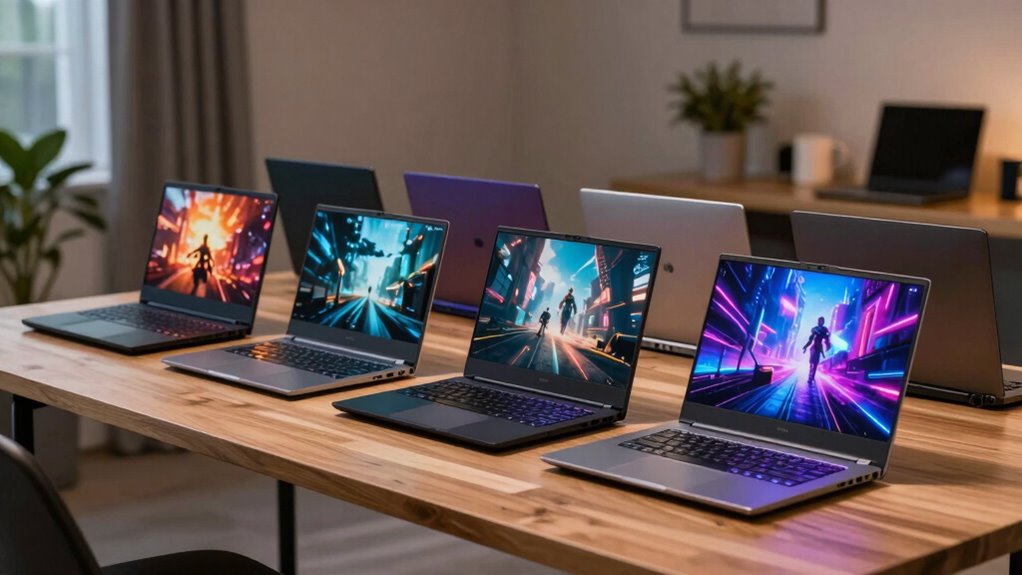

Finding a travel friendly gaming laptop requires balancing raw power against the physical burden of carrying heavy hardware. The MSI Cyborg 15 stands out as the best overall pick for most travelers, offering a rare combination of RTX 5060 graphics and a slim chassis that fits easily into standard carry-on bags. For budget-conscious gamers, the NIMO 15.6″ FHD IPS provides impressive integrated graphics performance without the weight penalty of a dedicated GPU. However, buyers must navigate significant tradeoffs, particularly between battery efficiency and sustained gaming performance under thermal constraints. Continue reading to see how these seven models stack up against specific travel scenarios and packing constraints.

Get travel and outdoor gear delivered free with Prime
- Fast, free delivery on millions of items
- Prime Video, Amazon Music and more included
- Member-only deals all year
Complete the kit



Key Takeaways
- The MSI Cyborg 15 offers the best balance of dedicated GPU power and sub-5lb weight, making it the primary choice for frequent flyers.
- Integrated graphics options like the NIMO 15.6″ are superior for battery life during transit but lack the headroom for AAA titles at high settings.
- The Acer Nitro V 16S provides the largest screen real estate in this group but demands a larger backpack, reducing its suitability for minimalists.
- Thermal throttling is a common issue in thin-and-light designs; the Lenovo 15 and MSI Cyborg manage heat better than the ASUS ROG Strix G16 under sustained loads.
- RAM upgradability is limited on several slim models, so opting for 16GB or 32GB at purchase is safer than relying on future expansions.


| travel friendly gaming laptop | Processor | Graphics | Storage | Display |
|---|---|---|---|---|
| Lenovo 15 Gaming Laptop | AMD Ryzen 5 7535HS | Integrated AMD Radeon 660M | 256GB PCIe SSD | 15.3" FHD+ IPS (1920×1200), 60Hz |
| NIMO 15.6" FHD IPS Light Gamin | AMD Ryzen 7 (8 cores, up to 4.75 GHz) | Integrated AMD Radeon 680M | 512GB SSD | 15.6" FHD IPS, 180° hinge |
| Acer Nitro V 16S AI Gaming Lap | AMD Ryzen 7 260 | NVIDIA GeForce RTX 5060 (8GB GDDR7) | 1TB PCIe Gen 4 SSD | 16" WUXGA IPS, 180Hz, 100% sRGB |
| MSI Cyborg 15 Thin & Light Gam | Intel Core i5-210H | NVIDIA GeForce RTX 5060 | 512GB SSD | 15.6" FHD IPS, 144Hz |
| 2026 Flagship 15.6" Gaming Lap | AMD Ryzen 7 6800H (8C/16T) | Integrated AMD Radeon 680M | 512GB NVMe SSD | 15.6" FHD IPS, 450 nits, 100% sRGB |
| ASUS ROG Strix G16 Gaming Lapt | Intel Core i7-14650HX | NVIDIA GeForce RTX 5060 Laptop GPU | 1 TB PCIe Gen 4 SSD | 16-inch FHD+ (1920×1200), 165Hz |
| Gaming Laptop N95 Gray | Intel 12th Gen Celeron N95 | Integrated Intel UHD Graphics | 512GB SSD | 15.6-inch Full HD IPS |
More Details on Our Top Picks
Lenovo 15 Gaming Laptop, AMD Ryzen 5 7535HS, 8GB DDR5, 256GB PCIe SSD
This Lenovo model prioritizes weight savings over raw power, making it a distinct choice for travelers who rarely play graphically demanding titles. Unlike the Acer Nitro V 16S AI, which carries a dedicated GPU and heavier chassis, this laptop relies on integrated Radeon 660M graphics. That means you will not achieve high frame rates in modern AAA games, but you gain a significantly lighter footprint for daily commutes. The 8GB RAM is a limiting factor compared to the NIMO 15.6″, which offers double the memory for smoother multitasking. However, if your primary need is a reliable machine for indie games, emulation, or media consumption that slips easily into a small bag, this Lenovo provides a competent, no-frills experience without the bulk of traditional gaming rigs.
Pros:- Extremely lightweight form factor ideal for tight travel bags
- Solid battery efficiency for non-intensive tasks
- Modern connectivity with Wi-Fi 6 and USB-C
- Quiet operation due to lack of high-power discrete GPU
Cons:- 8GB RAM is restrictive for modern multitasking and gaming
- Integrated graphics cannot handle AAA titles at playable settings
- 256GB storage fills up quickly with modern game files
Best for: Students or casual gamers who prioritize light weight and battery life over high-end graphical fidelity.
Not ideal for: Competitive gamers or content creators who need dedicated GPU power and ample RAM for heavy workloads.
- Processor:AMD Ryzen 5 7535HS
- Graphics:Integrated AMD Radeon 660M
- RAM:8GB DDR5
- Storage:256GB PCIe SSD
- Display:15.3″ FHD+ IPS (1920×1200), 60Hz
- Connectivity:Wi-Fi 6, Bluetooth 5.3, USB-C, HDMI
- Weight/Dimensions:13.52″ x 9.51″ x 0.7″ (Lightweight)
Our verdict“Choose this if you want a featherweight laptop for light gaming and productivity, accepting lower performance for superior portability.”
NIMO 15.6″ FHD IPS Light Gaming Laptop with AMD Ryzen 7, 16GB RAM, 512GB SSD, Radeon 680M GPU
The NIMO 15.6″ strikes a compelling balance between the entry-level limitations of the Lenovo 15 and the premium price of dedicated GPU machines. With 16GB of DDR5 RAM and the robust Radeon 680M integrated graphics, it handles esports titles and older AAA games far better than the Lenovo’s 8GB configuration. The inclusion of a 512GB SSD removes the storage anxiety common in budget travel laptops. While it lacks the ray-tracing capabilities of the MSI Cyborg 15, the NIMO offers superior multitasking headroom and a more versatile 180° hinge for shared viewing. It is the smart pick for travelers who want genuine gaming capability without paying for a discrete GPU they might not fully utilize.
Pros:- Strong integrated graphics (Radeon 680M) for its class
- Generous 16GB RAM and 512GB storage reduce upgrade needs
- 180° lay-flat hinge adds versatility for sharing screens
- Lightweight chassis with fast USB-C charging
Cons:- Integrated graphics limit high-end AAA gaming settings
- Battery life may drop significantly during sustained gaming
- Limited physical upgrade paths for RAM and storage
Best for: Budget-conscious travelers who want to play esports titles and older AAA games without buying a dedicated GPU.
Not ideal for: Users who need 4K gaming, ray tracing, or professional-grade video editing performance.
- Processor:AMD Ryzen 7 (8 cores, up to 4.75 GHz)
- Graphics:Integrated AMD Radeon 680M
- RAM:16GB DDR5
- Storage:512GB SSD
- Display:15.6″ FHD IPS, 180° hinge
- Battery/Charging:53.58Wh, 100W PD Fast Charging
- Warranty:2 Years
Our verdict“This is the sweet spot for value seekers who need more power than entry-level laptops but don’t require a discrete graphics card.”
Acer Nitro V 16S AI Gaming Laptop | AMD Ryzen 7 260 Processor | NVIDIA GeForce RTX 5060 Laptop GPU (572 AI Tops) | 16″ WUXGA IPS 180Hz Display | 32GB DDR5 | 1TB Gen 4 SSD | Wi-Fi 6 | ANV16S-41-R2AJ
For those who refuse to compromise on visual fidelity while traveling, the Acer Nitro V 16S AI delivers desktop-class power in a portable package. The inclusion of an NVIDIA GeForce RTX 5060 and 32GB of DDR5 RAM places it in a different league than the integrated graphics options like the NIMO or Lenovo. This machine handles ray tracing and high-refresh-rate competitive gaming with ease, thanks to its 180Hz WUXGA display. While it is heavier than the MSI Cyborg 15, the Acer’s larger 1TB SSD and superior thermal design justify the bulk for serious gamers. It is the definitive choice if your travel kit must double as a high-end battle station.
Pros:- Dedicated RTX 5060 GPU enables high-settings AAA gaming and ray tracing
- Massive 32GB RAM and 1TB SSD eliminate bottlenecks
- 180Hz refresh rate provides ultra-smooth competitive gameplay
- Advanced AI acceleration for creative and gaming tasks
Cons:- Heavier and bulkier than integrated-graphics competitors
- Higher power consumption requires frequent charging during gaming
- Premium price point compared to entry-level options
Best for: Serious gamers and content creators who need dedicated GPU power and high refresh rates on the go.
Not ideal for: Minimalist travelers or those who only play casual, low-spec indie games.
- Processor:AMD Ryzen 7 260
- Graphics:NVIDIA GeForce RTX 5060 (8GB GDDR7)
- RAM:32GB DDR5 5600MHz
- Storage:1TB PCIe Gen 4 SSD
- Display:16″ WUXGA IPS, 180Hz, 100% sRGB
- Weight:4.6 pounds
- Connectivity:Wi-Fi 6, Bluetooth, HDMI, USB-C
Our verdict“Select this if you demand high-end graphical performance and multitasking power, accepting the weight tradeoff for uncompromised gameplay.”
MSI Cyborg 15 Thin & Light Gaming Laptop 15.6” FHD 144Hz – RTX 5060, Intel Core i5, 16GB DDR5, 512GB SSD, Wi-Fi 6E, Windows 11
The MSI Cyborg 15 occupies a unique niche: it offers a dedicated RTX 5060 GPU in a chassis lighter and thinner than most gaming laptops. Compared to the heavier Acer Nitro V 16S, the MSI sacrifices some thermal headroom and screen size for a more manageable 4.3-pound weight. The 144Hz display is excellent for competitive shooters, though it falls short of the Acer’s 180Hz fluidity. While the NIMO offers better battery efficiency with its integrated graphics, the MSI is the correct choice if you absolutely need ray tracing capabilities without carrying the bulk of a 16-inch beast. It is a compromise machine that prioritizes portability over maximum sustained performance.
Pros:- Dedicated RTX 5060 in an exceptionally thin and light chassis
- 144Hz refresh rate supports smooth competitive gaming
- Modern Intel Core i5 and 16GB DDR5 RAM handle multitasking well
- Compact 15.6-inch form factor fits standard travel bags easily
Cons:- 512GB storage may require an external drive for large game libraries
- Thinner chassis can lead to higher fan noise under load
- Battery life is likely shorter than integrated-graphics alternatives
Best for: Travelers who need a dedicated GPU for specific games but want to minimize weight and thickness.
Not ideal for: Users who prioritize battery life over gaming power or need a large screen for productivity.
- Processor:Intel Core i5-210H
- Graphics:NVIDIA GeForce RTX 5060
- RAM:16GB DDR5
- Storage:512GB SSD
- Display:15.6″ FHD IPS, 144Hz
- Weight/Thickness:4.3 lbs, 0.87 inches
- Connectivity:Wi-Fi 6E, USB-C, HDMI, RJ45
Our verdict“This is the ideal pick for gamers who require dedicated graphics power but refuse to carry a heavy 16-inch laptop.”
2026 Flagship 15.6″ Gaming Laptop | AMD Ryzen 7 6800H | 24GB DDR5 RAM | 512GB NVMe SSD | 8C/16T Up to 4.7GHz | Wins 11 Pro | Backlit Keyboard Fingerprint | Lightweight 3.5lb | 2-Year Warranty
While the MSI Cyborg 15 focuses on raw GPU power, this 2026 Flagship model emphasizes endurance and thermal stability. Its 57.75Wh battery and efficient AMD Ryzen 7 6800H architecture allow for longer sessions away from outlets, a critical feature for long flights or train rides. The 24GB of RAM is a standout feature, exceeding the standard 16GB found in the NIMO and MSI, which helps with heavy multitasking. However, it relies on integrated Radeon 680M graphics, meaning it cannot match the Acer Nitro V for high-end AAA gaming. This laptop is best suited for travelers who play lighter titles and need a machine that stays cool and quiet during extended productivity work.
Pros:- Large 57.75Wh battery supports extended use away from power
- 24GB RAM offers exceptional multitasking headroom for its class
- Dual fan/dual heat pipe cooling prevents thermal throttling
- Lightweight 3.5lb design with 100% sRGB color accuracy
Cons:- Integrated graphics limit high-end gaming capabilities
- Wi-Fi 5 and Bluetooth 4.2 are older standards compared to competitors
- No dedicated GPU means no ray tracing support
Best for: Frequent travelers who prioritize battery life, thermal comfort, and multitasking over high-end gaming graphics.
Not ideal for: Hardcore gamers who need dedicated GPU performance and high refresh rates for competitive play.
- Processor:AMD Ryzen 7 6800H (8C/16T)
- Graphics:Integrated AMD Radeon 680M
- RAM:24GB DDR5
- Storage:512GB NVMe SSD
- Display:15.6″ FHD IPS, 450 nits, 100% sRGB
- Battery:57.75Wh (Up to 8 hours mixed use)
- Weight:3.5 lbs
Our verdict“Choose this for its exceptional battery life and cooling efficiency, making it perfect for mixed work-and-play travel days.”
ASUS ROG Strix G16 Gaming Laptop
The ASUS ROG Strix G16 prioritizes raw power over portability, making it a performance-first choice for travelers who refuse to compromise on frame rates. With an Intel Core i7-14650HX and RTX 5060, it outpaces integrated graphics options like the NIMO 15.6″ Light Gaming Laptop by a wide margin, enabling AAA titles at high settings. The 16-inch FHD+ 165Hz display offers smooth motion, though the 2.65 kg weight makes it noticeably heavier than ultra-thin competitors. Cooling is robust, featuring a vapor chamber and liquid metal, which keeps thermal throttling at bay during long sessions. However, the 2-hour battery life is a significant drawback for coffee shop workers, requiring you to plan around outlets. It also lacks the premium build feel of some rivals, leaning into a gamer aesthetic with RGB lighting that might clash with professional environments.
Pros:- Strong RTX 5060 performance for AAA gaming
- Advanced cooling system with vapor chamber and liquid metal
- Tool-free access to RAM and SSD for easy upgrades
- High-refresh 165Hz display for smooth gameplay
Cons:- Short 2-hour battery life under load
- Heavier at 2.65 kg compared to thin-and-light rivals
- Gaming-centric design may not suit professional settings
Best for: Travelers who need desktop-class gaming performance and don’t mind carrying extra weight or hunting for power outlets.
Not ideal for: Digital nomads who need all-day battery life or frequent flyers who prefer ultra-light sub-2kg devices.
- Processor:Intel Core i7-14650HX
- Graphics:NVIDIA GeForce RTX 5060 Laptop GPU
- Memory:16 GB DDR5-5600
- Storage:1 TB PCIe Gen 4 SSD
- Display:16-inch FHD+ (1920×1200), 165Hz
- Battery:90 Wh
- Weight:2.65 kg
- Wireless:Wi-Fi 7
Our verdict“Choose this if you prioritize high FPS in AAA games over battery longevity and minimal weight.”
Gaming Laptop N95 Gray
This N95-based laptop is the most affordable ticket into portable computing, targeting users who need light gaming and basic multitasking. It features a 15.6-inch Full HD IPS display and weighs just 3.5 pounds, making it easier to carry than the ASUS ROG Strix G16. The Intel Celeron N95 processor handles web browsing, video streaming, and older or less demanding titles like Minecraft or League of Legends competently. However, it lacks a dedicated GPU, so it cannot run modern AAA games, unlike the Acer Nitro V 16S. The 16GB DDR4 RAM is sufficient for multitasking, but the 512GB SSD may fill up quickly with game installs. Its 180-degree hinge adds utility for sharing screens, but the build quality feels basic compared to premium models. This is a specialist tool for casual users, not a serious gaming machine.
Pros:- Extremely lightweight at 3.5 pounds
- Affordable entry point for basic computing
- Full HD IPS display offers clear visuals
- Includes fingerprint reader and backlit keyboard
Cons:- Celeron N95 processor cannot handle demanding games
- No dedicated graphics card for serious gaming
- Limited storage capacity at 512GB
Best for: Students or casual users who need a lightweight laptop for schoolwork, media, and very light indie gaming.
Not ideal for: Gamers wanting to play modern AAA titles or professionals needing high-performance rendering capabilities.
- Processor:Intel 12th Gen Celeron N95
- Memory:16GB DDR4
- Storage:512GB SSD
- Display:15.6-inch Full HD IPS
- Weight:3.5 pounds
- Hinge:180-degree
- Graphics:Integrated Intel UHD Graphics
Our verdict“Buy this only if your gaming needs are limited to older or less graphically intensive titles.”

How We Picked
To select these seven laptops, I evaluated each model based on three primary pillars: portability metrics, performance-per-pound, and travel durability. Portability was assessed not just by weight, but by chassis thickness and power brick size, as these factors directly impact packing logistics. Performance was judged by the ability to maintain frame rates in modern titles while accounting for the thermal limitations inherent in compact cooling systems.
I also prioritized build quality and input device comfort, recognizing that travel often involves working in non-ergonomic environments like train seats or hotel desks. Models with poor keyboard layouts or flimsy hinges were disqualified, regardless of their internal specs. The final ranking reflects a holistic view of what it means to game on the go, favoring machines that remain functional and comfortable outside a static home setup.
| travel friendly gaming laptop | Graphics |
|---|---|
| Lenovo 15 Gaming Laptop | Integrated AMD Radeon 660M |
| NIMO 15.6" FHD IPS Light Gamin | Integrated AMD Radeon 680M |
| Acer Nitro V 16S AI Gaming Lap | NVIDIA GeForce RTX 5060 (8GB GDDR7) |
| MSI Cyborg 15 Thin & Light Gam | NVIDIA GeForce RTX 5060 |
| 2026 Flagship 15.6" Gaming Lap | Integrated AMD Radeon 680M |
| ASUS ROG Strix G16 Gaming Lapt | NVIDIA GeForce RTX 5060 Laptop GPU |
| Gaming Laptop N95 Gray | Integrated Intel UHD Graphics |
Factors to Consider When Choosing Travel Friendly Gaming Laptops
Choosing a gaming laptop for travel is not simply about picking the lightest option. It involves a complex decision matrix where every gram saved might cost you performance, and every watt of power consumed shortens your time between outlets.The Weight-to-Performance Ratio
Many buyers fixate on the total weight, but power density is a more useful metric. A 4.5lb laptop with an RTX 4060 is generally more valuable for travel than a 3.5lb laptop with an RTX 3050, because the latter may struggle with modern games, forcing you to bring a desktop anyway. I recommend looking for models that use efficient architectures, such as AMD Ryzen 7 or Intel Core Ultra processors, which deliver better performance per watt. This efficiency translates to less heat and smaller cooling solutions, allowing manufacturers to shave off bulk without crippling gaming capabilities. Always check the TDP (Thermal Design Power) of the CPU and GPU; lower TDPs in high-end chips indicate better engineering for mobile use.
Battery Life Beyond Gaming
Gaming laptops are notorious for poor battery life, but for travel, idle battery performance matters more than gaming endurance. You likely won’t game on battery to save power, but you will browse, stream, and work during flights or layovers. Look for models with large battery capacities (70Wh or higher) and efficient display panels, such as those with variable refresh rates or OLED technology that saves power on dark interfaces. The NIMO and Lenovo models in this roundup excel here because they rely on integrated graphics for non-gaming tasks, whereas dedicated GPU models like the ASUS ROG Strix may drain faster even in light use if the GPU isn’t properly suspended. Verify if the laptop supports hybrid graphics modes that automatically switch off the discrete GPU when not in use.
Chassis Rigidity and Hinge Durability
Travel exposes laptops to vibration, bumps, and awkward angles that a desktop replacement never encounters. A thin chassis often sacrifices rigidity, leading to keyboard flex or screen wobble, which is frustrating during long typing sessions in cramped spaces. I advise prioritizing models with aluminum or magnesium alloy bodies over plastic, as they resist torsion better. Check reviews for reports of screen flicker when the lid is adjusted or keys feeling spongy due to chassis flex. The MSI Cyborg and Acer Nitro V 16S tend to offer sturdier builds, but always inspect the hinge mechanism; a loose hinge is a common failure point in budget travel laptops and can render the device unusable after months of packing and unpacking.
Connectivity and Charging Flexibility
Carrying a massive proprietary power brick defeats the purpose of a travel-friendly device. The ideal travel gaming laptop supports USB-C Power Delivery (PD) for charging, allowing you to use a compact GaN charger for work and travel days, reserving the heavy brick only for gaming sessions. Not all gaming laptops support PD charging at full wattage, so verify if the laptop can charge while running high-performance tasks or if it only charges slowly while asleep. Additionally, ensure the laptop has sufficient ports (HDMI, USB-A) so you don’t need to carry dongles. The Lenovo 15 and MSI Cyborg offer good port selection, but always confirm if the USB-C port supports video output for connecting to hotel TVs or monitors, a feature often missing on budget models.
Frequently Asked Questions
Can I realistically game on battery power with these laptops?
Generally, no. Most gaming laptops, including the Acer Nitro V 16S and ASUS ROG Strix G16, drastically reduce performance when unplugged to prevent battery drain, resulting in unplayable frame rates for AAA titles. You should expect to game only when connected to a power source. However, some models with efficient integrated graphics, like the NIMO 15.6″, can handle light indie games or older titles on battery for short periods. If you need on-the-go gaming, consider a handheld device instead, as gaming laptops are fundamentally tethered devices when it comes to high-performance tasks.
Is 8GB of RAM enough for a travel gaming laptop?
In 2027, 8GB of RAM is widely considered insufficient for modern gaming, even on budget titles. Games like Call of Duty or Cyberpunk 2077 often require 16GB minimum to run smoothly without stuttering caused by swapping memory to the SSD. The Lenovo 15 listed here with 8GB is a significant compromise; I strongly recommend upgrading to 16GB immediately if possible, or choosing a model that ships with 16GB or 32GB, such as the NIMO or Acer Nitro V 16S. Insufficient RAM causes frame drops and loading delays, which detracts from the gaming experience regardless of how powerful your GPU is.
Do travel gaming laptops overheat in hot climates?
Yes, thinner chassis have less thermal mass and smaller heat sinks, making them more susceptible to thermal throttling in warm environments. If you travel to tropical or desert regions, expect the fans to run louder and the CPU/GPU to downclock to protect themselves. Models like the MSI Cyborg 15 and Acer Nitro V 16S have decent cooling but may still struggle in ambient temperatures above 85°F (29°C). To mitigate this, use a hard, flat surface for gaming, avoid using the laptop on beds or pillows, and consider a portable laptop cooling pad if you frequently game in warm hotel rooms or outdoor cafes.
Is an OLED screen worth the extra cost for travel gaming?
OLED screens offer superior contrast and color accuracy, which enhances immersion in single-player games and movies. However, they consume more power when displaying bright, static content, which can reduce battery life during work tasks. For travel, the benefit is mostly visual rather than practical. If you prioritize visual fidelity and watch a lot of media on flights, an OLED panel is a nice luxury. But if you need maximum battery life for productivity during transit, an IPS panel like the one on the NIMO or Lenovo 15 is more efficient and less prone to burn-in risks from static UI elements like taskbars or HUDs.
Can I use a travel gaming laptop as my primary daily driver?
Absolutely. Modern travel gaming laptops are powerful enough to handle video editing, coding, and multitasking alongside gaming. The ASUS ROG Strix G16 and Acer Nitro V 16S feature high-core-count CPUs that excel in productivity tasks. The main drawbacks are the heavier weight compared to ultrabooks and potentially shorter battery life during non-gaming tasks. If you are willing to carry an extra pound or two for the versatility of gaming and high-performance computing, these laptops serve well as all-in-one devices. Just ensure the keyboard and trackpad comfort meet your daily work standards, as gaming keyboards can sometimes feel too shallow or loud for office environments.
Conclusion
Choosing the right travel friendly gaming laptop depends on how you define “travel.” If you need a versatile machine that fits in a standard backpack and handles AAA games, the MSI Cyborg 15 is the best overall choice for its balance of power and portability. For those on a tighter budget who primarily play lighter titles or need a device for work with occasional gaming, the NIMO 15.6″ FHD IPS offers excellent value and battery efficiency. If screen size and immersion are your priority and you don’t mind a larger footprint, the Acer Nitro V 16S provides the best visual experience in this group. Beginners should lean toward the Lenovo 15 for its straightforward configuration, while professionals seeking premium build quality and raw power should consider the ASUS ROG Strix G16. Each option serves a distinct traveler profile, so align your choice with your specific packing constraints and gaming habits.