

For Alaska, aim for binoculars with 8x or 10x magnification—8x offers a wider view, while 10x brings closer details. Choose lenses of at least 42mm to gather enough light, especially in low conditions. Prioritize waterproof, fog-proof models for rugged weather, and consider image stabilization for steady viewing. Keep weight in mind; lighter binoculars reduce fatigue during long hikes or boat trips. To discover ideal options tailored for your trip, explore more essential details ahead.
Key Takeaways
- Aim for 8x or 10x magnification for a balance of detail and stability.
- Choose lenses of at least 42mm diameter for better light gathering and clarity.
- Ensure a field of view of at least 300 feet at 1000 yards for easy wildlife spotting.
- Select waterproof, fog-proof, and rugged models to withstand Alaska’s weather conditions.
- Prioritize lightweight, durable binoculars to reduce fatigue during extended outdoor activities.
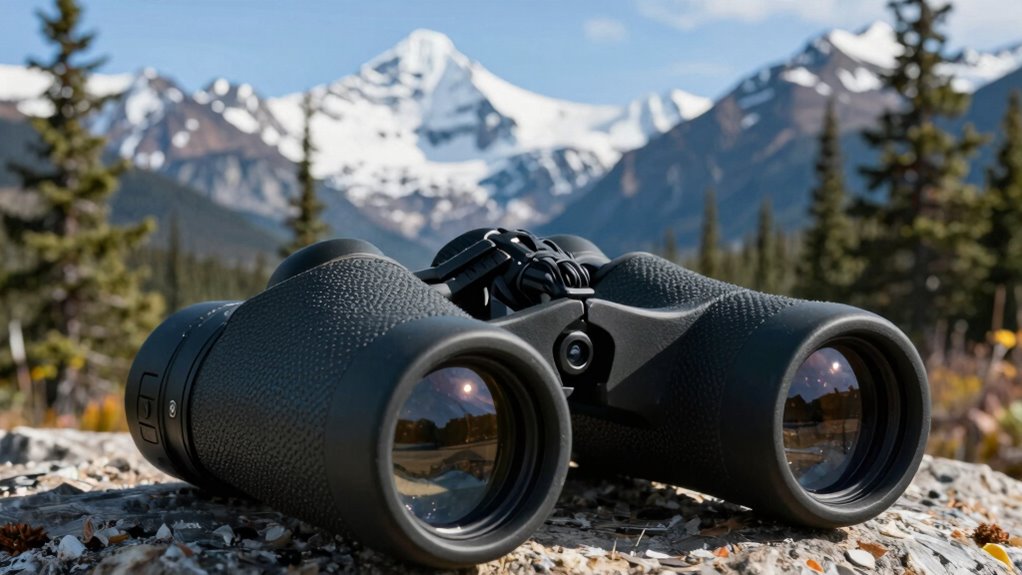
Are you ready to explore Alaska’s breathtaking landscapes and wildlife? If so, choosing the right binoculars can make all the difference in how much you experience and enjoy. When it comes to wildlife spotting and taking in mountain vistas, you want gear that provides clarity, brightness, and ease of use. The first thing to consider is magnification. For Alaska’s expansive scenery and active wildlife, a pair of binoculars with 8x or 10x magnification is ideal. An 8x offers a wider field of view, which helps you scan large areas quickly—perfect for spotting animals in their natural habitat. Meanwhile, 10x magnification pulls distant details closer, making it easier to observe wildlife without disturbing them. Keep in mind, higher magnification often means a heavier, less steady image, so balance your choice based on your activity level.
Next, consider the lens diameter, which impacts how much light your binoculars collect. For Alaska’s often cloudy or dim conditions, a lens diameter of at least 42mm is recommended. This size allows more light to enter, resulting in brighter, clearer images—even during dawn or dusk when animals are most active. Larger lenses, like 50mm, provide even better brightness but add weight and bulk, so think about how you’ll carry them during long hikes or boat trips.
Choose binoculars with at least 42mm lenses for brighter, clearer images in Alaska’s dim conditions.
Field of view is another essential factor. A wider view lets you scan vast mountain vistas and spot wildlife more easily. Look for binoculars offering at least 300 feet of field of view at 1000 yards. This way, you can take in broader scenes and catch fleeting movements without constantly repositioning your binoculars. Image stabilization isn’t vital but can be a real game-changer if you’re hiking rugged terrain or on a boat, as it helps keep the view steady even when your hands shake.
Finally, consider the weight and durability of your binoculars. Alaska’s wilderness can be tough on gear, so waterproof, fog-proof models are a smart choice. They’ll withstand rain, snow, and changing temperatures. A lightweight pair will reduce fatigue during extended wildlife spotting sessions, especially when you’re climbing mountain trails or exploring remote areas. Understanding vulnerabilities in devices and incorporating proactive measures, such as choosing rugged and weatherproof equipment, will help ensure your gear performs reliably in challenging conditions. When you pick binoculars that balance magnification, lens size, field of view, and ruggedness, you’ll be well-equipped to soak in Alaska’s grandeur—whether it’s distant mountain vistas or elusive wildlife darting through the trees.
8×42 waterproof binoculars
As an affiliate, we earn on qualifying purchases.
As an affiliate, we earn on qualifying purchases.
Frequently Asked Questions
What Is the Best Waterproof Rating for Alaskan Binoculars?
You should look for binoculars with at least an IPX7 waterproof rating for Alaska. This standard ensures they can withstand immersion in water up to a meter for 30 minutes, perfect for harsh weather conditions. Weather resistance is vital, so prioritize binoculars with sealed O-rings to prevent moisture and dust intrusion. This level of waterproofing gives you confidence in extreme rain, snow, or splashes during your outdoor adventures.
How Do Weight Differences Affect Long-Term Use?
Weight differences considerably impact your long-term use of binoculars. Heavier models can cause fatigue, especially during extended viewing sessions, but ergonomic design and balanced weight distribution help ease this strain. Lighter binoculars reduce fatigue and are easier to carry around Alaska’s rugged terrain. Consider how the weight feels in your hands and whether the design supports comfortable, prolonged use, ensuring you stay focused on spotting wildlife without discomfort.
Are There Specific Binoculars Recommended for Snowy Conditions?
Think of binoculars as your shield against snowy glare and frost. For snowy conditions, you want waterproof, fog-proof models with a sturdy build and frost resistance. Look for those with anti-reflective coatings to cut through glare and maintain clear vision. Rubber-armored binoculars also provide extra grip and protection against cold, ensuring you stay focused on the beauty around you without worrying about moisture or frost damage.
How Does Eye Relief Impact Comfort During Extended Viewing?
Eye relief directly impacts your comfort during extended viewing by providing enough space between your eye and the binoculars’ eyepiece. When you have longer eye relief, you experience better eye comfort and less strain, allowing you to enjoy longer viewing durations without discomfort. This is especially important in cold, snowy conditions where you might be using binoculars for hours, ensuring you stay comfortable and focused on the stunning Alaskan scenery.
What Maintenance Is Necessary for Extreme Cold Environments?
In extreme cold environments, you need to regularly clean your lenses to prevent dirt and moisture buildup. Use a soft, dry cloth to wipe away condensation and dirt, and consider lens cleaning solution for stubborn smudges. To prevent fogging, keep your binoculars in a warm, dry place when not in use, and use anti-fog coatings if available. This maintenance keeps your binoculars clear and functional during harsh conditions.
lightweight fog proof binoculars for wildlife
As an affiliate, we earn on qualifying purchases.
As an affiliate, we earn on qualifying purchases.
Conclusion
When choosing binoculars for Alaska, you’ll want to focus on the numbers that truly matter—magnification, lens size, and durability—like the pillars holding up a sturdy tent. These figures guide you through vast wilderness and icy landscapes, ensuring you see every majestic detail. Remember, the right binoculars are your trusted binoculars, turning distant sights into close-up wonders. With the right numbers in hand, you’ll unseal Alaska’s wild beauty, like opening a treasure chest of breathtaking moments.
image stabilized binoculars for hiking
As an affiliate, we earn on qualifying purchases.
As an affiliate, we earn on qualifying purchases.
best binoculars for Alaska wildlife viewing
As an affiliate, we earn on qualifying purchases.
As an affiliate, we earn on qualifying purchases.