
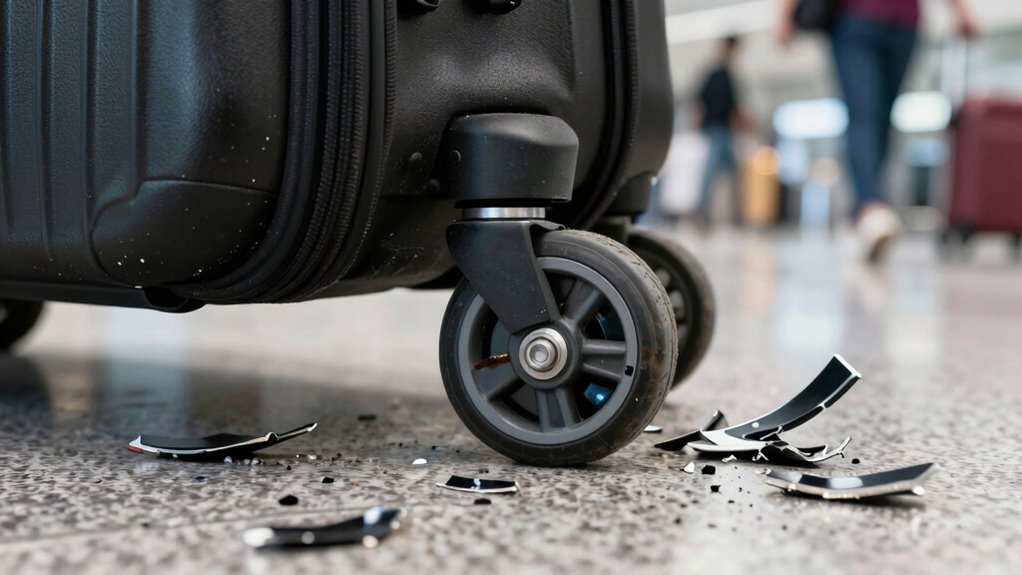
Carry-on wheels often fail unexpectedly because they’re subjected to rough handling, dirt, and frequent use without proper maintenance. Low-quality materials and weak construction make them vulnerable to cracks, detachment, or seizing, especially during busy travel times. Neglecting regular inspections or ignoring damage can cause sudden failures. To avoid surprises, it’s essential to choose durable luggage and keep wheels in good condition—stay with us to discover how to protect your wheels and travel stress-free.
Key Takeaways
- Rough baggage handling during transit causes cracks, detachment, and accelerated wear of carry-on wheels.
- Lack of regular maintenance leads to dirt buildup, loosening parts, and wheel seizure or wobbling.
- Low-quality materials and insufficient durability make wheels vulnerable to sudden failure under stress.
- Inadequate protective gear and poor packing increase the risk of wheel damage during rough handling.
- Unexpected wheel failure often occurs when travelers are least prepared, such as during busy travel moments.
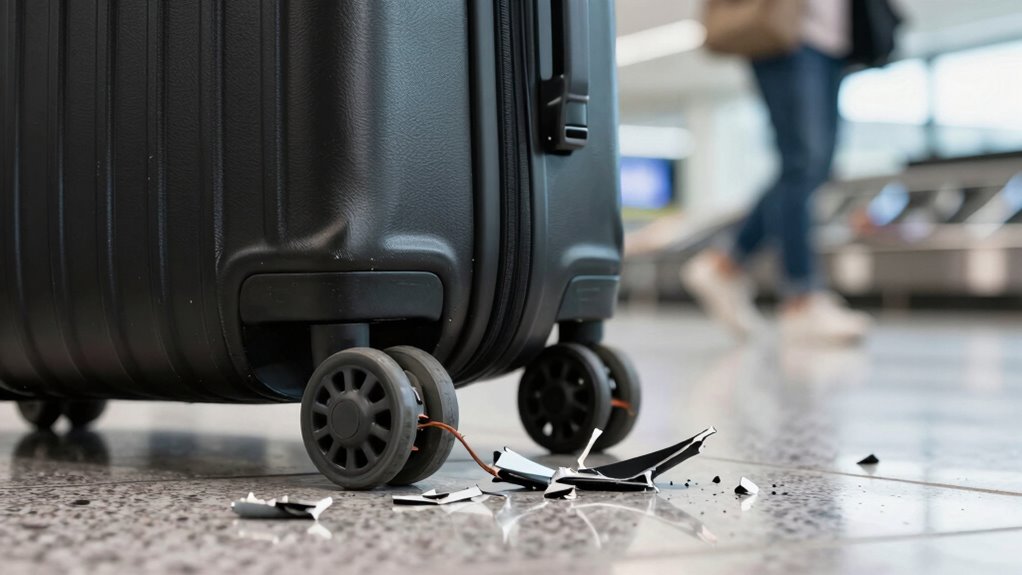
If you’ve ever relied on your carry-on luggage at the airport, you’ve probably experienced the frustration when the wheels suddenly fail. It’s one of those moments that can throw off your entire travel day. You’re trying to navigate crowded terminals, and suddenly, your suitcase becomes a burden rather than a convenience. Wheels are designed to make maneuvering easier, but they’re also the most vulnerable part of your luggage. When they break or wobble, it often happens right when you’re least prepared—whether you’re rushing to catch a flight or trying to navigate uneven surfaces.
One common reason for wheel failure is poor baggage handling. During transit, your luggage might be roughly tossed onto carts or conveyor belts, which weakens the wheels over time. Repeated rough handling can cause the wheels to crack or detach, especially if they’re not built with durability in mind. Unfortunately, many travelers don’t think about this until it’s too late. You might assume your luggage is sturdy enough, but rough baggage handling at airports can accelerate wear and tear significantly. This is why investing in high-quality luggage with sturdy wheels can make a difference, but even the best wheels aren’t immune to damage.
Rough baggage handling can weaken and damage wheels over time, even on high-quality luggage.
Another factor that contributes to wheel failure is lack of maintenance. If you don’t regularly check and tighten the wheels, loose parts can lead to wobbling or complete detachment. Dirt, debris, and moisture can also cause wheels to seize or become less functional. It’s easy to overlook these small issues until they escalate, especially during busy travel days. To avoid this, it’s wise to inspect your luggage before trips and carry some basic tools or replacement parts. Additionally, understanding how baggage handling affects your luggage can help you pack smarter—using protective gear for your wheels or choosing airlines known for gentler baggage treatment can reduce risks. Recognizing the importance of durable materials in luggage construction can also help you select bags that are better equipped to withstand the rigors of travel. Regularly inspecting your luggage’s wheels and choosing models with reinforced construction can also prolong their lifespan and prevent unexpected breakdowns.
Having travel insurance can be a real lifesaver when your carry-on wheels give out unexpectedly. Many policies cover damages caused by baggage mishandling or loss, which can help if you need to replace or repair your luggage quickly. While travel insurance doesn’t prevent wheel failure, it can ease the financial burden if your suitcase becomes unusable during crucial moments. Also, understanding how baggage handling works at different airports can help you pack smarter—using protective gear for your wheels or choosing airlines known for gentler baggage treatment can reduce risks.
Ultimately, your best defense against wheel failure is being proactive. Invest in quality luggage, regularly maintain it, and consider travel insurance to cover unexpected mishaps. The next time your carry-on wheels fail at the worst moment, you’ll be prepared—making your journey a little less stressful and a lot more manageable.
durable carry-on luggage with reinforced wheels
As an affiliate, we earn on qualifying purchases.
As an affiliate, we earn on qualifying purchases.
Frequently Asked Questions
How Can I Prevent My Carry-On Wheels From Failing Unexpectedly?
You might think wheel failure is inevitable, but regular wheel maintenance can prevent surprises. Check your carry-on wheels before each trip, ensuring they roll smoothly and are free of debris. Upgrading to luggage with durable wheels can also make a big difference, as high-quality wheels last longer and perform better under pressure. Taking these simple steps keeps your wheels reliable, so you won’t face unexpected breakdowns when you need your luggage most.
Are There Specific Brands Known for More Durable Carry-On Wheels?
Some brands are known for more durable carry-on wheels due to their strong brand reputation and focus on material durability. Brands like Samsonite, Travelpro, and Briggs & Riley consistently receive praise for their sturdy wheels that withstand rough handling and long travels. When choosing a carry-on, look for those with reinforced wheels and high-quality materials, ensuring your luggage can handle the demands of frequent travel without failing at the worst moments.
What Are the Signs That My Wheels Are About to Fail?
Your wheels are whispering trouble, signaling they’re about to fail. Check for uneven rolling or strange noises—these are signs of worn-out bearings or debris caught in the wheel. Regular wheel maintenance, like cleaning and lubrication, can prevent issues. Also, if your luggage feels heavier or pulls awkwardly, it’s time to inspect the wheels—overloading can accelerate wear and tear, leading to sudden, inconvenient breakdowns.
How Do Weather Conditions Affect Carry-On Wheel Performance?
Weather impact profoundly affects your carry-on wheel performance. Rain, snow, and ice can cause wheel corrosion or freezing, reducing durability and making rolling difficult. Excessive moisture weakens wheel materials over time, increasing the chance of failure during travel. Extreme temperatures, whether hot or cold, can also degrade wheel components. To guarantee durability, choose wheels designed for all weather conditions and regularly inspect them for signs of wear and weather-related damage.
Can I Replace Carry-On Wheels Myself or Should I Seek Professional Help?
Did you know that over 60% of carry-on wheel repairs are successfully done through DIY fixes? You can replace your carry-on wheels yourself if you’re comfortable with basic tools, but for complex issues or warranty concerns, seeking professional assistance is wiser. DIY repairs save time and money, but if you’re unsure or uncomfortable, a professional repair ensures the job’s done right and keeps your luggage in top shape.
carry-on luggage wheel replacement kit
As an affiliate, we earn on qualifying purchases.
As an affiliate, we earn on qualifying purchases.
Conclusion
So, next time your carry-on wheel suddenly gives out, remember it might not just be bad luck. Some experts believe that frequent use and rough handling weaken the wheels over time, making failure almost inevitable at the worst moment. While it’s tempting to blame the airport or airlines, the real culprit could be your own packing habits. Stay vigilant—regularly check and replace those wheels before your next trip, and you might just dodge this travel nightmare.
high-quality spinner suitcase with sturdy wheels
As an affiliate, we earn on qualifying purchases.
As an affiliate, we earn on qualifying purchases.
luggage wheel repair tools
As an affiliate, we earn on qualifying purchases.
As an affiliate, we earn on qualifying purchases.