
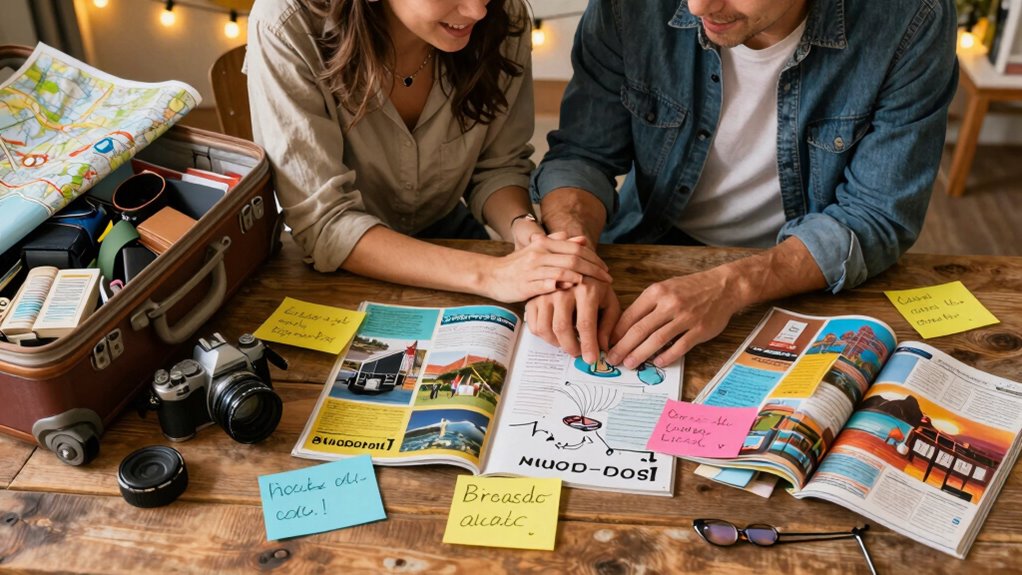

Planning separate “must-do” lists helps you focus on your personal interests and reduces conflicts during travel. It guarantees that both of your priorities are recognized, making the trip smoother and more enjoyable. This approach promotes mutual understanding, respects your individual preferences, and encourages balanced itineraries. By considering your own needs separately, you can avoid resentment and stay flexible. Keep exploring to discover how this simple step can make your shared adventure more memorable.

Get travel and outdoor gear delivered free with Prime
- Fast, free delivery on millions of items
- Prime Video, Amazon Music and more included
- Member-only deals all year
Key Takeaways
- It ensures each partner’s priorities are recognized and prioritized, leading to more satisfying experiences.
- Separate lists reduce conflicts by clearly defining individual interests and expectations.
- They facilitate balanced planning, allowing diverse activities without forcing compromises.
- Individual lists help manage budgets and packing needs, preventing oversights and stress.
- Revisiting personalized lists during the trip maintains clarity and promotes mutual understanding.

Before you and your partner set off on your trip, it’s essential to create separate “must-do” lists. This simple step guarantees each of you can focus on what matters most personally, reducing the chances of disagreements or overlooked priorities. When planning, start by considering your individual travel budget. Your budget influences your choices—what activities you can afford, where you’ll stay, and how much you can spend on souvenirs or dining out. By listing your specific financial priorities, you clarify what’s non-negotiable and what you’re willing to compromise on. For example, if you’re keen on splurging on a special dinner or a guided tour, note that down. Your partner might prefer saving for a local experience or shopping, so having separate lists helps you understand each other’s priorities upfront.
Creating separate “must-do” lists helps couples prioritize personal interests and avoid misunderstandings during travel.
Next, create your personal packing checklist. This might seem straightforward, but personal needs vary greatly—some prefer to travel light, while others pack every possible item “just in case.” Your list should include essentials unique to you—medications, favorite skincare products, or special accessories—and reflect your comfort level. Sharing your packing checklist with your partner allows you both to avoid duplicate items or missing essentials, making packing more efficient and less stressful. It also encourages you to respect each other’s preferences, which can prevent last-minute frustrations at the luggage scale or the airport. Additionally, understanding each other’s packing habits can contribute to a more organized travel experience.
Having separate “must-do” lists doesn’t mean you’re disregarding teamwork; rather, it promotes mutual understanding. When you go over your individual priorities, you’re more likely to plan activities that satisfy both of you without feeling forced into compromise. For instance, if your list emphasizes exploring local art galleries while your partner wants adventure sports, you can allocate time for both rather than arguing over a single plan. This approach helps you craft a balanced itinerary that honors your personal interests and keeps the trip enjoyable.
Furthermore, these lists can serve as a reference point during the trip. If disagreements arise about what to do or spend money on, you can revisit your separate lists to remind yourselves of each other’s core desires. This keeps communication clear and prevents resentment from building over overlooked priorities. Incorporating environmentally conscious choices into your planning can further enhance your trip’s positive impact. Ultimately, planning individual “must-do” lists, including your travel budget and packing checklist, empowers you both to enjoy your trip fully, feeling understood and prepared. It’s a simple strategy that fosters harmony and makes your shared adventure more memorable.
personal travel packing checklist
As an affiliate, we earn on qualifying purchases.
As an affiliate, we earn on qualifying purchases.
Frequently Asked Questions
How Can Couples Balance Individual Interests While Planning Separate Lists?
You can balance individual interests by openly discussing your personal preferences and respecting each other’s activity diversity. Share your must-do activities and listen actively to your partner’s ideas. Be flexible and find common ground, blending different interests into a shared experience. This way, both of you enjoy your unique preferences while creating memorable moments together, fostering understanding and ensuring your trip is fun and fulfilling for both.
What if One Partner Feels Left Out of the Planning Process?
Think of your trip planning as a duet—you both need to share the stage. If one partner feels left out, it’s like a silent note missing from the melody. You can fix this with open communication strategies, encouraging sharing of personal preferences, and active listening. Make space for each other’s ideas, ensuring both feel valued and included. This harmony keeps your journey enjoyable and balanced, with everyone’s voice heard.
How Do Different “Must-Do” Lists Impact Overall Trip Planning?
Different “must-do” lists help you focus on shared goals by clearly identifying each person’s priorities. This approach encourages open communication and allows you to develop compromise strategies that satisfy both partners. When you understand each other’s preferences, it’s easier to create a balanced itinerary. Ultimately, these lists foster teamwork, reduce conflicts, and guarantee both of you enjoy the trip without feeling overlooked or forced into rigid plans.
Can Separate Lists Lead to Conflicts During the Trip?
Separate lists can lead to conflicts during the trip if personal preferences clash. But with good communication strategies, you can navigate these differences smoothly. By openly sharing your desires and listening to each other, you turn potential disagreements into opportunities for compromise. This contrast between individual wishes and shared experiences emphasizes the importance of understanding and flexibility, helping you enjoy the trip without unnecessary tension.
How Should Couples Handle Overlapping Activities on Their Lists?
When handling overlapping activities, you should prioritize shared expectations through open communication. Talk about which activities matter most to each of you, and find compromises if needed. Use clear communication strategies to stay respectful and understanding. By openly discussing your plans, you guarantee both partners feel heard, and you can create a flexible itinerary that balances individual interests with shared experiences, reducing potential conflicts during your trip.
Conclusion
By crafting your own “must-do” lists, you’re planting seeds of adventure in your relationship’s garden. These lists become your unique constellations, guiding you through shared skies and individual journeys. Embrace the thrill of exploring different paths, knowing they’ll intertwine like vines in a lush jungle. When you return, your stories will bloom like wildflowers—vivid, diverse, and beautifully intertwined—reminding you that the best journeys are those taken side by side, yet with your own footprints left behind.
Halloween Picks
halloween
As an affiliate, we earn on qualifying purchases.