
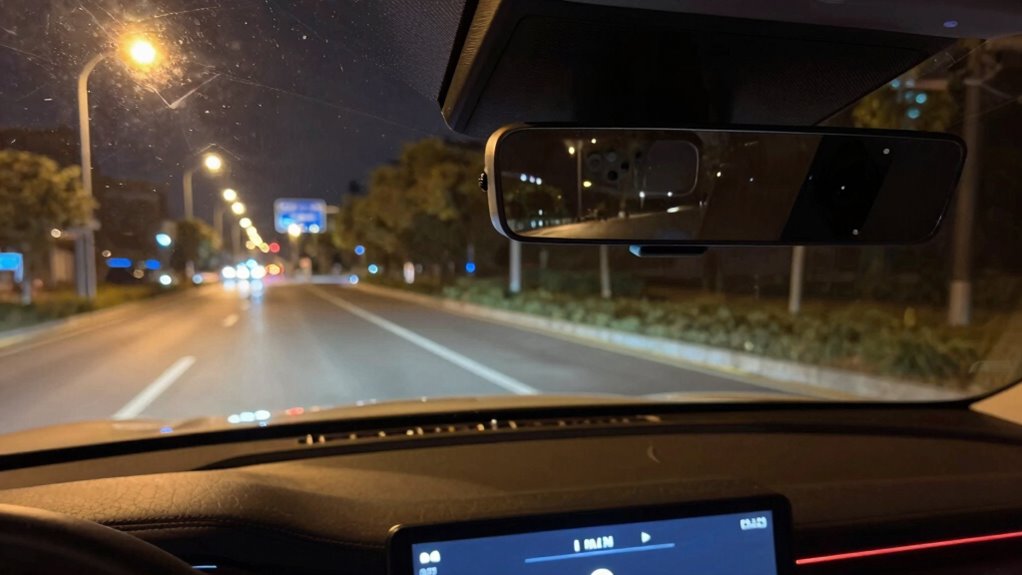

The dash cam setting that helps you at night more than resolution alone is night mode. This feature adjusts exposure, contrast, and noise reduction to improve low-light footage. It uses advanced algorithms to brighten dark areas and sharpen details, making license plates and street signs clearer. Automatic adjustments keep images balanced, preventing overexposure from headlights. Activating night mode ensures you capture critical details in challenging lighting conditions. Keep exploring to discover how this setting can enhance your safety further.

Get travel and outdoor gear delivered free — and shop member deals
- Fast, free delivery on millions of items
- Access to Prime Big Deal Days deals on October 6–7
- Prime Video, Amazon Music and more included
Key Takeaways
- Night mode optimizes exposure, contrast, and noise reduction for clearer low-light footage.
- Advanced image enhancement algorithms brighten dark areas and sharpen details beyond resolution.
- Automatic sensor adjustments adapt to changing light conditions for consistent image quality.
- Manual night mode activation allows better control over exposure for scene clarity.
- Sensor technology fine-tunes settings to reliably capture important details in low-light environments.

Night driving can be challenging, but your dash cam’s night setting can make a significant difference in capturing clear footage. When you’re on the road after dark, visibility drops, and lighting conditions change rapidly. That’s where the right dash cam setting steps in to improve your safety and guarantee you get usable footage if an incident occurs. While resolution is important, it’s not the only factor that enhances your footage in low-light conditions. Many dash cams feature specialized night modes designed to boost image quality by optimizing exposure, contrast, and noise reduction. This isn’t just about recording; it’s about improving driver safety by providing clearer evidence if you need it.
Night mode enhances dash cam footage by optimizing exposure, contrast, and noise reduction for clearer, safer recordings after dark
The key to effective night mode is image enhancement. Instead of simply relying on higher resolution, your dash cam uses advanced algorithms to brighten dark areas, reduce grain, and sharpen details. This process allows you to see license plates, street signs, and other critical details even under poor lighting. It’s an essential feature because, in many cases, a blurry or dark video won’t serve any purpose. With proper image enhancement, your footage becomes much more useful, whether for insurance claims or legal evidence. Proper image processing can significantly improve low-light performance in your dash cam. Additionally, many modern dash cams incorporate automatic adjustments that optimize settings based on ambient light levels, further enhancing nighttime footage. Some models also utilize sensor technology that improves their ability to capture details in varying light conditions.
You might wonder how the night setting works in real-world scenarios. When you activate it, the dash cam adjusts its sensor settings automatically or through manual selection. This fine-tuning helps to balance exposure, so bright headlights don’t wash out the scene while darker areas are illuminated enough to be distinguishable. The result is a well-balanced image that captures the necessary details without overexposing or underexposing the scene. This adjustment is fundamental for driver safety because it helps you stay aware of your surroundings and makes it easier to identify hazards or other vehicles that are difficult to see with the naked eye. Additionally, understanding the role of image enhancement can help you choose a dash cam with better low-light performance. As technology advances, many models now incorporate night mode features that automatically optimize settings for various lighting conditions, providing even more reliable footage.
Ultimately, the night setting isn’t just a technical feature; it’s a practical tool that can make a real difference in your daily driving experience. It guarantees you have reliable footage in low-light conditions, which can be essential if an incident occurs. Good image enhancement through the right night mode supports your driver safety by allowing you to record clearer, more detailed videos when visibility is limited. So, while resolution is important, don’t overlook the power of a well-designed night setting. It’s the upgrade that can turn a standard dash cam into an indispensable safety device, giving you peace of mind at night and better protection on the road.
As an affiliate, we earn on qualifying purchases.
Frequently Asked Questions
How Does the Night Setting Affect Battery Life?
Using the night setting can slightly impact your dash cam’s battery life because it often increases power consumption through enhanced sensor activity and low-light processing. To optimize battery conservation, activate power management features if available, and avoid extended use of night mode when not needed. This way, you balance the benefits of improved night footage with maintaining longer battery life, ensuring your dash cam stays ready when you need it most.
Can Night Mode Be Customized for Different Driving Conditions?
Think of night mode like adjusting a camera’s settings for different scenes—you can customize it based on your driving conditions. You can tweak color accuracy and sensor sensitivity to enhance visibility in fog, rain, or well-lit streets. For example, increasing sensor sensitivity during foggy nights helps capture clearer footage, while adjusting color accuracy in bright conditions prevents overexposure. Customizing night mode guarantees your dash cam adapts perfectly to your environment.
Does Enabling Night Mode Impact Video Playback Speed?
Enabling night mode doesn’t impact your dash cam’s video playback speed. It enhances visibility by improving camera positioning and utilizing image sharpening, which helps clarify footage in low light. Night mode adjusts the camera’s settings for better night recording, but it doesn’t slow down playback. So, you can enjoy clearer footage without worrying about slower playback speeds, making it easier to review your drives in detail.
Is There a Risk of Overexposure With Night Settings?
There’s a slight risk of overexposure with night settings, but you can minimize it by adjusting sensor sensitivity and light balance. If the sensor sensitivity is too high, bright lights may cause overexposure, washing out details. Similarly, improper light balance can distort dark or bright areas. Fine-tune these settings to guarantee your dash cam captures clear footage without overexposing, especially in challenging lighting conditions.
How Often Should the Night Mode Be Calibrated?
You should calibrate your night mode regularly, ideally every few months or if you notice reduced image quality. When doing this, check your camera placement to guarantee it’s not obstructed, and clean the lens to remove dirt or smudges. Proper calibration maintains ideal exposure and clarity at night, preventing overexposure or underexposure, so your footage stays clear and useful. Regular checks help keep your dash cam performing at its best.
Conclusion
Next time you’re driving at night, remember that tweaking your dash cam’s night setting can make a huge difference in visibility, often more than just increasing resolution. It’s a simple adjustment that can help you capture clearer footage and stay safer on the road. Don’t you want to make sure your recordings are as sharp and useful as possible? Take a moment to explore your dash cam’s night settings—you might just find it’s the best upgrade you can make.
Fall Picks
fall essentials
As an affiliate, we earn on qualifying purchases.