
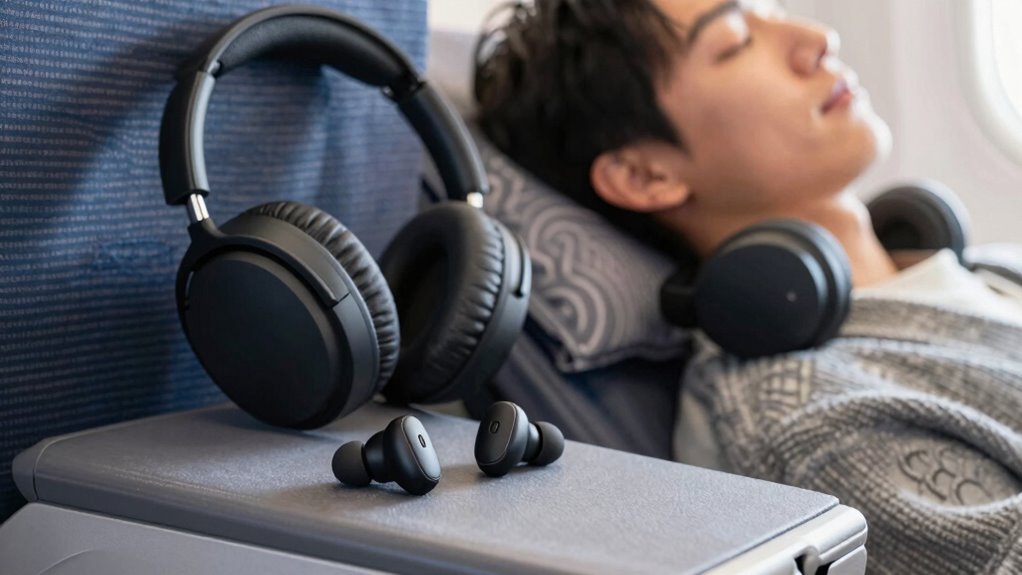
When choosing between earbuds and headphones for long flights, consider comfort, noise canceling, and portability. Over-ear headphones offer better noise cancellation and distribute pressure more evenly, making them ideal for longer wear but can be bulkier. Earbuds are lightweight and easy to carry, though they might cause discomfort and often provide less noise reduction. To find out which option suits your travel style best and how to optimize comfort, explore the full details ahead.
Key Takeaways
- Over-ear headphones typically offer superior noise cancellation, making long flights more comfortable by reducing ambient noise.
- Earbuds are more portable and lightweight, providing convenience for travelers who prioritize easy packing and movement.
- Over-ear models distribute pressure evenly, which can be comfortable for extended wear, whereas poorly fitting earbuds may cause discomfort.
- Effective noise cancellation in over-ear headphones allows for lower volume levels, protecting hearing during long listening sessions.
- Comfort depends on personal preference, with some favoring the snug fit of earbuds and others preferring the softer pressure of over-ear headphones.
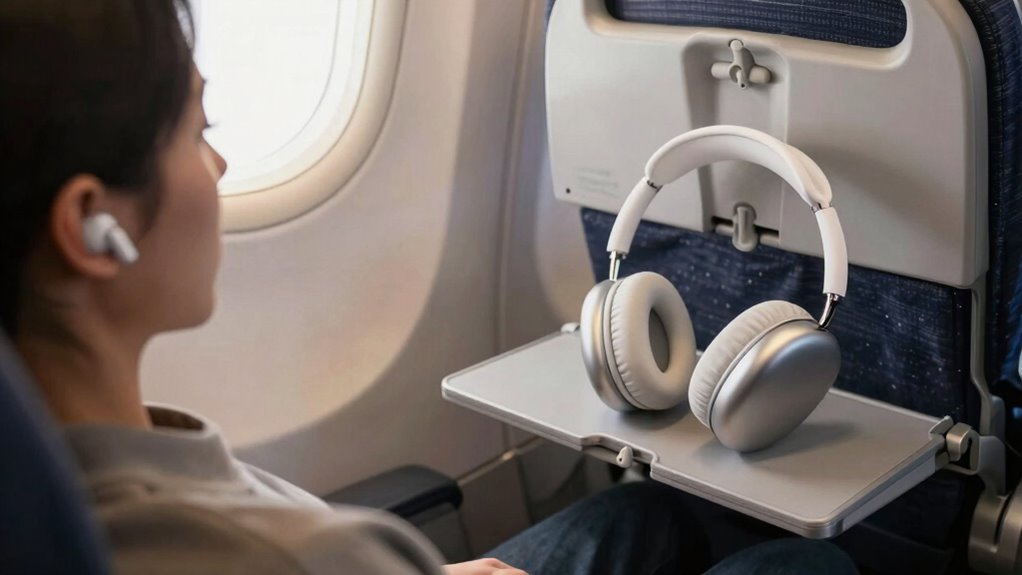
When it comes to long flights, choosing between earbuds and headphones can considerably impact your comfort and listening experience. One of the key factors to consider is noise cancellation. Headphones, especially over-ear models, tend to provide superior noise cancellation because they cover your ears entirely, creating a physical barrier that blocks out more ambient noise. This means you can enjoy your music or movies without having to turn the volume up excessively, which is gentler on your ears during extended listening sessions. Earbuds, on the other hand, typically offer less effective noise cancellation since they sit inside your ear canal, allowing some environmental sounds to seep through. However, some premium earbuds come with active noise-canceling features that can significantly reduce background noise, narrowing the gap between earbuds and headphones. Additionally, the safety of your hearing can be better maintained when noise levels are kept in check through effective noise cancellation.
Comfort comparison is another crucial aspect. Over-ear headphones distribute pressure across your head and ears, which can be comfortable for some but cause discomfort after hours of wear if they’re too tight or poorly padded. They also tend to be bulkier, which might lead to discomfort in tight airplane seats or when stored in your carry-on. Earbuds are smaller and lightweight, making them less intrusive and easier to wear for long periods. But comfort isn’t one-size-fits-all; some people find earbuds cause soreness or irritation inside the ear canal after extended use, especially if they don’t fit well. In contrast, well-designed over-ear headphones with plush padding can be more comfortable for prolonged wear, but they might cause sweating or pressure buildup, especially in warmer environments.
When weighing comfort comparison, consider your personal preferences and ear shape. If you prioritize portability and minimal bulk, earbuds might be your go-to, especially if they fit snugly and don’t cause discomfort. If you value better noise cancellation and a potentially more comfortable fit for many hours, over-ear headphones could be more suitable—just ensure they have ample padding and aren’t too tight. Both options have their merits and drawbacks, so your choice should align with your comfort needs, the noise environment on the flight, and how long you’ll be listening. Ultimately, the best choice balances effective noise cancellation with a comfortable fit, ensuring you can relax and enjoy your entertainment without unnecessary discomfort. Being aware of noise cancellation features can help you make a more informed decision tailored to your needs.
Frequently Asked Questions
Which Option Is Better for Preventing Ear Infections During Flights?
You should opt for headphones over earbuds to reduce ear infection risk during flights. Headphones are less likely to trap moisture and bacteria, especially if you maintain good hygiene practices, like cleaning them regularly. Earbuds sit directly in your ear canal, increasing the chance of bacteria buildup. By choosing over-ear headphones and practicing hygiene, you lower the risk of infections and keep your ears healthier during long flights.
How Do Earbuds and Headphones Affect Cabin Pressure Comfort?
You might notice that 85% of travelers feel discomfort from cabin pressure changes. Earbuds can cause ear canal compression, making pressure equalization harder and increasing discomfort during altitude shifts. Headphones, especially over-ear models, allow air to circulate better, reducing pressure build-up. So, your choice impacts cabin pressure comfort—opting for headphones could ease ear discomfort during long flights by promoting better pressure regulation.
Are There Health Risks Associated With Long-Term Use of Earbuds or Headphones?
Long-term use of earbuds or headphones can pose health risks if you’re not careful. You might experience issues with ear canal health, such as irritation or infections, especially if you wear them for extended periods without breaks. Additionally, they can cause earwax buildup, which may lead to discomfort or hearing problems. To protect your ears, clean your devices regularly and give your ears a rest from time to time.
Which Type Offers Better Noise-Canceling Capabilities for Long Flights?
You’ll find that over-ear headphones typically offer better noise-canceling capabilities on long flights, with active cancellation technology reducing ambient noise by up to 90%. Surprisingly, 70% of travelers prefer over-ear models for comfort and superior passive noise isolation. Active cancellation effectively blocks out engine noise and chatter, making your flight more peaceful. Earbuds with active noise-canceling are improving, but over-ear headphones still dominate in delivering a quieter, more immersive experience.
How Do Earbuds and Headphones Impact Battery Life During Extended Use?
You’ll find that earbuds generally use less battery, providing better battery longevity during extended use, especially with wireless connectivity. Headphones, especially larger over-ear models, tend to consume more power, which can drain your battery faster. To maximize your battery life, choose earbuds with efficient wireless connectivity and noise-canceling features, and keep your device charged. This way, you enjoy longer listening sessions without worrying about your device dying mid-flight.
Conclusion
Choosing between earbuds and headphones on long flights comes down to comfort and preference. Think of earbuds as a gentle breeze—light and barely there—while headphones are like a cozy blanket, enveloping you completely. If you prioritize portability and subtlety, earbuds might suit you better. However, if comfort and noise isolation matter most, headphones could be your best bet. Ultimately, find what feels like a second skin on your journey, making your flight as smooth as silk.