
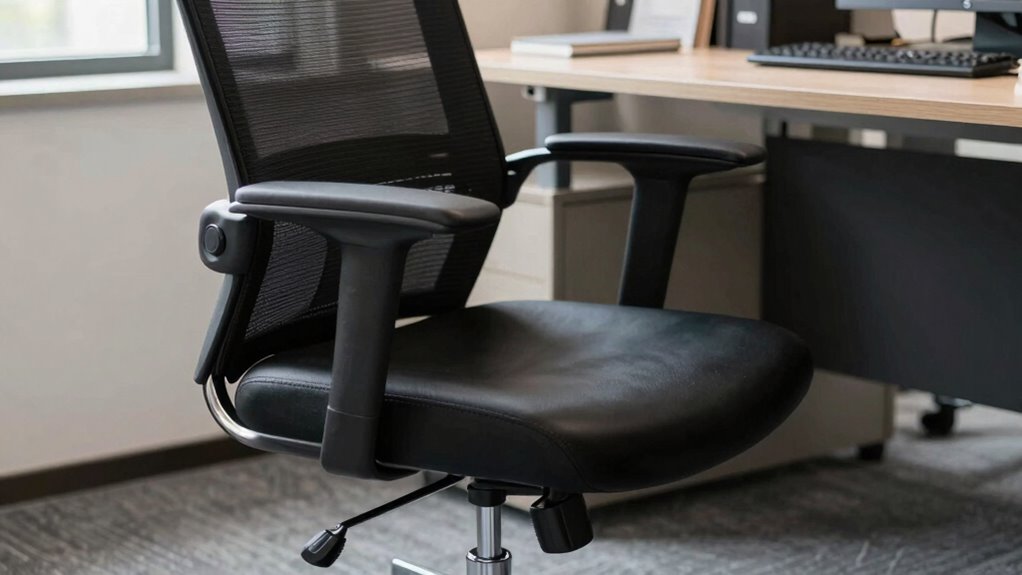

If the seat depth on your ergonomic chair is incorrect, it can seriously reduce its support and comfort. A seat that’s too deep or shallow puts pressure on your legs and knees, leading to discomfort and circulation issues. It also prevents proper lumbar support alignment, causing lower back strain. Additionally, improper seat size hampers the chair’s recline and adjustability features, making it harder to sit comfortably all day. Keep going to understand how these factors influence your overall ergonomic health.

Get travel and outdoor gear delivered free — and shop member deals
- Fast, free delivery on millions of items
- Access to Prime Big Deal Days deals on October 6–7
- Prime Video, Amazon Music and more included
Key Takeaways
- Incorrect seat depth disrupts lumbar support alignment, increasing lower back strain and discomfort.
- Poor sizing reduces thigh support, impairing circulation and causing fatigue over time.
- Improper seat length prevents proper recline and movement, limiting ergonomic benefits.
- Misaligned seat depth hampers adjustable features, decreasing overall comfort and support effectiveness.
- Non-ergonomic seat sizing leads to poor posture, increasing long-term musculoskeletal health risks.
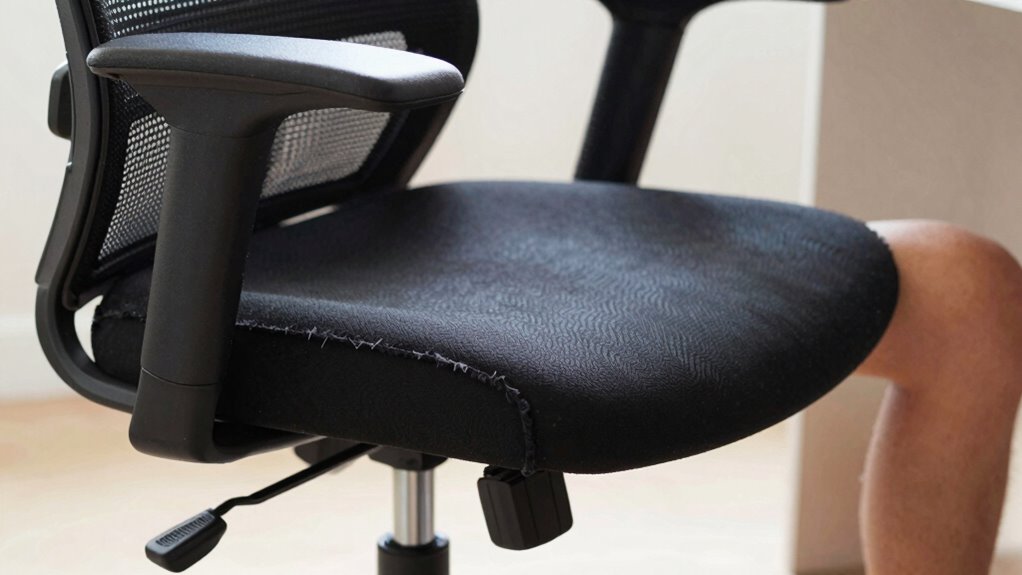
Have you ever wondered why some ergonomic chairs don’t provide the comfort and support they promise? One common reason is an incorrect seat depth. When the seat isn’t properly sized, it can undermine the entire purpose of an ergonomic chair, leading to discomfort and potential health issues over time. Proper seat depth is essential because it ensures that your thighs are fully supported without putting pressure on your knees or restricting circulation. If the seat is too deep, you might find yourself slouching forward or feeling pressure behind your knees. If it’s too shallow, your thighs won’t be supported enough, causing you to shift constantly, which can lead to fatigue.
Proper seat depth supports your thighs and prevents discomfort, ensuring your ergonomic chair works effectively.
A crucial element affected by seat depth is lumbar support. When the seat is too long or too short, it can prevent the lumbar support from aligning correctly with your lower back. Lumbar support is designed to maintain the natural curve of your spine, reducing strain and preventing back pain. If the seat depth isn’t right, the lumbar support might be misplaced, forcing your lower back to compensate for the lack of proper support. This misalignment can lead to discomfort and even long-term issues like chronic back pain. An ergonomic chair with an adjustable lumbar support can help, but only if the seat depth allows you to sit back fully and still have your lower back supported comfortably. Additionally, having the correct seat depth can enhance overall ergonomic benefits by allowing proper alignment of supporting features, especially when combined with adjustable components that accommodate individual preferences. Ensuring adjustable features also supports individual comfort preferences, which is key for long-term ergonomic health. Recognizing the importance of proper ergonomics can help you select a chair that promotes better posture and reduces the risk of discomfort. Furthermore, a well-designed seat depth can contribute to the chair’s overall ergonomic effectiveness, making it a vital consideration when choosing office furniture.
The reclining mechanism is another feature that’s affected by incorrect seat depth. When your seat isn’t properly sized, you may find it difficult to lean back comfortably or engage the reclining feature fully. An improper seat depth can limit your ability to shift positions easily, which defeats the purpose of having a recline function designed to reduce pressure on your spine and promote movement. When you can’t recline properly, you might end up stiff and tense, rather than relaxed and supported. This can contribute to muscle fatigue and discomfort, especially during long periods of sitting.
Ultimately, seat depth plays a vital role in how well an ergonomic chair functions. When it’s off, features like lumbar support and reclining mechanisms don’t work as intended. You end up sacrificing comfort, support, and ergonomic benefits, no matter how many adjustable features the chair has. Choosing a chair with adjustable seat depth—so you can find that perfect fit—is key to ensuring all other components work harmoniously to support your body, reduce strain, and keep you comfortable throughout your workday.
ergonomic office chair with adjustable seat depth
As an affiliate, we earn on qualifying purchases.
As an affiliate, we earn on qualifying purchases.
Frequently Asked Questions
How Can I Measure My Ideal Seat Depth Accurately?
To measure your ideal seat depth accurately, sit back comfortably on the chair with your back against the support. Measure from the back of your knees to your buttocks, subtracting padding thickness to find the true seat depth. Make sure the distance allows about 2-4 inches of space so your thighs aren’t cramped. Also, check armrest compatibility, making sure they don’t interfere with your seated posture for maximum comfort.
Are Adjustable Seat Depths Suitable for All Body Types?
Did you know nearly 60% of users find adjustable seat depths enhance comfort? Adjustable seat depths can suit many body types, but material durability and aesthetic appeal matter too. If the mechanism isn’t sturdy or the design doesn’t match your workspace, it might not serve you well long-term. So, while these chairs offer versatility, confirm they’re built with durable materials and match your style for lasting comfort and visual harmony.
What Signs Indicate My Chair’s Seat Depth Is Incorrect?
If your chair’s seat depth is incorrect, you’ll notice discomfort, like pressure behind your knees or limited thigh support. You might also feel your aesthetic design compromised if the seat looks uneven or poorly aligned. Over time, material durability issues could arise if the seat isn’t properly supported, causing premature wear. Adjust the seat depth to guarantee ideal comfort, support, and a sleek, durable aesthetic design.
Can Seat Depth Adjustments Improve Long-Term Comfort?
Yes, adjusting seat depth can improve long-term comfort, but beware of seat depth myths and ergonomic misconceptions. Many believe that simply changing seat depth guarantees comfort, but proper adjustment involves considering your leg length and posture. You should guarantee your thighs are supported without pressure behind the knees. Correct adjustments enhance circulation and reduce fatigue, so don’t fall for ergonomic misconceptions that seat depth isn’t adjustable or doesn’t matter.
Do Seat Depth Issues Affect Overall Ergonomic Support?
If your seat depth is incorrect, it can compromise overall ergonomic support. For instance, a worker with a seat too shallow may experience poor lumbar support, leading to discomfort and strain. While aesthetic design and material durability matter, proper seat depth guarantees long-term comfort and health. When the seat depth doesn’t match your body, even a stylish, durable chair won’t provide ideal support, risking musculoskeletal issues over time.
Conclusion
When your chair’s seat depth is wrong, it’s like trying to walk a tightrope with a heavy load—it throws off your balance and strains your body. An ergonomic chair should cradle you comfortably, supporting your posture like a steady hand guiding you through the day. When it fails, you’re left wobbling on unstable ground, risking discomfort and injury. Make sure your seat fits just right, so your workday flows smoothly, like a gentle, unwavering tide.
Evergreen bestsellers Picks
bestsellers
As an affiliate, we earn on qualifying purchases.