
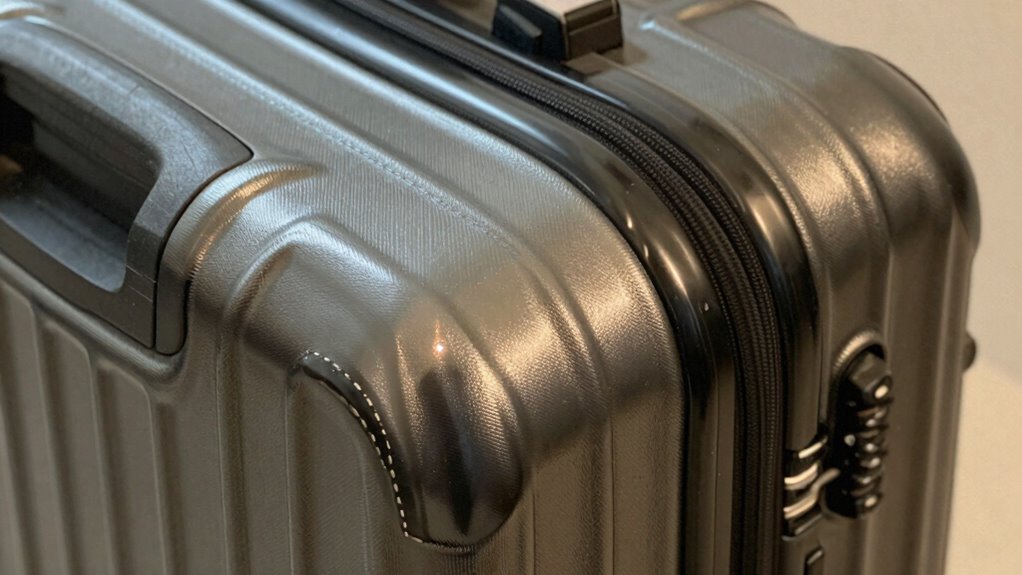

When choosing between hard-shell and soft-side luggage, consider durability, flexibility, and security. Hard-shell cases protect fragile items better and resist impacts but can crack if hit hard. Soft-side bags are more flexible, easier to squeeze into tight spaces, and often handle wear better over time. However, they may be more vulnerable to cuts or tampering. To understand the key tradeoffs in detail and find the best fit for your travels, keep exploring the options.
Key Takeaways
- Hard-shell luggage offers superior impact resistance but can crack or chip under severe force, especially if made from lower-quality plastics.
- Soft-side luggage is more flexible, making it easier to fit into tight spaces and handle overstuffing.
- Hard-shell cases often feature integrated TSA locks, providing better security against tampering; soft-side options may rely on external zippers.
- The durability of soft-side luggage depends on fabric quality and reinforcement, while hard-shell durability hinges on material strength and construction.
- Hard-shell provides better protection for fragile items, but soft-side luggage is generally better for ease of handling and storage flexibility.

When choosing luggage, understanding the differences between hard-shell and soft-side options can make your decision easier. Durability concerns are often at the top of travelers’ minds, and knowing how each material responds to rough handling can help you pick the best fit. Hard-shell luggage typically offers superior protection for your belongings because its rigid exterior resists impacts and crushing forces. If you’re traveling with fragile items or worried about baggage being tossed around, a sturdy hard-shell case can give you peace of mind. However, keep in mind that some hard-shell designs may crack or chip if subjected to severe impacts, especially if made from cheaper plastics. The resilience of soft-side luggage, on the other hand, depends largely on the quality of its fabric and construction. While it may not withstand heavy blows as well as a hard-shell, high-quality soft-side bags often feature reinforced corners and thicker materials that can handle regular wear and tear. Plus, soft-side bags tend to be more flexible, making them less prone to cracking over time. Additionally, soft-side luggage often allows for easier squeezing into tight spaces, which can be a significant advantage in crowded airports or vehicles.
Security features also play a vital role in your choice, especially if you’re concerned about theft or unauthorized access. Hard-shell luggage often comes with integrated TSA-approved locks built into the case, which can be a major advantage when traveling internationally. These locks are usually sturdy and difficult for thieves to tamper with, offering an extra layer of security. Soft-side luggage, meanwhile, often relies on external zippers and locks, which can be more vulnerable to prying or cutting. However, many soft-sided options now include lockable zippers or hidden compartments, providing comparable security features. You might also find soft-side bags equipped with lockable TSA-approved locks, which safeguard your belongings while still allowing security agents to inspect your bag without damage. Understanding material durability helps you choose luggage that balances protection with weight and flexibility for your travel needs.
hard-shell carry-on luggage with TSA lock
As an affiliate, we earn on qualifying purchases.
As an affiliate, we earn on qualifying purchases.
Frequently Asked Questions
Which Type Lasts Longer With Frequent Travel?
Hard-shell luggage generally lasts longer with frequent travel due to its superior durability comparisons. Its sturdy exterior resists impacts and rough handling, making it ideal for high travel frequency impacts. Soft-side luggage, while lighter and more flexible, tends to show wear and tear faster over time. If durability is your priority, especially with frequent trips, you’ll likely find hard-shell options stand up better to the rigors of constant travel.
Are Soft-Side Bags More Theft-Proof Than Hard-Shell?
Soft-side bags are generally less theft-proof than hard-shell luggage because they often lack advanced security features like integrated locks or reinforced materials. Their flexible design makes it easier for thieves to access the contents or cut through the fabric. If security is a priority, hard-shell luggage offers better theft protection with built-in locks and sturdy construction, reducing theft vulnerability and providing peace of mind during travel.
How Do Weight Restrictions Impact Luggage Choice?
Imagine your luggage weight limit is a tightrope you must balance on; it directly influences your choice. Lighter soft-sided bags often use durable materials, helping you pack more without exceeding restrictions. A reputable brand guarantees material durability, so your bag withstands travel stresses. If weight restrictions are strict, you might favor soft-sided luggage for its flexibility and lighter weight, but always consider the brand’s reputation for durability to avoid surprises at check-in.
Can Soft-Shell Luggage Withstand Rough Handling Better?
Soft-shell luggage can withstand rough handling better because of its flexible material, which absorbs shocks and prevents cracks. Its durability depends on the material quality, making it easier for you to pack efficiently since you can often squeeze in extra items or fill gaps. However, confirm the fabric is sturdy; otherwise, it might tear under extreme pressure. Overall, soft-shell luggage offers excellent durability and ease of packing, especially if you prioritize flexibility.
Is Maintenance Easier for One Type Over the Other?
You’ll find maintenance easier with soft‑side luggage because its fabric flexibility makes repairs simpler if it gets torn or stained. Hard‑shell luggage, on the other hand, often requires more effort to fix, especially if zippers durability declines or the shell cracks. Soft luggage generally handles cleaning better, and zippers tend to be more accessible for quick fixes. Overall, soft‑side options offer more straightforward maintenance for frequent travelers.
soft-side checked luggage reinforced corners
As an affiliate, we earn on qualifying purchases.
As an affiliate, we earn on qualifying purchases.
Conclusion
In the end, choosing between hard-shell and soft-side luggage boils down to what suits your travel style best. Think of it like picking a trusty sidekick—you want something that protects your belongings and fits your needs. Remember, every option has its pros and cons, so don’t put all your eggs in one basket. Weigh your priorities carefully, because the right luggage can make or break your journey, turning a rough trip into smooth sailing.
impact-resistant hard-shell suitcase
As an affiliate, we earn on qualifying purchases.
As an affiliate, we earn on qualifying purchases.
lockable soft-side travel bag
As an affiliate, we earn on qualifying purchases.
As an affiliate, we earn on qualifying purchases.