

TL;DR

Get travel and outdoor gear delivered free with Prime
- Fast, free delivery on millions of items
- Prime Video, Amazon Music and more included
- Member-only deals all year
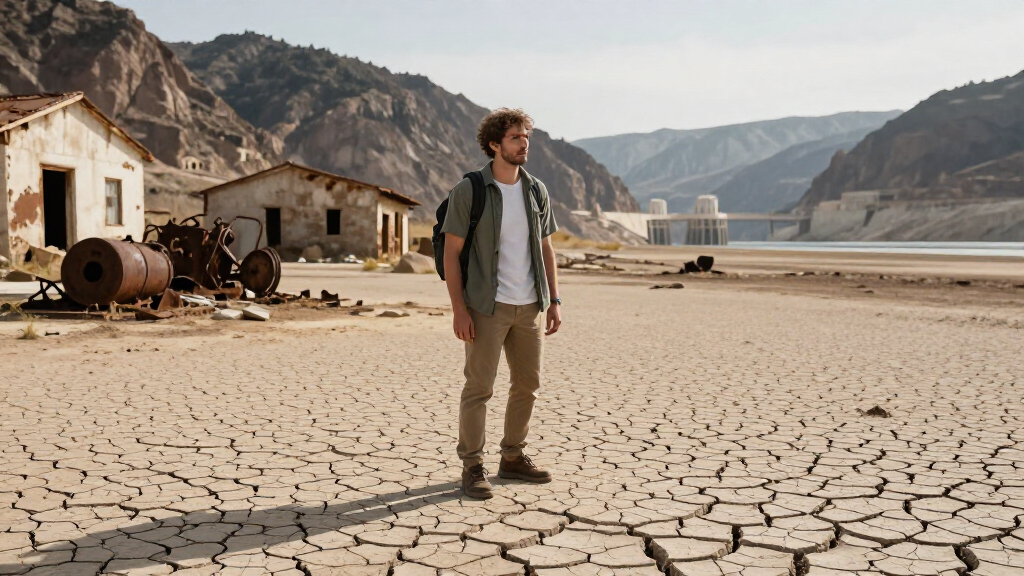
As Lake Mead’s water levels decline, remnants of a ghost town have surfaced near Hoover Dam. This development highlights ongoing drought issues and water shortages in the region. The situation remains evolving, with authorities monitoring water levels and potential impacts.
Recent water level declines in Lake Mead have exposed the remains of a ghost town near Hoover Dam, attracting attention from local authorities and historians. This emergence underscores the ongoing drought crisis affecting the American Southwest and the shrinking reservoir’s impact on the region’s history and water supply.
The ghost town, believed to be St. Thomas, Nevada, was submerged when Lake Mead’s water levels rose in the mid-20th century. According to the U.S. Bureau of Reclamation, recent drought conditions have caused Lake Mead to recede to its lowest levels in decades, revealing parts of the town that have been underwater for over 70 years.
Experts note that the exposed structures include building foundations and remnants of the town’s streets, which have become visible as water levels have dropped below critical thresholds. The current water level in Lake Mead is approximately 1,045 feet above sea level, compared to its full capacity of 1,229 feet, marking a decline of over 180 feet since 2000.
Officials from the National Park Service and the Bureau of Reclamation have confirmed the discovery but emphasized that the exposed site is fragile and subject to further erosion as water levels fluctuate. The region is experiencing its worst drought in over a century, driven by prolonged drought and climate change, which has significantly reduced water inflows to the reservoir.
Implications of the Water Level Drop for Regional Water Security
The emergence of the ghost town highlights the severity of ongoing drought conditions and the shrinking of Lake Mead, which supplies water to approximately 25 million people in Nevada, Arizona, California, and surrounding states. The exposed remains serve as a stark reminder of the region’s historical reliance on the reservoir and the potential for future water shortages if current trends continue.
Experts warn that continued declines could threaten water supplies, hydroelectric power generation, and recreational activities. The discovery also raises questions about the long-term sustainability of water management policies amid climate change and increasing demand.
portable water filter for outdoor trips
As an affiliate, we earn on qualifying purchases.
As an affiliate, we earn on qualifying purchases.
Historical and Environmental Background of Lake Mead’s Decline
Lake Mead was created by the construction of Hoover Dam in the 1930s and became a vital water source for the Southwest. Historically, the reservoir has fluctuated, but recent decades have seen unprecedented drops due to persistent drought and overuse of water resources.
In 2000, the water level was at approximately 1,125 feet, but it has steadily declined, reaching its lowest level since the reservoir’s filling. The drought is compounded by climate change, which has led to reduced snowpack in the Rockies—the primary source of inflow to Lake Mead—and increased evaporation rates.
The submerged ghost town of St. Thomas was abandoned in the 1930s before the reservoir’s filling, but its remains have been periodically visible in drought years. The current exposure is the most significant in recent history, drawing attention from historians and environmentalists alike.
“The water levels are at historic lows, revealing parts of the submerged town that have been underwater for decades.”
— U.S. Bureau of Reclamation spokesperson
Uncertainties Surrounding the Future of Lake Mead’s Water Levels
It is not yet clear how much further water levels will decline or if new drought conditions will accelerate the exposure of additional submerged sites. The exact state of the exposed structures and their preservation is also uncertain, as ongoing fluctuations in water levels could lead to erosion or submersion again.
Authorities are monitoring the situation, but future water management decisions and climate patterns remain unpredictable, making the full impact difficult to forecast.
Monitoring and Policy Responses to Lake Mead’s Declining Water Levels
Water agencies plan to continue monitoring Lake Mead’s levels closely and assess the condition of the exposed site. Discussions about water use restrictions, drought mitigation strategies, and climate adaptation policies are expected to intensify as the crisis worsens.
Researchers and officials are also considering archaeological and environmental assessments of the exposed town remnants to understand historical impacts and inform conservation efforts.
Key Questions
What is the ghost town that has been revealed at Lake Mead?
The remains of St. Thomas, Nevada, a town submerged when Lake Mead’s water levels rose in the 1930s, have been exposed due to recent drought conditions.
How low are Lake Mead’s water levels right now?
The current water level is approximately 1,045 feet above sea level, which is over 180 feet below its full capacity of 1,229 feet.
Why are water levels dropping so significantly?
The decline is primarily due to prolonged drought, reduced snowpack in the Rockies, climate change, and overuse of water resources in the Southwest.
What could happen if water levels continue to fall?
Further declines could threaten water supplies, hydroelectric power generation, and recreational activities, with some areas potentially facing more exposure of submerged sites.
Are there plans to address the drought and water shortage?
Yes, water agencies are considering restrictions, conservation measures, and policy changes to manage the crisis, but long-term solutions remain uncertain amid ongoing climate challenges.
Source: google-trends
Fall Picks
fall essentials
As an affiliate, we earn on qualifying purchases.