
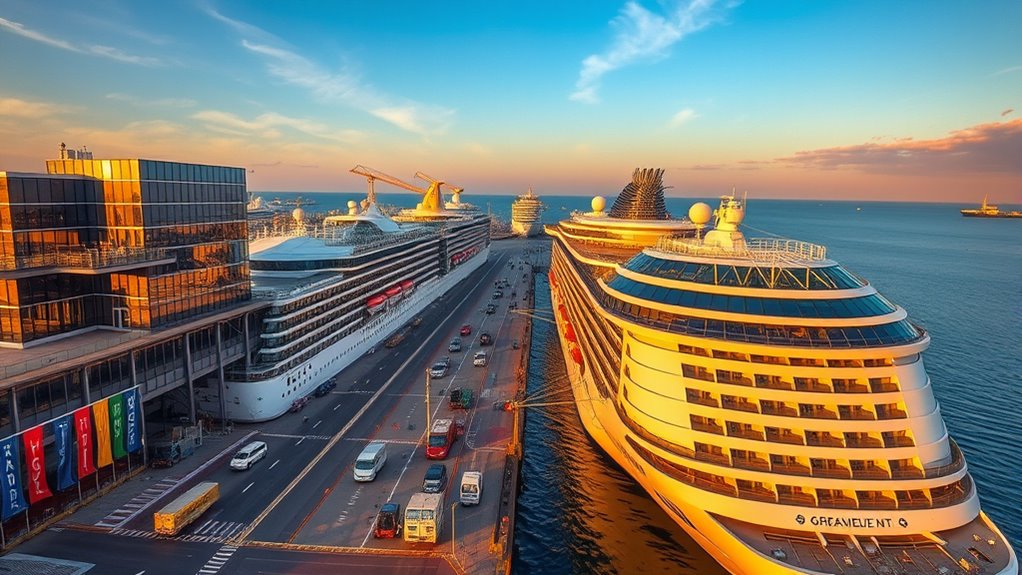

Cruise ports attract ships by forming strategic agreements with cruise lines that improve infrastructure, offer competitive fees, and create customized solutions for different operators. Ports invest in modern facilities, negotiate discounted or tiered fees, and develop long-term contracts that benefit both parties. These partnerships focus on passenger comfort and efficiency, making the port more appealing. Keep exploring to discover how these agreements keep ports competitive and thriving in the cruise industry.
Key Takeaways
- Ports offer mutually beneficial long-term agreements with cruise lines, ensuring regular ship visits and facility improvements.
- Upgraded infrastructure and specialized equipment enhance operational efficiency and passenger experience, attracting more cruise ships.
- Competitive port fees and flexible pricing structures incentivize cruise lines to choose certain ports over others.
- Customized agreements address specific cruise line needs, aligning facilities and services with their market segments.
- Ports promote their upgraded facilities and strategic partnerships through marketing efforts to increase their attractiveness to cruise operators.
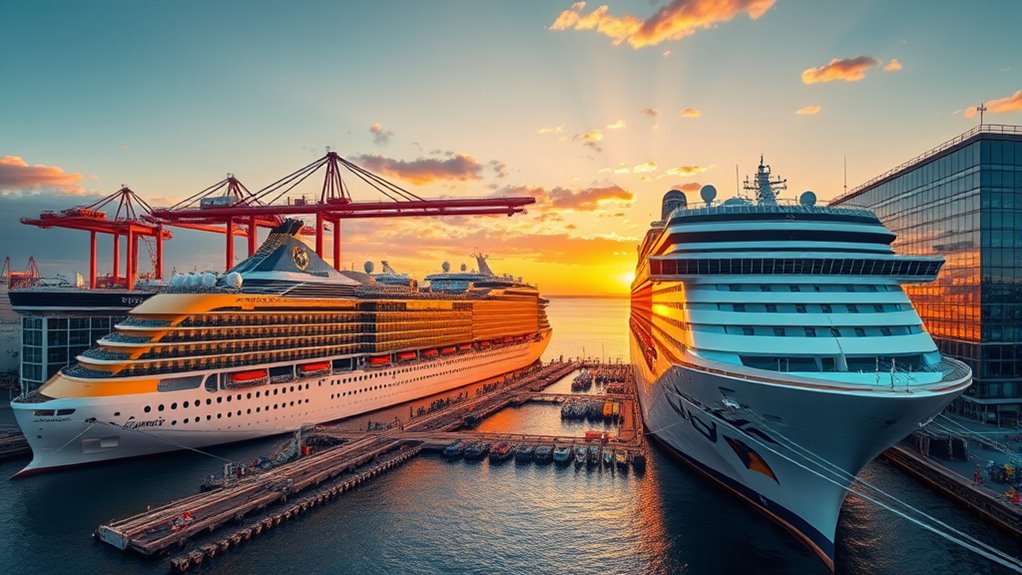
Cruise ports are increasingly competing to attract ships by offering better facilities, amenities, and infrastructure. You’ll notice that ports invest heavily in upgrading marina facilities to make docking more efficient and comfortable for cruise ships. These marina facilities include modern piers, spacious berths, and specialized equipment that can handle large vessels quickly and safely. When a port enhances its marina facilities, it signals to cruise lines that it’s capable of accommodating bigger ships with ease, reducing turnaround times and improving operational efficiency. This, in turn, makes the port more appealing, especially when combined with attractive port fees. Competitive port fees are a key factor in enticing cruise companies to choose one port over another. Ports often negotiate agreements that offer discounted or tiered port fees based on the volume of ships they attract or the length of stay. When port fees are lower, cruise lines can save money on each voyage, which can be passed on as more competitive cruise prices or used to improve onboard amenities, making the overall cruise experience more appealing to travelers.
Ports invest in upgraded marina facilities and competitive fees to attract cruise ships and enhance passenger experience.
By establishing agreements that include favorable marina facilities and flexible port fees, ports create a mutually beneficial relationship with cruise lines. These agreements often involve long-term contracts where ports commit to maintaining or improving marina facilities, ensuring that ships receive exceptional docking conditions. In return, cruise lines agree to schedule more frequent visits or allocate a certain number of ships to the port each season. These contracts can also include provisions for shared investments, such as upgrading terminal amenities, enhancing passenger comfort, or expanding parking and transportation options.
Furthermore, ports understand that the quality of marina facilities and the competitiveness of port fees directly influence a cruise line’s decision to include a port on its itinerary. They often tailor agreements to meet the specific needs of different cruise lines, whether they’re luxury operators seeking exclusivity or mass-market cruise companies prioritizing efficiency and cost. These strategic agreements also often involve marketing collaborations, where ports promote their upgraded facilities and attractive fee structures to cruise lines worldwide.
In essence, establishing clear agreements centered around marina facilities and port fees is essential for ports trying to stay competitive. It’s a delicate balance—offering world-class infrastructure without pricing themselves out of the market—yet when done right, it can lead to increased ship visits, higher port revenue, and a thriving cruise tourism industry. You’ll find that the ports that succeed are those that proactively negotiate these agreements, constantly improving their facilities and maintaining attractive pricing structures to lure cruise ships year after year.

Unique Docking at the port of the giant ship Print Beach Wrap Skirt – Stylish Swimsuit Coverup for Women, Sarong for Swimwear, Perfect for Beach Vacation Clothes
Exclusive Docking at the port of the giant ship Print Design : Stand out with our swimsuit coverup…
As an affiliate, we earn on qualifying purchases.
As an affiliate, we earn on qualifying purchases.
Frequently Asked Questions
What Incentives Do Cruise Ports Offer to Attract Ships?
You’re drawn to cruise ports offering attractive passenger amenities and effective marketing strategies. Ports often provide incentives like reduced docking fees, improved infrastructure, and exclusive access to popular attractions. They also invest in enhancing passenger experiences with better shopping, dining, and entertainment options. These strategies make ports more appealing to cruise lines, encouraging them to choose your port, which boosts tourism and benefits local businesses.
How Do Port Agreements Impact Cruise Ship Docking Schedules?
Port agreements directly influence your cruise ship’s docking schedule by establishing clear terms during negotiations. These contracts determine priority, allocated docking times, and berth availability, ensuring smooth ship scheduling. When negotiations are efficient, you benefit from predictable schedules and minimized delays. Conversely, complex or delayed negotiations can cause scheduling conflicts, affecting your itinerary. Clear agreements help streamline operations, allowing you to plan your cruise with confidence and reduce unexpected disruptions.
What Role Do Local Governments Play in Port-Shipping Agreements?
Imagine standing at a bustling port, where local governments shape the scene through municipal negotiations and policy frameworks. They play a crucial role by setting rules that encourage cruise lines to dock, offering incentives or infrastructure support. Your local officials act as gatekeepers, ensuring the port’s growth aligns with community goals. Their active involvement creates a welcoming environment, making it easier for cruise ships to choose your port as a preferred destination.
How Are Environmental Regulations Incorporated Into Port Agreements?
You guarantee environmental regulations are incorporated into port agreements by including clauses on sustainability initiatives and pollution control measures. These agreements often require cruise lines to follow specific standards, such as reducing emissions and managing waste responsibly. By setting clear expectations and monitoring compliance, ports promote environmentally friendly practices, helping protect local ecosystems and meet global sustainability goals. This proactive approach encourages ships to prioritize eco-conscious operations while docked.
What Are the Long-Term Benefits of Port Agreements for Local Economies?
Port agreements bring long-term benefits by boosting your local economy through sustained economic growth and tourism development. As you attract more cruise ships, you create jobs, increase spending, and enhance infrastructure. These agreements foster partnerships that promote tourism initiatives and improve facilities, making your port more appealing. Over time, this cycle of growth attracts even more ships and visitors, solidifying your port’s role as a key economic driver in the region.
marina facilities for cruise ships
As an affiliate, we earn on qualifying purchases.
As an affiliate, we earn on qualifying purchases.
Conclusion
So, next time you step off a cruise ship, remember how those ports work behind the scenes. It’s almost like a lucky coincidence—ports and cruise lines strike agreements that seem to align perfectly, attracting ships just when they’re needed most. It’s a little dance of negotiations and incentives, all designed to make sure your journey is seamless. In this world of strategic agreements, luck often plays a quiet but essential role in creating those unforgettable cruise experiences.
cruise port terminal amenities
As an affiliate, we earn on qualifying purchases.
As an affiliate, we earn on qualifying purchases.
cruise ship passenger comfort upgrades
As an affiliate, we earn on qualifying purchases.
As an affiliate, we earn on qualifying purchases.