

To disembark quickly and smoothly, start by reviewing the disembarkation instructions and organizing your documents and belongings beforehand. Follow posted signs and listen to announcements, respecting designated zones and pathways. Keep a close eye on your group and assign a point person to gather items efficiently. Move promptly but carefully, prioritizing safety over speed. If you want to learn more tips to make your exit seamless, continue exploring effective strategies here.
Key Takeaways
- Review disembarkation instructions and organize documents and belongings beforehand.
- Pay attention to announcements and follow designated zones and pathways during disembarkation.
- Designate a group point person to gather belongings and coordinate movement.
- Maintain patience, avoid rushing, and respect safety protocols and security checks.
- Move promptly and carefully, adhering to signage and crew instructions for a smooth process.
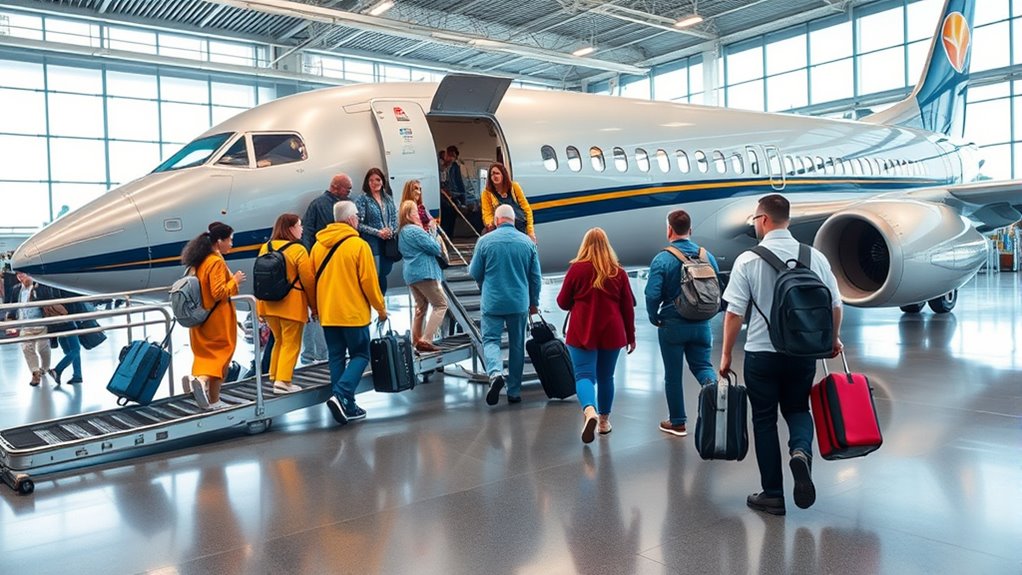
Disembarking from a cruise or flight can often feel rushed and chaotic, but with proper preparation, you can make the process quick and smooth. One of the key factors in achieving this is understanding the boarding procedures and how they impact passenger safety. Knowing what to expect and following the correct steps can help you avoid delays and ensure everyone’s safety is maintained throughout the process.
First, familiarize yourself with the specific disembarkation instructions provided by the crew or airline beforehand. Most cruise lines and airlines send detailed guidelines about when and how to leave, including any required documentation or forms. By reviewing these instructions early, you can prepare your documents, luggage tags, or boarding passes in advance, saving precious time during disembarkation. This preparation also reduces confusion, which can lead to bottlenecks or accidental safety hazards.
Review disembarkation instructions early to streamline process and enhance safety.
During the actual disembarkation, pay close attention to the boarding procedures announced or posted. These procedures are designed to manage passenger flow efficiently while prioritizing passenger safety. For example, crews often stagger the disembarkation by zones or groups, which prevents overcrowding and minimizes the risk of accidents. When it’s your turn, move promptly but carefully, following the designated pathways and instructions. Rushing or trying to cut ahead can cause congestion and compromise passenger safety, so stay patient and respectful of others.
Keep your belongings organized and easily accessible. Having your documents, carry-on items, and any necessary identification ready will streamline the process. If you’re in a group, designate a point person to gather everyone’s belongings and coordinate movement. This reduces the chances of losing items or creating delays, both of which can contribute to safety issues or frustration. Remember, safety is a shared responsibility, so stay alert, watch your step, and avoid rushing through crowded areas.
Once you’ve disembarked, continue to follow safety protocols, especially if there are ongoing security or health checks. If you’re in an airport, adhere to the signage and instructions from security personnel. If on a cruise, follow the crew’s directions and avoid unnecessary delays that could disrupt the flow of disembarkation for others. Keeping a calm and courteous attitude not only helps you move more efficiently but also maintains a safe environment for everyone involved.

BAREFOOT CARIBOU Over Luggage Organizer for Carry On Bag or Suitcase with Storage Pockets, 16” Laptop Sleeve with Handle, Travel Accessories Bag Slide On Luggage Harness with Adjustable Straps (Black)
Travel-Ready Luggage Organizer – A must for avid travelers going on vacation or to business meetings this luggage…
As an affiliate, we earn on qualifying purchases.
As an affiliate, we earn on qualifying purchases.
Frequently Asked Questions
What Should I Do if I Miss My Disembarkation Time?
If you miss your disembarkation time, stay calm and contact the ship’s staff immediately. They can help you handle disembarkation delays and guide you through the next steps. Be prepared to provide your booking details and follow their instructions carefully. Managing missed departure quickly ensures you avoid further complications and can arrange alternative transport or accommodations without unnecessary stress. Always communicate promptly to resolve disembarkation delays smoothly.
How Do I Handle Luggage During Quick Disembarkation?
Think of your luggage as a trusted companion guiding you through the chaos. During quick disembarkation, handle luggage management by keeping essentials in accessible, lightweight bags. Use baggage handling services whenever possible, allowing staff to swiftly move your belongings. Stay organized by securing tags and labels beforehand. This way, your luggage becomes an extension of your quick exit, helping you navigate disembarkation smoothly without unnecessary delays or stress.
Are There Specific Tips for Disembarking With Children?
When disembarking with children, prioritize child safety by keeping them close and using a harness or leash if needed. Manage stroller logistics by folding it early and keeping it within reach to avoid delays. Stay organized with essentials like snacks, toys, and a change of clothes. Communicate clearly with your kids, stay patient, and guide them calmly to ensure a smooth, safe disembarkation for everyone involved.
Can I Disembark Early if I Have a Connecting Flight?
Did you know that nearly 30% of travelers miss their connecting flights? If you have an early connecting flight, you can often request early disembarkation, but it’s not guaranteed. Contact airline staff beforehand and explain your situation. They may prioritize you, but be prepared for delays. Always check your airline’s policies, and consider priority boarding or disembarkation options to make your transfer smoother and faster.
What Safety Precautions Should I Follow During Disembarkation?
During disembarkation, prioritize passenger safety by paying close attention to crew instructions and emergency procedures. Keep your belongings secure, move calmly, and avoid rushing to prevent accidents. Follow designated pathways and listen for safety announcements. If an emergency arises, stay calm, assist others if possible, and adhere to crew directions. These precautions help make certain a safe, smooth disembarkation for everyone onboard.

Passport Holder Family RFID Travel Document Organizer for Women Waterproof Passport Wallet Men Portable Case for Cards, Boarding Pass, ID, Money, Tickets with Zipper
Efficient Organization: Our travel document holders are not only travel organizers but also family travel document organizers and…
As an affiliate, we earn on qualifying purchases.
As an affiliate, we earn on qualifying purchases.
Conclusion
Remember, disembarking is like sailing into a calm harbor—you steer with patience and coordination. Rushing too fast risks capsizing the process, while staying calm guides everyone safely ashore. Just as a seasoned captain reads the winds, anticipate and communicate clearly. When you approach the exit with purpose and composure, you create a smooth voyage for all. Embrace the journey’s end as part of the adventure, knowing that a steady hand leads to safe, swift disembarkation.

SEAVILIA 5 Pack Cruise Luggage Tag Holder & 2 Pack Cruise Ship Lanyards with Waterproof Id Badge Holder, Cruise Essentials 2025 for NCL, Princess, Carnival, Royal Caribbean and Celebrity
All-In-One Travel Set: Includes 5 durable cruise luggage tag holder, 2 premium cruise lanyards, and 2 waterproof ID…
As an affiliate, we earn on qualifying purchases.
As an affiliate, we earn on qualifying purchases.

J.L. Childress Gate Check Bag for Car Seats – Travel Bag for Airplane, Fits All Baby & Infant Car Seats, Airport Accessories for Gate Check, Flying Essentials, AirTag Compatible – Red
GATE CHECK CAR SEAT TRAVEL BAG – Specially designed for gate check, this lightweight cover bag fits all…
As an affiliate, we earn on qualifying purchases.
As an affiliate, we earn on qualifying purchases.