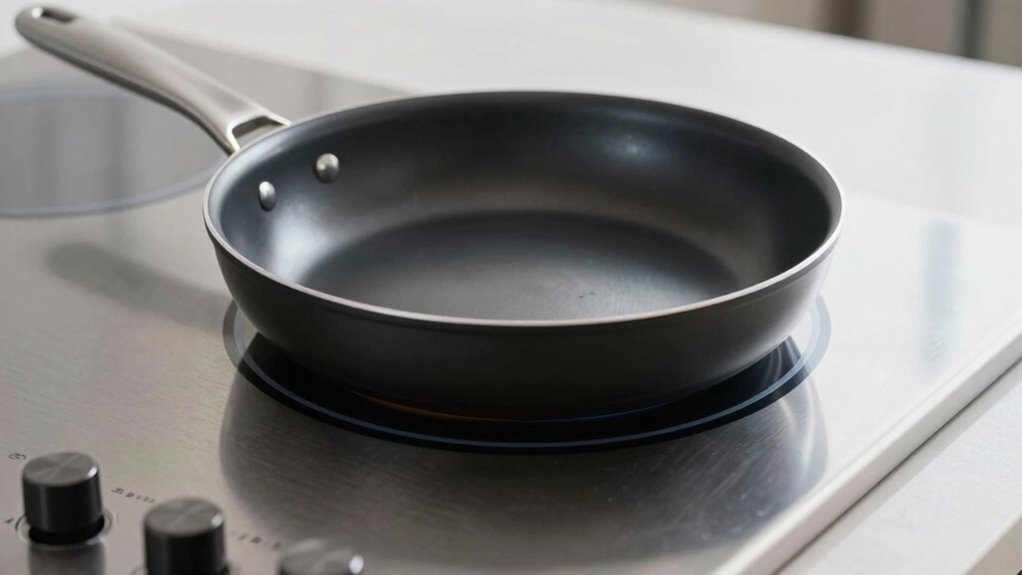
To make certain your cookware works with induction stoves and avoid costly returns, perform a simple magnet test. Place a magnet on the bottom of your pan; if it sticks firmly, it’s compatible. If the magnet doesn’t hold, your pan won’t heat efficiently or safely, and you should consider replacing it. Keep your cookware safe and effective by mastering this quick test—continue observing for more helpful tips that could save you time and money.
Key Takeaways
- Perform a simple magnet test: if the magnet sticks firmly, the pan is suitable for induction cooking.
- Using incompatible pans can cause uneven heating, safety hazards, and potential damage to your induction stove.
- Proper pans ensure efficient, quick, and even heat distribution, preventing the need for returns or replacements.
- Avoid investing in non-magnetic cookware like aluminum or glass, which won’t work with induction burners.
- Choosing high-quality, compatible pans enhances safety, durability, and cooking performance, saving you time and money.
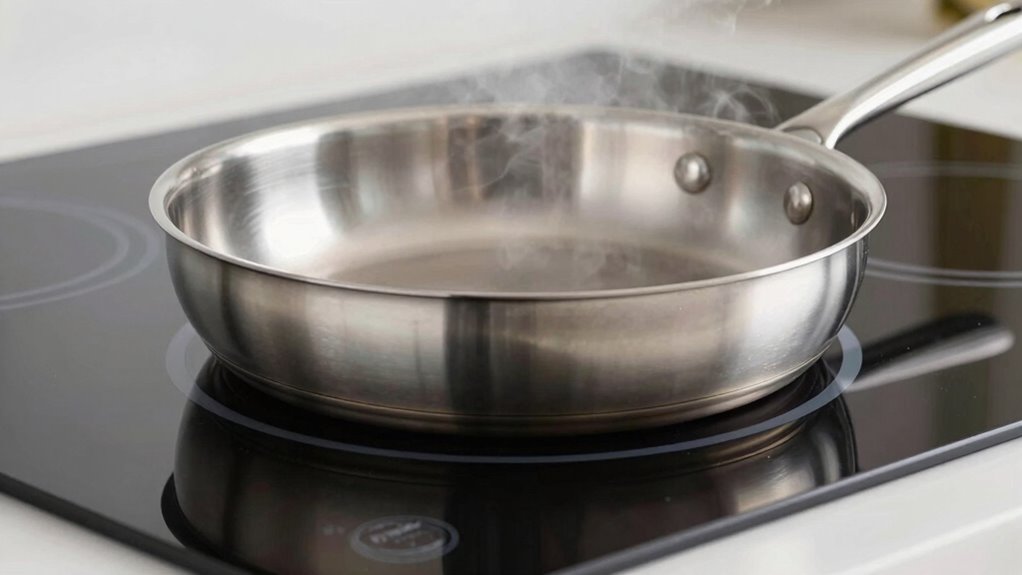
If you’re considering switching to induction cooking, choosing the right pan is essential for ideal performance. Induction burners rely on magnetic fields to generate heat, so not all cookware will work effectively. Ensuring cookware compatibility isn’t just about getting the pan to heat; it’s also about safety considerations. Using incompatible or low-quality pans can lead to uneven cooking, damage to your cooktop, or even safety hazards like sparks or electrical issues. Before making a purchase, you need to verify that the pans you choose are compatible with induction stoves.
The most straightforward way to determine cookware compatibility is to perform a simple magnet test. Take a magnet and see if it sticks firmly to the bottom of the pan. If it does, that pan is suitable for induction cooking. If the magnet doesn’t adhere, then the pan probably contains non-magnetic materials like aluminum or glass, which won’t work on induction stoves. This simple test helps you avoid investing in cookware that won’t perform properly or could cause safety concerns.
Safety considerations extend beyond just compatibility. Using the right pans minimizes risks like overheating or accidental damage. For instance, pans made from ferromagnetic metals tend to heat quickly and evenly, reducing the chance of hot spots that could cause burns or fires. Conversely, incompatible cookware might not heat at all, leading you to accidentally overheat the stovetop or use excessive heat settings, which can be dangerous. Also, some non-compatible pans might deform or warp when exposed to induction heat, creating sharp edges or unstable surfaces that could result in spills or injuries. Additionally, choosing cookware with European manufacturing standards can ensure better safety features and durability, aligning with the emphasis on safety and quality.
induction compatible cookware set
As an affiliate, we earn on qualifying purchases.
As an affiliate, we earn on qualifying purchases.
Frequently Asked Questions
Can Non-Magnetic Pans Work With Induction Cooktops?
Non-magnetic pans won’t work with induction cooktops, so you should test your cookware first. Using a simple magnet test guarantees your cookware offers cooking safety and durability. If the magnet sticks firmly, your pans are compatible and will heat efficiently. Avoid using non-magnetic cookware, as it won’t activate the induction process, which can be frustrating and unsafe. Always check your cookware’s compatibility to ensure safe, effective cooking.
How Do I Know if My Pan Is Induction-Compatible?
To know if your pan is induction-compatible, check its magnetic properties. Use a magnet and see if it sticks firmly to the bottom; if it does, your cookware material is suitable. Most induction-compatible cookware is made from ferrous metals like cast iron or magnetic stainless steel. Non-magnetic materials like aluminum or glass won’t work unless they have a magnetic layer. This simple test helps you avoid buying the wrong cookware.
Does the Pan Test Damage the Cookware?
Worried the pan test might damage your cookware? It’s unlikely if you use gentle pressure and avoid scratching the surface. The test is designed to be safe, maintaining your cookware’s durability and ensuring test accuracy. Think about it—does pressing lightly with a magnet harm your pan? Probably not. So go ahead, perform the test confidently; it’s a quick way to check induction compatibility without risking your cookware’s integrity.
Are There Specific Brands Recommended for Induction Cooking?
Yes, certain brands excel at induction compatibility and are recommended for reliable cookware testing. Brands like All-Clad, Le Creuset, and Lodge often design their cookware specifically for induction stoves, guaranteeing efficient heat transfer. When selecting, look for labels indicating induction compatibility. These trusted brands undergo rigorous cookware testing to ensure quality, durability, and performance, so you can cook confidently without worrying about compatibility issues or damaging your cookware.
How Often Should I Perform the Induction Pan Test?
You should perform the induction pan test regularly, especially when trying new cookware or if your current pan isn’t heating properly. This helps guarantee pan compatibility and cookware safety, preventing issues like uneven heating or damage to your induction cooktop. Conduct the test before each use if you’re unsure about compatibility, and always check that your cookware is magnetic enough to work efficiently on your induction stove.
magnetic pan test for induction
As an affiliate, we earn on qualifying purchases.
As an affiliate, we earn on qualifying purchases.
Conclusion
By performing this simple pan test, you’ll catch the perfect match for your induction stove, ensuring your cooking is smooth sailing. Think of it as a key that opens your kitchen’s full potential, preventing you from getting stuck with incompatible cookware. When you choose the right pan, your stovetop becomes a well-oiled machine, turning every meal into a masterpiece. So, test wisely, and let your cookware dance harmoniously with your induction cooktop.
induction stove safe pots and pans
As an affiliate, we earn on qualifying purchases.
As an affiliate, we earn on qualifying purchases.
induction cookware magnet test
As an affiliate, we earn on qualifying purchases.
As an affiliate, we earn on qualifying purchases.