
Cooling fabrics and gel memory foam offer only temporary relief because they don’t address the core issue—your body’s natural heat production or the environment around you. These materials can help move heat or temporarily delay buildup, but they won’t actively lower your core temperature during sleep. To truly stay cool, you need strategies that manage ambient conditions and support your body’s heat regulation. If you’re curious, you’ll discover more about effective ways to achieve better sleep comfort.

Get travel and outdoor gear delivered free with Prime
- Fast, free delivery on millions of items
- Prime Video, Amazon Music and more included
- Member-only deals all year
Key Takeaways
- Cooling fabrics and surface treatments only manage surface heat, not the body’s internal heat production.
- They promote temporary moisture wicking and airflow but don’t actively lower core body temperature.
- Heat buildup from body metabolism isn’t addressed by surface cooling materials alone.
- Effective cooling requires environmental control and strategies that actively regulate body heat.
- Relying solely on cooling fabrics can lead to disappointment, as they don’t solve the root causes of sleep heat.
Ever wondered why some nights you just can’t seem to stay comfortable? Even with the latest cooling mattresses and breathable fabrics, you might still find yourself tossing and turning, drenched in sweat. It’s frustrating because manufacturers often tout their products as the ultimate solution to heat, but the truth is, cooling fabrics alone rarely solve the problem. The real challenge lies in understanding how your body generates heat and how different materials manage it.
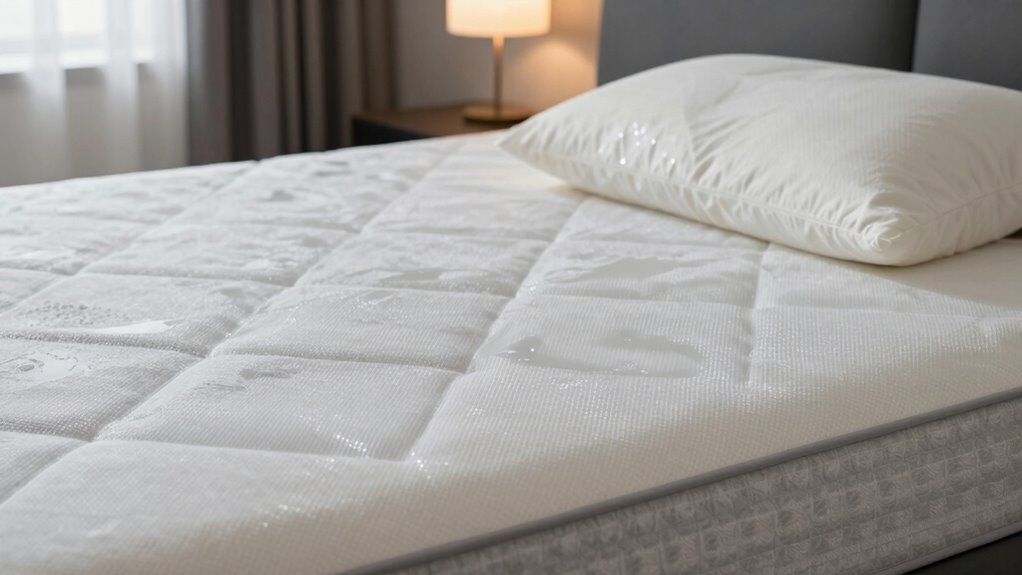
Many mattresses now incorporate gel memory foam, which is marketed as a cooling innovation. It’s designed to absorb and dissipate heat, creating a cooler sleeping surface. But in reality, gel memory foam doesn’t drastically reduce your body temperature. Instead, it provides a slight delay in heat buildup, giving you a moment of relief before the heat accumulates again. While gel particles might seem like a good idea, they often still trap heat within the foam, especially if the mattress isn’t paired with other cooling strategies.
Gel memory foam delays heat buildup but still traps heat without other cooling strategies.
Breathability fabrics are another common feature touted as a solution. These fabrics are designed to promote airflow and wick moisture away from your body. While they can help prevent heat from accumulating around your skin, they don’t actively lower your core temperature. Instead, they work passively by moving heat and moisture away from you, which might make you feel cooler temporarily but doesn’t address the root cause of overheating during sleep. If your room is warm or your body naturally produces more heat, breathable fabrics alone won’t keep you cool for long.
The misconception is that a cooler sleeping surface or more breathable fabrics will magically keep your body temperature down. But your body generates heat through metabolic processes, and this heat continues to be produced regardless of the mattress or fabric technology. Cooling strategies that only focus on surface materials overlook this fundamental fact. To truly improve your sleep comfort, you need to consider cooling mechanisms that actively manage your body heat or lower the ambient temperature of your room.
In essence, gel memory foam and breathability fabrics are tools that can help manage surface heat temporarily. However, they’re not a cure-all for night sweats and heat buildup. Your comfort depends on a combination of factors, including room temperature, humidity, your sleep position, and your body’s natural heat production. Relying solely on surface-level cooling features can leave you disappointed. Instead, focus on an all-encompassing approach that addresses both your bedding and your environment for truly cooler, more restful sleep. Recognizing the importance of thermal regulation can help you make better choices for a cooler night.
best cooling mattress for hot sleepers
As an affiliate, we earn on qualifying purchases.
As an affiliate, we earn on qualifying purchases.
Frequently Asked Questions
Do Cooling Fabrics Actually Lower Body Temperature During Sleep?
Cooling fabrics don’t actually lower your body temperature during sleep. Instead, they rely on fabric breathability to promote airflow and wick away moisture, which can make you feel cooler temporarily. However, their material durability limits long-term effectiveness. You’ll notice some relief, but they won’t considerably change your core temperature. For better results, focus on breathable bedding and a cool room environment instead of relying solely on cooling fabrics.
How Long Do Cooling Fabrics Typically Maintain Their Effectiveness?
Cooling fabrics often act like fleeting whispers, lasting about 20 to 30 washes before they fade into memory. Their fabric longevity is limited, as material degradation gradually diminishes their cooling magic. You might think they’re a cool breeze, but over time, they lose their freshness. To keep your sleep cool, expect these fabrics to serve you well for a few months before needing replacement, like a sunset slipping beyond the horizon.
Are Cooling Fabrics Safe for Sensitive Skin?
Cooling fabrics are generally safe for sensitive skin, but it’s important to contemplate fabric chemical safety. Some cooling textiles may contain chemicals or treatments that could increase the risk of skin irritation. If you have sensitive skin, look for fabrics labeled as hypoallergenic or free of harmful chemicals. Always do a patch test first, and choose natural or organic options when possible to minimize skin irritation risk.
Can Cooling Fabrics Be Washed Without Losing Their Properties?
Yes, you can wash cooling fabrics without losing their properties if you follow the proper washing instructions. Always check the fabric’s care label for guidance, as improper washing can affect fabric durability and cooling effectiveness. Use gentle cycles and cold water to preserve the fabric’s structure and cooling features. Avoid harsh detergents or bleach, which can degrade the fibers and reduce the fabric’s ability to stay cool over time.
Do Cooling Fabrics Work Equally Well for All Sleep Positions?
Cooling fabrics are like a tailored suit—best suited for certain sleep postures. They work well if you sleep on your back or side, but less so for stomach sleepers, who generate more heat. Fabric durability varies, so some may lose effectiveness over time. To stay cool all night, choose fabrics that match your sleep posture and are built to last, ensuring consistent comfort regardless of how you sleep.
Conclusion
Remember, even Icarus learned that chasing perfect comfort can lead to unexpected falls. No matter how advanced the cooling fabrics seem, they can’t guarantee a cool night forever. Your body’s natural rhythms and needs matter most. So, don’t rely solely on fleeting solutions—embrace genuine comfort and understand that true rest comes from harmony, not just high-tech fabrics. Sometimes, the simplest approach is the most profound, guiding you toward restful nights and brighter mornings.
Fall Picks
fall essentials
As an affiliate, we earn on qualifying purchases.