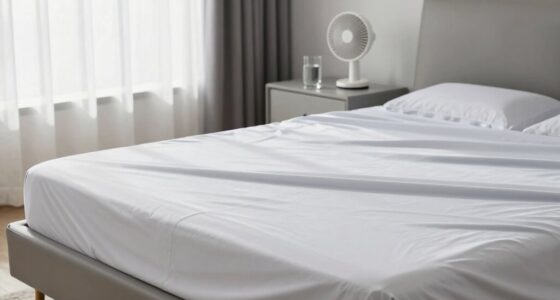
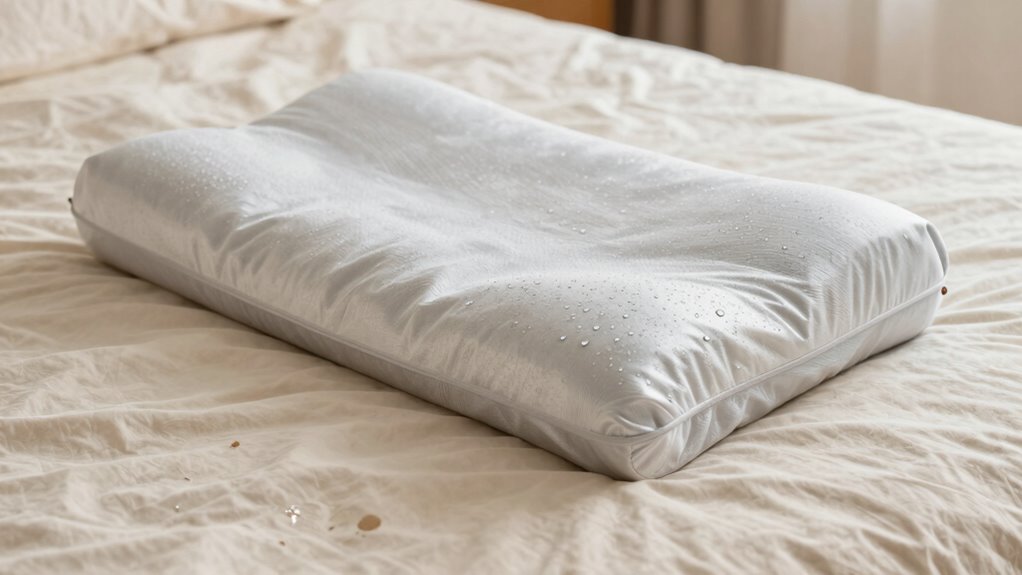

You can’t rely on fabric alone to solve mattress cooling issues because external factors like room temperature, mattress insulation, and poor airflow play a bigger role in heat retention. Even the breathability of sheets or pillows can’t fully counteract a warm environment or an insulative mattress that traps heat. To really improve sleep comfort, you need to address these external conditions too. Keep exploring to discover effective strategies for creating a cooler, more comfortable sleep environment.

Get travel and outdoor gear delivered free with Prime
- Fast, free delivery on millions of items
- Prime Video, Amazon Music and more included
- Member-only deals all year
Key Takeaways
- Fabric’s breathability cannot fully counteract heat trapped by insulative mattresses or warm room temperatures.
- External environmental factors like room temperature and ventilation significantly impact heat dissipation during sleep.
- Effective cooling requires controlling external conditions, not just upgrading bedding materials.
- Heat transfer depends more on environment and mattress design than fabric alone.
- A holistic approach, including climate control, is essential for achieving consistent sleep cooling.
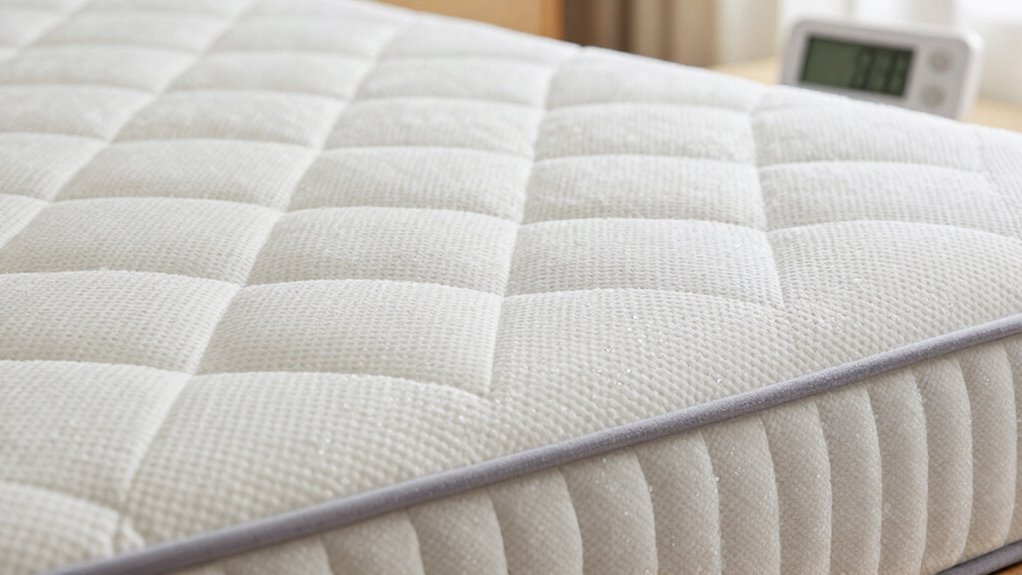
Have you ever woken up in the middle of the night feeling too hot? It’s a common issue that can turn a good night’s sleep into a frustrating experience. While changing your bedding might help temporarily, the root cause often lies deeper within your sleep environment and how your body regulates temperature during the night. Fabric alone, no matter how breathable or fancy, can only do so much to solve this problem. You need to understand that temperature regulation isn’t just about what covers you but also about how your sleep environment manages heat.
Your body naturally tries to maintain a stable internal temperature while you sleep, but external factors can interfere with this process. If your bedroom is too warm, or if the mattress traps heat, you’ll struggle to cool down naturally. This is where the limitations of fabric become clear. Even the most advanced cooling sheets or pillows can’t fully counteract a hot room or an overly insulative mattress. The issue isn’t just about feeling sweaty; it’s about how heat moves away from your body and how your environment supports or impedes that process. Heat dissipation plays a crucial role in maintaining comfort during sleep.
External factors like room temperature and mattress insulation hinder your body’s natural cooling process during sleep.
You might think that investing in cooling bedding will solve the problem, but the truth is, it’s only part of the solution. A good sleep environment must allow heat to dissipate efficiently, which means considering factors like room temperature, humidity, and airflow. If your room is stuffy or lacks proper ventilation, no amount of cool fabrics will keep you comfortable all night. Proper airflow helps carry heat away from your body more effectively and is essential for better sleep quality. Temperature regulation is a complex process that involves your body, your mattress, and the space around you working together. When one element is off, the entire system suffers. Incorporating climate control solutions can significantly improve your sleep comfort by actively managing temperature levels. Additionally, understanding the importance of heat transfer can help you implement more effective strategies for a cooler sleep environment.
To truly address the mattress cooling problem, you need to look beyond fabric and focus on creating an ideal sleep environment. This could mean lowering your room temperature with a fan or air conditioner, using breathable bedding, or choosing a mattress designed for better heat dissipation. Remember, your body’s ability to cool itself during sleep depends heavily on these external conditions. Proper ventilation helps support the body’s natural cooling processes and prevents heat buildup. Simply layering on cooling sheets can only do so much if the surrounding environment isn’t conducive to heat loss. The key is to foster an environment that supports natural temperature regulation, so you can wake up feeling refreshed instead of overheated.
As an affiliate, we earn on qualifying purchases.
Frequently Asked Questions
Do Cooling Fabrics Work Better With Memory Foam Mattresses?
Yes, cooling fabrics tend to work better with memory foam mattresses. Fabric technology that promotes breathability and moisture wicking enhances comfort, especially when paired with memory foam’s heat retention qualities. While memory foam traps heat, cooling fabrics help dissipate it, creating a more comfortable sleep environment. Using a cooling fabric cover or sheets can notably reduce nighttime overheating, making your sleep experience more revitalizing and restful.
How Long Do Cooling Mattress Covers Typically Last?
Cooling mattress covers typically last between 1 to 3 years, depending on fabric durability and how well you care for them. Notably, studies show that sleep temperature regulation can decline as covers wear out, impacting comfort. To maximize lifespan, wash them gently and follow manufacturer instructions. Proper maintenance helps preserve fabric integrity, ensuring your cooling solution remains effective for as long as possible.
Are There Health Risks With Certain Cooling Fabrics?
Yes, some cooling fabrics can pose health risks like skin irritation or allergic reactions, especially if you have sensitive skin or allergies. Synthetic materials or those treated with chemicals may cause discomfort or worsen skin conditions. Always check fabric labels and choose breathable, hypoallergenic options. If you notice redness, itching, or swelling, stop using the fabric and consult a healthcare professional to prevent further irritation or reactions.
Can Cooling Fabrics Prevent Night Sweats Effectively?
You might worry cooling fabrics won’t stop night sweats, but with advanced fabric technology, they can considerably improve your sleep environment. These fabrics actively wick away moisture and promote airflow, helping you feel cooler and more comfortable. While they aren’t a complete cure, they create a more stable temperature, reducing the risk of night sweats and improving your overall rest. Don’t let discomfort ruin your night—try fabrics designed to keep you cooler.
Do Cooling Fabrics Require Special Maintenance or Cleaning?
Cooling fabrics usually require gentle cleaning protocols to maintain their fabric durability and cooling properties. You should wash them with mild detergents and avoid bleach or fabric softeners, which can damage the fabric. Always follow the manufacturer’s instructions for care. Regular cleaning helps keep these fabrics effective and prolongs their lifespan, ensuring you continue to benefit from their cooling benefits during sleep.
Conclusion
Remember, you can’t rely on fabric alone to keep you cool through the night. While breathable sheets help, they’re just one piece of the puzzle. To truly beat the heat, consider additional cooling solutions like memory foam with gel infusion or a cooling mattress pad. As the saying goes, “A chain is only as strong as its weakest link.” Don’t let your sleep suffer—combine strategies for a cooler, more restful night.
Fall Picks
fall essentials
As an affiliate, we earn on qualifying purchases.