
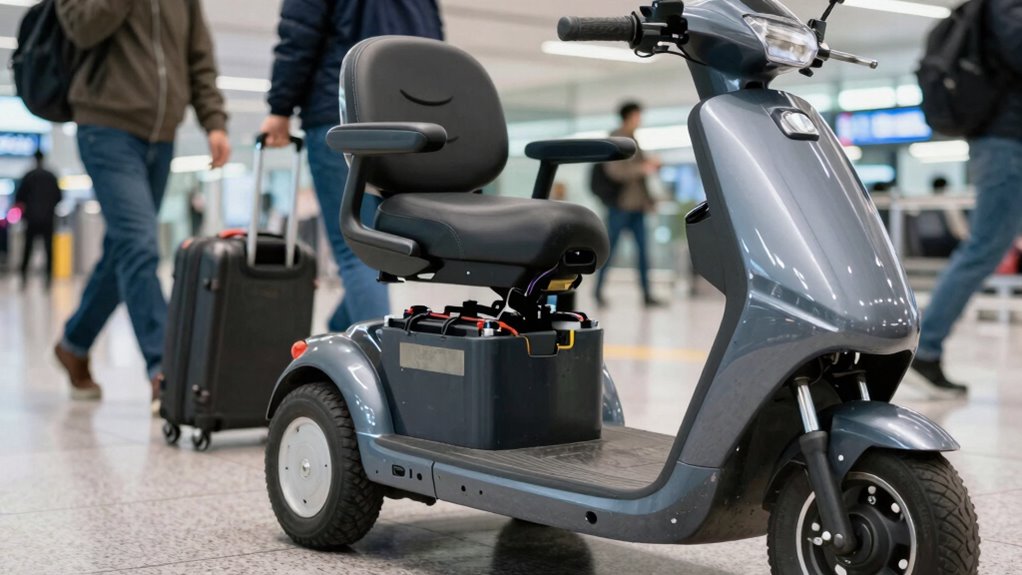

To guarantee a smooth boarding day with your mobility scooter, proper battery care is essential. Neglecting to charge regularly, store the battery in ideal conditions, or using incompatible chargers can lead to unexpected power loss or safety issues. Keeping up with maintenance helps your scooter run reliably and safely. Staying on top of these battery rules now can prevent disruptions when you need your scooter most. Keep going to discover essential tips to avoid charging mishaps and assure worry-free rides.
Key Takeaways
- Overcharging or undercharging the scooter’s battery can cause damage and lead to delays during boarding.
- Failing to fully charge the battery before travel may result in insufficient power to reach your destination.
- Not following manufacturer guidelines for charging times can compromise battery health and trip reliability.
- Improper storage or exposing the battery to extreme temperatures can reduce performance and cause boarding issues.
- Neglecting regular maintenance or ignoring battery issues increases the risk of breakdowns and safety concerns during travel.

Have you ever wondered how mobility scooters can restore independence for people with limited mobility? One of the key factors that determine how well your scooter performs is how you handle its battery maintenance. Properly caring for your scooter’s battery isn’t just about prolonging its lifespan; it’s about guaranteeing your safety and reliability every time you hit the road. If your battery isn’t maintained correctly, you risk unexpected power loss, which can leave you stranded or cause accidents. That’s why understanding the basics of battery care is essential. Regularly charging your scooter after each use, avoiding letting the battery fully drain, and keeping it in a cool, dry place can make a significant difference. Overcharging can also harm the battery, so it’s important to follow the manufacturer’s guidelines for charging times. When you pay attention to these details, you’re not just extending your battery’s life—you’re also making your rides safer. Proper battery maintenance helps ensure your scooter operates efficiently and reduces the likelihood of sudden failures.
Scooter safety goes hand in hand with good battery maintenance. A well-maintained battery ensures your scooter operates smoothly and reliably, reducing the chances of sudden breakdowns that could lead to falls or other accidents. Always inspect your scooter before every ride—check the tires, brakes, and, most importantly, the battery level. If you notice the battery isn’t holding a charge or seems to drain faster than usual, don’t ignore it. Addressing battery issues early can prevent emergency situations that compromise your safety. Keep in mind that a fully charged battery isn’t just about convenience; it’s about guaranteeing you have enough power to reach your destination safely. Also, be aware of your scooter’s weight limits and avoid overloading, which can strain the battery and reduce its lifespan. Properly maintaining your scooter’s battery and prioritizing safety measures help you enjoy independence without worry.
Additionally, always use the charger provided by the manufacturer and avoid using incompatible charging devices. Store your scooter in a safe, sheltered location to prevent exposure to extreme temperatures, which can degrade the battery over time. Remember, a well-charged and properly maintained battery boosts your confidence and enables you to navigate various terrains securely. Ultimately, taking the time to care for your scooter’s battery and practicing safe riding habits ensures each trip is smooth, reliable, and safe—so you can focus on enjoying your freedom without the worry of unexpected breakdowns. Proper battery maintenance isn’t just a routine; it’s an essential part of your mobility and safety plan, making sure every boarding day goes off without a hitch.
mobility scooter replacement batteries
As an affiliate, we earn on qualifying purchases.
As an affiliate, we earn on qualifying purchases.
Frequently Asked Questions
Can I Bring My Mobility Scooter on International Flights?
Yes, you can bring your mobility scooter on international flights, but you must follow airline policies and battery regulations. Check with your airline beforehand, as they may have specific requirements for lithium batteries and device storage. Guarantee your scooter’s batteries meet safety standards to avoid issues during check-in. By preparing in advance and understanding airline policies, you can ensure smooth boarding and enjoy your trip without surprises.
Are There Size Restrictions for Mobility Scooters on Buses?
Yes, there are size restrictions for mobility scooters on buses. You need to check the specific bus company’s policies regarding scooter size, as many have maximum dimensions to ensure they fit comfortably. If your scooter exceeds these limits, you might need to contemplate alternative transportation. Always measure your scooter beforehand and confirm bus restrictions to avoid surprises and ensure a smooth journey.
How Do I Properly Charge My Mobility Scooter Before Travel?
To properly charge your mobility scooter before travel, make certain you follow good battery maintenance by charging it fully in a well-ventilated area. Use the original charger, avoid overcharging, and disconnect once it’s complete. Prioritize charging safety by keeping the battery away from heat sources and moisture. Check for any damage or corrosion, and always follow manufacturer instructions to keep your scooter ready and safe for your journey.
What Are the Costs Associated With Transporting a Scooter?
Transporting your scooter is like moving a precious cargo—costs vary based on airline policies, shipping methods, and weight considerations. Expect fees ranging from $50 to $200, with additional charges for excess weight or special handling. Proper battery maintenance can prevent extra costs, and knowing your scooter’s weight helps avoid surprises. Always check airline rules beforehand to ensure smooth travel and avoid unexpected fees that can turn your trip into a costly ordeal.
Are There Specific Insurance Requirements for Mobility Scooters?
You should verify the insurance regulations for mobility scooters, as they vary by airline and destination. Most airlines require you to have scooter coverage, either through your personal insurance or a specific policy. It’s essential to confirm that your insurance covers damage, theft, and liability. By understanding these requirements, you ensure your scooter is protected and avoid surprises at the airport, making your travel smoother and more secure.
mobility scooter charger compatible with [brand/model]
As an affiliate, we earn on qualifying purchases.
As an affiliate, we earn on qualifying purchases.
Conclusion
Did you know that nearly 60% of travelers with mobility scooters face battery-related issues at airports? Don’t let a simple rule ruin your boarding day. Stay informed about airline policies and battery regulations to guarantee a smooth journey. By understanding these rules, you can avoid delays and stress, making your travel experience much more enjoyable. Remember, a little preparation goes a long way—so check those batteries before you head to the airport!
portable mobility scooter battery charger
As an affiliate, we earn on qualifying purchases.
As an affiliate, we earn on qualifying purchases.
mobility scooter battery maintenance kit
As an affiliate, we earn on qualifying purchases.
As an affiliate, we earn on qualifying purchases.