
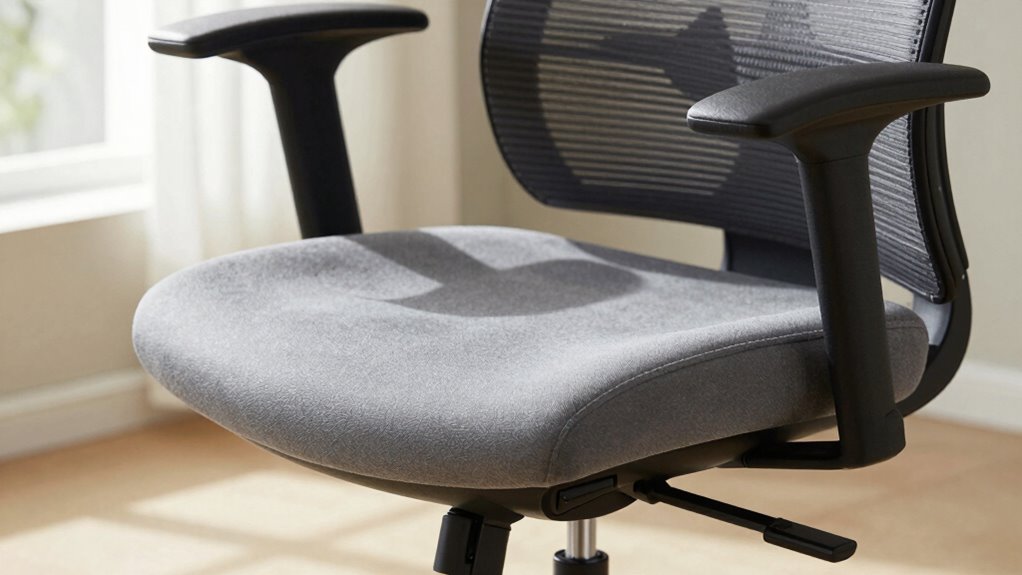

Many people overlook how important seat-depth adjustment is on ergonomic chairs. Properly setting it guarantees your entire back is supported comfortably, prevents thigh discomfort, and improves circulation during long hours. If you don’t adjust it, you might suffer from poor posture or strain that could lead to discomfort or long-term issues. Want to discover how perfect seat-depth settings can make a difference? Keep going for tips to optimize your chair’s support and comfort.
Key Takeaways
- Seat-depth adjustment is often overlooked but crucial for supporting the entire back and maintaining proper posture.
- Proper seat depth prevents thigh discomfort, promotes circulation, and reduces numbness during extended sitting.
- Incorrect seat depth can cause slouching, strain, and discomfort, undermining ergonomic benefits.
- Adjusting seat depth aligns hips and pelvis, enhancing lumbar support and overall comfort.
- Combining seat-depth adjustment with armrest and lumbar support customization maximizes ergonomic benefits.
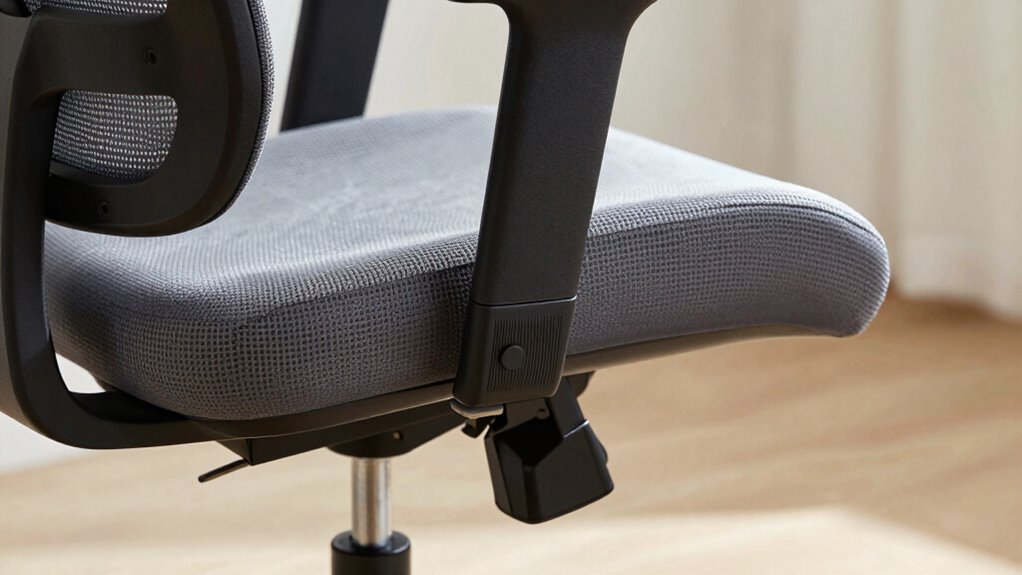
Have you ever wondered why so many people swear by ergonomic chairs? It’s because these chairs are designed to promote better posture, reduce discomfort, and increase productivity. But even with all their features, many users overlook the importance of a proper seat-depth adjustment. This simple yet essential feature can make a significant difference in how you feel after long hours at your desk. When you sit in an ergonomic chair, the lumbar support is often praised for its ability to maintain the natural curve of your lower back, preventing slouching and strain. However, seat-depth adjustment works hand-in-hand with lumbar support to guarantee your entire back is supported comfortably. If the seat is too deep, you might find yourself leaning forward, which defeats the purpose of lumbar support. Conversely, if it’s too shallow, your thighs won’t be properly supported, leading to discomfort and poor circulation. Adjusting the seat depth allows you to set it so that you can sit fully back against the lumbar support while still maintaining a few inches of space between the back of your knees and the edge of the chair. This adjustment ensures your hips and pelvis are aligned correctly, which is essential for long-term comfort. Proper seat-depth adjustment can also enhance blood circulation and prevent numbness during extended sitting periods.
Another feature that’s often overlooked but equally important is the adjustable armrests. When these are set appropriately, they help reduce tension in your shoulders and neck by allowing your arms to rest naturally. Properly adjusted armrests also help support your upper body, reducing the strain on your lumbar region. If your armrests are too high, they can elevate your shoulders, causing unnecessary tension. If they’re too low, your arms hang unsupported, leading to fatigue over time. By fine-tuning the armrests, you help distribute your weight more evenly and prevent slouching, which can put unnecessary pressure on your lumbar spine. Combining seat-depth adjustment with well-positioned lumbar support and adjustable armrests creates a customized ergonomic experience designed for your body. These adjustments aren’t just about comfort—they actively contribute to better spinal health and reduce the risk of musculoskeletal issues caused by prolonged sitting.
ergonomic office chair with adjustable seat depth
As an affiliate, we earn on qualifying purchases.
As an affiliate, we earn on qualifying purchases.
Frequently Asked Questions
How Often Should I Readjust the Seat Depth for Optimal Comfort?
You should readjust your seat depth whenever you notice discomfort or your posture isn’t ergonomic anymore. Aim to do this at least once a month or if your activity level changes. Proper seat depth keeps your lumbar support effective, allowing your back to stay supported and promoting ergonomic posture. Regular adjustments help prevent strain and keep your sitting experience comfortable, especially during long periods at your desk.
Can Seat-Depth Adjustment Prevent Long-Term Back Problems?
You might think seat-depth adjustment won’t prevent long-term back problems, but it actually plays a vital role. By customizing the distance between your lumbar support and seat cushion, you guarantee proper alignment and reduce strain. This helps maintain good posture and minimizes pressure on your lower back. Regularly adjusting your seat depth keeps your lumbar support in the right spot, preventing discomfort and potential long-term back issues.
Are There Specific Ergonomic Chairs Better Suited for Taller or Shorter Users?
Yes, some ergonomic chairs are better suited for taller or shorter users by addressing height considerations and offering ergonomic customization. Taller individuals should look for chairs with adjustable seat height, higher weight capacities, and longer seat depths for proper support. Shorter users benefit from chairs with adjustable lumbar support and lower seat height options. Choosing a chair with customizable features guarantees maximum comfort and reduces strain, regardless of your height.
Does Seat-Depth Adjustment Affect Overall Chair Stability?
Think of seat-depth adjustment like balancing a scale—if you set it right, it stays stable. Yes, adjusting the seat depth can affect chair stability because it influences your weight distribution. When you customize it to fit your body, you make certain of even support, which keeps the chair steady. Proper seat-depth adjustment helps prevent wobbling or tipping, enhancing overall chair stability and making your sitting experience safer and more comfortable.
What Tools or Techniques Are Recommended for Easy Seat-Depth Adjustments?
You should use the chair’s height customization lever or dial for easy seat-depth adjustments. Simply slide the seat forward or back to find your perfect fit, ensuring proper lumbar support and comfort. Check if your chair has clear markings for adjustments, making it simple to customize. Regularly adjusting your seat depth helps maintain good posture and prevents strain, keeping your workspace ergonomic and supportive.
ergonomic chair lumbar support
As an affiliate, we earn on qualifying purchases.
As an affiliate, we earn on qualifying purchases.
Conclusion
Don’t let the seat-depth adjustment be the hidden gem of your ergonomic chair. When used correctly, it’s like fine-tuning a musical instrument—ensuring harmony between comfort and support. Many overlook this feature, missing out on a personalized fit that could prevent discomfort and boost productivity. So, take control of your seating experience and explore all the adjustments at your fingertips. After all, an ergonomic chair isn’t just furniture; it’s your foundation for better days at work.
adjustable armrest office chair
As an affiliate, we earn on qualifying purchases.
As an affiliate, we earn on qualifying purchases.
ergonomic desk chair for long hours
As an affiliate, we earn on qualifying purchases.
As an affiliate, we earn on qualifying purchases.