To capture stunning photos on a cruise, focus on the ship deck for panoramic ocean views, especially during sunrise or sunset for warm, dynamic lighting. Explore port scenes with colorful buildings, markets, and waterfront activity for vibrant shots. Use natural framing like railings, and play with reflections and shadows to add depth. Keep your camera ready for spontaneous moments and experiment with different vantage points—if you want to learn more, you’ll find plenty of tips ahead.
Key Takeaways
- Capture panoramic views from the ship deck during sunrise or sunset for vibrant, dynamic images.
- Use natural framing like railings or structures to add depth and interest to your shots.
- Photograph port scenes such as colorful buildings, market life, and waterfront views for diverse storytelling.
- Take advantage of softer morning or late afternoon light and use polarizers to reduce glare.
- Keep your camera ready for candid moments and spontaneous scenes to authentically document your cruise experience.
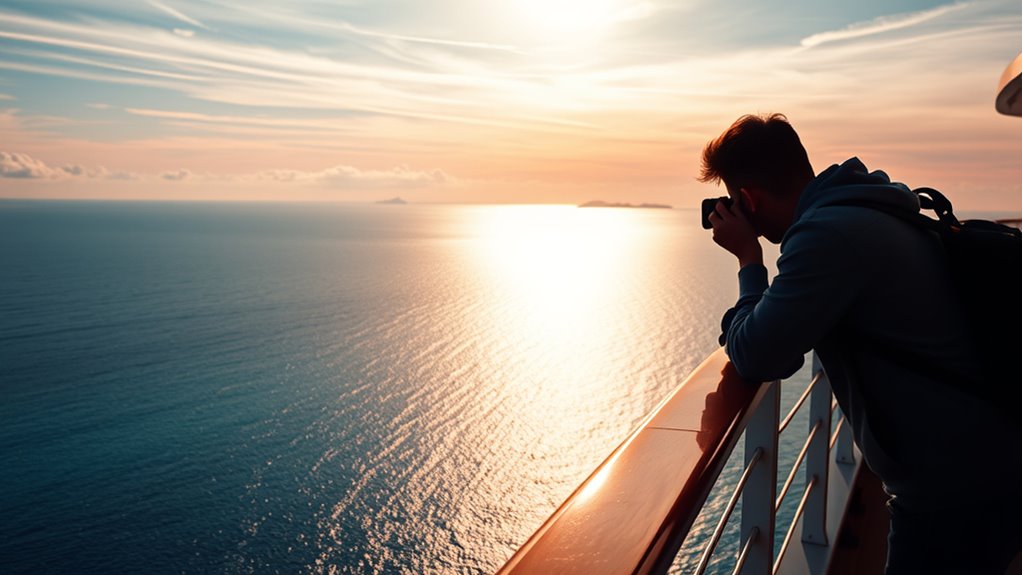
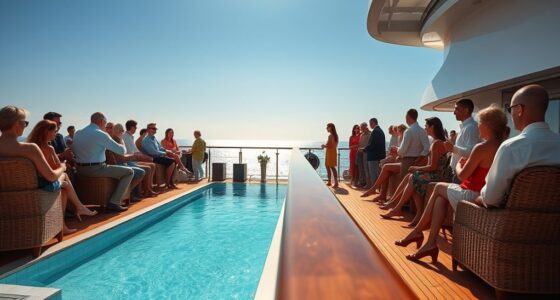
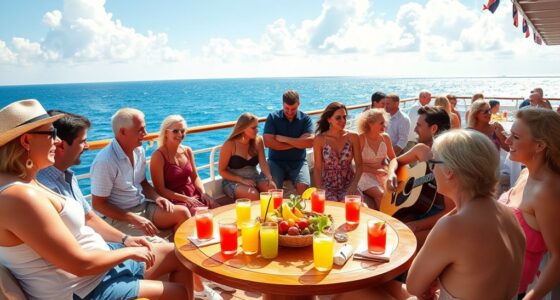
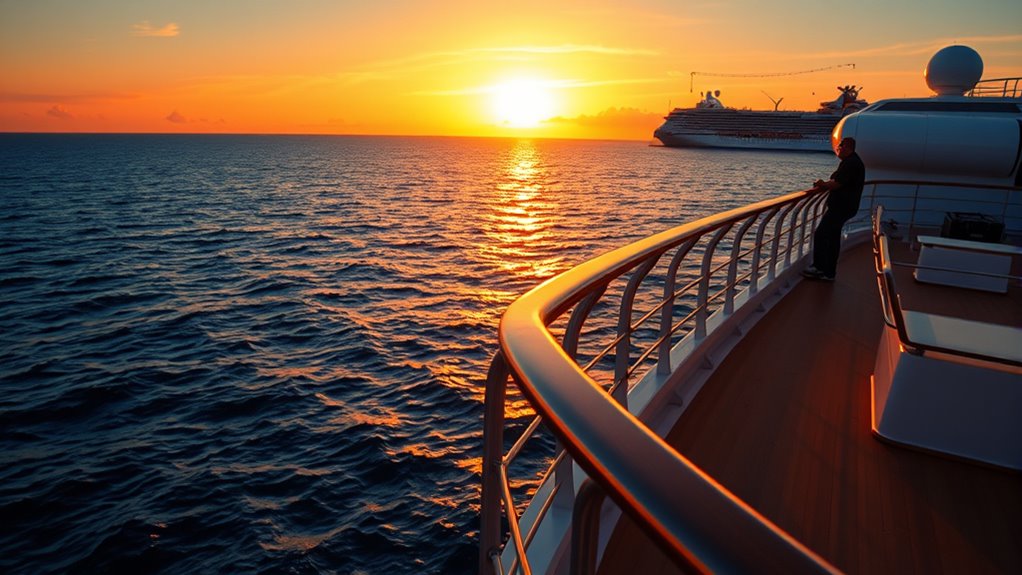
Ever wondered how to capture stunning photos while cruising the open seas? It all begins with understanding the unique vantage points you have on a cruise ship. The ship deck is arguably the best spot for panoramic shots, offering sweeping views of the endless horizon and the vast ocean stretching out before you. As you step onto the deck, you’ll notice how the sunlight dances on the water, creating mesmerizing reflections perfect for capturing vibrant, lively images. Whether it’s sunrise or sunset, the ship deck provides a dynamic setting where you can play with lighting and composition. Keep your camera ready for moments when the crew is setting up for a show or when fellow travelers are enjoying the deck’s amenities—these candid shots add a lively touch to your collection.
Capture stunning panoramic views from the ship deck during sunrise or sunset for vibrant, lively images.
When the ship docks at a port, the scenery transforms, giving you a different perspective to photograph. Port scenery is often a treasure trove of colorful buildings, bustling markets, and historic landmarks. As you step ashore, look for unique angles that highlight the charm of each destination. Narrow streets, local markets, and waterfront views make excellent foregrounds, helping your images tell a story of your journey. Capture the lively energy of port cities by photographing street performers, local vendors, or boats bobbing in the harbor. The contrast between the ship’s sleek exterior and the authentic, vibrant port scenery offers a fantastic opportunity for diverse shots, from wide vistas to detailed close-ups.
Always be mindful of lighting when photographing port scenery. Early morning and late afternoon provide softer, warmer light that enhances colors and textures, making your photos more inviting. Midday sun can be harsh, so look for shaded areas or wait for clouds to soften the light. Using a polarizer can help reduce glare and reflections, especially when photographing water or shiny surfaces. If you’re shooting on the ship’s deck, consider the direction of the sun to avoid backlighting, which can turn your subject into a silhouette unless that’s your intention. Use the ship’s railings or other structures to frame your shots creatively, adding depth and context. Additionally, incorporating natural materials found on a cruise or at port can enhance the rustic or authentic feel of your photos.
In essence, whether you’re on the ship deck capturing the serenity of the sea or exploring the bustling port scenery, your camera becomes your best companion. With an eye for detail and a bit of preparation, you’ll be able to immortalize the magic of your cruise and bring home photos that truly tell the story of your adventure.
Frequently Asked Questions
What Camera Gear Is Best for Underwater Shots on a Cruise?
For underwater shots on a cruise, you’ll want a waterproof camera or an SLR with an underwater housing. A waterproof camera is convenient and compact, perfect for quick shots, while an underwater housing permits you to use your preferred camera and offers more control. Make sure the housing is rated for the depth you’ll dive, and always test it before your trip to ensure your photos come out clear and protected.
How to Protect My Camera From Saltwater Damage?
To protect your camera from saltwater damage, make sure it has proper camera waterproofing, like a sealed housing or waterproof case. Always rinse your camera with fresh water after exposure to saltwater to prevent salt corrosion. Use salt corrosion protection sprays or wipes designed for electronics, and regularly check seals and gaskets for integrity. This proactive care keeps your gear safe and functional during your cruise adventures.
Can I Bring Drone Photography Equipment Onboard?
Yes, you can bring drone photography equipment onboard, but you must follow regulations compliance and guarantee proper storage safety. Check with your cruise line beforehand, as they often have specific rules about drones, including restrictions on usage and storage. Secure your drone in a safe, dry place to prevent damage during the voyage. Respect crew instructions and local laws to keep your trip trouble-free and your footage fantastic.
What Are the Best Times for Capturing Sunrise and Sunset Photos?
You should aim to capture sunrise and sunset photos during the best lighting conditions, which occur during the golden hour. This is typically just after sunrise and just before sunset, when the light is soft and warm. Check local times for these periods, as they vary depending on your location. Planning ahead guarantees you don’t miss these stunning moments, giving your photos that magical, professional look.
How Do I Handle Low-Light Photography in Ship Interiors?
Did you know that ship interiors often have lighting levels as low as 200 lux? To handle low-light photography, use tripod techniques to keep your camera steady and prevent blur. Increase your ISO settings carefully—around 800-1600—to brighten images without excessive noise. Adjust exposure times accordingly, and consider using a fast lens with wide apertures. These steps help you capture clear, sharp photos even in dimly lit ship interiors.
Conclusion
As you explore your cruise, remember that each shot is like capturing a fleeting sunset—beautiful and gone in an instant. Your camera becomes a tool to preserve memories, turning moments into timeless images. Embrace the changing scenery, the vibrant sunsets, and candid smiles, knowing these photos will be treasures long after the trip ends. So, keep your camera ready, and let your photography turn your voyage into a stunning story that lasts forever.