
To get started safely with the Pilates reformer, it’s key to learn how to set it up properly. Make sure the machine is on a flat, stable surface and that all parts are secure and in good condition. Adjust the resistance and components like springs and straps to match your fitness level. Regularly inspect your equipment for wear, and stay aware of proper alignment. If you keep these tips in mind, you’ll enhance your workout safety and effectiveness—more tips await to help you progress smoothly.
Key Takeaways
- Always verify all parts are securely assembled before use to prevent accidents.
- Familiarize yourself with resistance adjustments to customize your workout effectively.
- Regularly inspect springs and moving parts for wear to ensure safety and longevity.
- Learn how to modify equipment settings for different exercises and fitness levels.
- Proper setup and maintenance are essential for safe, effective, and progressive Pilates practice.

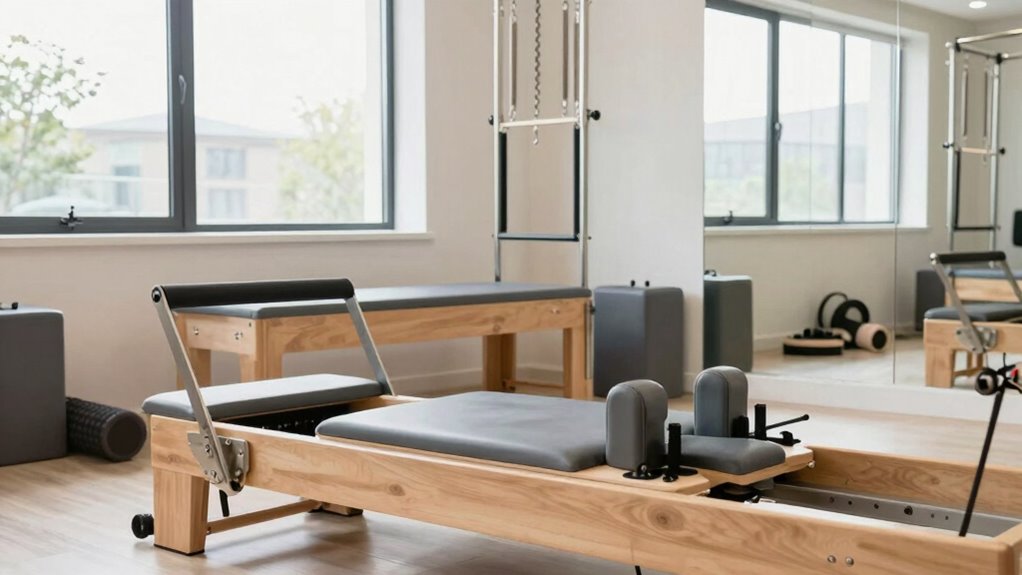
Getting started with a Pilates Reformer can seem intimidating at first, but setting it up correctly is simple once you know the basics. The key is understanding the essential steps to assemble and adjust your equipment safely and efficiently. Start by making sure the machine is placed on a flat, stable surface and that all parts are intact. Familiarize yourself with the different components, such as the carriage, springs, footbar, and straps. Before beginning any exercise, double-check that all parts are securely connected and functioning properly. Proper setup is not just about safety; it also sets the foundation for more advanced techniques you might want to explore later.
Ensure your Pilates Reformer is on a stable surface and all parts are secure for safe, effective workouts.
As you become more comfortable with the setup process, you’ll discover that mastering equipment maintenance is equally important. Regularly inspecting springs for wear or damage helps prevent accidents and guarantees consistent resistance during workouts. Keep the moving parts clean and lubricated if necessary, following the manufacturer’s instructions. This routine maintenance prolongs the life of your equipment and keeps your workouts smooth and effective. Remember, neglecting equipment maintenance can lead to misalignments or malfunctions, which could compromise your safety and limit your progress in mastering advanced techniques.
Additionally, understanding the resistance mechanism of your reformer makes it easier to customize workouts and safely increase difficulty as you improve. Once you’re comfortable with the initial setup, you’ll find that adjusting the reformer for different exercises is straightforward. Most machines have markings or adjustable parts that make changing resistance and positions quick and easy. This flexibility allows you to progress from beginner movements to more advanced techniques, such as single-leg exercises or complex sequences. As you adjust your equipment, paying attention to alignment and calibration ensures that you maintain proper form and prevent unnecessary strain. Proper equipment adjustments can greatly enhance your workout experience and safety. Knowing how to correctly align and calibrate your equipment can also prevent issues and optimize your workout effectiveness.
Learning how to set up your Pilates Reformer properly also means understanding how to modify it to match your evolving fitness level. Whether you’re adding resistance through springs or adjusting the carriage, these small tweaks open new challenges, pushing your limits safely. The more you understand the equipment’s mechanics, the easier it becomes to incorporate advanced techniques into your routine. Gaining knowledge about equipment mechanics can help you troubleshoot issues more effectively and ensure your workouts remain safe and productive. And as you become more experienced, maintaining your equipment becomes second nature, allowing you to focus entirely on your form and progress. Ultimately, knowing how to set up and care for your Pilates Reformer guarantees safe, effective workouts that grow with you.
Pilates reformer resistance springs
As an affiliate, we earn on qualifying purchases.
As an affiliate, we earn on qualifying purchases.
Frequently Asked Questions
How Do I Adjust the Footbar Height Properly?
To adjust the footbar height properly, first stand in front of your reformer and set the footbar to a height where your hips are level or slightly higher. Make certain your feet are aligned with your hips for proper alignment. You should be able to comfortably reach and press against the footbar without straining. Adjust as needed for comfort and to maintain proper alignment during your workout.
What Safety Checks Should I Perform Before Starting?
Think of it like tuning a fine instrument—before you play, check everything. Inspect the equipment for loose or worn parts, make sure the springs are secure, and confirm the safety locks are engaged. Wear proper clothing that allows free movement and won’t get caught. Perform a quick test to see if the Reformer moves smoothly. These safety checks, combined with regular equipment maintenance, keep your workout safe and effective from start to finish.
How Do I Choose the Correct Resistance Settings?
To choose the correct resistance settings, start by considering your fitness level and goals. Adjust the resistance gradually, ensuring the equipment maintenance is up to date and all reformer accessories are secure. Test the settings with a few slow movements to gauge comfort and challenge. As you progress, tweak the resistance to increase strength or flexibility. Always listen to your body and consult your instructor if unsure.
Can I Use the Reformer Without a Trainer?
Yes, you can use the reformer without a trainer, but beware of common Reformer myths that might lead you astray. As a beginner, follow some essential tips to stay safe and effective. Start slow, focus on proper form, and use beginner-friendly exercises. Watch instructional videos or read guides to understand the machine’s mechanics. Remember, even without a trainer, prioritizing safety and technique guarantees you get the most out of your workout.
What Common Mistakes Should I Avoid During Setup?
Don’t forget to double-check details during setup! Avoid common mistakes like neglecting proper alignment, which can cause discomfort, and overlook equipment maintenance, risking safety. Make certain springs are securely attached, the carriage moves smoothly, and straps are correctly positioned. Pay close attention to your body’s positioning, keeping everything aligned. By minding these mistakes, you’ll maximize safety, stability, and satisfaction, making your Pilates practice more effective and enjoyable from the very first session.
Conclusion
Now that you’ve got the basics down, imagine what’s next—more challenging moves, deeper stretches, and a stronger you. But here’s the twist: your journey with the Pilates reformer is just beginning. With each session, you’ll uncover new strengths and surprises. Are you ready to push the limits and discover what your body truly can do? Keep exploring, stay curious, and the possibilities are endless—your next breakthrough might be just one reformer away.