

On a polar cruise, you’ll experience either the Arctic’s vast sea ice, glaciers, and indigenous communities, or Antarctica’s stark, icy landscapes home to unique wildlife like penguins and seals. The Arctic faces rapid climate change impacts and is more inhabited, while Antarctica remains largely pristine but is also affected by melting ice. Each offers extraordinary sights and insights into climate change. Keep exploring to discover how these polar regions shape our understanding of Earth’s climate and ecosystems.
Key Takeaways
- Arctic cruises explore sea ice, glaciers, and indigenous communities; Antarctica offers icy landscapes with unique wildlife like penguins.
- Both regions face rapid ice melting due to climate change, impacting ecosystems and wildlife habitats.
- Arctic wildlife includes polar bears, reindeer, and Arctic foxes; Antarctica hosts penguins, seals, and albatrosses.
- Human impact is higher in the Arctic with indigenous communities; Antarctica remains largely pristine with minimal human activity.
- Cruises provide educational experiences on climate change effects, conservation efforts, and ecosystem responses in both regions.
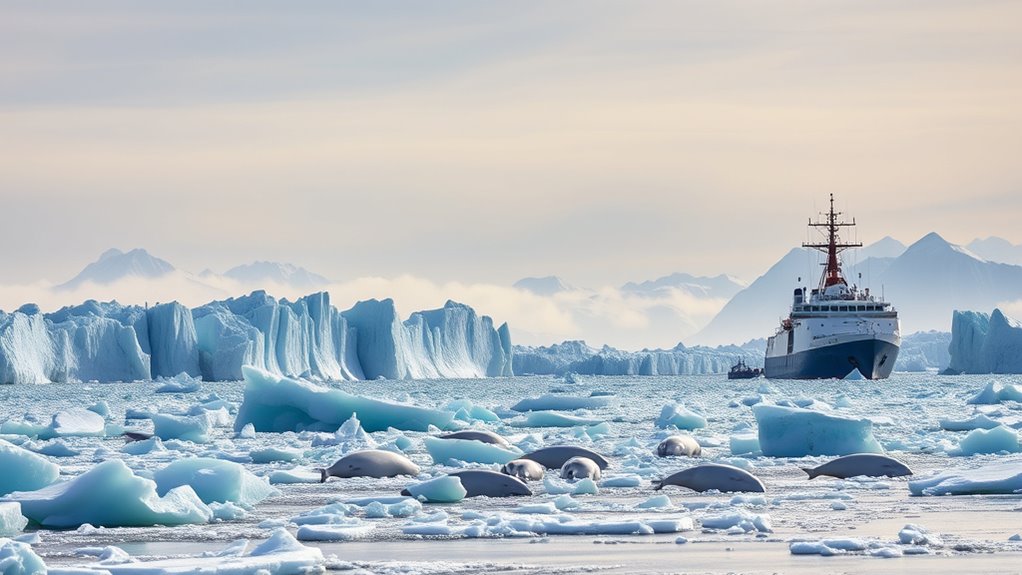
Have you ever wondered what it’s like to explore the icy wilderness of the Arctic or Antarctic? Both destinations offer unique adventures, but they also present distinct challenges and opportunities. When you choose a polar cruise, you’re stepping into environments deeply affected by climate change, which has accelerated melting ice sheets and disrupted local ecosystems. This makes your journey not just an exploration but also a chance to witness firsthand how these fragile regions are responding to global warming. As you cruise through these icy realms, you’ll see the importance of wildlife conservation efforts aimed at protecting species like polar bears, seals, penguins, and whales. These animals have adapted over millennia to survive in extreme conditions, but rising temperatures threaten their habitats and food sources.
Explore fragile polar regions and witness wildlife conservation efforts amid climate change challenges.
In the Arctic, you’ll find a landscape shaped by vast sea ice, glaciers, and tundra. It’s a region where climate change is most evident, with ice melting at unprecedented rates. Your expedition might include observing polar bears, majestic creatures that rely on sea ice to hunt seals. You’ll also spot Arctic foxes, reindeer, and a variety of seabirds. The Arctic is home to indigenous communities whose way of life is closely linked to the environment, making your visit an opportunity to learn about their ongoing efforts in wildlife conservation. You’ll see how climate change is forcing them to adapt and how scientific initiatives are working to preserve this delicate ecosystem. Your presence can help raise awareness about the importance of protecting these vital habitats. Additionally, understanding the role of carrier oils and essential oils in promoting wellbeing can enhance your travel experience by providing relaxation and comfort amidst the icy wilderness.
Contrastingly, Antarctica offers a different yet equally enthralling experience. The continent is mostly covered in ice and home to incredible wildlife such as penguins, albatrosses, and seals. Since Antarctica is less affected by human activity, it’s often considered a pristine wilderness, but climate change is slowly changing that status. Melting ice is threatening the breeding grounds of penguins and disrupting the food chain that sustains their colonies. During your cruise, you can witness these effects firsthand and understand the importance of global efforts in wildlife conservation. The continent’s stark, icy landscape is a stark reminder of the urgency to combat climate change, which directly impacts its fragile ecosystems.
Both Arctic and Antarctic cruises provide invaluable opportunities to connect with nature and understand the critical issues facing polar regions. Your journey can inspire a deeper appreciation for the importance of climate change mitigation and wildlife conservation, emphasizing our shared responsibility to protect these extraordinary environments for future generations.
Frequently Asked Questions
What Wildlife Is Unique to the Arctic and Antarctica?
In the Arctic, you’ll encounter unique Arctic flora like mosses and lichens, alongside iconic Arctic fauna such as polar bears, Arctic foxes, and reindeer. Meanwhile, in Antarctica, the landscape supports specialized Antarctic fauna like penguins, seals, and whales. The flora is sparse, but you’ll see hardy mosses and lichens. Both regions offer distinct wildlife experiences, with Arctic flora and fauna thriving in the tundra and Antarctic fauna adapting to icy waters and land.
How Do Weather Conditions Differ Between Arctic and Antarctic Cruises?
Imagine stepping into a world where the weather dances unpredictably. Arctic cruises face climate variability with icy winds, frigid temperatures, and dramatic seasonal changes that turn the landscape into a frozen mosaic. Meanwhile, Antarctic cruises encounter more stable, though still harsh, conditions dominated by strong winds and cold currents. You’ll experience a shifting climate that keeps you on your toes, making each voyage a unique adventure through nature’s icy theater.
Are There Any Cultural Experiences on Polar Cruises?
Yes, during polar cruises, you can engage with indigenous cultures and experience local traditions. You might visit communities where you learn about their history, art, and daily life directly from locals. These cultural experiences often include storytelling, traditional dances, and crafts, giving you a deeper appreciation of the indigenous peoples’ way of life. It’s a meaningful way to connect with the regions beyond their stunning landscapes.
Which Destinations Offer the Best Whale-Watching Opportunities?
You’ll find the best whale-watching opportunities in Alaska, where you can spot minke whales and enjoy thrilling orca sightings. The waters around the Falkland Islands and South Georgia also offer incredible chances to see these majestic creatures up close. In Antarctica, whale encounters are spectacular, with humpbacks and orcas often breaching near your ship. No matter the destination, keep your binoculars ready for unforgettable whale-watching experiences.
What Are the Environmental Impacts of Polar Tourism?
You should consider that polar tourism’s eco tourism impact can harm fragile ecosystems, disrupting wildlife and their habitats. Pollution concerns arise from increased ship traffic, waste disposal, and carbon emissions, which can accelerate climate change. While these adventures offer incredible experiences, it’s essential to choose operators committed to sustainable practices. By doing so, you help minimize environmental damage and protect these pristine regions for future generations.
Conclusion
Whether you choose the Arctic or Antarctica, polar cruises offer unforgettable adventures. Did you know that over 70% of the world’s fresh water is stored in Antarctica’s ice sheet? This highlights how fragile these ecosystems are and the importance of protecting them. So, as you set out on your journey, remember that your experience can inspire conservation efforts. Embrace the wonder and leave a positive impact on these pristine, essential environments for generations to come.