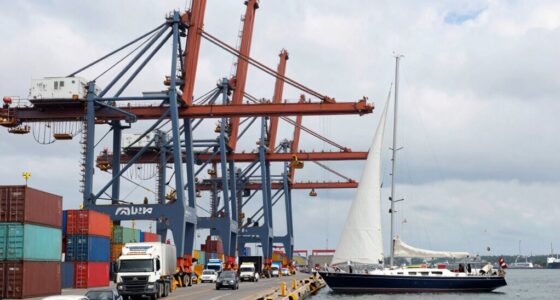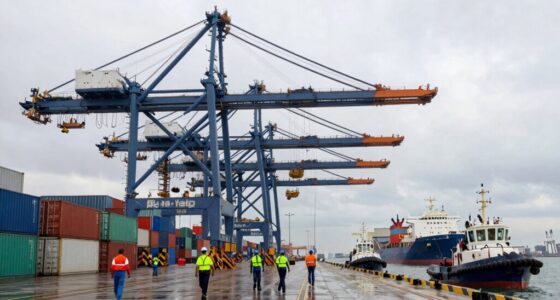

Port arrival times matter more because they set the pace for your entire supply chain. Knowing exactly when ships arrive helps you avoid delays, reduce costs, and improve cargo handling efficiency. It allows you to coordinate resources, prevent congestion, and communicate effectively with stakeholders. Without accurate arrival info, disruptions can ripple through your operations. Keep going to discover how precise timing can give you a real competitive edge and keep your logistics running smoothly.

Get travel and outdoor gear delivered free with Prime
- Fast, free delivery on millions of items
- Prime Video, Amazon Music and more included
- Member-only deals all year
Key Takeaways
- Precise arrival times enable optimized cargo handling and resource allocation, reducing delays and operational costs.
- Accurate arrivals prevent congestion and bottlenecks, ensuring smooth flow and minimizing cargo damage.
- Knowing exact arrival times allows better coordination with stakeholders, enhancing communication and reliability.
- Early or late arrivals can cause significant disruptions, making arrival timing more critical than departure schedules.
- Precise port arrival data supports proactive planning and quick responses to potential delays, improving overall efficiency.
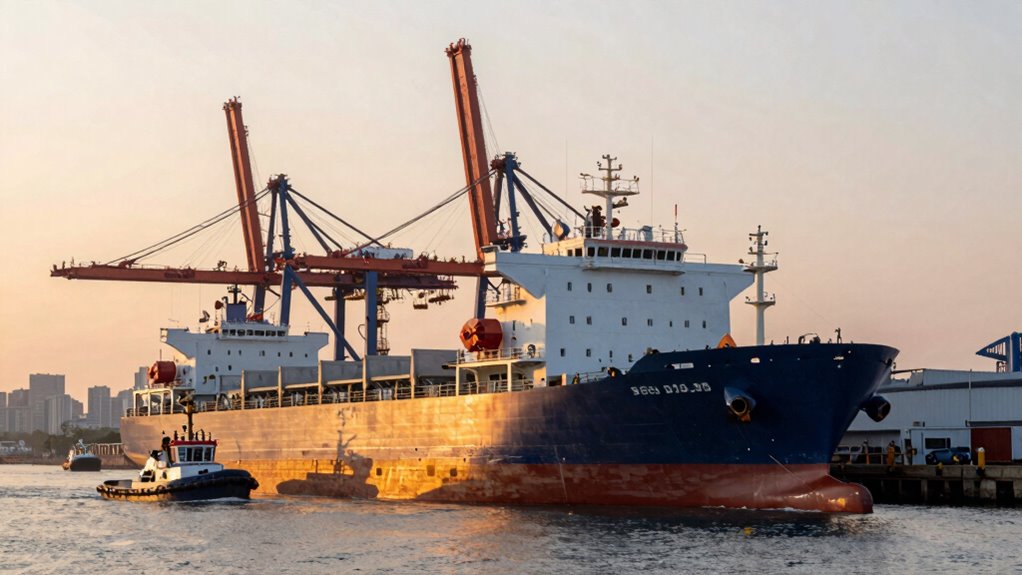
Knowing when a ship arrives at port isn’t just about scheduling; it’s essential for smooth logistics, cost efficiency, and minimizing delays. The moment the vessel reaches port sets the tone for the entire supply chain. If the arrival time is off, even by a small margin, it can throw off cargo handling operations and disrupt schedule coordination. When you’re aware of the precise arrival time, you can prepare your team and equipment for quick and efficient cargo loading or unloading. This proactive approach reduces idle time for cranes and dock workers, speeding up turnaround times and lowering costs.
Accurate ship arrival times streamline cargo handling, cut costs, and boost supply chain efficiency.
Cargo handling is highly sensitive to arrival times because it determines when equipment and personnel are mobilized. If a ship arrives unexpectedly early or late, it can lead to bottlenecks or idle resources. By accurately tracking port arrival times, you ensure your cargo is processed smoothly, without unnecessary delays. This precision helps avoid congestion at the dock, prevents cargo from piling up, and maintains a steady flow of goods. It also minimizes the likelihood of cargo damage caused by rushed or disorganized handling, protecting your investments and maintaining delivery schedules. Additionally, understanding the significance of scheduling accuracy can help optimize resource allocation and improve overall efficiency. Incorporating predictive analytics can further enhance your ability to anticipate delays and plan accordingly, leading to even greater efficiency.
Furthermore, accurate port arrival times allow you to communicate more effectively with stakeholders, including customs, freight forwarders, and clients. When everyone is on the same page regarding arrival estimates, it minimizes miscommunications and last-minute adjustments. This clarity enhances reliability and customer satisfaction, especially in just-in-time supply chains. Being aware of port congestion and adjusting schedules proactively can prevent potential delays and improve overall throughput.
In essence, knowing the exact port arrival time empowers you to optimize cargo handling, coordinate schedules seamlessly, and keep your supply chain running smoothly. It’s not just about the ship’s clock — it’s about maintaining control over your entire logistics operation. Being aware of precise port arrival times can significantly impact your ability to respond promptly and avoid costly disruptions. When you prioritize accurate arrival times, you’re less likely to face costly delays, and you gain a strategic advantage in managing your freight efficiently and effectively.
port arrival time tracking system
As an affiliate, we earn on qualifying purchases.
As an affiliate, we earn on qualifying purchases.
Frequently Asked Questions
How Do Port Delays Impact Global Supply Chains?
Port delays disrupt your global supply chain, causing late deliveries and increased costs. Customs delays often slow down shipments, while labor shortages at ports make handling even more sluggish. These issues extend transit times, create inventory shortages, and force you to reroute or expedite shipments. When arrival times are delayed, your entire supply chain faces unpredictability, forcing you to adapt quickly to maintain customer satisfaction and avoid financial losses.
Can Port Arrival Times Influence Insurance Premiums?
Yes, port arrival times can influence your insurance premiums. When ships arrive on schedule, it reduces delays and risks, leading insurers to see your operations as lower risk. This positive risk assessment can lower your insurance premiums. Conversely, unpredictable or late arrivals increase the risk of damage or loss, prompting higher premiums. Timely arrivals demonstrate reliable logistics, which insurers view favorably and can help you save money on coverage.
What Technologies Help Track Port Arrival Times Accurately?
You can use real-time tracking technologies like GPS and AIS systems to monitor port arrival times accurately. These tools provide live updates on vessel positions, ensuring you have precise data. Automated alerts notify you instantly when a ship approaches or arrives at the port, reducing delays and optimizing scheduling. By leveraging these technologies, you stay informed and can respond quickly to any changes, improving overall efficiency and decision-making.
How Do Port Schedules Affect Cargo Pricing?
Port schedules substantially influence cargo pricing by impacting cargo congestion and terminal efficiency. When schedules are well-coordinated, cargo moves smoothly, reducing delays and congestion charges. Conversely, poorly managed schedules cause congestion, increasing costs for storage and detention. Efficient terminal operations streamline cargo flow, lowering overall prices. So, if you want competitive rates, prioritize ports with reliable schedules that enhance terminal efficiency and minimize congestion-related expenses.
Are Port Arrival Times More Critical for Certain Industries?
Yes, for industries like perishable goods or just-in-time manufacturing, port arrival times matter more. You need to beat port congestion and customs procedures that can cause delays. Arriving promptly guarantees your cargo clears customs faster and avoids costly storage or spoilage. Staying on schedule helps maintain your supply chain’s efficiency, giving you a competitive edge, especially when delays could mean significant financial losses.
Conclusion
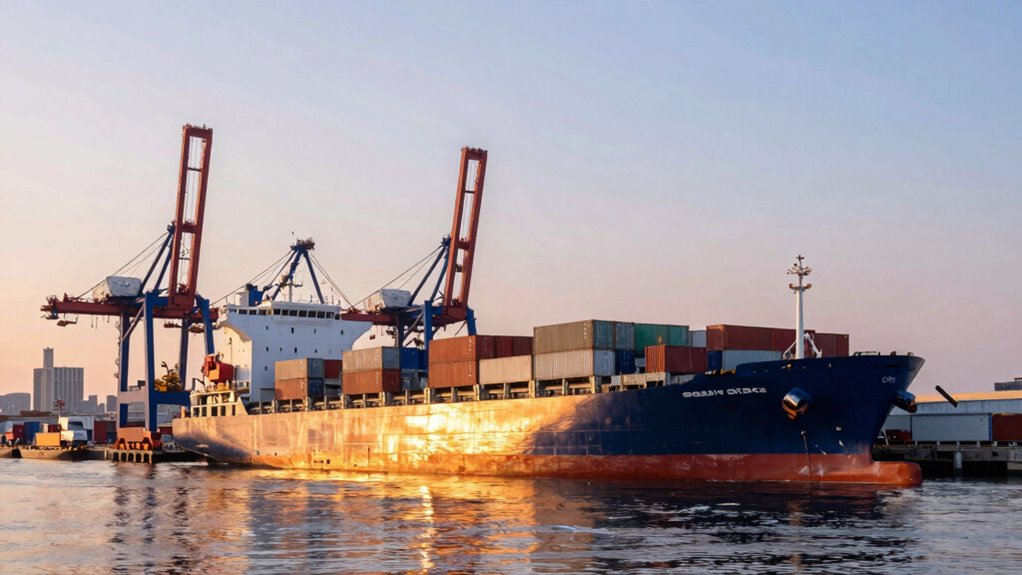
So, next time you’re tracking a ship, remember that its arrival time can be more vital than departure. It’s like a ship arriving just as the sun begins to rise, casting a golden glow that signals new beginnings and opportunities. That moment of arrival, often overlooked, holds the key to scheduling, safety, and efficiency. In this dance of logistics, timing at port isn’t just about when it leaves—it’s about when it arrives, perfectly aligned with the world’s rhythm.
Halloween Picks
halloween
As an affiliate, we earn on qualifying purchases.