
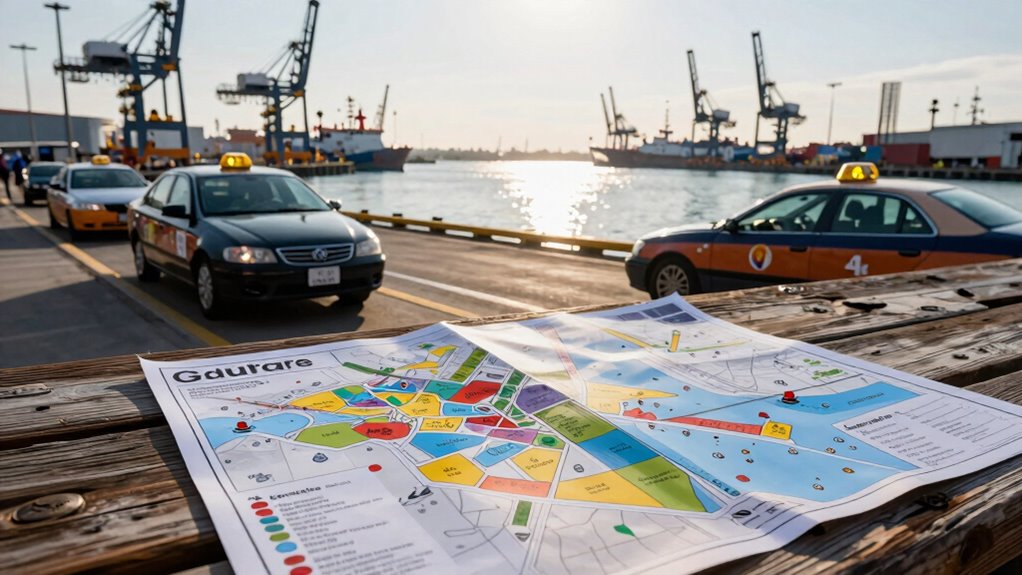

To avoid costly taxi mistakes at the port, recognize official transportation options like shuttles, buses, or trains early on. Use maps, signs, and info booths to gather fare details and routes before deciding. Understanding local regulations and signage helps you choose trustworthy services and avoid scams. Knowing these details can make your journey smoother and cheaper. Keep exploring to discover more practical tips for orienteering port transportation confidently.

Get travel and outdoor gear delivered free with Prime
- Fast, free delivery on millions of items
- Prime Video, Amazon Music and more included
- Member-only deals all year
Key Takeaways
- Identify and use official port transportation options like shuttles or trains instead of unreliable taxis.
- Research fare structures and purchase passes at official booths to avoid overcharging.
- Recognize official signage and route maps to navigate accurately and safely.
- Use translation apps or printed information to communicate effectively with transit staff.
- Plan ahead with schedules and resources to prevent impulsive, costly taxi decisions.
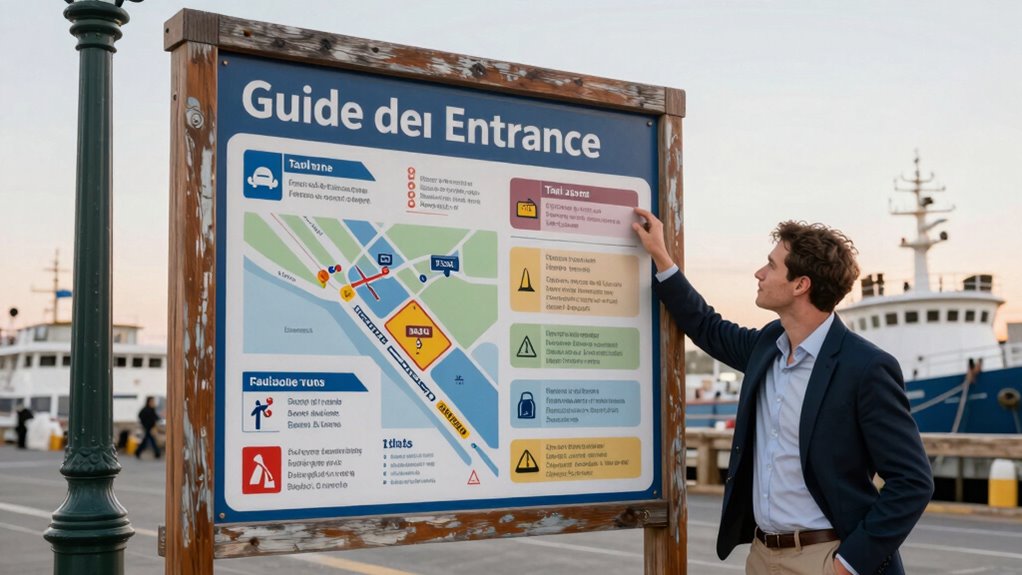
Finding your way through a busy port can be overwhelming, especially when you’re trying to decide whether to grab a taxi or explore other transportation options. The sheer number of drivers offering rides, the noise, and unfamiliar surroundings can make quick decisions stressful. One key detail that can save you from an awful taxi experience is understanding the local transportation scene. Knowing what options are available beyond taxis can help you avoid unnecessary expenses or scams, and it can give you peace of mind. Ports often have buses, shuttles, or train services connecting you to nearby areas, and recognizing these options early on can be a game-changer.
Another essential tip is to prepare for potential language barriers before you arrive. Many port areas are bustling with international travelers, but local transportation staff or drivers may not speak your language fluently. If you don’t have a basic grasp of the local language or a translation app, you might struggle to communicate your destination or verify prices, leading to confusion or overcharging. To avoid this, it’s smart to research common phrases, download translation apps, or carry a printed map with key locations marked. When you approach transportation providers, simple gestures or written addresses can help bridge communication gaps. Understanding local signage can also be a crucial part of navigating effectively. Additionally, familiarizing yourself with the local transportation system can help you recognize official signs and routes more easily. Being aware of local transportation regulations can also help you avoid potential fines or misunderstandings during your journey.
It’s also helpful to note that local transportation fare structures can vary significantly, so understanding how prices are set can save you money. Knowing the typical costs of local transportation can also prevent you from getting ripped off. Many ports display fare information or have ticket booths where you can buy passes in advance. If you’re unfamiliar with the pricing, ask locals or hotel staff for guidance. This insight helps you compare options effectively, whether you’re considering a taxi, bus, or shuttle. Additionally, look out for official transportation services that operate under recognizable brands or have proper signage—these are usually more reliable and transparent about fares. Being aware of official transportation services can further ensure a smoother experience.
Lastly, keep an eye out for signs, maps, or information booths that provide details about local transportation options. These resources often include maps or schedules that clarify routes and prices, making it easier to plan your journey. Taking a moment to gather this information can prevent you from rushing into a decision driven by fatigue or frustration at the port. By understanding the local transportation landscape, preparing for language differences, and utilizing available resources, you empower yourself to make smarter choices and avoid the pitfalls of impulsive taxi decisions. This foresight means more confidence in *orienteering* the port and more enjoyment of your trip right from the start.
portable translation app for travelers
As an affiliate, we earn on qualifying purchases.
As an affiliate, we earn on qualifying purchases.
Frequently Asked Questions
How Do I Identify Reliable Taxi Services at the Port?
To identify reliable taxi services at the port, start by observing pre-boarding procedures—trusted drivers often wait in designated areas. Look for driver identification, such as official badges or company logos, to verify authenticity. Avoid accepting rides from unmarked or unofficial taxis. Asking for recommendations from port staff or pre-booking through reputable companies also helps. These steps guarantee you hop into a safe, reliable taxi, avoiding scams or unsafe drivers.
Are There Specific Times When Taxis Are More Available?
Taxis are more available during off-peak times, usually early mornings or late evenings when cruise ships aren’t disembarking. Peak hours, typically mid-morning to early afternoon, see a surge in demand, so taxis can be harder to find. To avoid hassles, plan your transfers during off-peak times or book in advance. This way, you’ll find reliable taxis more easily and save time waiting.
What Should I Do if a Taxi Driver Overcharges?
If a taxi driver overcharges, you should calmly refuse to pay more than the meter shows. Remember, meter fraud is common, so insist on fare transparency before starting your ride. If they refuse, politely ask to see the fare details or consider filing a complaint with local authorities. Knowing your rights helps defend you from unfair charges and guarantees you’re not taken advantage of.
Are There Alternative Transportation Options at the Port?
At the port, you can explore alternative transportation options like shuttle services, ride-sharing apps, or rental cars. Check the port amenities for info on available services, and always be aware of local regulations to avoid issues. These options often offer more transparency and better prices than taxis. Before you go, research your destination’s transportation policies, so you’re prepared and can choose the safest, most convenient way to get around.
How Can I Avoid Scams From Unlicensed Taxi Drivers?
To dodge dishonest drivers, don’t plunge into unlicensed taxis. Demonstrate good taxi etiquette by insisting on a visible, official license and agreeing on fare estimates upfront. Driver tips can help establish trust, but always confirm prices before starting your ride. Stay savvy by sticking to reputable, licensed operators, and avoid sharing personal info. This simple, smart strategy shields you from scams and guarantees a safe, smooth, stress-free trip.
Conclusion
Knowing the port details can truly save you from costly taxi mistakes. With over 70% of travelers reporting confusion or overcharging at unfamiliar ports, having reliable info at your fingertips is essential. By familiarizing yourself with the layout, transportation options, and local tips, you’ll navigate smoothly and avoid unnecessary stress. So, take the time to prepare—your wallet and peace of mind will thank you, ensuring your cruise starts off on the right foot.
Halloween Picks
halloween
As an affiliate, we earn on qualifying purchases.