
Your safety setup in a power rack matters more than just the weight capacity because it helps prevent accidents and injuries no matter how heavy you lift. Relying solely on weight limits can give you false confidence, while proper safety measures like spotters and safety accessories provide essential protection. Ensuring your equipment is correctly installed and safety protocols are followed makes your workouts safer and more effective. If you want to understand how to maximize safety, keep going—there’s lots to uncover.

Get travel and outdoor gear delivered free with Prime
- Fast, free delivery on millions of items
- Prime Video, Amazon Music and more included
- Member-only deals all year
Key Takeaways
- Proper safety setup prevents accidents regardless of the rack’s weight capacity.
- Safety accessories and spotters provide crucial protection during heavy lifts.
- Relying solely on weight capacity can create a false sense of security.
- Regular equipment inspection ensures safety features function correctly.
- Prioritizing safety measures enhances injury prevention and training effectiveness.
Have you ever considered how crucial safety is when using a power rack? While the weight capacity numbers on your equipment might seem like the most important factor, they don’t tell the full story. What truly keeps you safe during your workout isn’t just how much your rack can hold, but how well you set it up to prevent accidents. Spotter presence and safety accessories are critical elements that should never be overlooked. Relying solely on a rack’s maximum weight capacity can give you a false sense of security. Instead, focus on creating a complete safety setup that prioritizes injury prevention.
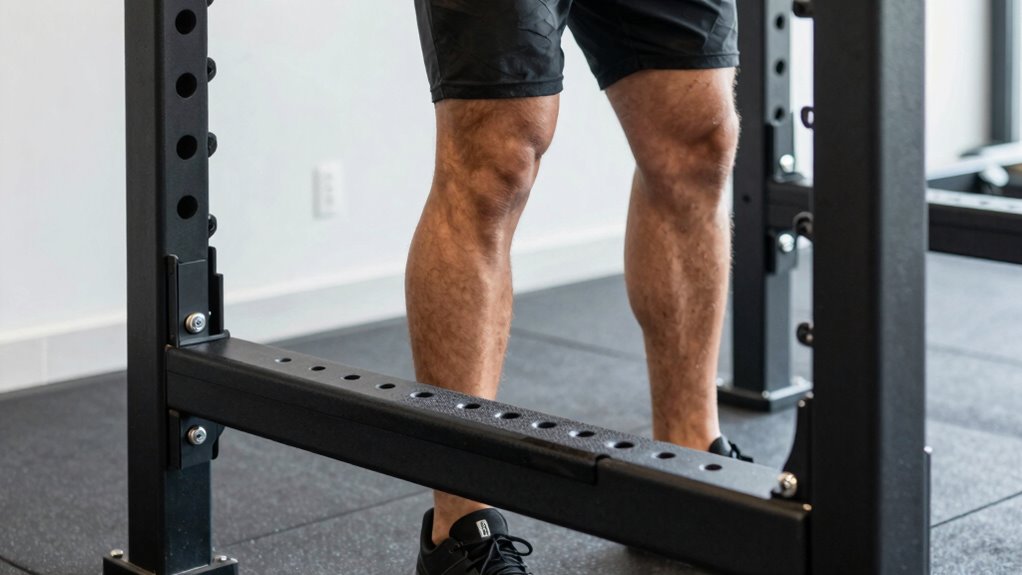
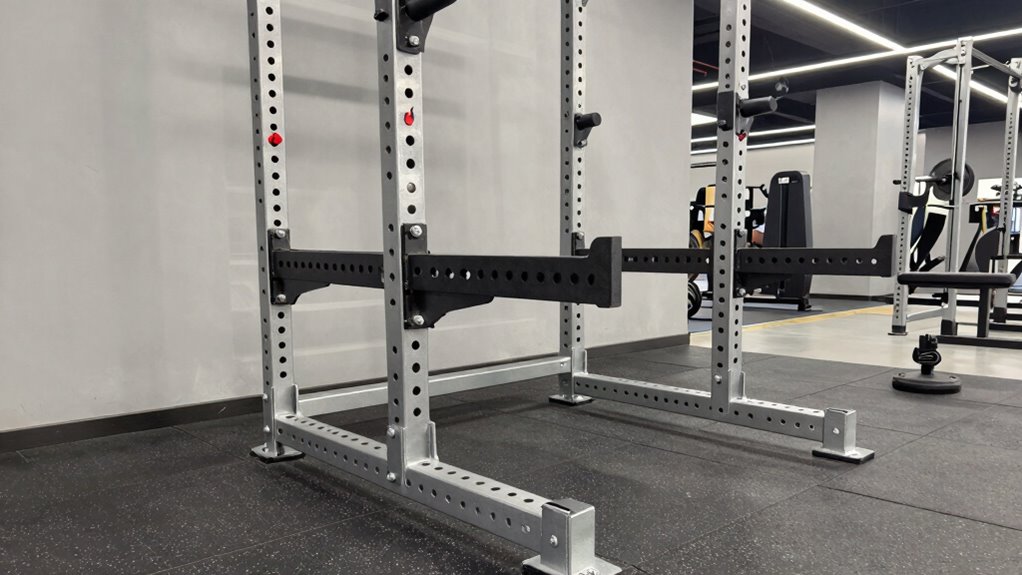
Having a spotter present adds an essential layer of security, especially when lifting heavy. A spotter is there to assist if your strength wanes or if you hit a snag during a lift. Their presence provides peace of mind, allowing you to push your limits safely. But it’s not just about having someone watch over you; it’s about active communication and knowing when to ask for help. Even if you work out alone, it’s wise to use safety accessories that simulate a spotter’s role. Safety bars, adjustable catch blocks, and safety pins are designed to catch the bar if you lose control, preventing it from falling onto you.
A spotter or safety accessories ensure secure lifting and prevent accidents during heavy lifts.
Safety accessories are often overlooked in favor of heavier weights or more advanced routines, but they are essential for safe training. Properly installed safety bars or straps can be the difference between a minor incident and a serious injury. They allow you to lift confidently, knowing there’s a backup in case you can’t complete a rep. These accessories also help you train more effectively, encouraging you to lift heavier or push closer to your limits without fear of injury. To maximize your safety, it’s also important to understand the safe working load of your equipment and ensure it’s appropriate for your training intensity. Additionally, understanding the importance of biodiversity in your environment can promote a more holistic approach to safety and well-being. Incorporating proper safety protocols into your routine can further reduce the risk of accidents and create a safer training environment. Being aware of equipment maintenance and inspecting your gear regularly is another crucial step in ensuring safety. Remember, the goal isn’t to lift the heaviest weight possible but to train safely and consistently.
Ultimately, your focus should be on how your setup promotes safety, not just how much weight your rack can handle. Even with a high weight capacity, neglecting safety accessories or spotter presence can turn your workout into a danger zone. Prioritize proper safety measures—use the right accessories, have a spotter when needed, and set up your rack correctly. This approach ensures that your training remains productive and injury-free. Because in the end, safe lifting isn’t just about numbers; it’s about protecting yourself every step of the way. Proper setup and safety awareness are essential to ensure your workouts are both effective and secure.
As an affiliate, we earn on qualifying purchases.
Frequently Asked Questions
How Often Should I Inspect My Power Rack for Safety?
You should inspect your power rack for safety at least once a month, or more often if you use it frequently. Regular equipment maintenance and inspection frequency are essential for safety. Check for loose bolts, worn-out pads, or damaged parts, and confirm safety bars are secure. Staying proactive helps prevent accidents, so make it a habit to examine your power rack regularly to keep your workouts safe and effective.
What Safety Accessories Are Essential for a Power Rack?
Think of your power rack as a fortress guarding your strength; essential safety accessories are your shields and gates. You need safety bars or spotter arms to catch you, securing your progress. Consider rack customization options, like adjustable safety pins, to fit your height and lifts. These accessories not only prevent accidents but also build confidence, allowing you to push limits safely. Prioritize these safety measures to protect your gains and well-being.
Can Improper Setup Increase Injury Risk?
Yes, improper setup can definitely increase your injury risk. If you neglect equipment maintenance or don’t use proper technique, safety features might not work correctly, leaving you vulnerable during lifts. Always check that safety bars are positioned correctly and secure, and verify your equipment is well-maintained. Practicing proper technique and maintaining your gear helps prevent accidents, making your workouts safer and more effective.
Are Safety Spotters Necessary for All Lifts?
Think of a safety spotter as your workout’s co-pilot; they’re essential for certain lifts. Yes, safety spotters are necessary for heavy or complex lifts, especially when your form or weight distribution might falter. Spotter techniques ensure you lift safely, preventing accidents. Even if you’re experienced, having a spotter adds a layer of security, making sure your focus stays on the lift, not on potential mishaps.
How Do I Know if My Power Rack Is Stable?
You can determine if your power rack is stable by checking its rack stability and ensuring it’s properly anchored. Make sure the rack is on a flat, solid surface and that all bolts and screws are securely tightened. Never exceed the weight limits specified by the manufacturer, as overloading can compromise stability. Regularly inspect the structure for any damage or wobbling to keep your workouts safe and secure.
Conclusion
Remember, a chain is only as strong as its weakest link. Prioritizing proper safety setup in your power rack isn’t just about hitting numbers—it’s about protecting yourself every time you lift. Never sacrifice safety for a few extra pounds. By ensuring your rack is secure and well-prepared, you’re investing in your strength and longevity. After all, safety isn’t a hurdle; it’s the foundation of every successful workout.
Halloween Picks
halloween
As an affiliate, we earn on qualifying purchases.