
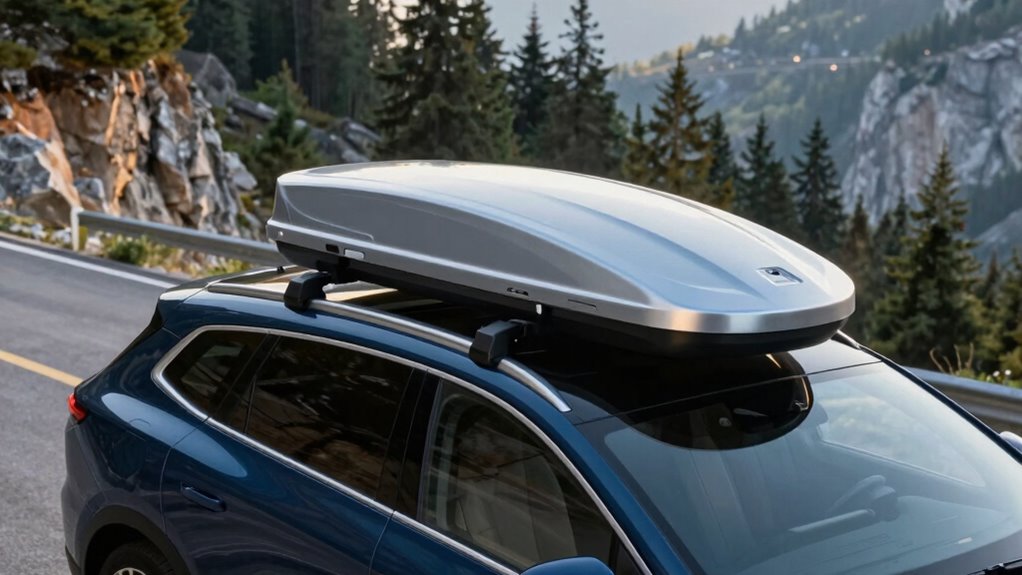

Using a roof cargo box can markedly hit your fuel economy because it disrupts smooth airflow, creating extra drag that you might not notice. Larger or less aerodynamic boxes make this effect worse, especially at highway speeds. Securing the box close to the roof, choosing sleek shapes, and adding wind fairings help reduce the impact. Want to learn simple tips to keep your gas mileage from dropping? Keep exploring for more insights.
Key Takeaways
- Roof cargo boxes increase aerodynamic drag, especially at highway speeds, reducing fuel efficiency.
- Proper installation and choosing aerodynamic designs can significantly mitigate gas mileage loss.
- Adding wind fairings helps redirect airflow, decreasing drag caused by roof boxes.
- Removing the cargo box when not in use is a simple way to improve fuel economy.
- Driving habits like steady speeds and proper tire inflation further offset the fuel consumption impact.
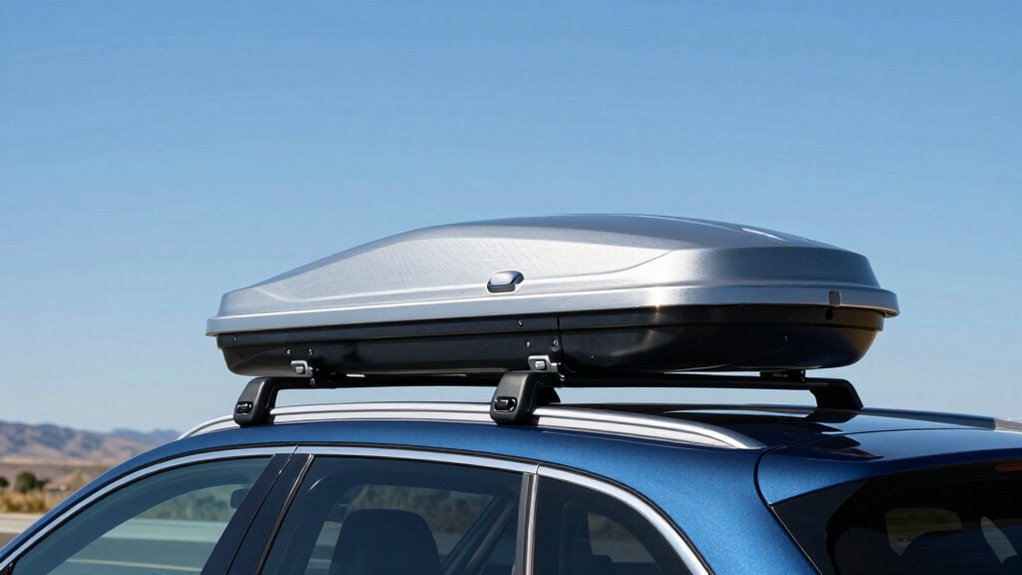
Roof cargo boxes are a practical solution for expanding your vehicle’s storage capacity, especially during trips or when carrying bulky items. However, many overlook how they can affect your vehicle’s gas mileage. One vital factor to consider is the aerodynamics impact. A roof box disrupts the smooth airflow over your vehicle, creating drag that forces your engine to work harder and consume more fuel. The larger and less streamlined the box, the more notable this effect becomes. To minimize this, choose a sleek, aerodynamic design that contours closely to your roofline. When selecting a roof cargo box, look for models with tapered shapes or smooth surfaces, as these help reduce wind resistance. The placement of the box also matters; mounting it as close to the roof as possible decreases the drag caused by the airflow separation behind it.
Installation tips can make a noticeable difference in how much your fuel efficiency suffers. Properly securing the box ensures it remains stable at highway speeds, which not only enhances safety but also maintains ideal aerodynamics. Always double-check that the mounting hardware is tight and that the box is centered on the roof rack. An off-center or loosely attached box can cause uneven wind flow and increase turbulence, further draining your fuel. When installing, remove any unnecessary accessories from your roof rack that could interfere with the box’s fit or aerodynamics. Additionally, consider adding a wind fairing—a small, aerodynamic piece mounted at the front of the roof rack—to help redirect airflow smoothly over the cargo box, considerably reducing drag and improving fuel efficiency. Detecting passive voice can also help you write more clearly and concisely when describing these tips.
Beyond installation, driving habits can influence how much your fuel economy drops when carrying a roof cargo box. Maintain steady speeds, avoid excessive acceleration, and keep your tires properly inflated to reduce overall resistance. Also, removing the box when it’s not needed can save you a substantial amount of fuel. Many drivers forget that the impact on gas mileage is most pronounced at highway speeds, where air resistance is a dominant force. By being mindful of how your roof cargo box is mounted and driving efficiently, you can mitigate some of the gas-mileage hit, even if it’s impossible to eliminate entirely.
aerodynamic roof cargo box
As an affiliate, we earn on qualifying purchases.
As an affiliate, we earn on qualifying purchases.
Frequently Asked Questions
How Can I Reduce Gas Mileage Loss With a Roof Cargo Box?
To reduce gas mileage loss with a roof cargo box, keep the roof box weight light and avoid overloading it. Choose a color that matches your vehicle to minimize wind resistance, and always remove the box when not in use. Properly securing the box also helps reduce drag, improving fuel efficiency. By managing the roof box weight and selecting a sleek color, you can lessen its impact on your gas mileage.
Do Different Roof Box Materials Affect Fuel Efficiency Differently?
You might think heavier roof box materials are a curse, but it’s more about their aerodynamic design. Lighter materials like ABS plastic usually cause less drag, helping your fuel efficiency. Thinner, streamlined designs made from durable materials reduce wind resistance, keeping your mileage intact. Remember, the key is balancing weight with shape—so choose a roof box that’s lightweight yet aerodynamic to save fuel and keep your trip smooth.
Are There Specific Roof Box Sizes That Minimize Aerodynamic Drag?
Choosing a roof cargo box with an aerodynamic design and optimized box dimension helps reduce drag and improve fuel efficiency. Smaller, lower-profile boxes generally create less resistance, making them ideal for minimizing aerodynamic drag. Look for designs that smoothly streamline airflow, avoiding bulky or boxy shapes. By selecting a box that balances capacity with sleekness, you’ll cut down on fuel consumption and enjoy better mileage during your trips.
How Does Speed Impact Fuel Consumption When Using a Roof Cargo Box?
Speed impact on fuel consumption is like a snowball rolling downhill—faster you go, the more energy it consumes. When you increase your speed with a roof cargo box, your vehicle faces higher aerodynamic drag, which substantially raises fuel consumption. So, the faster you drive, the more your fuel efficiency drops, making it essential to maintain moderate speeds to save gas and reduce the added aerodynamic penalty from your roof box.
Can Proper Installation Techniques Improve Fuel Efficiency With Roof Boxes?
Yes, proper installation techniques can improve fuel efficiency with roof boxes. By following installation guidelines carefully, you guarantee ideal roof box aerodynamics, reducing drag that increases fuel consumption. Secure the box tightly and align it correctly to minimize wind resistance. When you pay attention to these details, your vehicle faces less air resistance, helping you save fuel and maintain better mileage during your trips.
wind fairing for roof rack
As an affiliate, we earn on qualifying purchases.
As an affiliate, we earn on qualifying purchases.
Conclusion
While roof cargo boxes seem like a small convenience, they silently sap your gas mileage, often going unnoticed. It’s easy to overlook this trade-off when planning your trip, just as you might ignore the extra weight on your roof. But remember, what saves you time packing could cost you more at the pump. Sometimes, the biggest gains come from simple choices—like skipping that roof box—highlighting that convenience and efficiency don’t always go hand in hand.
roof cargo box with tapered shape
As an affiliate, we earn on qualifying purchases.
As an affiliate, we earn on qualifying purchases.
roof rack wind deflector
As an affiliate, we earn on qualifying purchases.
As an affiliate, we earn on qualifying purchases.