
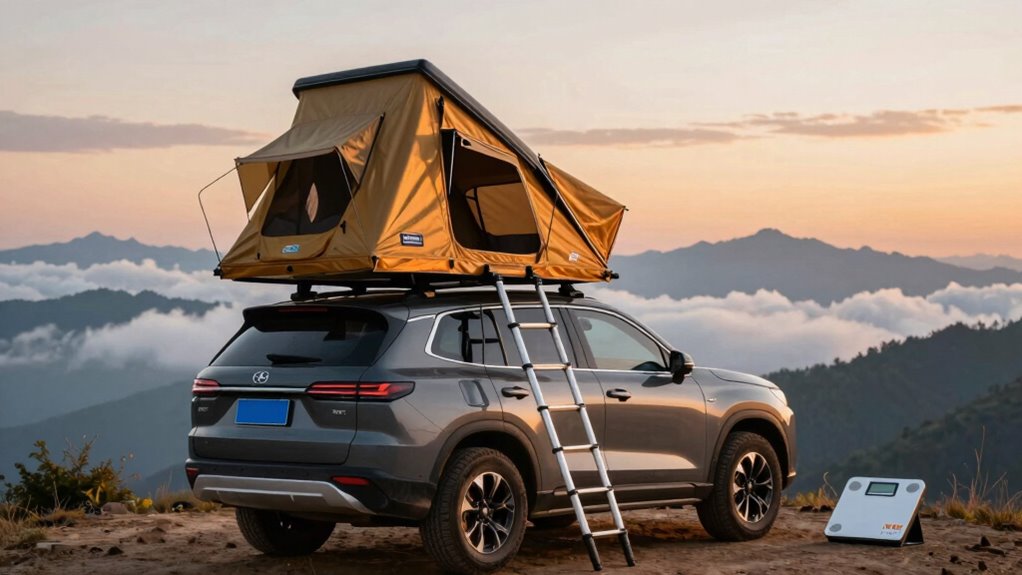

Before installing a rooftop tent, you need to check your vehicle’s weight limit and confirm your roof rack can support the added weight. Review your owner’s manual or manufacturer’s website for roof load capacity, and verify that your rack or crossbars are rated for the total weight. Properly distributing the load is key to safety. If you keep these points in mind, you’ll avoid damage or accidents. Learn more about safe setup tips ahead.
Key Takeaways
- Always verify your vehicle’s roof load capacity in the owner’s manual or manufacturer’s website.
- Check the rooftop tent’s weight and ensure it does not exceed the combined weight limit of roof rack and vehicle.
- Properly distribute the tent’s weight evenly across the roof to maintain vehicle stability and handling.
- Follow installation instructions carefully and secure all mounting hardware to prevent detachment.
- Consider upgrading roof racks or suspension if your vehicle’s weight limit is insufficient for your rooftop tent and gear.
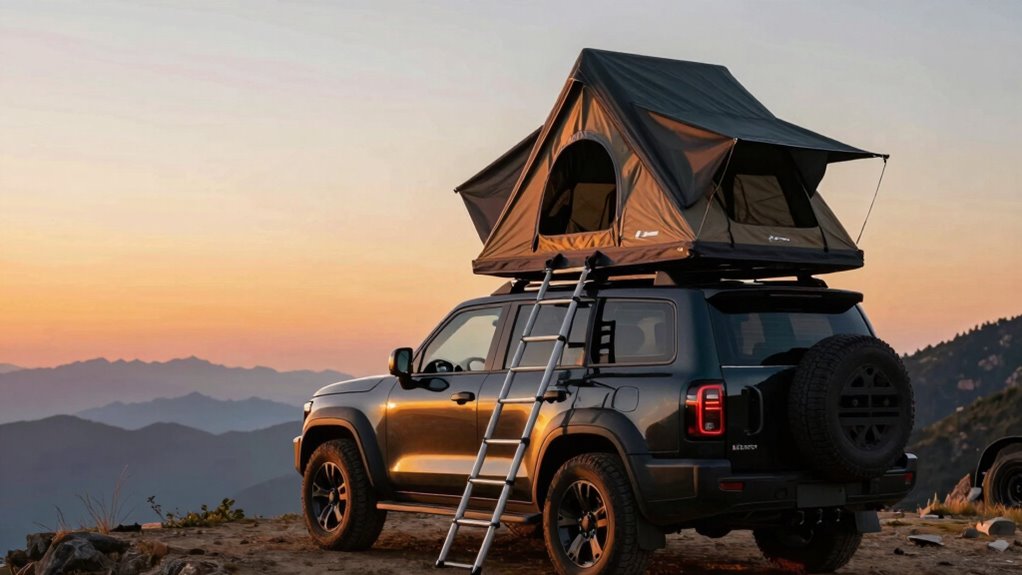
Have you ever wondered how to elevate your camping experience? One of the best ways is by investing in a rooftop tent, which offers comfort, convenience, and a new perspective on outdoor adventures. But before you start shopping, it’s essential to understand the importance of checking the weight limit and ensuring your gear is safe and compatible with your vehicle. The key is to pay close attention to vehicle compatibility and installation safety, which are crucial for a successful and enjoyable camping trip.
First, you need to consider your vehicle’s compatibility with a rooftop tent. Not all vehicles are built to support the added weight, so checking your vehicle’s roof load capacity is vital. This information is usually found in the owner’s manual or on the manufacturer’s website. Ignoring this detail can lead to serious safety issues, like damaging your roof rack or compromising your vehicle’s stability. You should also verify that your roof rack or crossbars are rated for the weight of the tent plus the maximum payload. If your current setup isn’t strong enough, investing in a reinforced rack or a more robust suspension system might be necessary. This step isn’t just about fitting the tent; it’s about ensuring your vehicle can handle the load safely during travel and while stationary.
Verify your vehicle’s roof load capacity and ensure your roof rack is rated for the tent’s weight for safe camping.
Once you confirm vehicle compatibility, installation safety becomes your next priority. Proper installation isn’t just about mounting the tent; it’s about securing it correctly to prevent accidents or damage. Follow the manufacturer’s instructions meticulously, and double-check every bolt and connection. Use the appropriate tools and, if needed, seek professional assistance to ensure everything is secure. An improperly installed rooftop tent can cause dangerous vibrations, sway, or even detachment while driving, risking your safety and that of others. Remember, safety hinges on not just the quality of the tent but also its proper installation. Additionally, understanding vehicle load capacity can help you avoid exceeding weight limits and maintain optimal handling during your trip.
Also, don’t forget to consider the weight distribution. Position the tent in a way that evenly distributes the load across your vehicle’s roof. Avoid overloading one side or exceeding the weight limit, as this can affect handling and braking. Regularly inspect the mounting hardware and roof rack for signs of wear or looseness, especially after long trips or rough roads. By paying attention to vehicle compatibility and installation safety, you ensure your rooftop tent adds to your adventure rather than creating hazards. Safety, after all, makes every camping trip more enjoyable.
rooftop tent weight limit
As an affiliate, we earn on qualifying purchases.
As an affiliate, we earn on qualifying purchases.
Frequently Asked Questions
Can I Install a Rooftop Tent on Any Vehicle?
You can’t install a rooftop tent on any vehicle without checking vehicle compatibility and installation requirements. Not all vehicles have the roof strength or racks needed to support the weight of a tent and its occupants. You need to verify your vehicle’s roof load capacity and ensure it has proper mounting points or crossbars. Ignoring these factors can lead to safety issues or damage, so always review your vehicle’s specifications before installation.
How Does Weather Affect Rooftop Tent Weight Capacity?
Weather can considerably impact your rooftop tent’s weight capacity. For example, strong winds can exert up to 60 pounds of force per square foot, testing its wind resistance. Heavy rain and snow add extra weight, reducing its durability and safety. Always check weather durability and avoid installing your tent during storms or high winds. Proper maintenance and securing your tent help guarantee it withstands adverse weather conditions safely.
Are There Differences in Weight Limits for Hard-Shell vs. Soft-Shell Tents?
Hard-shell tents generally have higher weight limits due to their material differences and structural variations, offering more durability and support. Soft-shell tents, made from flexible fabrics, tend to have lower weight capacities, which you need to think about when loading gear. Always check the manufacturer’s specifications for each tent type, as structural variations can substantially impact safety and performance. Knowing these differences helps you stay within safe weight limits and avoid damage.
What Safety Precautions Should I Take With Heavy Rooftop Tents?
Your rooftop tent is a fortress on your vehicle, so safety is essential. Always guarantee proper weight distribution to prevent instability and use high-quality securing straps to keep it firmly attached. Regularly inspect straps and mounting points for wear and tear. Avoid overloading, and double-check the weight limit before each trip. These precautions will keep you safe and your adventure smooth, no matter how high your tent reaches!
How Often Should I Check the Weight Limit of My Rooftop Tent?
You should perform weight limit inspections regularly, ideally before each trip, to make certain your rooftop tent remains within safe limits. Consistently check the tent’s weight maintenance and any added gear to prevent overloading. By doing so, you protect your vehicle’s roof, prolong your tent’s lifespan, and ensure safety during your adventures. Regular inspections help catch any issues early, keeping your setup secure and reliable.
vehicle roof rack load capacity
As an affiliate, we earn on qualifying purchases.
As an affiliate, we earn on qualifying purchases.
Conclusion
Remember, checking the weight limit of your rooftop tent isn’t just a detail — it’s the secret to revealing endless adventures without risking disaster. Ignore it, and you might find yourself facing a catastrophe that’s more than a bump in the road. Think of it as the backbone of your camping experience; when you respect it, you’re unstoppable. So, always double-check that weight limit, and turn your outdoor escapades into legendary stories worth telling.
reliable roof rack crossbars
As an affiliate, we earn on qualifying purchases.
As an affiliate, we earn on qualifying purchases.
roof rack installation tools
As an affiliate, we earn on qualifying purchases.
As an affiliate, we earn on qualifying purchases.